
This guide covers how to start a snow blower from start to finish. Starting a snow blower is a sequence, not a knack. When a machine will not start it is almost never because the operator pulled wrong; it is because one item in the sequence is out of place, and nine times out of ten that item is fuel. This guide covers the correct starting order for a petrol machine, cold and warm, the electric start route, the cordless and corded equivalents, and what to do when the engine fires and dies.
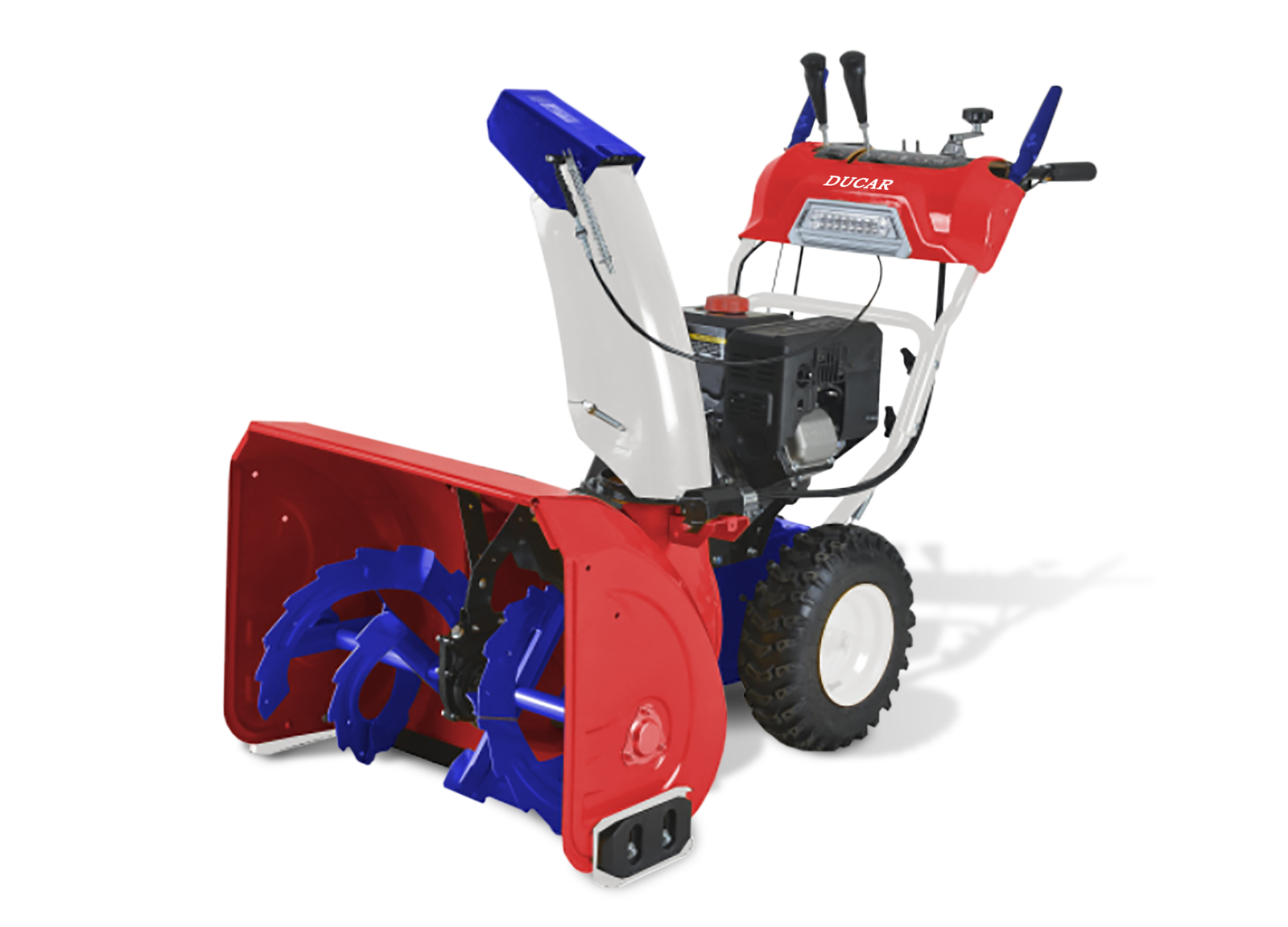
The starting sequence, in order
Every petrol snow blower, whatever the badge on the housing, wants the same six things in the same order. Learn the order and the machine becomes predictable. Most questions about how to start a snow blower end here.
| Step | What to do | Why it matters |
|---|---|---|
| 1. Fuel valve | Turn to the open position | A closed valve is the single most common cause of a machine that turns over and never fires |
| 2. Safety key | Push fully in | Most machines will not produce a spark without it, and a half seated key feels identical to a dead engine |
| 3. Throttle | Set to fast or the rabbit symbol | Starting on a low throttle gives you a weak, reluctant fire |
| 4. Choke | Fully closed for a cold engine, off for a warm one | Choke enriches the mixture; using it on a warm engine floods it |
| 5. Primer | Two or three firm presses if fitted, cold only | Puts raw fuel into the intake. More is not better |
| 6. Start | Recoil pull or electric start button | A smooth full pull, not a short sharp tug |
If you get through all six and the engine does not fire, stop pulling. Nothing about the seventh pull is different from the sixth. Go back and check fuel condition and the spark plug, which is where the no start guide picks up. Knowing how to start a snow blower in the cold is mostly about patience.
Cold start, step by step
A cold start means the engine has not run today. It needs a richer mixture to catch, which is what the choke and primer are for. Every step in how to start a snow blower assumes the machine was stored properly. If how to start a snow blower still feels fiddly, the fuel is usually why.
- Check the oil before anything else. Two seconds with the dipstick, every time. Running a snow blower engine low on oil is the fastest way to destroy it, and cold oil hides a low level because it clings to the tube.
- Open the fuel valve. On most machines it sits under the tank and turns a quarter turn.
- Push the safety key fully home.
- Set the throttle to fast.
- Close the choke completely.
- Press the primer bulb two or three times if the machine has one. Skip this if the engine is anything other than genuinely cold.
- Pull the recoil handle slowly until you feel the compression stroke resist you, then pull firmly through in one smooth movement. Do not yank from the top of the travel and do not let the cord snap back.
- The engine should fire within two or three pulls. Once it runs, open the choke gradually over about thirty seconds rather than all at once.
Let it run at fast throttle for a minute before you engage the auger. Cold oil needs to circulate, and an engine put straight under load from cold wears faster. This is where how to start a snow blower stops being a sequence and becomes a habit.
Warm restarts and mid clear stalls
A warm engine needs no choke and no primer. Using either will flood it, which is why the restart after a mid clear pause is the one people most often get wrong. The rest of how to start a snow blower is repetition until it is automatic.
For a warm restart: fuel valve open, key in, throttle fast, choke fully off, no primer, pull. It should catch on the first pull. If it does not catch within three, treat it as a cold engine and try a small amount of choke, because a machine that has sat for twenty minutes in minus fifteen is closer to cold than warm.
If the engine stalls repeatedly during a clear, that is not a starting problem. It is usually a fuel supply problem or a machine being asked to take too deep a bite. Slow down, take a narrower cut, and if it persists, read the fault table in the repair guide.
Using the electric start
Electric start on a petrol snow blower is usually a 120 volt starter motor, not a battery. It plugs into a mains extension lead, which surprises people expecting a key and a battery like a car.
- Follow the same sequence: fuel valve open, key in, throttle fast, choke closed if cold, prime if cold.
- Plug the lead into the machine first, then into the outlet.
- Press and hold the start button for no more than five seconds at a time, waiting ten seconds between attempts. Continuous cranking overheats a starter that was never designed for it.
- Once it runs, unplug at the mains first, then at the machine, and put the lead away before clearing. A trailing cord and a moving auger do not belong on the same driveway.
If the starter turns the engine but nothing fires, the starter is fine and the problem is fuel or spark. If it hums or clicks without turning the engine, check the extension lead rating before blaming the starter. An underspecified lead is a very common false alarm.
Starting a cordless or corded machine
Battery and corded machines have no starting sequence worth the name, which is most of their appeal. They are also the majority of what we stock: 25 Snow Joe and 27 Greenworks machines against 15 petrol.
Cordless. Seat the pack until it clicks, insert the safety key, hold the lock out button and squeeze the bail. If nothing happens the pack is either not fully seated or too cold. A pack stored at minus twenty may refuse to deliver current until it warms, so bring it indoors for twenty minutes.
Corded. Connect the lead to the machine, secure it in the strain relief hook, then plug into the outlet. Insert the key, hold the lock out and squeeze. If it trips the breaker the lead is undersized or the circuit is shared. Use a 12 gauge cold weather rated outdoor extension.
Browse battery machines and corded electric machines.
If you have flooded it
Flooding means too much fuel and not enough air. It comes from over priming, leaving the choke closed too long, or repeated pulling on a warm engine with the choke on. The machine smells strongly of petrol and will not fire.
Recovery is straightforward. Open the choke fully, set the throttle to fast, and pull the recoil six to eight times to clear the cylinder. Wait ten to fifteen minutes, then start again from the warm sequence with no choke and no primer. If it still will not go, remove the spark plug, dry it, and check whether it is fouled black. A wet sooty plug will not spark reliably even once the flood clears.
Spark plugs are the cheapest thing in the box to replace, and we list them with the rest of the engine parts on the parts catalogue.
If it fires and then dies
This is the most diagnostic symptom on the machine, because it proves the ignition works. The engine made a spark and burned fuel. What it cannot do is keep supplying itself.
| What you see | Most likely cause | What to do |
|---|---|---|
| Fires on choke, dies when the choke opens | Blocked idle circuit in the carburettor | Clean the carburettor or fit a carburettor kit |
| Runs a few seconds then dies, repeatedly | Blocked fuel line, filter, or a partly closed valve | Check the valve is fully open, then the filter |
| Runs then surges up and down | Partly blocked main jet | Carburettor clean; running it rough will not clear it |
| Fires once and never again | Stale fuel or water in the tank | Drain and refill with fresh fuel plus stabiliser |
| Dies only under load | Fuel starvation at higher demand | Fuel filter and line before suspecting the engine |
Every one of those is a fuel path problem, and every one is preventable. Stabiliser in the tank in April rather than October is the single highest value habit in snow blower ownership.
The first start of the season
The first start in November or December is the one that goes wrong, and it goes wrong because of what happened in April. A machine put away with untreated fuel has spent the summer letting that fuel separate and varnish the carburettor jets.
Give yourself an unhurried hour on a dry day well before the first fall. Check and change the oil if it was not done at the end of last season. Drain any fuel that has been sitting and replace it with fresh petrol dosed with stabiliser. Fit a new spark plug if the old one is more than a couple of seasons old. Then run the machine for ten minutes so the fresh fuel reaches the carburettor.
Doing this in October rather than during the first storm is the difference between a five minute job and a two week wait for a workshop slot in December, when every shop in the country is booked. The maintenance checklist sets out the full seasonal routine.
A quick recap on how to start a snow blower
To summarise: how to start a snow blower comes down to matching the machine to the surface, the snowfall and the space you have to store it. Everything above is the detail behind that. If any of it is unclear for your property, ask us rather than guessing. That is the whole of how to start a snow blower on a normal morning.
Before you engage anything
Starting is the easy part. The clearing is where people get hurt, and impeller injuries remain the most common serious accident with this equipment. They happen to experienced operators who took one shortcut. Ask us if how to start a snow blower is not working on your unit.
- Never clear a clogged chute by hand, even with the engine off. Use the clearing tool supplied with the machine.
- Stop the engine and wait for the auger to come to a complete stop before touching anything near the intake. A stopped engine can still hold stored energy in a jammed auger.
- Keep the discharge chute pointed away from people, windows and vehicles before you engage the auger, not after.
- Never run a petrol engine in a closed garage. Carbon monoxide has no exceptions.
- Walk the driveway first in fresh snow and note where the newspaper, the extension cord and the dog toy are. The auger will find them otherwise.
Canadian safety guidance for outdoor power equipment is published by the CSA Group, and provincial rules on operating powered equipment vary.
Common questions
How do you start a snow blower that has been sitting all summer?
Drain or replace the fuel first. Petrol left untreated over a Canadian summer separates and gums the carburettor, and that single problem causes most no start calls in December. Put in fresh fuel with stabiliser, check the oil, set the choke fully closed, open the fuel valve, insert the safety key and pull. If it fires and dies repeatedly, the carburettor needs cleaning rather than more pulling. Anyone learning how to start a snow blower should read this part twice.
Why does my snow blower start then stall when I open the choke?
The choke is compensating for a blocked idle circuit. A partly gummed carburettor jet lets the engine run rich on choke but starves it once the choke opens. Clean the carburettor or fit a carburettor kit. Running it on half choke is a workaround, not a fix, and it fouls the plug. Nothing about how to start a snow blower changes between brands.
Do I need to prime a snow blower before starting?
Only if it has a primer bulb and the engine is cold. Two or three firm presses is normal. More is not better: over priming floods the engine, and then you need to hold the throttle open with the choke off and pull several times to clear it.
Can I use the electric start without a battery?
On most machines yes. Electric start on a petrol snow blower is usually a 120 volt starter that plugs into a mains extension lead, not a battery starter. Plug in, press the button in short bursts of a few seconds, and unplug before you start clearing.
What should I check before the first pull of the season?
Oil level, fuel condition, spark plug, the safety key, that the fuel valve is open, and that the auger and drive controls are disengaged. Two minutes of checks prevents most of the failures we are called about.
Still stuck? The repair guide works through faults in order of likelihood, spare parts are listed by stock number on the parts catalogue, and if you would rather ask a person, use the contact page.