
A corded electric snow blower is the quiet specialist of this category. It weighs a third of what a gas machine weighs, starts instantly at minus twenty, needs almost no maintenance, and costs a fraction of everything else on this site. Within its limits it is the easiest machine here to live with.
-
Electric Snow Blowers
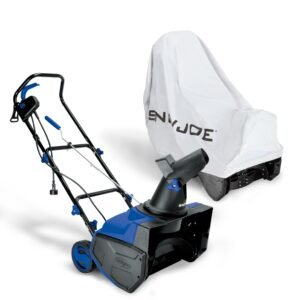
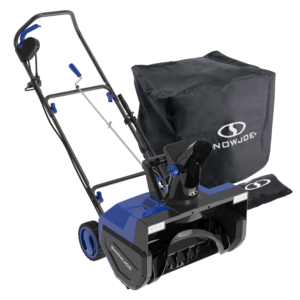
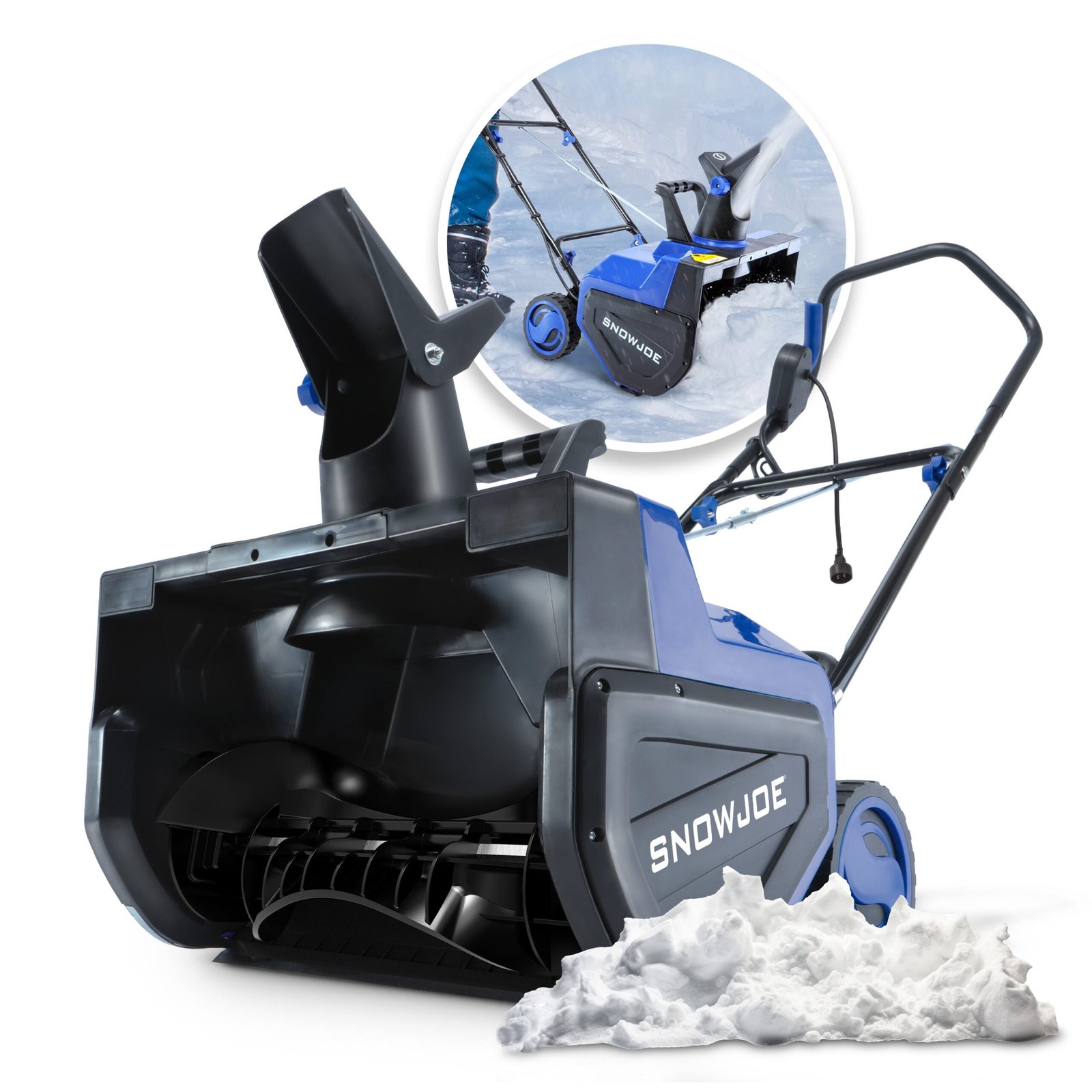
Snow Joe Electric Snowblower Protection Bundle | Includes Electric Snow Blower and Cover
$277.35 Add to cart -
Electric Snow Blowers
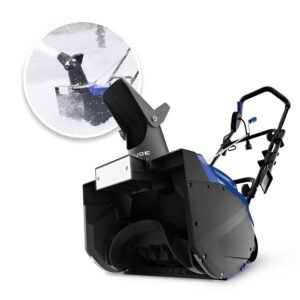
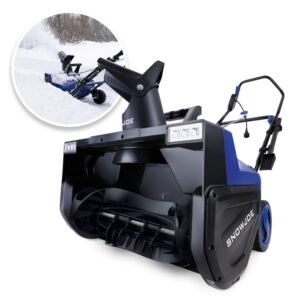
Snow Joe SJ623E Electric Walk-Behind Single-Stage Snow Blower W/ Headlight | 18-inch | 15-amp
$278.75 Add to cart -
Electric Snow Blowers
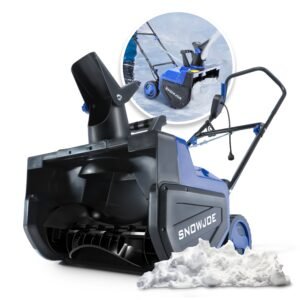
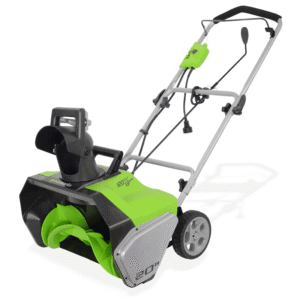
Snow Joe SJ626E Electric Walk-Behind Single-Stage Snow Blower | 22-inch | 14.5-amp
$320.56 Add to cart -
Electric Snow Blowers
Snow Joe SJ627E Electric Walk-Behind Snow Blower W/ Dual LED Lights | 22-inch | 15-amp
$348.44 Add to cart -
Electric Snow Blowers
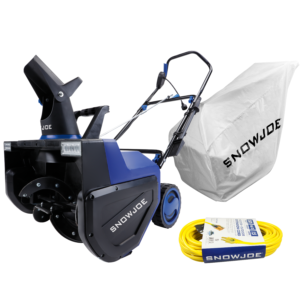
Snow Joe SJ627E-CVR Electric Snow Blower | 22-Inch | 15-Amp | w/ Dual LED Lights + Bonus Cover
$362.37 Add to cart
Who a corded electric snow blower is right for
The honest answer is that a corded electric snow blower suits a specific household very well and suits everyone else badly. If your driveway is one or two car lengths, paved, and sits within about 30 metres of an exterior outlet, this is very likely the right machine and you can stop reading the gas pages entirely.
It also suits people who physically do not want to wrestle a 90 kilogram machine. A corded electric snow blower typically weighs between 13 and 20 kilograms. You can carry it down a step, hang it on a garage wall, and steer it with one hand. For townhouse owners, condo residents with a private walkway, and anyone clearing a deck, a set of stairs or a wheelchair ramp, nothing else in the category is this manageable.
The third group is people who already own a bigger machine. A wide gas two stage is the wrong tool for a back deck or the path to the shed. Plenty of Canadian households run a gas machine for the driveway and keep a light electric snow blower for everything the big one cannot reach.
If your driveway is long, unpaved, or regularly buried under a plow ridge, a corded machine will frustrate you. Read gas snow blowers or two stage snow blowers instead, because those are built for exactly that job.
Corded electric or battery, honestly compared
This is the real decision for most buyers, since both are quiet, both start instantly, and neither needs fuel or oil. The difference is the cord, and the cord cuts both ways. A corded electric snow blower never runs out of power partway through a storm. A battery snow blower goes anywhere but stops when the pack is empty.
| What matters | Corded electric | Battery | Gas two stage |
|---|---|---|---|
| Typical price | Lowest in the category | Middle to high | Highest |
| Runtime | Unlimited while plugged in | 30 to 60 minutes per pack | Unlimited, refuel in a minute |
| Range | Limited by cord length | Goes anywhere | Goes anywhere |
| Weight | 13 to 20 kg | 20 to 60 kg | 70 to 140 kg |
| Snow depth | Up to about 20 cm | Up to about 40 cm | Deep snow and plow ridge |
| Safe on gravel | No | Only two stage models | Yes |
| Annual maintenance | Effectively none | Effectively none | Oil, plug, fuel treatment |
| Cold start | Instant | Instant, reduced capacity | Choke and pull, or electric start |
Read that table honestly against your own driveway. If the cord reaches and the snow is normally under 20 centimetres, the corded electric snow blower wins on price, weight and upkeep, and the compromises never show up.
How much snow one can actually move
A corded electric snow blower is a single stage machine. One auger both picks the snow up and throws it, touching the ground as it turns, which is what lets a light machine clear right down to the pavement. In fresh snow up to roughly 15 to 20 centimetres it works quickly and throws 6 to 9 metres.
Past that depth the machine does not fail so much as slow down. You take half width passes, and a 20 centimetre fall becomes a slower job rather than an impossible one. What genuinely stops a corded electric snow blower is the compacted ridge the municipal plow leaves across the foot of the driveway. That material is dense, often icy, and needs the weight and gearing of a two stage machine.
Wet spring snow is the other limit. Heavy saturated snow is far denser than powder and can pack the chute. Clearing early, before traffic compresses it, matters more with an electric snow blower than with any other type here.
Amps, motor size and what the numbers mean
Corded machines are rated in amps, and the number is a fair proxy for how hard the machine will push before it bogs. Canadian household circuits supply 120 volts, so a 15 amp motor is drawing close to the practical ceiling of a standard outlet.
- 10 to 11 amps. Paired with a 16 to 18 inch housing. Steps, decks, walkways and a single car pad. The lightest machines here, often under 15 kilograms.
- 13 to 14 amps. The middle of the range, usually 18 to 20 inches wide. This is the sweet spot for a normal two car driveway.
- 15 amps. The most powerful corded electric snow blower you can buy, and effectively the limit of a domestic circuit. Wider intake, better throwing distance, more tolerance for wet snow.
Amps alone do not tell the whole story. Intake height decides how deep a bite the machine takes, and impeller design decides how far it throws. Two machines at the same amp rating can differ noticeably, which is why the listings here show clearing width and intake height rather than leading on the motor rating alone.
Extension cords, the part most buyers get wrong
More complaints about corded machines trace back to the cord than to the machine. An undersized cord starves the motor, the machine feels gutless, and in the worst case the cord warms up under load. This is the one accessory not to economise on.
- Use an outdoor rated cold weather cord. Ordinary indoor cords stiffen and the jacket can crack at Canadian winter temperatures.
- Match gauge to length. For a 15 amp electric snow blower, 12 gauge to 30 metres. Lighter 14 gauge cords are only appropriate on shorter runs and smaller motors.
- Shorter is better. Voltage drops over distance. Two 15 metre cords joined together perform worse than one 30 metre cord.
- Use the cord retainer. Every machine has a hook or loop near the handle. It stops the plug pulling out mid pass, which is the single most irritating failure mode.
Plan your passes so the cord trails behind you and stays on cleared ground. Most people work away from the outlet and back toward it, keeping the cord on the side already finished.
Matching clearing width to your driveway
Clearing width sets how many passes you make. A 20 inch machine on a two car driveway is roughly six passes. A 16 inch machine on the same driveway is closer to eight. On a small pad that difference is trivial. On a longer driveway it decides whether the job takes ten minutes or twenty.
Wider is not automatically better on a corded electric snow blower, because a wider intake asks more of a motor already limited by the outlet. If your snow is routinely wet and heavy, a narrower machine at a higher amp rating will out perform a wider machine at a lower one.
Cold weather starting
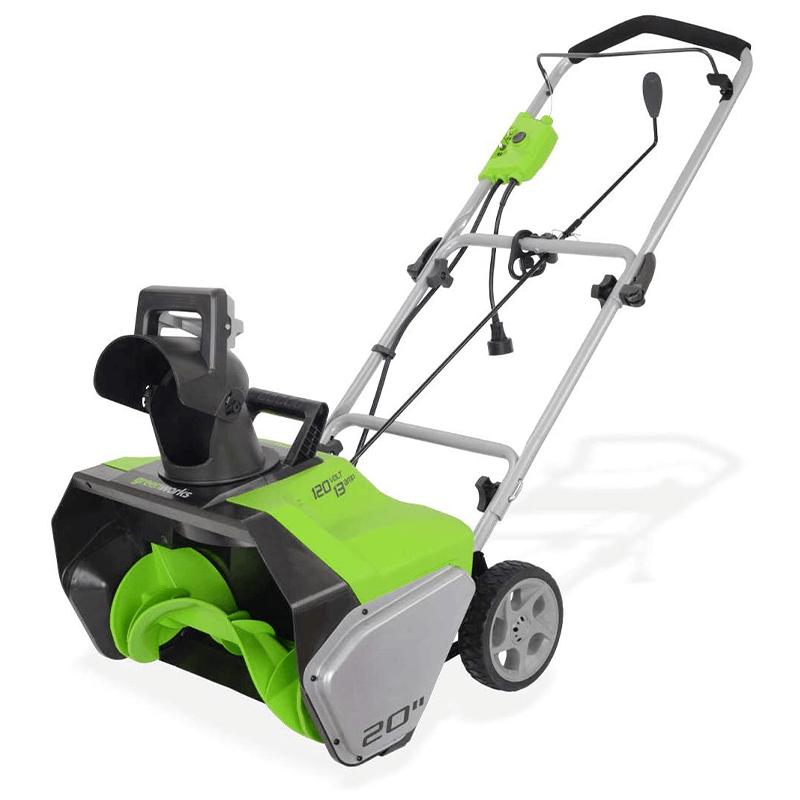
This is where an electric snow blower quietly wins. There is no choke, no primer bulb, no pull cord and no fuel that has gone stale since March. You plug it in and press the switch, and it behaves identically at minus five and minus twenty five.
Anyone who has knelt on a frozen driveway yanking a starter cord on a machine that sat all summer understands the value of this. It is also why an electric snow blower suits people who clear snow before dawn, since a quiet motor at six in the morning is a genuine courtesy in a dense neighbourhood.
Maintenance, or the near absence of it
There is no oil to change, no spark plug, no carburettor, no fuel filter and no fuel to stabilise before storage. Over a season an electric snow blower asks for almost nothing.
- Check the scraper bar and paddles once a year. Rubber paddles wear, and worn paddles stop the machine clearing to the pavement. They are inexpensive and simple to replace. See snow blower parts.
- Inspect the cord and plug for nicks before each season.
- Clear the chute with the tool, never a hand. This applies to every machine on this site.
- Store it dry. Wipe the housing down so meltwater does not sit on bare metal all summer.
That is the entire list, and it is the strongest argument for electric for anyone who resents small engine upkeep. If something does go wrong, our snow blower repair guide covers the common faults.
What a corded electric snow blower cannot do
Being straight about this saves returns and disappointment.
- It cannot work on gravel. The auger contacts the ground, so a single stage machine will pick up gravel and throw it. Gravel needs a two stage machine with adjustable skid shoes.
- It cannot go beyond the cord. Roughly 30 metres from an outlet is the working radius. Detached garages and long rural laneways are out.
- It struggles with the plow ridge. Compacted, often icy, and heavier than anything the storm itself dropped.
- It is not built for repeated deep falls. If 30 centimetre storms are normal where you live, size up.
Safety and Canadian certification
Any electric snow blower sold legally in Canada must carry certification from an accredited body, which for electrical products usually means a mark from CSA Group or another body accredited by the Standards Council of Canada. Look for that mark and treat its absence as disqualifying.
Outdoors, plug into a circuit protected by a ground fault interrupter. Guidance from the Electrical Safety Authority is worth reading before the first snowfall, and Environment and Climate Change Canada forecasts tell you when to get ahead of a storm rather than fight it after the fact.
-
Electric Snow Blowers
Snow Joe Electric Snowblower Protection Bundle | Includes Electric Snow Blower and Cover
$277.35 Add to cart -
Electric Snow Blowers
Snow Joe SJ626E Electric Walk-Behind Single-Stage Snow Blower | 22-inch | 14.5-amp
$320.56 Add to cart -
Electric Snow Blowers
Snow Joe SJ623E Electric Walk-Behind Single-Stage Snow Blower W/ Headlight | 18-inch | 15-amp
$278.75 Add to cart
Common questions
Is an electric snow blower powerful enough for Canadian winters?
How long an extension cord can I use?
Can an electric snow blower be used on a gravel driveway?
Corded electric or battery, which should I buy?
Do electric snow blowers work in extreme cold?
How much snow can an electric snow blower handle at once?
What maintenance does an electric snow blower need?
Are electric snow blowers quieter than gas?
Still deciding between types? Compare single stage and two stage machines, or browse everything in shop by type.