
There are six snow blower types on sale in Canada and most buying advice treats them as one shelf sorted by price. They are not. Each class solves a different problem, and picking the wrong one is how people end up pushing snow around with a machine that cost more than the shovel they were trying to retire. This page sorts every collection we stock by what it is actually for.
On this page
- The six classes, in one place
- Corded electric snow blowers
- Cordless battery snow blowers
- Single stage gas snow blowers
- Two stage gas snow blowers
- Tracked and stand on machines
- Attachments for machines you already own
- Choosing between the snow blower types
- What each class costs to own, not just to buy
- Common questions
The six classes, in one place
Every machine we sell falls into one of six snow blower types. The split is not marketing. It is a genuine difference in how the machine moves snow, and it decides what depth, what surface and what driveway length the machine can cope with.
| Class | Typical width | Max depth | Gravel safe | Plow ridge | From |
|---|---|---|---|---|---|
| Corded electric | 18 to 20 in | 6 in | No | No | $278.75 |
| Cordless battery | 18 to 24 in | 8 in | No | Marginal | $283.64 |
| Single stage gas | 21 in | 12 in | No | No | $549.00 |
| Two stage gas | 24 to 34 in | 18 to 21 in | Yes | Yes | $1,299.00 |
| Tracked two stage | 34 to 42 in | 21 in and up | Yes | Yes | $5,999.00 |
| Attachments | 40 to 84 in | No practical limit | Yes | Yes | Quote |
Two of those snow blower types cover the large majority of Canadian driveways. The cordless machines suit short paved drives in coastal and southern Ontario snow, and the two stage gas machines suit everything with a real winter behind it. The rest are specialists, and they are worth the money only when your situation matches.
If you already know your snowfall depth, the fastest route is the what size snow blower do I need guide, which sizes on depth and driveway length rather than on horsepower.
Corded electric snow blowers
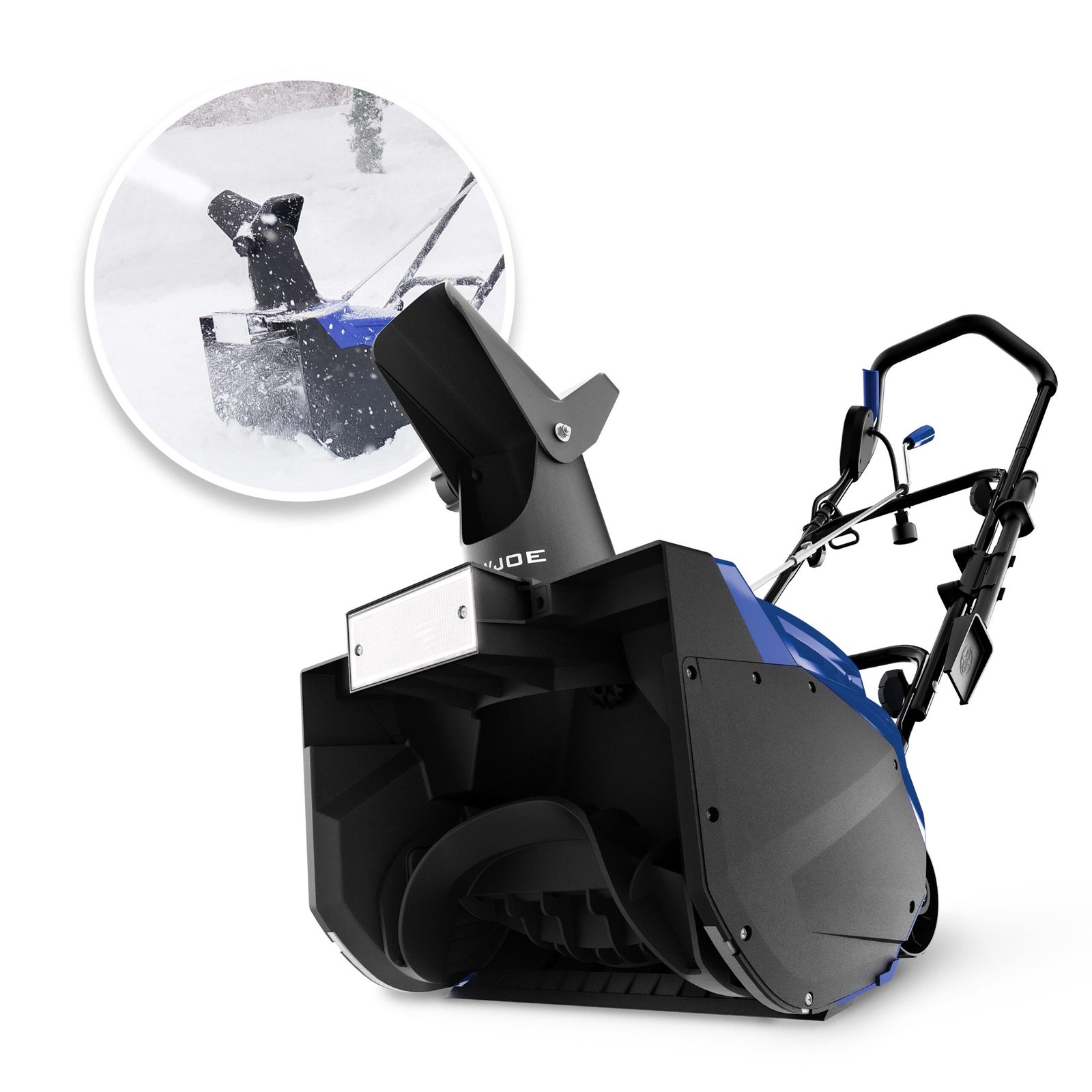
A corded machine is the simplest of the snow blower types. Mains power, one moving auger, a rubber paddle that touches the ground and pulls the unit forward. Nothing to charge, nothing to winterise, and typically under 35 pounds, so it can be carried down a set of steps.
The limits are real. Six inches is the honest ceiling, the paddle rules out gravel, and the cord is a genuine nuisance on anything longer than a single car drive. Use a cold weather rated 12 gauge outdoor lead and keep it behind you, never coiled in front of the intake.
Who it suits: townhouses, decks, steps, walkways and back lanes within reach of an outdoor outlet. Browse electric snow blowers to see the current range.
Cordless battery snow blowers
Cordless machines are the fastest growing of the snow blower types in Canada and the one where the specification sheet misleads people most. Platforms run from 24V for a powered shovel up to 100V for a genuine two stage cordless machine.
What is true: they start instantly at minus twenty, there is no fuel to stabilise, no carburettor to strip in April, and you can run one inside an open garage without gassing yourself. What is also true: manufacturer runtimes assume dry powder. In saturated March snow the same machine draws two to three times the current, so a long driveway needs a third and fourth pack rather than optimism.
The packs are the expensive part, which is why buying into a platform you already own tools on is usually the cheaper decision. Greenworks 80V and Ryobi 40V are the two we get asked about most.
Who it suits: paved drives up to about two cars, anyone storing the machine in a living space, and anyone who has had enough of pull cords. See battery snow blowers for the current platforms, or read single stage against two stage before committing.
Single stage gas snow blowers
A single stage gas machine sits between the cordless units and the serious two stage class. One rubber tipped auger gathers and throws in a single motion, and because the paddle contacts the ground it drags the machine forward without a drive system. That is why a 21 inch single stage feels light and costs half what a two stage does.
It is also why it must never be used on gravel. The paddle will pick up stone and throw it at a car, a window or a person, and no amount of care changes that. This is the single most expensive mistake among all the snow blower types, and it is covered in detail on the snow blower safety page.
Twelve inches of fresh snow is a comfortable ceiling. The plow ridge is not. Who it suits: paved drives, moderate snowfall, buyers who want gas reliability without the weight or the storage footprint. See single stage snow blowers.
Two stage gas snow blowers
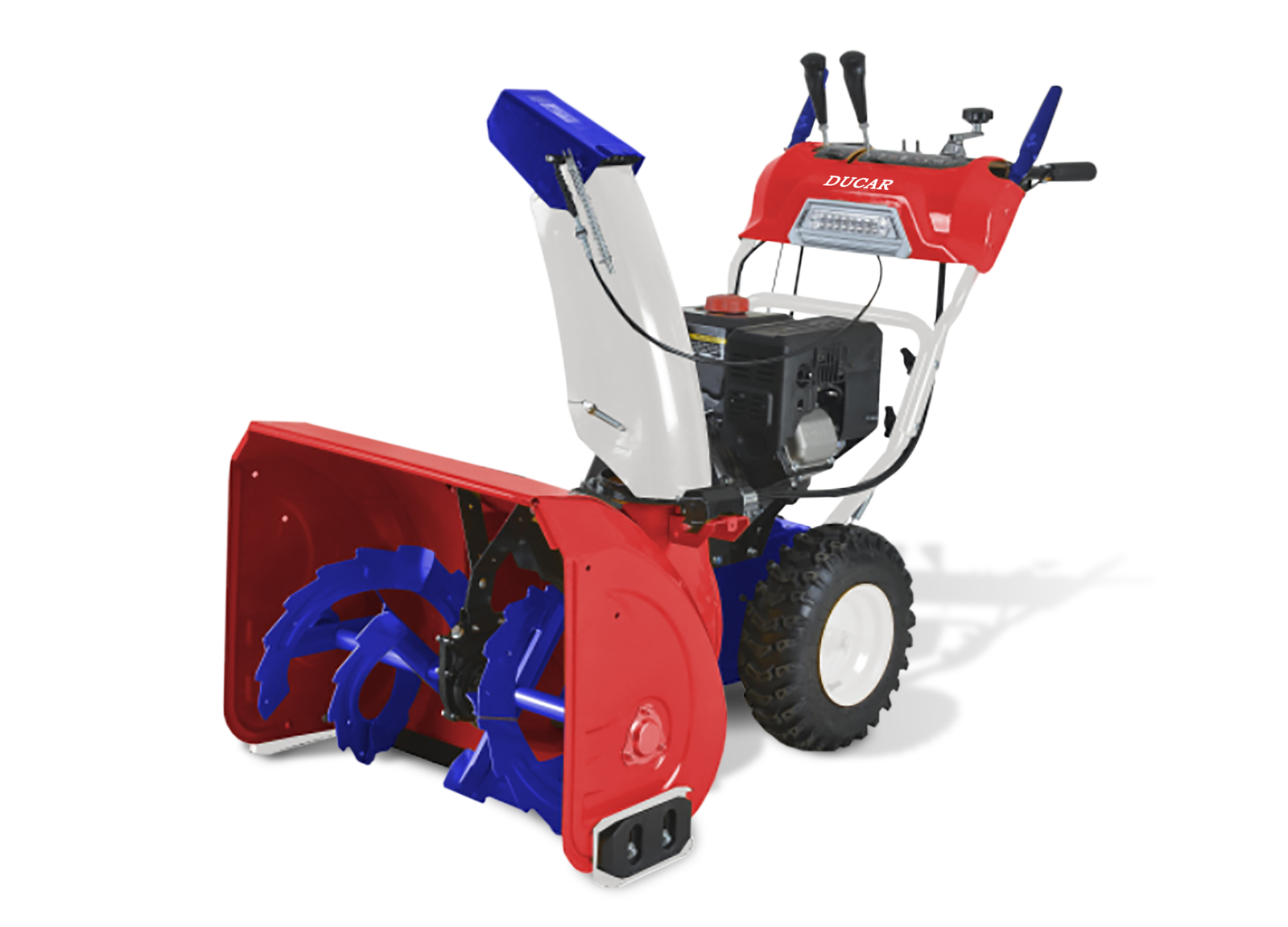
This is the class most Canadian driveways need, and if you only read one section of this page it should be this one. A slow steel auger gathers snow and feeds a separate high speed impeller that does the throwing. Because the auger rides clear of the ground on adjustable skid shoes, gravel stays where it belongs.
The practical consequences: sixteen to twenty inches of depth, thirty five to fifty feet of throw, and enough impeller speed to take the compacted bank the municipal plow leaves across the entrance. That last point is the one that separates this class from every cheaper option. See clearing the plow ridge for why the ridge is the hardest thing a machine meets all winter.
Sizes run from 24 to 34 inches, engines from 196 cc to 375 cc, with heated grips, power steering and electric start on the larger units. Browse two stage snow blowers or read the best snow blowers in Canada guide for picks by snowfall band.
Tracked and stand on machines
Tracked machines are the specialist end of the gas snow blower types. Rubber tracks replace wheels, which buys traction on a slope, on an icy pad and on the loose surface of a rural laneway. A 42 inch stand on unit with a 420 cc engine will clear a long laneway at walking pace without wheelspin.
They are heavy, they are expensive, and they are overkill on a suburban double drive. Where they earn their money is lake effect country, long unpaved approaches and anyone clearing more than an hour a storm. Three stage machines belong in the same conversation: an accelerator shaft pre chops before the impeller, cutting clearing time through packed drifts by up to half.
Thirty year snowfall normals for your own weather station are published free by Environment and Climate Change Canada, and five minutes there is worth more than any review before you commit to this class.
Attachments for machines you already own
The sixth group is the one Canadians are worst served on. If there is already a tractor, a quad or a skid steer in the shed, a snow blower attachment turns it into a clearing machine for a fraction of the price of a dedicated unit, and it uses equipment that otherwise sits idle for ten months of the year.
Three point hitch tractor units run PTO driven and clear a rural laneway in a single pass while you sit down. ATV and UTV snow blowers mount to a quad or side by side on a smaller frame. skid steer snow blowers are the commercial answer and come in high flow and standard flow heads.
Check hitch category and hydraulic flow rate before ordering. If the specification sheet is unclear, ask us through the contact page rather than guessing. The full range is on the snow blower attachments hub.
Choosing between the snow blower types
Three questions settle the choice between snow blower types, in this order.
What is the surface? Gravel eliminates every single stage design in one move, corded and cordless included. That is not a preference, it is a safety limit.
How deep does it get in one storm? Not the seasonal total, the single event. A city with two hundred centimetres spread over forty small falls needs a different machine from one that gets it in twelve.
How long is the driveway? Width is a time calculation. A 21 inch machine is fourteen passes on a 40 foot double drive. The same driveway at 28 inches is ten. That difference is fifteen minutes on a heavy morning, every heavy morning, for the life of the machine.
Everything else, engine size included, follows from those three. The snow blower price guide sets out what each class costs in Canadian dollars and when clearance pricing lands, and where to buy a snow blower in Canada is honest about when another retailer has the better deal.
Whichever class you land on, the wear parts matter more than the badge. We stock 244 lines of snow blower parts with the manufacturer stock number printed on every listing, because a machine you cannot get a belt for in February is not a machine.
What each class costs to own, not just to buy
Purchase price is the number people compare. Running cost is the number that decides whether the machine is still working in fifteen years.
Corded electric costs almost nothing to run and has no seasonal routine at all. Cordless costs a pack replacement around year six, which is the single largest line item in its lifetime. Gas costs fuel, stabiliser, an oil change a season and a carburettor clean every few years, and in exchange it does not care how deep the snow is.
Across all snow blower types the consumables are the same short list: belts, shear pins, auger paddles and scraper bars. None of them are expensive. All of them are the reason a machine sits in a shop queue in January if they were not ordered in April. The the maintenance checklist sets out the seasonal jobs, and snow blower storage covers the April routine that prevents the December no start.
Safety guidance for powered snow removal in Canada is published by Canadian Centre for Occupational Health and Safety, and it is worth ten minutes whichever class you buy.
Common questions
How many snow blower types are there?
Six, if you count honestly: corded electric, cordless battery, single stage gas, two stage gas, tracked or stand on machines, and attachments for a tractor, quad or skid steer you already own.
Which snow blower type is best for a gravel driveway?
A two stage machine, and nothing else. Adjustable skid shoes hold the auger above the surface so stone stays put. Every single stage design, corded and cordless included, puts a rubber paddle on the ground and will throw gravel.
Are battery snow blowers powerful enough for Canada?
For a paved drive up to about two cars, yes. A 60V, 80V or 100V machine clears six to eight inches without drama and starts instantly at minus twenty. For deep wet snow or a plow ridge, a two stage gas machine is still the right tool.
What is the difference between a snow blower and a snow thrower?
In Canadian retail the terms are used interchangeably. Strictly, a thrower is a single stage machine that throws in one motion, and a blower is a two stage machine where the auger feeds a separate impeller. Nobody enforces the distinction.
Can I put a snow blower on a lawn tractor?
Usually yes. Lawn tractor and garden tractor snow blower kits are the least understood category in the market. Check your hitch category and, on hydraulic units, the flow rate before ordering.
Which class holds its value best?
Two stage gas machines, because the parts supply outlives the model and buyers know the class clears a real winter. Cordless machines lose value with the pack, not the motor.
Do I need a three stage machine?
Only for long rural laneways, lake effect belts or anyone clearing more than an hour a storm. An accelerator shaft can cut time through packed drifts by up to half, but it is the heaviest option and the highest parts cost per season.
Where do snow shovels fit in?
A powered shovel is a genuinely useful twelve inch tool for steps, decks and a car length of path. It is not one of the snow blower types proper, because it neither gathers nor throws at any useful distance. Our snow shovels range covers the cordless and manual options.