
Snow blower safety starts with one fact: the impeller inside a two stage machine is the most dangerous mechanism most households own, and it does not know the difference between packed snow and a hand. The injuries that happen every Canadian winter follow the same small set of patterns, and every one of them is preventable by habits that cost nothing.
Snow blower safety: the short answers
- The chute rule. Snow blower safety starts here. Never clear a chute by hand, engine off or not.
- Use the tool. The clearing tool clipped to the handle exists because hands do not survive a stored impeller.
- Gravel and objects. Snow blower safety on gravel means raising the skid shoes and walking the drive first.
- Exertion. Cold air plus effort is hard on the heart. Take the drive in stages.
The first rule of snow blower safety: the chute
There is one rule in snow blower safety that matters more than everything else combined. Never put a hand into the chute or the auger housing. Not to clear a jam, not briefly, not with the engine off, not ever.
Hand injuries from snow blower chutes are a recognised seasonal presentation at Canadian emergency departments, and they cluster during and immediately after heavy snowfalls. The mechanism is nearly always the same: wet snow packs the chute, the machine stops throwing, and someone reaches in to pull the blockage clear.
The reason this is so much more dangerous than it looks is the next section, and it is the part most owners have never been told.
The rules at a glance
| Hazard | What goes wrong | The rule |
|---|---|---|
| Chute and auger | Hand injuries clearing a jam | Tool only, key out, plug lead off |
| Stored energy | Impeller turns with engine off | Disconnect before reaching anywhere |
| Thrown objects | Stones and buried items fired at speed | No single stage on gravel, walk the drive in autumn |
| Carbon monoxide | Gas engine run in a garage | Never run indoors, cordless for covered areas |
| Slips | Pushing a heavy machine on ice | Boots with grip, clear early |
| Loose clothing | Scarves and drawstrings caught | Close fitting clothing only |
| Bystanders | Discharge reaches 10 to 15 m | Keep children and pets well clear |
| Exertion in cold | Cardiac strain | Pace, layer, break, stop if unwell |
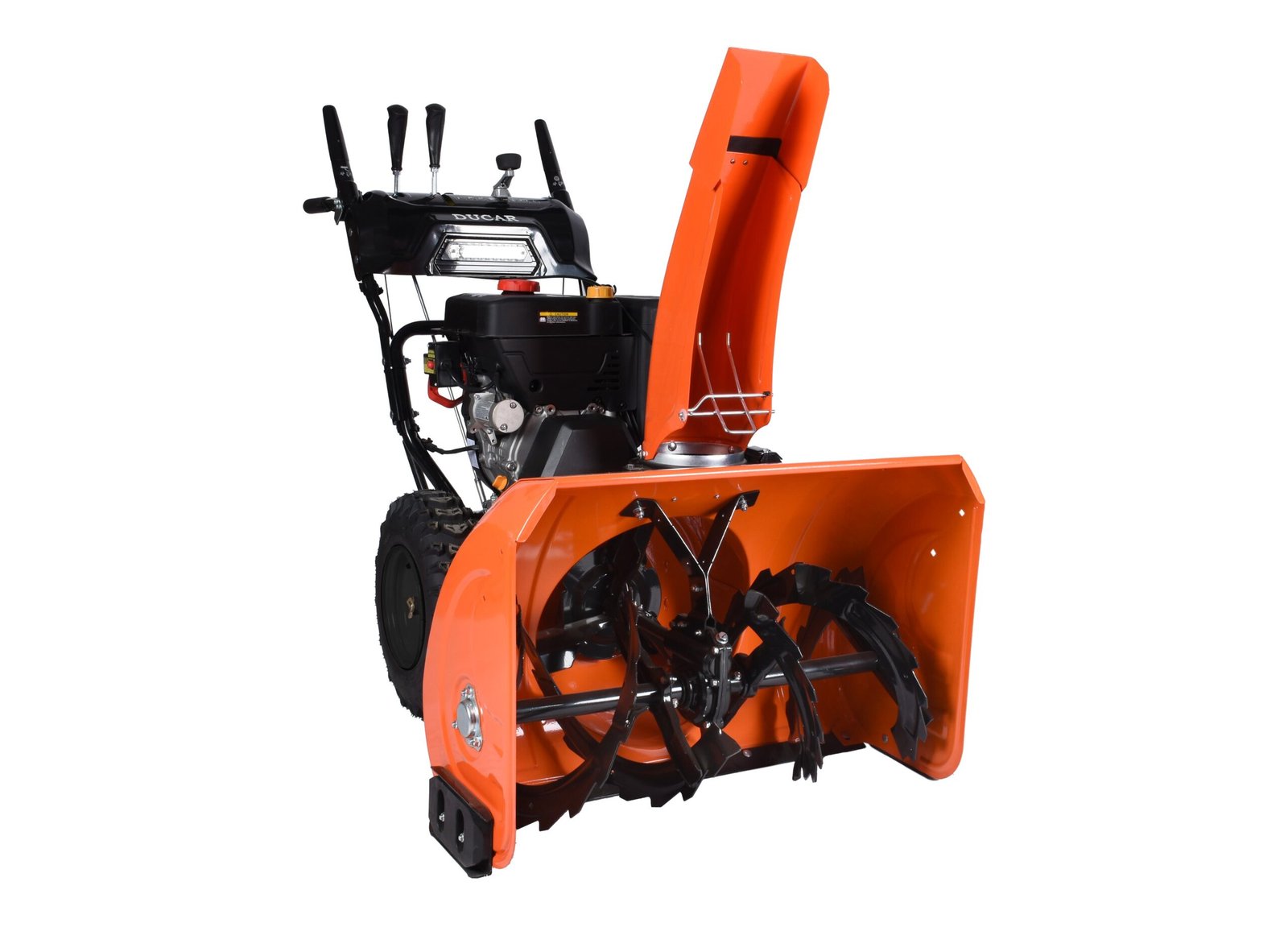
Stored energy, the part people do not know
The most misunderstood point in snow blower safety is that turning the engine off is not enough, and believing otherwise is what makes this injury so common among careful people.
When wet snow jams the auger and impeller, the drive belt stretches and the mechanism holds tension. Shutting off the engine does not release that tension. The moment the blockage is freed, the stored energy discharges and the impeller rotates, hard and without warning, with no engine running at all.
That is why people are injured by machines they had switched off, and why they describe it as the machine starting by itself. It did not start. It unwound.
The protection is procedure rather than caution. Stop the engine, remove the safety key, and on a gas machine disconnect the spark plug lead. Then wait a few seconds. Then use the tool, never a hand.
The clearing tool
Every machine ships with a clearing tool, usually a plastic stick with a shaped end, clipped to the housing or the handle. It exists for exactly one purpose and it is the single most ignored piece of equipment in the category.
If yours has gone missing, replace it. They are inexpensive and stocked alongside other consumables in snow blower parts. A broom handle is a poor substitute and a gloved hand is not a substitute at all, since a glove offers no protection whatsoever against an impeller and can make matters worse by catching.
Build the habit that the tool comes off the clip before your hands go anywhere near the machine. Habits survive tiredness and bad light. Intentions do not.
Snow blower safety and thrown objects
A snow blower throws whatever it picks up, and it throws it hard enough to break a window or injure a person at some distance.
Single stage machines must never be used on gravel. The auger contacts the ground, so it will pick up and fire stones. This is the single most important surface rule in the category and it is covered in single stage vs two stage.
On any machine, walk the driveway before the first snowfall and note what could be buried once snow covers it: landscape edging, a doormat, a hose, children’s toys, the lip of a raised slab. Anything the auger can pick up is a projectile, and anything solid it cannot pick up will shear a pin instead.
Never aim the chute toward people, vehicles, windows or the road. Check where the discharge is pointing before you engage the auger, not after.
Clothing, footwear and hands
Loose clothing and rotating machinery are a poor combination. Scarves, drawstrings and open jackets can be caught by moving parts, and a scarf around the neck near an auger is a genuinely serious hazard.
Wear boots with real grip. A great deal of what goes wrong on a driveway is a slip while pushing a heavy machine, and clearing happens on precisely the surface most likely to be icy underneath.
Use eye protection where snow is being thrown back toward you by wind, and hearing protection on a gas machine, which is loud enough over a long clearing session to matter. Keep hands warm enough to stay dexterous, because cold clumsy hands make poor decisions around machinery.
Fumes and enclosed spaces
Never run a gas engine in an enclosed space. Not in a closed garage, not in a garage with the door partly open, not briefly to warm it up before clearing.
Carbon monoxide is colourless and odourless, it accumulates faster than people expect in a domestic garage, and this kills people every winter in this country. Start the machine outside, and if you need to work on it indoors, do not run it.
If you clear an enclosed or covered area such as an underground ramp or a covered walkway, a cordless machine is the only safe choice. See battery snow blowers.
Children, pets and bystanders
Keep both well clear, and further than feels necessary. Thrown snow carries grit, ice and anything the auger picked up, and it travels 10 metres or more from a two stage machine.
Never carry a child on a machine, including a stand on unit, and never let children operate one. Be aware that a running machine is loud enough that you will not hear someone approaching from behind, so check around you before reversing or turning.
Pets are the common blind spot. A dog that appears beside you mid pass is in the path of the discharge before you can react.
The physical risk nobody mentions
Snow clearing is strenuous work performed in cold air, often early in the morning by people who have not warmed up, and cold constricts blood vessels while exertion raises demand.
Cardiac events during snow clearing are a documented seasonal pattern in Canada, and a powered machine reduces the strain considerably compared with a shovel, which is one of the better arguments for owning one at all. It does not remove it, particularly when you are pushing a heavy machine through dense material or wrestling the plow ridge.
Pace yourself, take breaks, dress in layers you can shed, and stop if you feel unwell. If you have any cardiovascular history, guidance from Heart and Stroke is worth reading before winter rather than during it. Clearing twice through 15 centimetres is easier on you than once through 30, which is another reason to watch Environment and Climate Change Canada forecasts and go out early.
Snow blower safety on corded machines
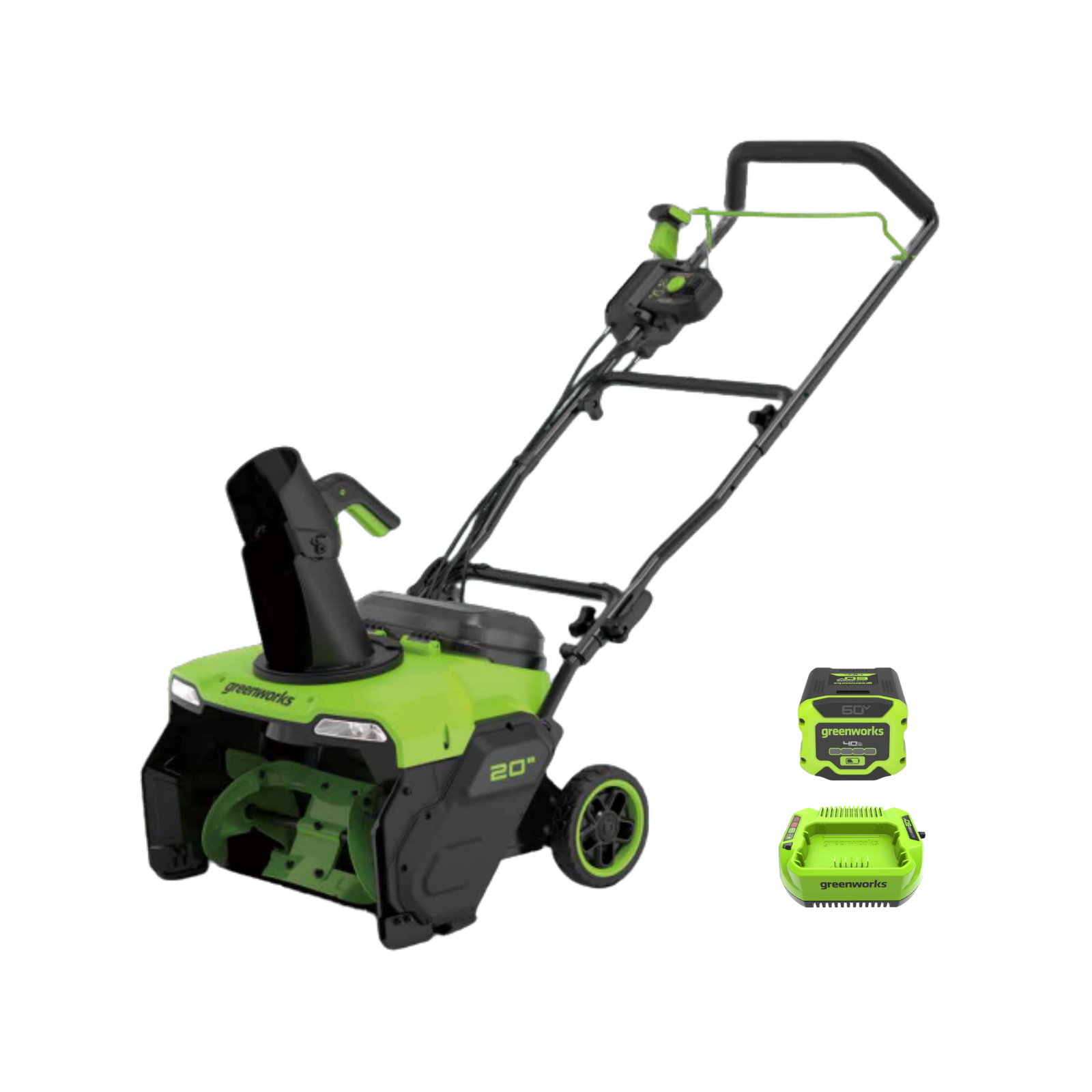
Use an outdoor rated cold weather extension cord, correctly sized for the machine, and inspect the jacket for nicks and cracks before each season. Winter temperatures make ordinary indoor cords brittle.
Plug into a circuit protected by a ground fault interrupter, since you are running an electrical appliance across a wet surface. Keep the cord behind you and on cleared ground, use the retainer hook so the plug cannot pull out mid pass, and never run a machine over its own cord.
Certification matters here. Electrical equipment sold in Canada carries a mark from CSA Group or another body accredited by the Standards Council of Canada, and its absence should be disqualifying.
If someone else uses the machine
Snow blower safety fails most often when a machine changes hands. The person who bought it read the manual. The neighbour helping out, the teenager sent to clear the drive, or the relative visiting for the winter did not.
Anyone using the machine needs three things before they start it, and it takes two minutes. Where the safety key and the shut off are. That the clearing tool is the only thing that goes near the chute, with the key out and the plug lead disconnected. And what is buried on your particular driveway, since they have no idea where the raised slab or the landscape edging sits.
Do not let children operate a snow blower, and do not carry anyone on a stand on machine. On a machine that will be shared, consider writing the model number and the two key rules on a label fixed to the handle, which sounds excessive until you consider that the injury happens to whoever is holding it, not to whoever bought it.
The snow blower safety habits worth building
- Tool off the clip before hands go near the machine. Every time, without exception.
- Key out and plug lead off before clearing any jam.
- Walk the driveway in autumn and note what will be buried.
- Check the chute direction before engaging the auger.
- Clear early and often rather than once through deep snow.
- Never run a gas engine indoors, under any circumstances.
- Stop when tired. Most incidents happen at the end of a long clearing session in poor light.
General guidance on working safely with powered equipment is published by the Canadian Centre for Occupational Health and Safety.
Common questions
What is the most common snow blower injury?
Why is it dangerous to clear a chute with the engine off?
What should I use to clear a blocked snow blower chute?
Can I use a snow blower on a gravel driveway safely?
Is it safe to run a snow blower in the garage?
How far can a snow blower throw an object?
Is snow clearing hard on the heart?
What safety gear should I wear?
Keeping the machine in good order is part of using it safely. See the maintenance checklist, and read shear pins explained before working on a jammed auger.