
Gas still wins at the extremes. Long laneways, lake effect belts, back to back storms, and a metre of accumulation plus the ridge the plow leaves behind. A gas snow blower is the tool that does not negotiate, and for a large part of this country it remains the only realistic answer.
-
Gas Snow Blowers
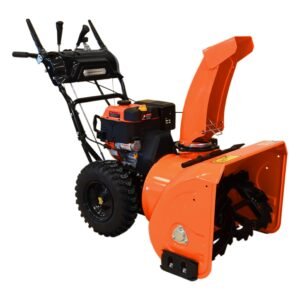
21″ Snow Blower, 196 cc, recoil start
$549.00 to $599.00 Select options This product has multiple variants. The options may be chosen on the product page -
Gas Snow Blowers
21″ Snow Blower, 212 cc, electric and recoil start
$849.00 to $999.00 Select options This product has multiple variants. The options may be chosen on the product page -
Gas Snow Blowers
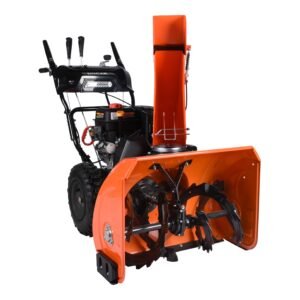
24″ Snow Blower, 212 cc, electric and recoil start, heated handles, LED light
$1,249.00 to $1,399.00 Select options This product has multiple variants. The options may be chosen on the product page -
Gas Snow Blowers
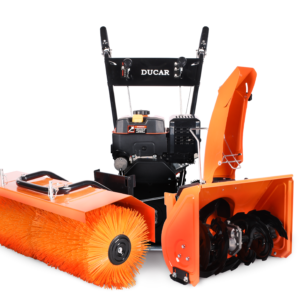
32″ Motorized brush and 22″ snow blower , 2 in 1, 212 cc
$1,299.00 to $1,449.00 Select options This product has multiple variants. The options may be chosen on the product page -
Gas Snow Blowers
26″ Snow Blower, 212 cc, electric and recoil start, heated handles, LED light
$1,349.00 to $1,549.00 Select options This product has multiple variants. The options may be chosen on the product page -
Gas Snow Blowers
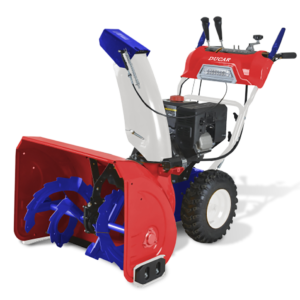
28″ Snow Blower, 252 cc, electric and recoil start, heated handles, LED light
$1,599.00 to $1,799.00 Select options This product has multiple variants. The options may be chosen on the product page
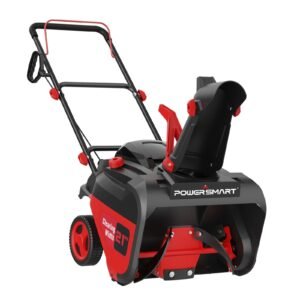
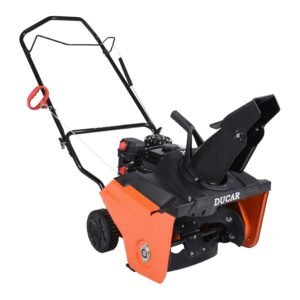
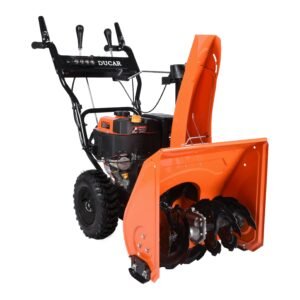
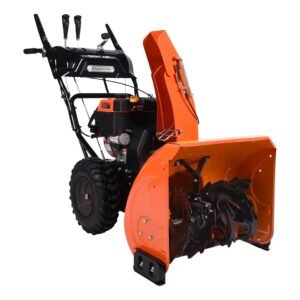
When a gas snow blower is still the right answer
If you clear a long laneway, live in a lake effect belt, or move heavy accumulation repeatedly through a storm, a 28 inch or wider gas snow blower remains the machine that finishes the job. Refuelling takes a minute, so there is no runtime ceiling and no moment where the machine simply stops with half the driveway done.
Gas is also the only category that handles gravel confidently at every size, because every gas machine sold here beyond the smallest single stage is a two stage design with adjustable skid shoes that hold the auger clear of the surface.
Three situations make gas the correct choice rather than merely a valid one. A driveway longer than about four car lengths, where a battery machine would need a pack change partway. A rural property with an unpaved surface. And any location where the municipal plow reliably seals the foot of the driveway with a dense ridge after every storm.
If none of those describe you, be honest about it. A gas snow blower asks for fuel, oil changes and off season storage discipline in return for capability you may never use. For a short paved driveway, corded electric or battery will make you happier.
Two stage or three stage
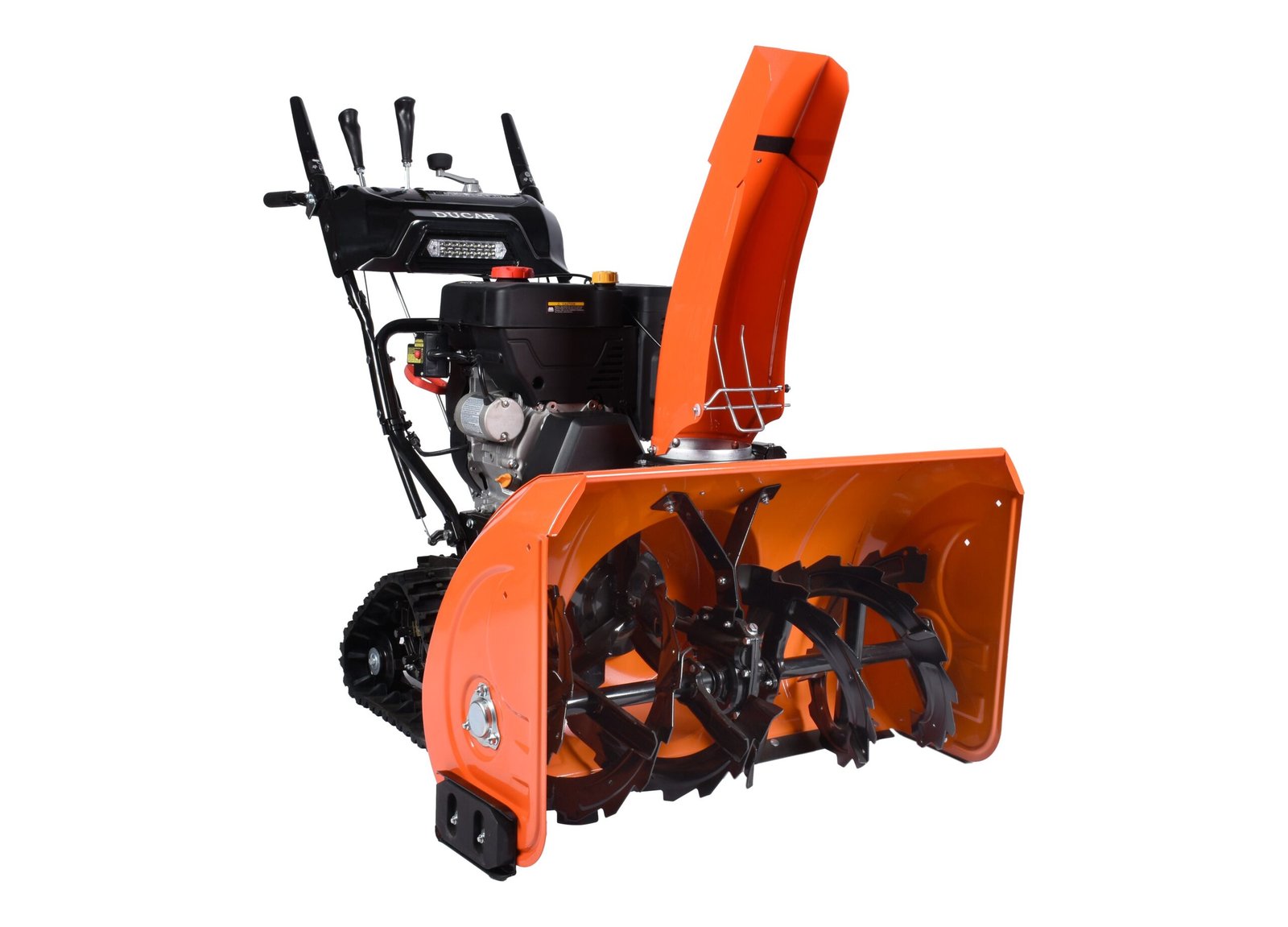
Almost every gas snow blower sold in Canada is a two stage machine, and understanding why explains most of what separates one gas snow blower from another. A serrated auger breaks the snow loose and feeds it to a separate high speed impeller that throws it out of the chute. Splitting those jobs is what lets the machine handle depth and density that a single stage machine cannot touch, and what lets the auger stay clear of a gravel surface.
A three stage design adds an accelerator, a third rotating component that breaks up compacted snow and ice before it reaches the impeller. It is meaningfully faster through the plow ridge and through the crusted material left after a thaw and refreeze. It also costs more and adds another driven component. For most driveways a good two stage machine is enough. If your plow ridge is the defining problem of your winter, three stage earns its price.
Single stage gas machines still exist and still make sense on a short paved driveway where you want instant clearing to the pavement without the weight of a two stage machine. See single stage snow blowers for that lane.
Engine size and what actually matters
The engine on a gas snow blower is quoted in cubic centimetres, and the number is a reasonable proxy for how hard the machine pushes before it bogs down in dense snow.
- 196 to 212 cc. Entry two stage machines, typically 21 to 24 inches wide. A normal two car driveway in normal snow.
- 250 to 300 cc. The heart of the market, 26 to 30 inches. Comfortable with depth, wet snow and a daily plow ridge.
- 370 to 420 cc. Wide machines from 30 to 42 inches, for long driveways, commercial use and heavy snowfall regions.
Displacement alone does not decide the outcome. Impeller diameter drives throwing distance more directly than engine size, and a well matched 252 cc machine with a large impeller will out throw a poorly matched 300 cc one. Intake height decides how deep a bite you can take without stopping to clear. Those figures appear on every listing here for exactly that reason.
Clearing width against driveway length
Width decides how many passes the job takes, and passes decide how long you stand in the cold.
| Driveway | Clearing width | Engine | Notes |
|---|---|---|---|
| 1 to 2 cars, paved | 21 to 24 in | 196 to 212 cc | Consider electric or battery instead |
| 2 to 3 cars | 24 to 28 in | 212 to 252 cc | The most common Canadian choice |
| 3 to 4 cars, or a slope | 28 to 30 in | 252 to 302 cc | Power steering starts to matter |
| Long or rural laneway | 30 to 34 in | 302 to 420 cc | Tracks worth considering |
| Acreage or commercial | 34 in and up | 420 cc and up | Stand on and tracked machines |
Going wider than the table suggests is not free. A wider machine is heavier, harder to turn at the end of a pass, and needs more room to store. Most people who regret a purchase bought too wide for the space they actually have.
Tracks or wheels
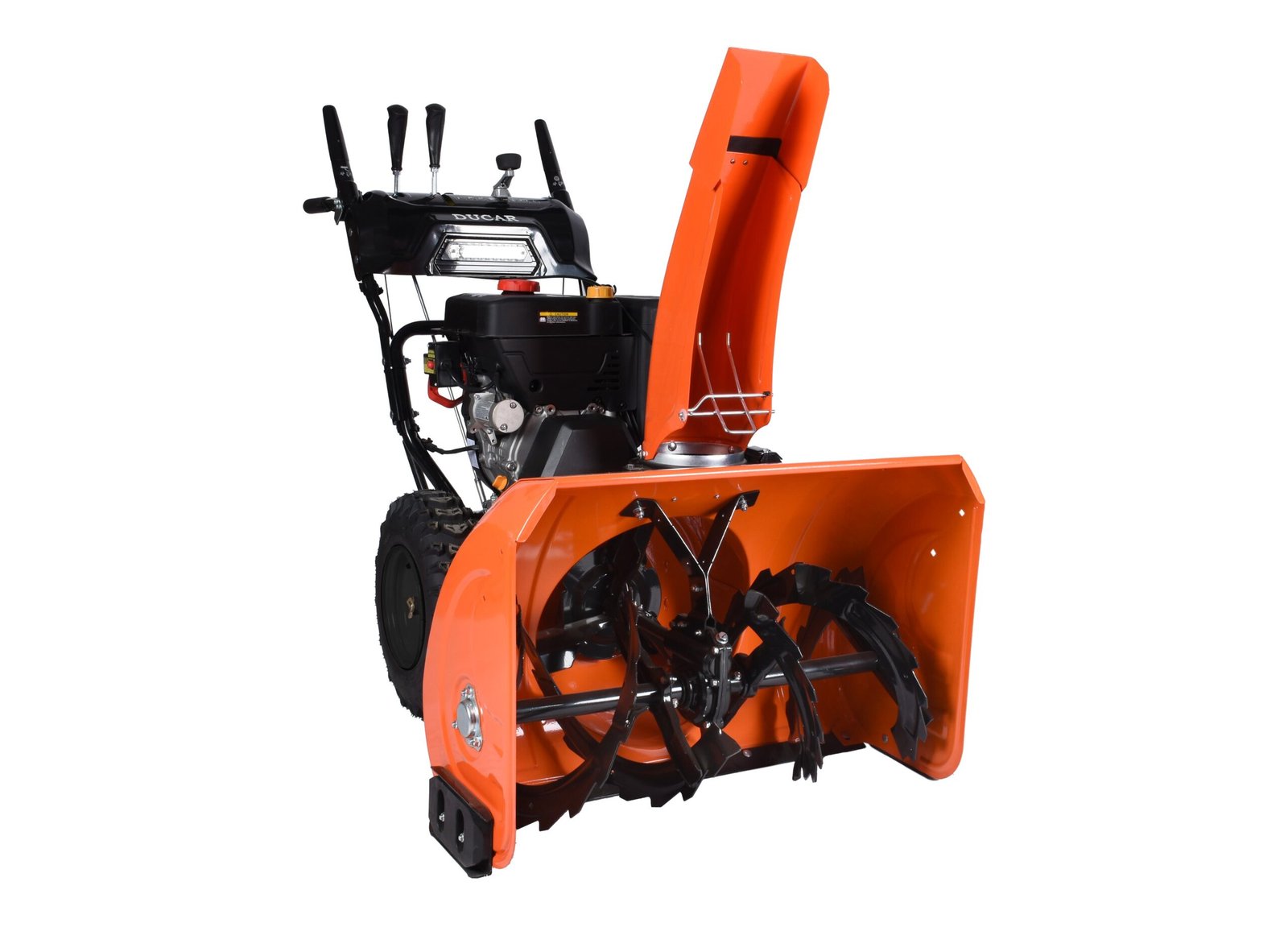
Wheels on a gas snow blower suit flat, paved driveways and are lighter to manoeuvre. Tracks change what the machine can do. A tracked gas snow blower keeps its grip on a slope, on ice, and on an unpaved surface, and it lets you lean the machine into a deep ridge without the drive wheels spinning uselessly.
The trade is manoeuvrability. Tracked machines turn less willingly, so on a small paved pad they feel like hard work. Choose tracks if you have a sloped driveway, a gravel or dirt surface, or genuinely deep accumulation. Choose wheels for a flat paved driveway of ordinary size.
Features worth paying for
Options on a gas snow blower vary in how much they change daily use. These are the ones that repay their cost.
- Electric start. A plug in or battery start removes the one part of gas ownership people dislike most. On a cold morning it is the difference between a machine you use and one you resent.
- Heated handgrips. Genuinely transformative on a long driveway at minus twenty, and cheap to add at the point of purchase.
- Power steering. Trigger controlled steering that disengages one wheel. On any machine over about 28 inches this matters more than the spec sheet suggests.
- Chute control from the handle. Being able to change throw direction without stopping saves real time. Prefer a joystick or crank you can reach while walking.
- LED lighting. Most clearing in this country happens before dawn or after dark.
- Steel skid shoes. Cheap, replaceable, and the part that saves the auger housing on a gravel surface.
The maintenance you are signing up for
Every gas snow blower asks for a short list of seasonal jobs. Skip them and the machine will let you know in January.
This is the real cost of gas, and it is not the money so much as the discipline.
- Fresh fuel with stabiliser. Petrol older than about 30 days begins to varnish, and stale fuel causes the majority of no start calls every single season.
- Annual oil change. Cheap, quick, and the single biggest factor in engine life.
- Spark plug every year or two.
- Shear pins checked before every storm. They are designed to break and protect the gearbox, so carry spares. Find them in snow blower parts.
- Belts inspected annually. A worn auger belt is the most common reason a machine spins but stops throwing.
- Skid shoes adjusted for your surface, higher on gravel, lower on pavement.
None of it is difficult, and our repair guide walks through the common faults. But a gas snow blower that sat all summer with untreated fuel in it will not start in December, and that is a self inflicted problem rather than a fault in the machine.
Fuel, ethanol and summer storage
Most Canadian pump gasoline contains ethanol, which attracts moisture and degrades faster than straight petrol. In a machine that sits unused for eight months of the year, that matters more than it does in a car.
Two approaches work. Either add a fuel stabiliser and run the engine long enough to carry treated fuel through the whole system before storage, or run the tank dry at the end of the season. Do not simply park it full of untreated pump fuel. Ethanol free fuel, where you can get it, avoids the problem outright and is worth the premium for a machine used this seasonally.
Fuel quality standards and consumer guidance are published by Natural Resources Canada, and small engine emissions requirements are set out by Environment and Climate Change Canada.
Safety, the chute and the plow ridge
A gas snow blower is the most powerful machine most households own, and it deserves respect, and the impeller does not know the difference between snow and a hand. The clearing tool clipped to the housing exists for one reason. Use it, every time, with the engine off.
The plow ridge deserves separate mention because it causes most jams. It is dense, often part ice, and hitting it at full walking speed stalls the auger and shears a pin. Approach it slowly, take partial width bites, and let the machine work rather than forcing it.
Clear early during long storms. Two passes through 15 centimetres is easier on you and on the machine than one pass through 30, and it avoids the compaction that comes from driving over the snow before clearing it. Storm timing from Environment and Climate Change Canada is the most useful planning tool you have.
What a gas snow blower costs to run
Budget realistically for a gas snow blower. Fuel for a typical Canadian season is modest, usually a few tanks across the winter unless you are clearing acreage. Oil, a spark plug and stabiliser come to very little annually. Shear pins and a spare belt are inexpensive and worth keeping on the shelf.
The larger cost is the one people forget: a machine that will not start in January because of untreated fuel becomes a service bill and a week of shovelling while it sits in a queue at a shop during the busiest month of their year. Spending ten minutes on storage in April is the cheapest insurance in this category.
Against that, a well maintained gas snow blower routinely lasts fifteen to twenty years, which is longer than any battery platform currently on the market can promise. Amortised over that life it is often the cheapest machine here, which is the argument that keeps gas relevant even as battery improves.
-
Gas Snow Blowers
42″ Snow Blower, Stand-On, 420 cc, tracks, 12V electric start, LED light (Available August 18, 2026)
$5,999.00 to $6,249.00 Select options This product has multiple variants. The options may be chosen on the product page -
Gas Snow Blowers
32″ Motorized brush and 22″ snow blower , 2 in 1, 212 cc
$1,299.00 to $1,449.00 Select options This product has multiple variants. The options may be chosen on the product page -
Gas Snow Blowers
28″ Snow Blower, 252 cc, electric and recoil start, heated handles, LED light
$1,599.00 to $1,799.00 Select options This product has multiple variants. The options may be chosen on the product page
Common questions
What size gas snow blower do I need?
Is a gas snow blower better than battery?
Can a gas snow blower be used on gravel?
Why will my gas snow blower not start?
Two stage or three stage?
How often do shear pins break?
Do I need electric start?
How should I store a gas snow blower over summer?
Compare against two stage machines, look at tractor mounted attachments if you already own a tractor, or browse every type.