
Most brand pages are a sales pitch with a logo on top. This one is not. We are not an exclusive dealer for anybody, which means we can say plainly which snow blower brands are worth your money, which ones are worth it only in certain sizes, and which ones we carry parts for without stocking the machines. The test we apply is not badge loyalty. It is whether you can still get a belt for it in February.
On this page
What we stock, and what we only support
There are two lists here and the difference matters. The first is machines we hold. The second is snow blower brands whose wear parts we stock because Canadians own a lot of them, even though we do not sell the complete machine.
| Brand | We stock machines | We stock parts | Strongest at |
|---|---|---|---|
| Ducar | Yes | Yes | Two stage gas, 21 to 42 in |
| Snow Joe | Yes | Yes | Corded and cordless single stage |
| Greenworks | Yes | Yes | 80V cordless, including two stage |
| Toro | No | Yes | Single stage paddle machines |
| Ariens | No | Yes | Heavy two stage and tracked |
| Honda | No | Yes | Hydrostatic tracked machines |
| Husqvarna | No | Yes | Mid range two stage |
| MTD, Cub Cadet, Craftsman | No | Yes | Volume two stage |
The second column is the honest one. If a Toro or an Ariens is the better fit for your driveway than anything on our shelf, our best snow blowers in Canada guide says so. What we do better than a big box retailer is stock the consumables that keep those machines running when the shelves everywhere else are empty.
Ducar
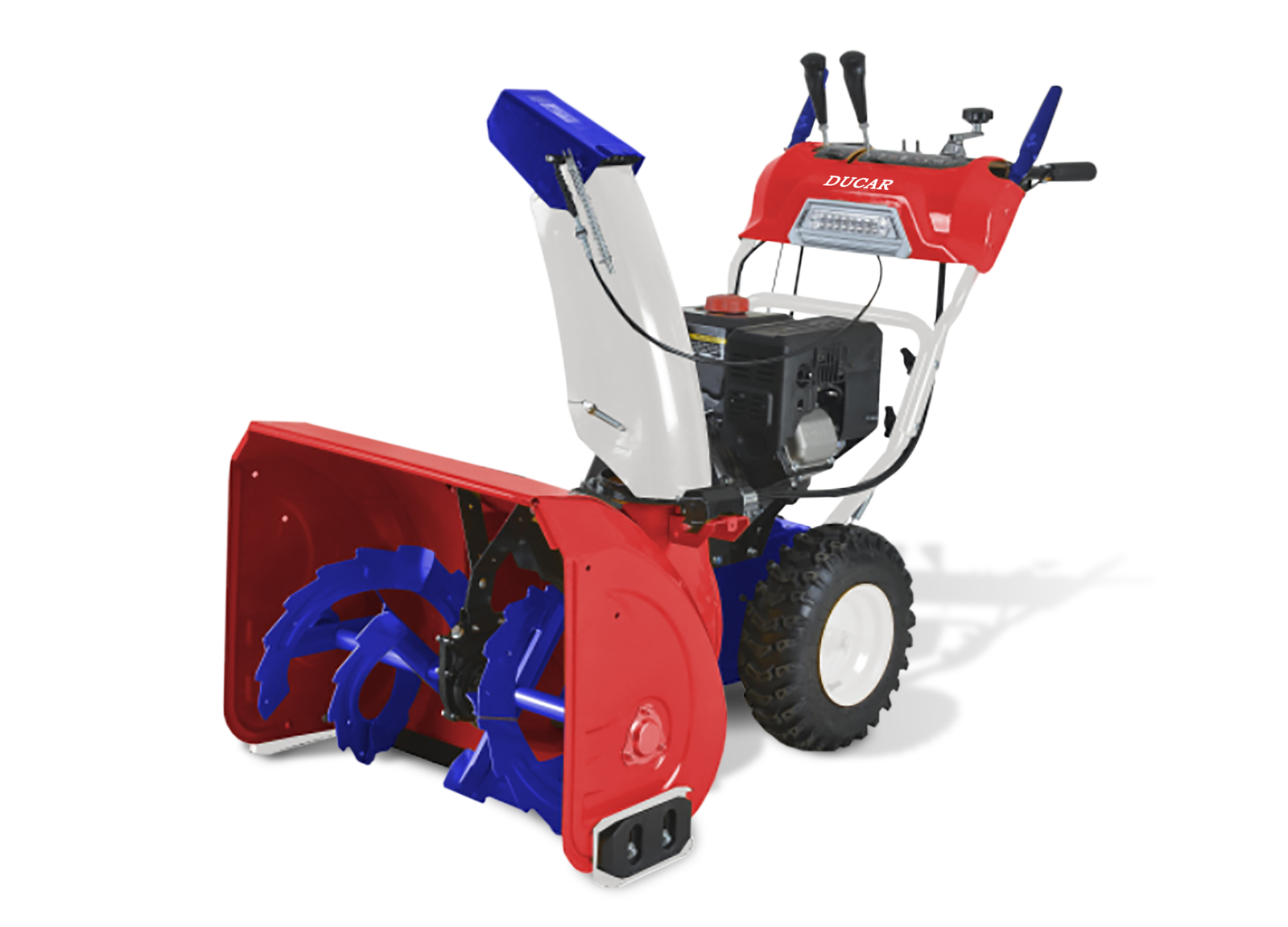
Ducar is the backbone of our two stage range and the brand most of our customers end up on. The line runs from a 21 inch single stage at $549 through 24, 28 and 34 inch two stage machines to a 42 inch tracked stand on unit at $5,999.
What it does well: sensible engineering at a price that leaves money for a spare belt and a set of shear pins. Electric start, heated grips and power steering appear at reasonable sizes rather than only at the top of the range.
What to know: it is not a heritage badge and it does not pretend to be. The value is in the specification you get per dollar and in the fact that we hold the wear parts. See the Ducar snow blowers range.
Snow Joe
Snow Joe owns the light end. The SJ623E corded electric at $278.75 is the cheapest honest way to clear a townhouse driveway in Canada, and the 24V and 48V IONMAX cordless machines and shovels cover everything from a set of steps to a two car paved drive.
What it does well: weight, price and simplicity. A machine under 35 pounds that starts on a button and needs no winterising is the right answer for a lot of urban properties, and no gas machine competes on that ground.
What to know: every Snow Joe walk behind is a single stage design, which means the paddle touches the ground. That rules out gravel across the whole line, and it means the plow ridge is not their job. See Snow Joe snow blowers and the electric snow blowers collection.
Greenworks
Greenworks is the brand to look at if you want cordless without giving up capability. The 80V platform includes a 24 inch dual stage snow thrower, which is genuinely rare among cordless snow blower brands and changes what a battery machine can be asked to do.
What it does well: platform breadth. If you already own 80V or 40V tools, the packs are the expensive part and you have them. Cold start behaviour is excellent, which matters more in Canada than peak power figures.
What to know: runtime claims assume dry powder. Wet March snow draws two to three times the current, so a long driveway needs a third and fourth pack. Battery recycling in Canada runs through Canadian Centre for Occupational Health and Safety guidance and municipal programmes. See Greenworks snow blowers and the wider battery snow blowers range.
The brands we support without stocking
Toro, Ariens, Honda, Husqvarna, Cub Cadet, Craftsman, Poulan Pro, Yard Machines, MTD and Briggs and Stratton powered units are all common in Canadian garages, and all of them eventually need a belt, a paddle set, a scraper bar or a handful of shear pins.
We stock those. Every listing prints the manufacturer stock number, the profile and the length, because ordering a belt by eye is how people end up with three wrong belts in a drawer. Search by the number stamped on the old part rather than by the machine.
On the cordless side, EGO Power+, Ryobi 40V, DeWalt 60V and Milwaukee platforms are represented in the accessories catalogue. The snow blower parts page is the place to start, and snow blower repair guide shows exactly where the stock number is stamped on each common component.
Why the badge tells you less than it used to
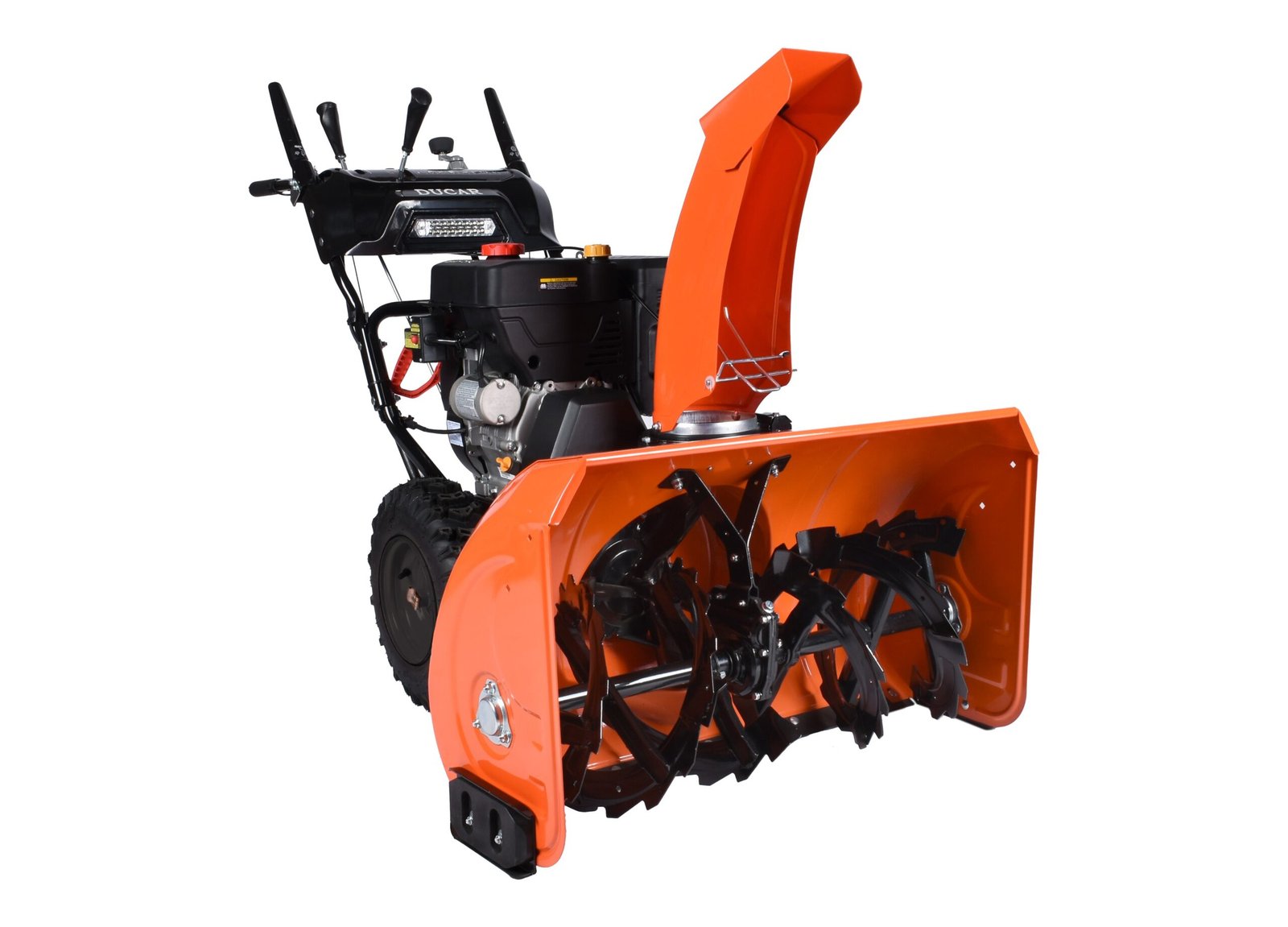
A generation ago a brand name told you who cast the gearbox. Today a good deal of the market is built on shared platforms, and several familiar snow blower brands sit on the same chassis with different paint, different handle furniture and a different sticker on the engine cover.
That is not a scandal. Shared platforms are how a 28 inch two stage machine costs $1,625 instead of $3,000. It does mean that comparing badges is close to useless, and that comparing specifications is close to everything.
The specifications that separate real machines from the rest are impeller diameter, chute material, auger gearbox construction and whether the skid shoes are adjustable. None of those appear in an advertisement and all four appear in the manual.
Engines are the clearest case. A great many machines across different snow blower brands run the same handful of engine families, so the number on the cover tells you the displacement and nothing about how the machine will behave. What decides that is how much housing the engine has been asked to move, which is why we print engine size against clearing width on every listing rather than engine size alone.
Product safety certification marks are a more useful signal than the badge. In Canada those are issued through recognised bodies rather than by the manufacturer, and the mark on the plate is checkable.
How to choose between snow blower brands
Brand is the last decision, not the first, whatever the advertising for the major snow blower brands would prefer you believed. Surface, depth and driveway length decide the class, and the class narrows the field to two or three names. Work in that order and the brand question mostly answers itself.
When you do get to it, three things separate the snow blower brands that are worth buying from the ones that are not.
Parts supply in Canada. A machine you cannot get a belt for in February is not a machine. Ask the question before you buy, not after.
Engine and gearbox rather than trim. Heated grips are pleasant. An auger gearbox that survives a shear pin event is what decides whether you own the machine in fifteen years.
Honest sizing. A 252 cc engine on a 24 inch housing is a different machine from the same engine on a 34 inch housing. Compare engine to width, never engine alone. The what size snow blower do I need guide works through this properly.
Consumer protection rights when a retailer or manufacturer does not stand behind a machine are set out by Consumer Protection Ontario, and they apply regardless of what a warranty card says.
What a brand warranty actually covers
Every machine we sell carries its full manufacturer warranty, and the differences between snow blower brands here are smaller than the marketing suggests. Warranty length is one of the few places where snow blower brands compete openly, and it is also the place where the exclusions matter more than the headline number. Two to five years on the machine, one to three on the engine, and a shorter term on the battery pack for cordless units is the normal shape.
What is never covered, on any badge: shear pins, belts, paddles, scraper bars and skid shoes. Those are consumables by design. Nor is impact damage, nor damage from untreated fuel left over a summer, which is the single most common rejected claim in the category.
Our own position is on the warranty policy page, and it is deliberately plainer than most. We also keep the wear parts for what we sell, so a claim is not the only route back to a working machine.
Where the money actually goes
Across snow blower brands the price differences at a given width and stage count are narrower than people expect. What varies is where the manufacturer chose to spend.
Cheap machines save on the auger gearbox, the chute material and the impeller clearance. The first shows up as a gearbox that does not survive its first real impact. The second shows up as a plastic chute that bridges with wet snow. The third shows up as throw distance that collapses the moment the snow is heavy.
Expensive machines spend on hydrostatic drive, cast iron gearboxes and serviceability. Whether that is worth it depends entirely on how long your driveway is and how many years you intend to own it.
The middle, which is where most Canadians should be shopping, buys a steel chute, a properly sized impeller and adjustable skid shoes, and skips the features that are pleasant rather than structural. The snow blower price guide sets out the bands, and where to buy a snow blower in Canada is honest about when another retailer has the better deal on a given week.
Common questions
Which snow blower brand is best in Canada?
There is no single answer, because the class decides more than the badge. For two stage gas at sensible money Ducar covers 21 to 42 inches. For light corded and cordless work Snow Joe owns that end. For capable cordless, Greenworks 80V.
Do you sell Toro or Ariens machines?
No, we stock their wear parts rather than the complete machines. If a Toro or an Ariens is the better fit for your driveway, our buying guide says so plainly.
Why does parts supply matter more than the brand?
Because every machine eventually needs a belt, a paddle set or a handful of shear pins, and a machine you cannot source those for in February is out of action for the part of the year you bought it for.
Are cheaper brands a false economy?
Not automatically. The savings are usually made on the auger gearbox, the chute material and the impeller clearance. If you are clearing a short paved drive in moderate snow, none of those three are likely to be tested.
Do all brands carry the same warranty?
Broadly. Two to five years on the machine, one to three on the engine, shorter on a battery pack. No brand covers shear pins, belts, paddles, scraper bars or damage from untreated fuel.
Can I get parts for an older machine?
Usually, if you have the model number and the number stamped on the old part. Search by the stock number rather than by the machine name, and check the profile and length on belts.
Which brands are best for battery platforms?
Greenworks 80V and Ryobi 40V are the two we get asked about most, because the packs are the expensive part and most buyers already own them from other tools.
Do you favour the brands you stock in your guides?
No. We are not an exclusive dealer for anyone, and the guides name machines we do not sell where they are the better answer. That is the whole point of publishing them.
In summary
The Canadian market for snow blower brands is smaller and thinner than it should be, which is why parts availability matters more here than almost anywhere else. A machine you cannot get a belt for in February is a machine with an expiry date, whatever the badge on the front says, and that is the single most useful test to apply before buying anything.
Everything we hold is listed with the manufacturer stock number on the parts catalogue, prices are in Canadian dollars with no conversion at the checkout, and freight is free over $999. If you want the reasoning rather than the recommendation, the guides are written for Canadian snowfall rather than scraped from American sites.