
If there is already a tractor, a quad or a skid steer in your shed, you probably do not need another engine. Snow blower attachments turn equipment that sits idle for ten months into a clearing machine that outperforms almost any walk behind, and they cost a fraction of a dedicated unit. This is the least well served category in Canadian retail, which is exactly why we stock it properly.
On this page
- Why an attachment beats a second machine
- The four mounting types
- Tractor snow blower attachments
- ATV, UTV and side by side units
- Skid steer snow blower attachments
- Lawn and garden tractor kits
- Choosing the width, and where wider stops helping
- Getting fitment right the first time
- Running and maintaining an attachment
- Common questions
Why an attachment beats a second machine
The economics are simple. A dedicated 42 inch tracked machine is close to six thousand dollars and needs its own storage, its own fuel and its own maintenance routine. Snow blower attachments borrow all three from equipment you already own and already service.
The performance argument is stronger still. A three point hitch unit on a 25 horsepower tractor clears a rural laneway in a single pass at walking speed, from a seat, in a cab, with a heater. No walk behind competes with that on a long approach.
The catch is fitment. Hitch category, PTO speed and hydraulic flow rate all have to match, and a mismatch is not a small inconvenience. The rest of this page is about getting that right before you order.
The four mounting types
| Mount | Typical width | Drive | Suits | From |
|---|---|---|---|---|
| Three point hitch | 48 to 84 in | PTO | Compact and utility tractors | Quote |
| Front mount tractor | 44 to 60 in | PTO or hydraulic | Cab tractors and loaders | Quote |
| ATV and side by side | 48 to 60 in | Electric or hydraulic | Quads and UTVs | Quote |
| Skid steer | 60 to 84 in | Hydraulic | Commercial and municipal | Quote |
| Lawn and garden tractor | 40 to 48 in | Belt or PTO | Ride on mowers | Quote |
Three point hitch units are the most common of the snow blower attachments in Canada because most rural properties already run a compact tractor. They mount at the rear, which means clearing in reverse or fitting a reversible seat, and they are driven from the PTO shaft at either 540 or 1000 rpm.
Front mount units clear in the direction of travel, which is more comfortable and better for visibility, at the cost of a more involved fitting. ATV and UTV snow blowers suit properties where the quad is the main workhorse. skid steer snow blowers are the commercial answer and are specified almost entirely on hydraulic flow.
Tractor snow blower attachments
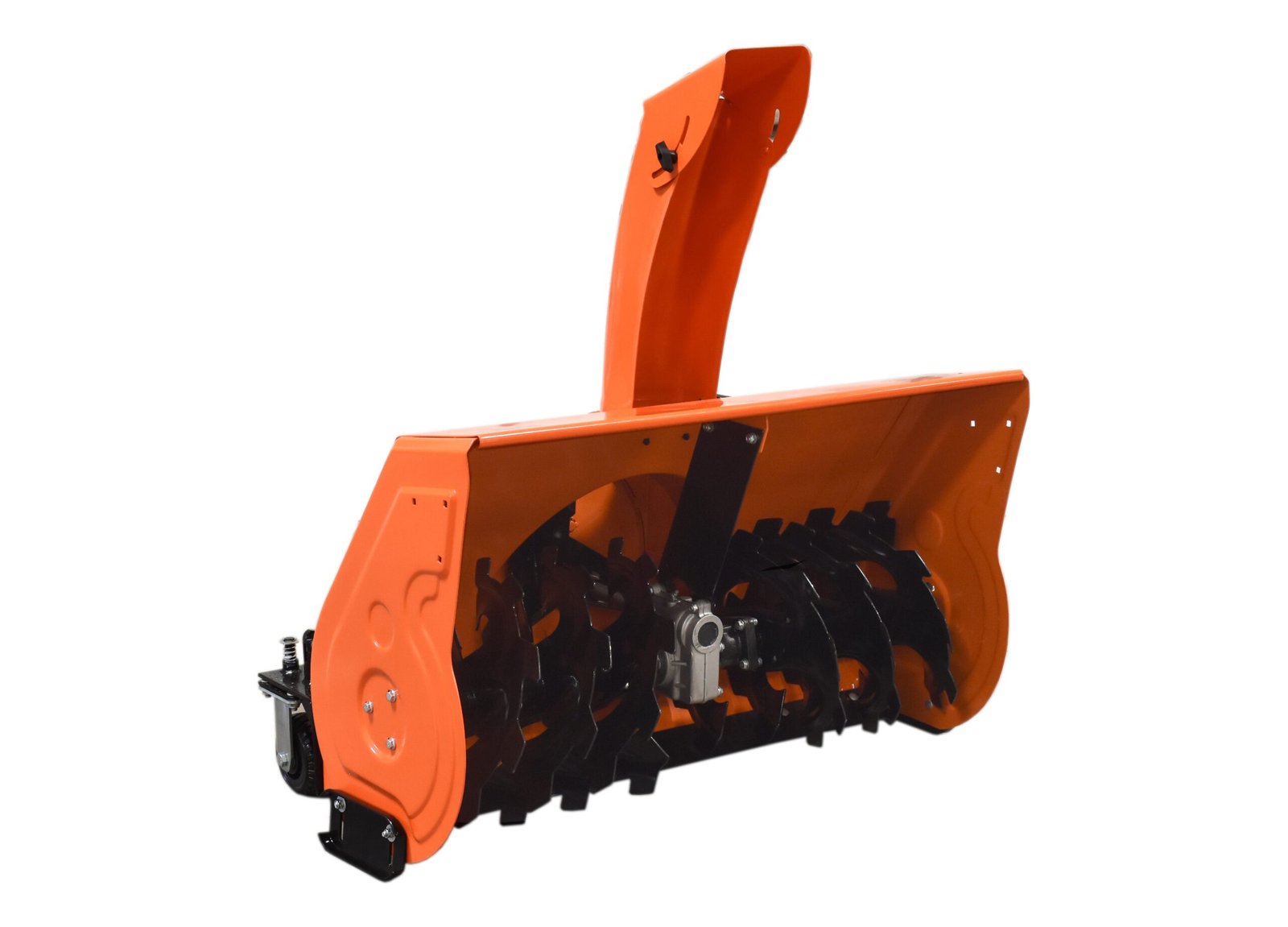
Two numbers decide whether a tractor unit will work: hitch category and PTO horsepower. Category 1 covers most compact tractors up to about 45 horsepower. Category 2 starts around 40 and runs up through utility tractors. Fitting a category 2 implement to a category 1 tractor is not a matter of adapters and enthusiasm.
As a rule of thumb, allow four to five horsepower per foot of clearing width. A 60 inch unit wants 20 to 25 horsepower at the PTO, not at the flywheel. Undersizing does not break anything immediately, it simply means stalling in the exact conditions you bought the machine for.
Chute rotation is worth specifying properly. Manual crank is cheapest and becomes tiresome on a long laneway. Electric rotation is the sensible middle. Hydraulic rotation and deflector control is what commercial operators buy.
See tractor snow blowers for the range, and use the contact page if your tractor is not on the fitment list. We would rather answer a question than take a return.
ATV, UTV and side by side units
Quad mounted snow blower attachments occupy a genuine middle ground. They are narrower than tractor units, lighter on a soft surface, and they fit properties where a compact tractor would be an expensive answer to a small question.
Most ATV units are driven by an auxiliary engine or by an electric motor drawing from an upgraded charging system. Check the alternator output before ordering an electric drive unit, because a stock quad charging circuit will not carry a heavy load and a headlight at minus fifteen.
Weight distribution matters more here than on a tractor. A 60 inch head hung off the front of a short wheelbase quad unloads the rear wheels, and traction is the whole point of buying one. Ballast at the rear rack solves it.
Browse ATV and UTV snow blowers, and if the machine has to double as a summer tool the quick attach frames are worth the premium.
Skid steer snow blower attachments
Skid steer heads are specified on hydraulic flow, and everything else is secondary. Standard flow machines run roughly 17 to 24 gallons per minute. High flow runs 30 to 40. A high flow head on a standard flow machine will turn slowly, throw badly and heat the hydraulic oil until something gives.
Get the flow rating off the machine plate rather than the brochure, because auxiliary circuits are frequently derated from the main pump figure. If the plate is missing or unreadable, a flow meter on the auxiliary circuit takes ten minutes at any hydraulic shop.
Widths from 60 to 84 inches are normal. Commercial operators generally take the widest head the machine can drive, because on a parking lot the limiting factor is passes, not depth. Equipment safety standards for this class of attachment in Canada are certified through CSA Group.
See skid steer snow blowers for current heads and flow ratings.
Lawn and garden tractor kits
This is the category Canadians ask about most and find least often. A ride on mower that spends the winter under a tarp will, with the right kit, clear a suburban double driveway comfortably. The kits cost a fraction of a dedicated machine and they use equipment already paid for.
Fitment is model specific and unforgiving. A kit is built for a particular frame, a particular deck lift and a particular drive arrangement. Have the model and serial number in front of you before you order, not the brand and a rough year.
Most kits also want wheel weights or chains, because a mower tyre is designed for traction on grass rather than on packed snow. Budget for those at the same time rather than discovering the need in December.
Everything we hold is listed on the snow blower attachments hub, and the wear parts are on the snow blower parts page with the manufacturer stock number on each listing.
Choosing the width, and where wider stops helping
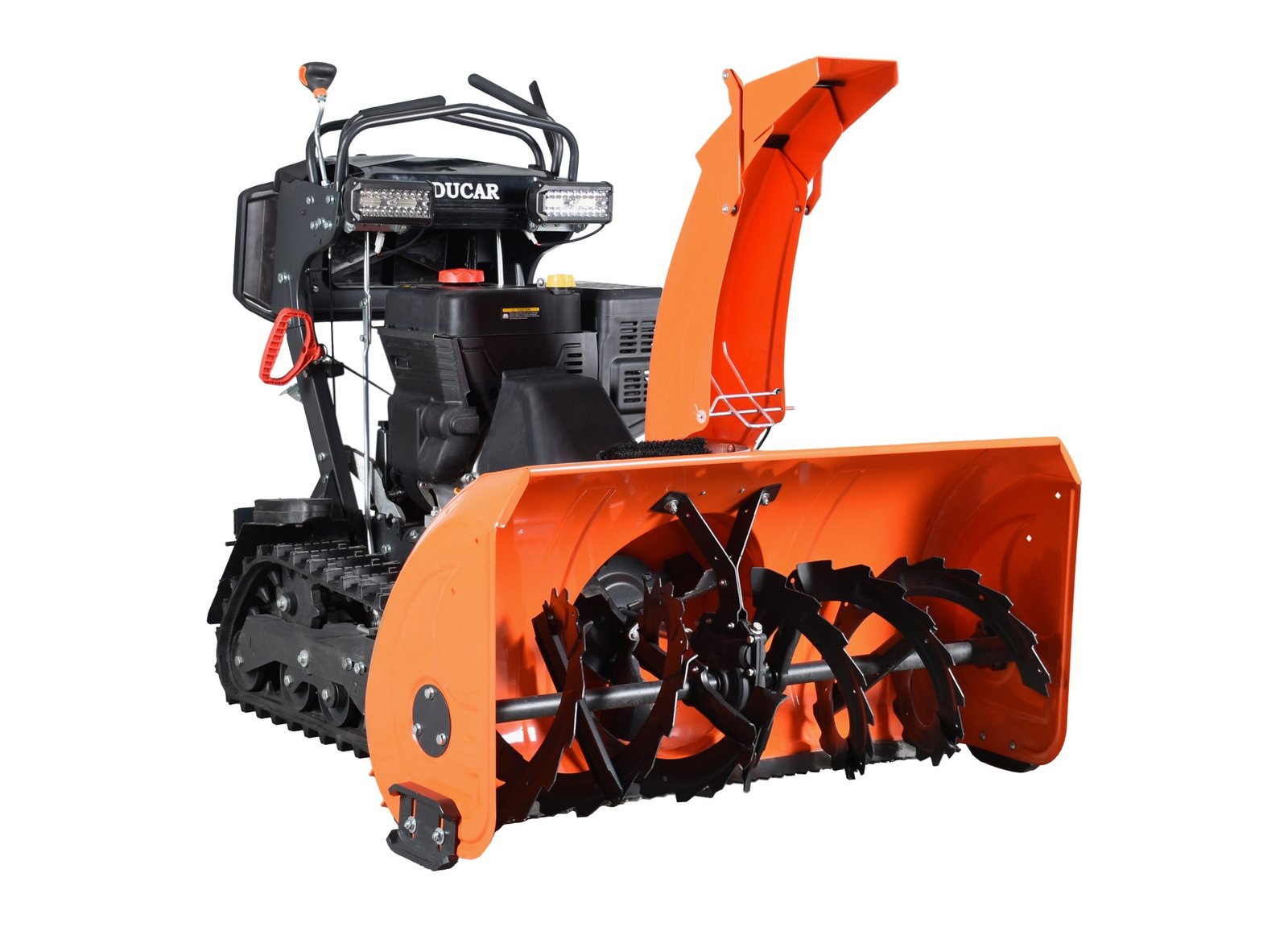
The instinct is to buy the widest head the hitch will carry. It is usually right, and it has a clear stopping point.
Width buys you passes. A 200 foot laneway at 48 inches is roughly six passes each way. At 72 inches it is four. Over a season that is hours, and on a work morning it is the difference between leaving on time and not.
Width costs you torque. Every extra foot asks the same drive to move half again as much snow, and the point where a unit stops throwing and starts pushing arrives sooner in wet March snow than in January powder. That is why the horsepower per foot figure matters more than the headline width, and why snow blower attachments should be matched to the drive rating rather than to the driveway.
The other limit is the machine itself. A head wider than the outside of the tyres means clean edges. A head narrower than the tyres means you pack a rut on every pass and then fight it for the rest of the winter.
If your laneway crosses an unpaved section, size for the gravel rather than the pavement. Skid shoes set high enough to clear stone will leave a thin layer behind on the paved part, which is the correct trade and not a fault.
Getting fitment right the first time
Four checks prevent almost every return we see on snow blower attachments.
- Hitch category or mount pattern. Category 1 against category 2 on a tractor. Universal quick attach against a proprietary plate on a skid steer.
- Drive rating. PTO horsepower and speed for mechanical units. Hydraulic flow in gallons per minute, taken from the auxiliary circuit, for hydraulic ones.
- Width against the machine. The head should be at least as wide as the outside of the tyres, otherwise you pack a rut on every pass.
- Storage and handling. A 72 inch head is heavy and awkward on and off. A stand or a dolly is not a luxury.
Send us the machine model, the serial number and a photo of the hitch or plate through the contact page and we will confirm the fit in writing before anything ships. Freight, lead times and delivery method for oversized items are set out on the shipping and delivery policy.
Running and maintaining an attachment
An attachment is mechanically simpler than a walk behind machine, because the engine and the drivetrain belong to something else. What it does have is the same short list of wear parts: shear pins protecting the gearbox, a driveline with universal joints, and skid shoes that set the clearance.
Grease the driveline on the schedule in the manual rather than on the schedule in your memory. A dry universal joint on a PTO shaft fails suddenly and expensively, and it usually takes the shaft with it.
Set skid shoes for the surface. On gravel, run them low so the auger never touches. On concrete, run them tighter for a cleaner finish. The same logic as a walk behind machine, described in more detail in the maintenance checklist.
Store the head off the ground and off concrete over summer. Concrete wicks moisture and rusts an auger housing from the inside out. The routine in snow blower storage applies equally here.
Operator safety guidance for powered snow removal equipment is published by Canadian Centre for Occupational Health and Safety, and the rules on a PTO driven implement are stricter than on a walk behind for good reason. Never approach a rotating driveline, and never clear a chute without shutting the tractor down completely. The snow blower safety page covers the chute rule in full.
Common questions
What size tractor do I need for a snow blower attachment?
Allow four to five horsepower at the PTO per foot of clearing width. A 60 inch unit wants 20 to 25 PTO horsepower, which on most compact tractors means a 30 to 35 horsepower engine.
What is the difference between standard flow and high flow on a skid steer?
Standard flow runs roughly 17 to 24 gallons per minute, high flow 30 to 40. A high flow head on a standard flow machine turns slowly, throws badly and overheats the hydraulic oil. Take the rating from the machine plate, not the brochure.
Can I fit a snow blower to a lawn tractor?
Usually yes, but kits are model and serial specific rather than brand specific. Have both numbers before ordering, and budget for wheel weights or chains at the same time.
Are rear mounted tractor units awkward to use?
They mean clearing in reverse or fitting a reversible seat. On a long straight laneway that is a minor issue. On a tight yard with obstacles, a front mount is worth the extra fitting cost.
Do snow blower attachments work on gravel?
Yes, and better than most walk behind machines, because the skid shoes hold the auger well clear of the surface. Set them low on gravel and reset them for concrete.
How much do attachments cost compared with a dedicated machine?
A kit is typically a fraction of the price of a comparable self powered machine, because you are not buying an engine, a drivetrain or a chassis. Widths and drive types vary too much for a single figure, so we quote per fitment.
Will you confirm fitment before I buy?
Yes. Send the machine model, the serial number and a photo of the hitch or mounting plate through the contact page and we will confirm in writing before anything ships.
How are oversized attachments delivered?
By pallet on a truck with a tail lift, and the carrier calls ahead. Lead times and freight for oversized items are set out on the shipping and delivery page.
The last word on snow blower attachments
Everything above comes down to three decisions and none of them are about brand. Surface first, because gravel removes whole classes in one move and that is a safety limit rather than a preference. Depth second, measured as the typical single storm rather than the seasonal total, because two cities can share an annual figure and need completely different machines. Driveway length third, because width is a time calculation and those minutes repeat every heavy morning for the life of the machine.
Get those three right and the rest follows on its own. Get them wrong and no amount of engine size rescues the purchase. If any of it is still unclear, the contact page reaches somebody who has taken these machines apart, and our buying guides set out the reasoning behind every recommendation rather than just the recommendation.