
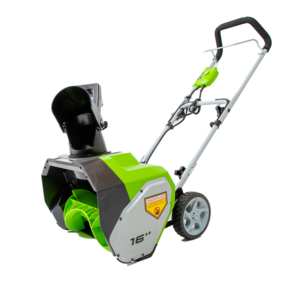
A single stage snow blower is the light, narrow, easy to store machine that clears right down to the pavement. On a paved driveway of ordinary size it does the job faster than anything heavier, and it is the only type here you can lift onto a wall hook when spring arrives.
-
Electric Snow Blowers
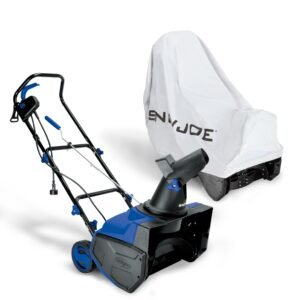
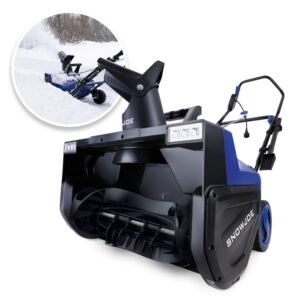
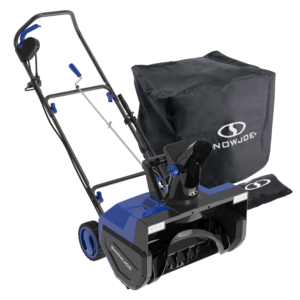
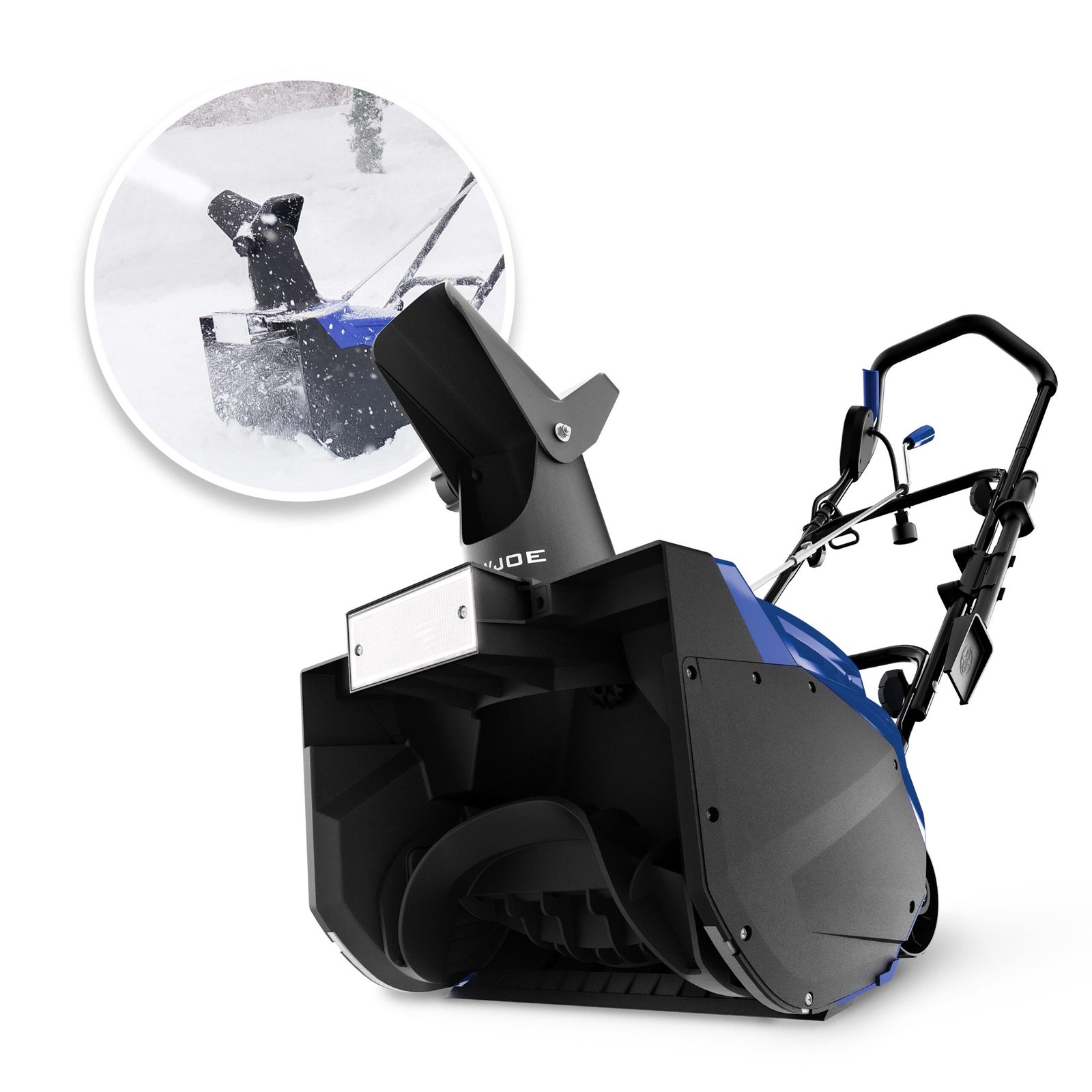
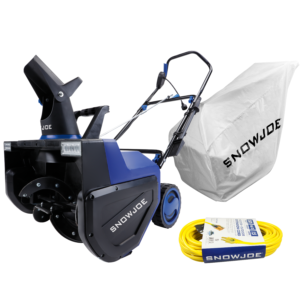
Snow Joe Electric Snowblower Protection Bundle | Includes Electric Snow Blower and Cover
$277.35 Add to cart -
Electric Snow Blowers
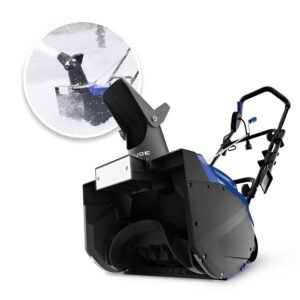
Snow Joe SJ623E Electric Walk-Behind Single-Stage Snow Blower W/ Headlight | 18-inch | 15-amp
$278.75 Add to cart -
Battery Snow Blowers
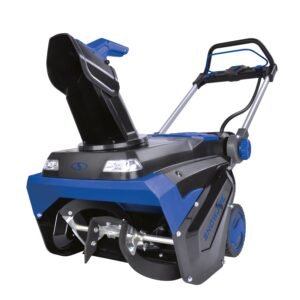
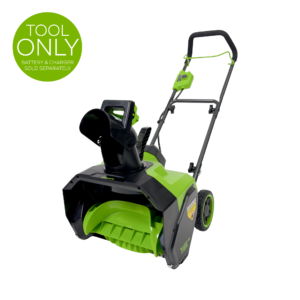
Snow Joe iON100V-21SB-CT-RM 100-Volt iONPRO Cordless Brushless Variable Speed Single Stage Snow Blower | 21-Inch | Tool Only (Certified Refurbished)
Original price was: $487.82.$283.64Current price is: $283.64. Add to cart -
Electric Snow Blowers
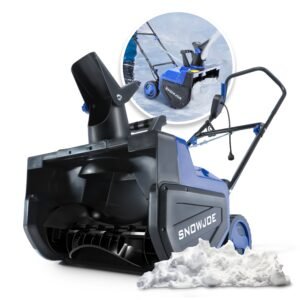
Snow Joe SJ626E Electric Walk-Behind Single-Stage Snow Blower | 22-inch | 14.5-amp
$320.56 Add to cart -
Electric Snow Blowers
Snow Joe SJ627E Electric Walk-Behind Snow Blower W/ Dual LED Lights | 22-inch | 15-amp
$348.44 Add to cart -
Electric Snow Blowers
Snow Joe SJ627E-CVR Electric Snow Blower | 22-Inch | 15-Amp | w/ Dual LED Lights + Bonus Cover
$362.37 Add to cart
How a single stage snow blower works
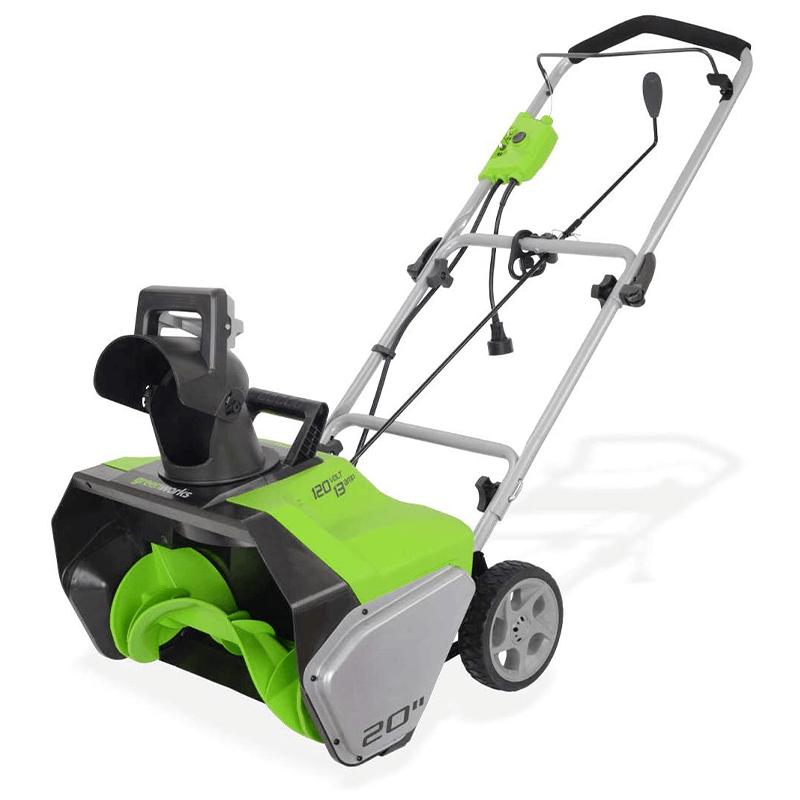
One rotating auger does both jobs. It scoops the snow up and throws it out of the chute in a single motion, and because that auger is faced with rubber or polymer paddles it makes contact with the ground as it turns.
That ground contact is the defining characteristic, and it cuts both ways. It means a single stage snow blower clears to bare pavement, leaving no residual layer behind. It also means the paddles pull the machine forward as they bite, so most models need no drive system at all, which is why they weigh so little. And it is precisely why the design must never be used on gravel.
Who it is right for
A single stage snow blower suits a specific and very common household. Paved driveway, one to two car lengths, typical snowfall under about 20 centimetres per storm, and somewhere to store a machine that hangs on a wall.
It is also the right answer for surfaces a bigger machine cannot reach. Decks, wheelchair ramps, garden paths, stairs and the strip along a fence line are all easier with a machine you can lift and steer with one hand. Plenty of households own a two stage machine for the driveway and a single stage for everything else.
Anyone who finds a heavy machine physically difficult should look here first. At 13 to 45 kilograms depending on power source, a single stage snow blower is the most manageable powered option on this site.
Who should avoid one
- Gravel or dirt driveways. The auger touches the ground, so it will pick up stones and throw them hard enough to break a window. This is not a limitation to work around, it is a hard no.
- Long driveways. Without powered wheels you are supplying the effort over distance.
- Deep snow regions. Beyond about 20 centimetres the machine slows sharply.
- Anyone facing a daily plow ridge. Compacted, often icy material needs a two stage machine.
Single stage against two stage
| What matters | Single stage | Two stage |
|---|---|---|
| Clears to bare pavement | Yes | No, leaves a thin layer |
| Safe on gravel | No | Yes |
| Weight | 13 to 45 kg | 70 to 140 kg |
| Snow depth | Up to about 20 cm | Deep snow and plow ridge |
| Throwing distance | 6 to 9 m | 10 to 15 m |
| Drive | Paddles pull it forward | Powered wheels or tracks |
| Storage | Compact, often wall hung | Takes real floor space |
| Price | Lowest in the category | Highest |
Read it against your own driveway rather than in the abstract. For a paved two car driveway in a region of moderate snowfall, a single stage snow blower wins on price, weight, storage and finish quality. Change any one of those conditions to gravel, length or depth and the answer flips decisively.
Gas, corded electric or battery
This category spans all three power sources, which is unusual, and the choice matters more than the badge on the housing.
Corded electric. The cheapest and lightest option. Unlimited runtime while plugged in, no maintenance to speak of, limited to roughly 30 metres from an outlet. See electric snow blowers.
Battery. The same convenience without the cord, and the fastest growing part of this category. A 40V to 80V single stage snow blower clears a typical driveway on one charge. Browse battery snow blowers.
Gas. Heavier and needs seasonal upkeep, but throws further and pushes harder through wet snow. Worth it if your snow is dense and your driveway is at the upper end of what a single stage machine can handle. See gas snow blowers.
For most buyers in this category the honest recommendation is battery, unless the driveway is entirely within reach of an outlet, in which case corded costs less and never stops mid job.
Clearing width and depth
Widths here run from about 16 to 22 inches, and the range is narrow because the design has a natural ceiling. Beyond roughly 22 inches a machine without powered wheels becomes tiring to push.
- 16 to 18 inches. Walkways, decks, stairs and single car pads. The lightest machines, some under 15 kilograms.
- 20 inches. The most common size and the right default for a two car paved driveway.
- 21 to 22 inches. The upper end, usually gas or a high voltage battery platform, for a driveway at the limit of what this design suits.
On depth, treat 20 centimetres as the practical maximum for a full width pass. Beyond that take half width bites. A single stage snow blower does not fail in deep snow so much as slow down, and wet heavy snow reduces the workable depth further.
Paddles and the scraper bar
These two wear parts define how well a single stage snow blower performs, and both are consumable by design.
The paddles are the rubber or polymer blades on the auger. They contact the ground, pull the machine forward and throw the snow. As they wear down the machine stops clearing to the pavement, loses its self propulsion, and throws noticeably shorter. Most people interpret that as the machine dying when it needs an inexpensive part.
The scraper bar runs along the bottom of the housing and sets how close the auger sits to the ground. It wears too, and it is equally cheap to replace.
Check both once a year. A machine with fresh paddles and a good scraper bar performs like new, and both are stocked in snow blower parts. This is the single highest value maintenance job in the category, and it takes under an hour.
Maintenance
On an electric or battery single stage snow blower there is almost nothing to do beyond the paddles and scraper bar. On a gas model add the usual small engine routine.
- Fresh fuel with stabiliser before summer storage, on gas models only. Stale fuel causes most no start calls.
- Annual oil change on gas models.
- Paddles and scraper bar checked every season on every model.
- Clear the chute with the tool rather than a hand, always with the machine off.
- Store dry so meltwater does not sit on bare metal through the summer.
Common faults are covered in our snow blower repair guide, and in this category the answer is usually worn paddles or, on gas models, old fuel.
Storage, the underrated advantage
This rarely appears in buying guides and matters to a great many people. A single stage snow blower is narrow enough to fit beside a car, light enough to lift, and most models hang on a garage wall bracket. For anyone with a single garage, a carport or a garden shed, that is often the deciding factor.
A two stage machine at 100 kilograms and 30 inches wide occupies real floor space for the eight months a year it is not needed. If your storage is tight, be realistic about it before buying on capability alone.
Safe clearing
The auger on a single stage snow blower turns fast and sits close to the operator. Never clear the chute by hand, use the tool supplied with the machine, and only with the motor stopped.
The gravel warning bears repeating because it causes real damage every winter. On an unpaved surface this design will throw stones with enough force to break glass or injure someone. If your driveway is gravel, buy a two stage machine instead.
Clear early and clear often. Two passes through 12 centimetres is far easier than one through 25, and it avoids the compaction that follows from driving over snow before clearing it. Forecasts from Environment and Climate Change Canada help you time it, and the Canadian Centre for Occupational Health and Safety publishes general guidance on working safely in cold conditions. For electrically powered models, confirm the certification mark from CSA Group before use.
What a clear actually looks like
Specifications rarely tell you how a morning goes, so here is the practical version. On a two car paved driveway with 12 centimetres of fresh snow, a 20 inch single stage snow blower takes roughly six passes and about ten minutes, throwing the snow 6 to 9 metres to one side. You walk at a normal pace and the paddles do most of the pulling.
Change one variable and the picture shifts. The same driveway under 25 centimetres becomes half width passes and closer to twenty minutes. Wet March snow at the same depth is slower again, and you will stop at least once to clear the chute. Add the ridge the plow left across the entrance and you will be attacking it in small bites, which is the moment owners of this type most often wish they had bought heavier.
None of that is a criticism. It is the honest shape of the trade you make for a machine that weighs 20 kilograms, costs the least in the category, and hangs on a wall for eight months of the year. Buyers who understand that shape before purchase are almost always happy with a single stage snow blower. Buyers who expected it to behave like a two stage machine are the ones who are not.
One practical habit is worth adopting. Throw with the wind rather than against it, and plan passes so you are never throwing snow onto ground you have already cleared. On a narrow driveway that single change saves more time than any feature on the spec sheet.
-
Gas Snow Blowers
21″ Snow Blower, 196 cc, recoil start
$549.00 to $599.00 Select options This product has multiple variants. The options may be chosen on the product page -
Electric Snow Blowers
Snow Joe Electric Snowblower Protection Bundle | Includes Electric Snow Blower and Cover
$277.35 Add to cart
Common questions
Can a single stage snow blower be used on a gravel driveway?
How much snow can a single stage snow blower handle?
Does a single stage snow blower clear to bare pavement?
Why has my single stage snow blower stopped throwing snow far?
Are single stage snow blowers self propelled?
Gas, corded or battery for a single stage machine?
Can I use one on a deck or wooden surface?
How long does a single stage snow blower last?
Compare with two stage snow blowers, or browse every type and parts.