
Asking what size snow blower you need usually ends with buying too big. It feels like the safe error, because more machine sounds like more capability, and it produces something heavier to turn, harder to store for eight months, and no faster on the driveway you actually own. Sizing well is the difference between a machine you like using and one that lives in the corner.
What size snow blower: the four measurements that decide it
Answer these before you look at a single machine, and the range narrows from forty to about four.
- Surface. Gravel, dirt or loose stone rules out every single stage machine outright, regardless of budget. Paved leaves both options open.
- Length. Measured in car lengths is fine. This drives clearing width more than anything else.
- Typical snowfall per storm. Not the annual total, the depth of a normal single fall where you live.
- The plow ridge. Does the municipal plow seal your entrance after every storm? That compacted bank asks far more of a machine than fresh snow does.
Notice that budget is not on the list. Deciding what size snow blower you need is a question about your property, and price enters afterwards to choose between the machines that actually fit.
What size snow blower by driveway: the table
| Driveway | Clearing width | Type | Engine or voltage |
|---|---|---|---|
| Walkway, deck, steps | 16 to 18 in | Single stage | Corded, 24V or 48V |
| 1 to 2 cars, paved | 20 to 21 in | Single stage | Corded, 40V to 80V, or 196 cc |
| 2 to 3 cars, paved | 22 to 24 in | Single or two stage | 60V to 80V, or 212 cc |
| 3 to 4 cars | 24 to 28 in | Two stage | 60V to 80V, or 212 to 252 cc |
| Any gravel driveway | 24 in and up | Two stage only | 60V upward, or 212 cc upward |
| Long or rural laneway | 28 to 34 in | Two stage, tracks worth it | 252 to 420 cc |
| Acreage or commercial | 34 in and up | Two or three stage, tracked | 420 cc upward |
Read across from your driveway rather than down from the biggest machine. The row you land on is the answer, and going one row up costs you manoeuvrability and storage without making the job meaningfully faster.
Clearing width, the number that matters most
Clearing width determines what size snow blower suits you, because it sets how many passes you make, and passes are what you actually spend time on.
A two car driveway is roughly six passes with a 20 inch machine and about eight with a 16 inch one. On a small pad that difference is trivial. On a long driveway it decides whether the job takes ten minutes or twenty five, and across a winter of thirty clearings that adds up to real hours.
The instinct is therefore to go as wide as possible, and that instinct is wrong past a point. A wider machine is heavier, turns less willingly at the end of each pass, and on a driveway with obstacles or a tight apron you spend the time you saved manoeuvring. Wider also asks more of the engine or motor, so a narrow machine with more power often out performs a wide machine with less in wet snow.
Match the width to the driveway, and if you are between two sizes, go narrower on a driveway with tight corners and wider on a long open one.
Intake height, the number nobody checks
Clearing width gets all the attention. Intake height, the vertical opening of the auger housing, decides how deep a bite you can take without stopping to clear the chute, and it is barely mentioned in most listings.
If your normal storm drops 10 centimetres, almost any machine copes. If you regularly see 25 to 30 centimetres, a taller intake means full width passes instead of half width ones, which halves your time in the cold. On a machine you will use through deep accumulation, this number matters as much as width.
Every listing on this site states both figures for exactly that reason, which is not universal in this category.
Engine size and voltage
On gas machines, displacement is a fair proxy for how hard the machine pushes before bogging in dense snow. 196 to 212 cc suits entry two stage machines at 21 to 24 inches. 252 to 302 cc covers the heart of the market at 26 to 30 inches. 375 to 420 cc drives wide machines from 30 to 42 inches.
On cordless machines, voltage plays the same role. 24V and 48V for light single stage machines, 40V as a step up, 60V as the best all round choice, and 80V for wet heavy snow, gravel and dual stage machines.
In both cases the headline number is not the whole story. Impeller diameter drives throwing distance more directly than displacement does, and a well matched 252 cc machine with a large impeller will out throw a poorly matched 302 cc one. Compare ranges in gas snow blowers and battery snow blowers.
The oversizing mistake when choosing what size snow blower to buy
This is the most common error in the category and it is worth naming precisely.
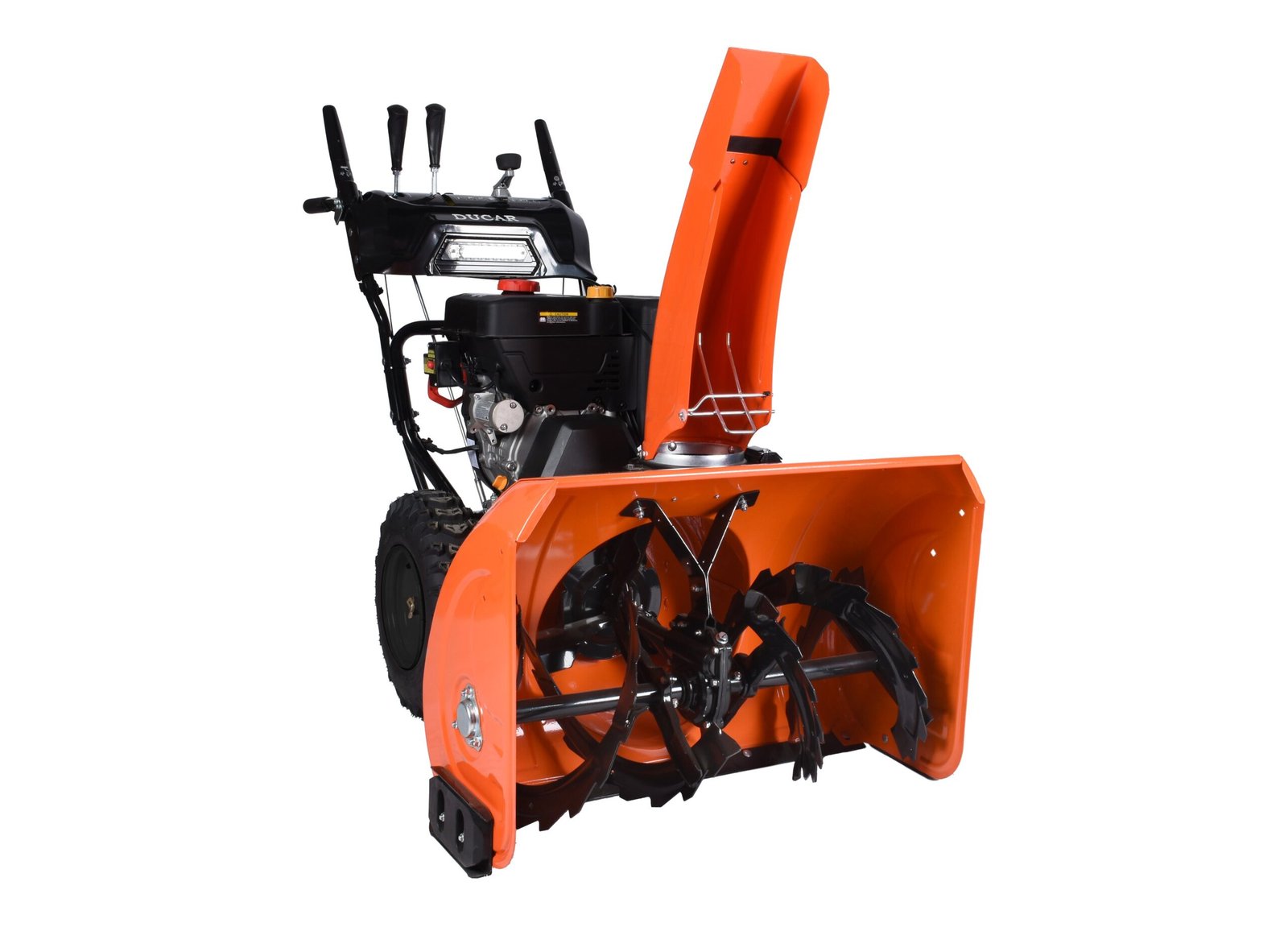
A 34 inch machine on a two car driveway does not clear it faster in practice. You make three passes instead of five, but you spend the difference turning a 120 kilogram machine around at each end, and you now need somewhere to store something the size of a small motorcycle for the eight months a year it is idle.
Heavier machines are also harder work on anything other than flat pavement, and if the driveway has a step, a gate or a tight apron, weight becomes the defining daily annoyance rather than a spec on paper.
Buy the size your driveway calls for. If your snowfall is genuinely extreme, go up a row for intake height and power rather than for width.
When you have gone too small
Undersizing when choosing what size snow blower to buy is less common but not rare, and the symptoms are clear.
You take half width passes as a matter of routine rather than only in deep snow. The machine bogs and slows in wet March snow. You cannot get through the plow ridge without repeated attacks. Or you are simply out on the driveway far longer than you expected, every time.
If two or more of those describe you, the machine is under sized for the property rather than faulty. That is worth knowing before you spend money on a repair for a machine that was never going to be enough.
Storage, the constraint people forget
Buying happens in October when the garage is empty and the decision feels abstract. Living with the machine happens for eight months when it is not needed at all.
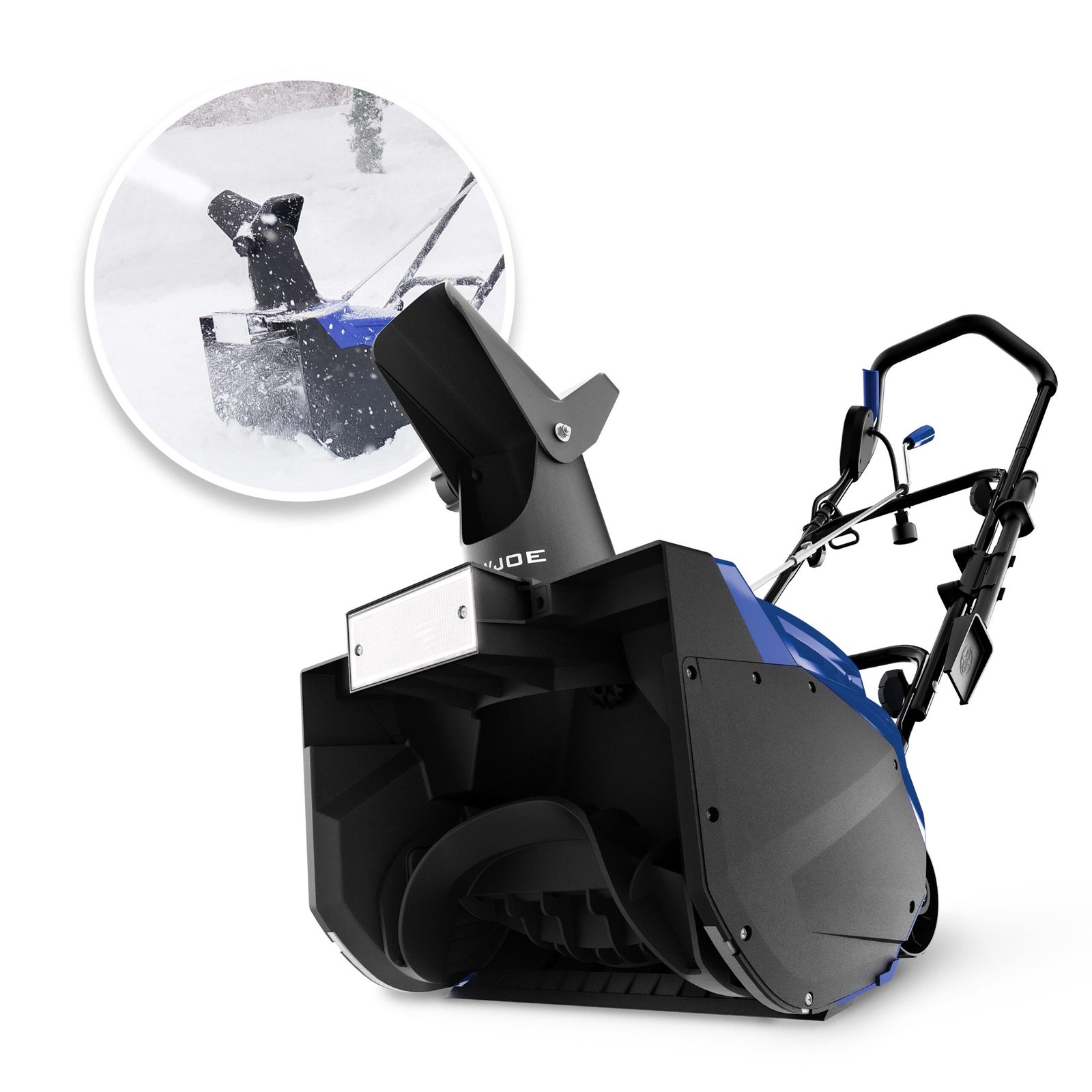
A single stage machine is narrow enough to fit beside a car and most models hang on a wall bracket. A 30 inch two stage machine at 100 kilograms takes real floor space and does not go on a wall. For anyone with a single garage, a carport or a garden shed, this is frequently the deciding factor, and it is almost never mentioned in buying advice.
Measure the space you will actually store it in before you buy, not after it arrives.
Who will actually be pushing it
This belongs in every sizing conversation and almost never appears in one.
Machine weight ranges from about 13 kilograms for a light corded machine to 140 for a wide tracked gas machine. That is a tenfold spread, and the person clearing the driveway is not always the person buying it. A machine sized correctly for the property can still be the wrong machine for whoever ends up using it most.
Two stage machines drive their own wheels, which removes most of the pushing effort on flat ground. What they do not remove is the effort of turning at the end of every pass, and that is where weight is felt. Power steering, which uses triggers on the handlebars to disengage drive to one wheel, changes this substantially and is worth having on anything over about 28 inches.
If more than one person in the household will clear the driveway, or if anyone using it would struggle with a heavy machine, weight that into the sizing decision alongside the driveway measurements. A slightly narrower machine that gets used willingly beats a wider one that sits in the garage while someone reaches for a shovel.
Adjusting for where you live
Annual snowfall in Canada varies more than generic advice allows. Victoria sees under 50 centimetres in a typical year, while Montreal, Ottawa and Quebec City routinely clear more than two metres, and parts of Atlantic Canada and the lake effect belts pass three.
Frequency matters as much as total. Two metres arriving in steady 10 centimetre falls is far easier than the same total in four enormous storms. If your snow arrives in large events, size up on intake height and power, because you will be moving accumulation rather than fresh snowfall.
Historical snowfall by station is published at Environment and Climate Change Canada, and it is worth ten minutes before choosing. Storm timing through the season is worth watching at ECCC forecasts, since clearing twice through 15 centimetres beats once through 30 on any machine.
Common questions
What size snow blower do I need for a two car driveway?
Is a bigger snow blower always better?
What size snow blower for a long driveway?
Does driveway surface affect what size I need?
What is intake height and why does it matter?
How many passes should a driveway take?
Should I size up for heavy snowfall?
What size snow blower fits in a single garage?
Once you know the size, decide the type in single stage vs two stage and the power source in battery vs gas. Budget figures are in snow blower prices in Canada.
The last word on what size snow blower
Everything above comes down to three decisions and none of them are about brand. Surface first, because gravel removes whole classes in one move and that is a safety limit rather than a preference. Depth second, measured as the typical single storm rather than the seasonal total, because two cities can share an annual figure and need completely different machines. Driveway length third, because width is a time calculation and those minutes repeat every heavy morning for the life of the machine.
Get those three right and the rest follows on its own. Get them wrong and no amount of engine size rescues the purchase. If any of it is still unclear, the contact page reaches somebody who has taken these machines apart, and our buying guides set out the reasoning behind every recommendation rather than just the recommendation.