
Battery vs gas snow blower was not a real debate ten years ago. Today a good 80V two stage machine throws comparably to a mid range gas engine, and for a large share of Canadian driveways the cordless machine is simply the better tool. For the rest, gas still wins outright, and the dividing line is sharper than most buying advice admits.
Battery vs gas snow blower: the short answers
- Driveway length. The battery vs gas snow blower choice is decided by how long you clear for, not by brand.
- Runtime. Wet snow doubles current draw, so plan on a third and fourth pack.
- Cold. Both start at minus twenty. Battery capacity drops, gas does not.
- Fifteen year cost. Battery vs gas snow blower ownership lands close once fuel, oil and pack replacement are counted.
The short answer, before the detail
Buy battery if your driveway is paved or you need a cordless two stage machine, it takes under an hour to clear, and you want to press a button rather than maintain an engine. That covers most suburban Canadian households.
Buy gas if your driveway is long or rural, if you clear for more than an hour at a stretch, if you regularly move deep accumulation through back to back storms, or if you simply do not want to think about charge state during a storm.
Everything below is the reasoning. The battery vs gas snow blower decision comes down to runtime against convenience, and the honest answer depends on facts about your property rather than on which technology is newer.
Battery vs gas snow blower, side by side
| What matters | Battery | Gas |
|---|---|---|
| Runtime | 30 to 60 min per pack | Unlimited, refuel in a minute |
| Starting | Press a button, always | Choke and pull, or electric start |
| Annual maintenance | Effectively none | Oil, plug, fuel treatment |
| Summer storage | Store packs indoors | Stabilise or drain fuel |
| Throwing distance | 10 to 13 m on 80V two stage | 10 to 15 m |
| Gravel capable | Two stage models only | Two stage models |
| Weight | 20 to 60 kg | 70 to 140 kg |
| Noise | Low | High |
| Fumes | None | Yes, never run indoors |
| Up front cost | $284 to $3,199 | $516 to $5,999 |
| Expected life | Packs degrade over years | 15 to 20 years |
| Cold start reliability | Excellent, capacity drops | Good if maintained |
Runtime, the real dividing line
Runtime is the whole battery vs gas snow blower argument, and everything else is secondary.
A battery machine gives you 30 to 60 minutes of real clearing per pack, depending on pack size and snow density. Wet, heavy March snow drains a pack considerably faster than light January powder, and the storms that justify owning a snow blower are precisely the storms that exhaust one.
A gas machine has no runtime ceiling at all. Refuelling takes a minute and can be repeated indefinitely, which is why commercial operators and rural properties still run gas almost exclusively.
For a two car driveway that takes fifteen minutes, this distinction is theoretical and you will never meet it. For a laneway that takes ninety minutes, it decides the purchase. Be honest about which you have, and time yourself with a shovel if you are unsure.
The mitigation is a second pack, which is close to mandatory in heavy snowfall regions and is a real cost that never appears in a headline price. A dual port or rapid charger helps further, since a pack charging while you clear with the other effectively removes the limit on a normal driveway.
Has battery actually caught up on power
Largely yes, and this is the part that has changed most in the last five years.
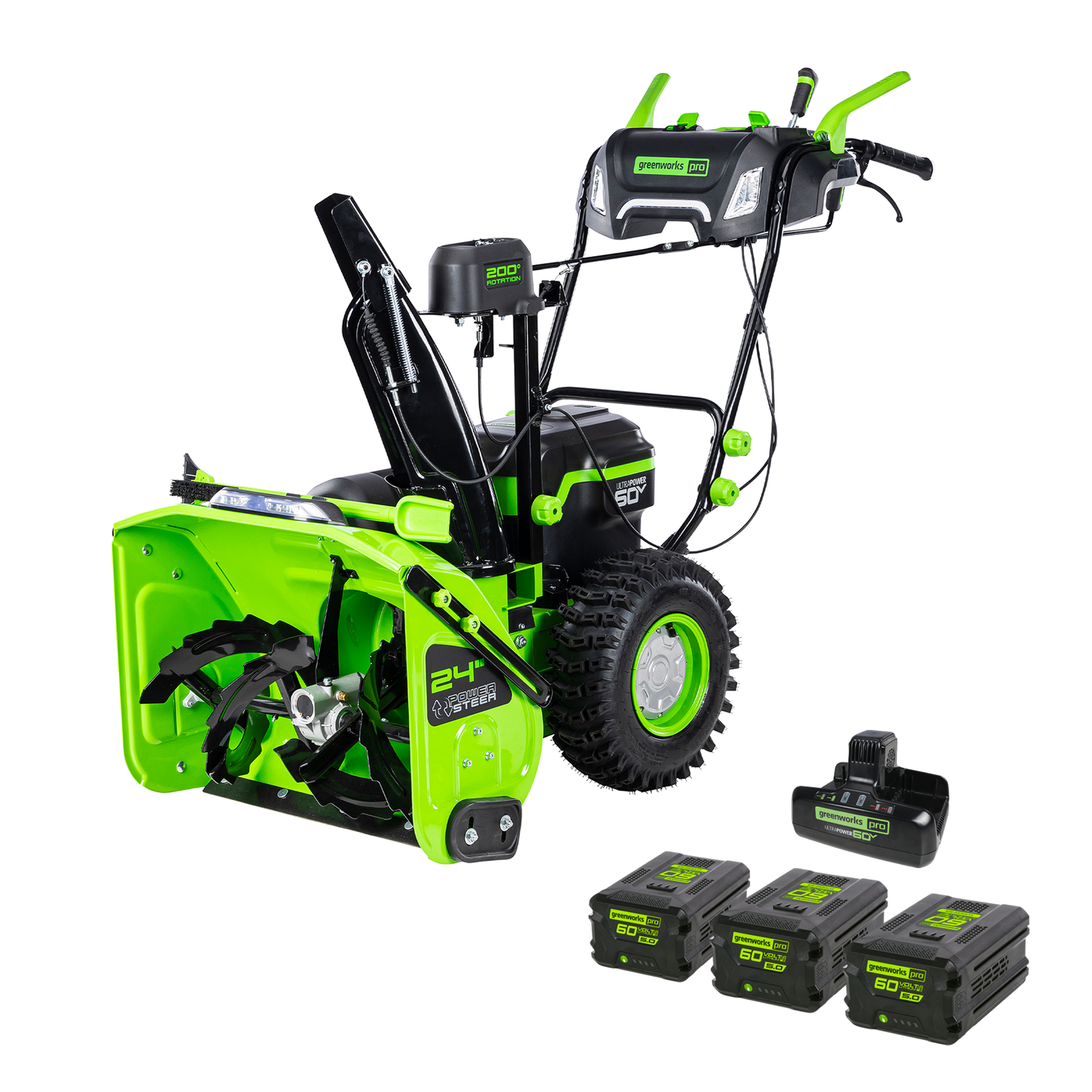
Brushless motors and higher pack voltages closed a gap that used to be obvious. A modern 80V two stage machine puts serious torque into the auger and spins the impeller fast enough to throw 10 metres or more. Against a mid range gas engine on a suburban driveway, most people cannot tell the difference in the snow.
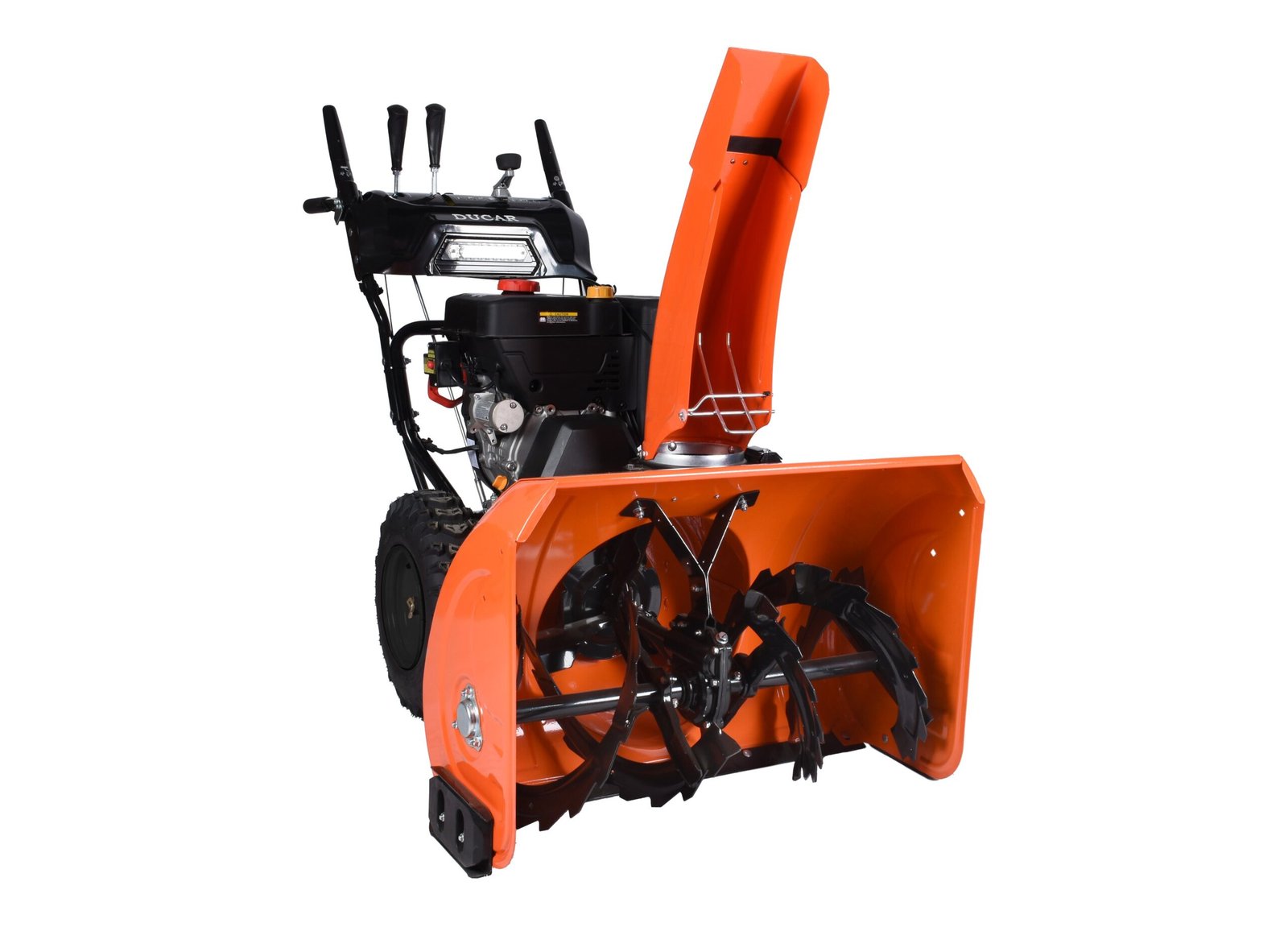
Where gas keeps an edge is at the top of the range and under sustained load. A 375 or 420 cc machine moving heavy wet accumulation for an hour will out work anything cordless, and it will do it without any drop in performance as the job goes on. Battery output stays strong through a pack, but you eventually stop.
The other honest point is that low voltage cordless machines are not in this conversation. A 40V or 48V single stage machine is a fine tool for a small paved driveway and it is not competing with a gas two stage machine at all. Compare like with like: the battery vs gas snow blower question is really about 60V and 80V two stage machines against mid range gas.
Cold weather behaviour
Battery wins the start, gas wins the endurance, and both are fine if you understand them.
A cordless machine starts identically at minus five and minus twenty five. There is no choke, no primer, no pull cord, and no fuel that went stale in August. Anyone who has knelt on a frozen driveway yanking a starter cord understands what that is worth.
The trade is capacity. Lithium packs deliver less in deep cold, so a machine that clears your driveway on one pack in January may need more in a cold snap. The fix is simple: store packs indoors and fit them just before you clear, rather than leaving them on the machine in an unheated garage.
Gas engines start reliably in deep cold when they have been maintained, and the failures people blame on cold are almost always stale fuel instead. That is covered in why a snow blower will not start.
Gravel and the plow ridge
Two conditions that cut across the battery vs gas snow blower question entirely.
Gravel requires a two stage machine, full stop, because the auger must ride clear of the ground on skid shoes. That rules out every single stage machine of either type. It does not rule out battery, because cordless two stage machines exist and work well on gravel, which surprises people who assume gravel means gas.
The plow ridge is the compacted, often part icy bank the municipal plow leaves across your entrance. It is denser than anything the storm dropped and it is the hardest thing either machine will meet. A good two stage machine of either type handles it with partial width bites. A heavier gas machine handles it with less drama, and a three stage machine handles it fastest of all.
Battery vs gas snow blower costs over fifteen years
In battery vs gas snow blower terms, purchase price favours gas at the low end and roughly evens out in the middle of the market. The interesting comparison is total cost across a machine life.
Gas costs less up front for equivalent capability, then asks for oil, a spark plug, fuel and stabiliser every year. Call it well under a hundred dollars annually for a typical Canadian season. A well maintained machine lasts fifteen to twenty years, and amortised across that life gas is often the cheapest option available.
Battery costs more initially, particularly once a second pack is included, then almost nothing annually. The catch is the packs themselves, which lose capacity over years of seasonal use and eventually need replacing. That is expected rather than a failure, and it is the cost people forget when comparing.
Neither is dramatically cheaper. Choose on how the machine fits your driveway, not on a spreadsheet, because the running cost difference is smaller than one bad purchase decision. Full figures are in snow blower prices in Canada.
Noise, fumes and where you clear
Underrated, and for some households decisive.
A cordless machine is quiet enough to use at six in the morning without antagonising a dense neighbourhood. A gas two stage machine is not, and in a townhouse row or a condo development that matters more than any specification.
Fumes rule out gas anywhere enclosed. Never run a gas engine in a closed garage, even briefly, even with the door partly open. If you clear an underground parking ramp, a covered walkway or anything similar, cordless is the only safe answer. General equipment safety guidance is published by the Canadian Centre for Occupational Health and Safety.
Maintenance, the daily difference
Maintenance is where the battery vs gas snow blower comparison favours cordless most clearly, and it is the reason many people switch after one gas machine.
A battery machine has no oil, no spark plug, no carburettor and no fuel system. Seasonal maintenance is checking the paddles and scraper bar once a year and storing the packs indoors. That is the entire list.
A gas machine wants fresh fuel with stabiliser before summer, an annual oil change, a plug every year or two, belts inspected and shear pins checked. None of it is difficult, and all of it is genuinely important: a machine stored with untreated fuel will not start in December, which is the single most common failure in this whole category. The full routine is in the maintenance checklist.
If you resent small engine upkeep, be honest about that before buying. A gas machine you neglect is worse than a cordless machine that occasionally needs a pack change.
What people say after switching
Two patterns come up repeatedly, and they are worth knowing because they are the lived version of everything above.
People who move from gas to battery on a suburban driveway rarely go back. The thing they name is not power, it is that the machine simply works every time they press the button, with no seasonal ritual and no January no start. The convenience compounds across a winter in a way a specification sheet cannot convey.
People who move from battery to gas are almost always people who underestimated their driveway. They bought a cordless machine sized for a two car driveway, then met a lake effect winter or a rural laneway, and ran out of charge partway through. That is not a failure of the technology, it is a sizing error, and buying a second pack at the outset would have prevented most of them.
The lesson in both directions is the same. The battery vs gas snow blower decision is not about which technology is better in the abstract. It is about matching runtime to the size of the job, and being honest about how long you actually spend clearing when the weather is at its worst rather than at its average.
Battery vs gas snow blower: the verdict by driveway
- Walkway, deck, small paved pad. Battery, or corded if an outlet is close. Gas is overkill.
- Two car paved driveway. Battery. This is where cordless has genuinely won.
- Three car driveway, moderate snow. Either. Battery with a second pack, or a mid range gas two stage machine.
- Gravel driveway. Two stage of either type. Cordless dual stage machines work well here.
- Long or rural laneway. Gas. The runtime ceiling decides it.
- Heavy snowfall belt with back to back storms. Gas, or battery with several packs and a rapid charger.
- Acreage or commercial. Gas, and probably tracked.
Browse both sides in battery snow blowers and gas snow blowers, and check historical snowfall for your station at Environment and Climate Change Canada before committing.
Common questions
Is a battery snow blower as good as gas?
How long does a battery snow blower run?
Can a battery snow blower handle gravel?
Do battery snow blowers work in extreme cold?
Which is cheaper overall, battery or gas?
Do I need a second battery?
Is a gas snow blower harder to maintain?
Can I use a gas snow blower in a garage?
Still deciding on machine type rather than power source? Read single stage vs two stage, which is the decision that comes first.