
In the electric vs battery snow blower comparison both are quiet, both start instantly, neither needs fuel or oil. On paper they look like the same machine sold two ways. The difference is a cord, and it decides the purchase completely: one never runs out of power but cannot leave the house, the other goes anywhere but stops when the pack is empty.
Electric vs battery snow blower: the short answers
- The deciding question. Electric vs battery snow blower comes down to whether an outlet reaches everything you clear.
- Cost. Corded is the cheapest powered option. Battery costs more because the packs cost more.
- Power. In the electric vs battery snow blower comparison a 60V or 80V pack now beats a 15 amp cord.
- Neither on gravel. Both are single stage designs, so the paddle touches the ground.
The one question that decides it
Stand at your outdoor outlet and look at everything you need to clear. Can a 30 metre cord reach all of it, without crossing anything you would rather it did not?
Yes: buy corded. It costs less, it never stops mid job, there are no packs to degrade over the years, and the runtime limit that worries cordless owners simply does not exist for you.
No: buy battery. A detached garage, a long walkway, a side path around the house or an awkward layout makes a cord a permanent daily irritation, and no amount of saving justifies fighting it thirty times a winter.
Everything else in the electric vs battery snow blower comparison is secondary to that. The two machines are otherwise remarkably similar, and people overthink the rest.
Electric vs battery snow blower, side by side
| What matters | Corded electric | Battery |
|---|---|---|
| Runtime | Unlimited | 30 to 60 min per pack |
| Range | About 30 m from an outlet | Anywhere |
| Price from | $279 | $284 |
| Typical price | $330 | $700 |
| Weight | 13 to 20 kg | 20 to 60 kg |
| Two stage available | No | Yes, 60V and 80V |
| Safe on gravel | No | Two stage models only |
| Parts that degrade | Paddles, scraper bar | Paddles, scraper bar, packs |
| Cold start | Instant, unaffected | Instant, capacity drops |
| Setup each use | Run out the cord | Fit a charged pack |
Note the two stage row, because it is the one asymmetry that matters. There is no corded two stage machine, so if you need gravel capability or serious depth, corded is out of the conversation entirely.
Runtime against range
This is the trade in one sentence: corded machines trade range for unlimited runtime, battery machines trade runtime for unlimited range.
A corded machine will clear for three hours if you ask it to. It does not care about snow density, it does not fade toward the end of the job, and it will never leave you with half a driveway done. That is genuinely valuable during a long storm.
A battery machine gives you 30 to 60 minutes of real clearing per pack, less in wet heavy snow. For a driveway that takes fifteen minutes, that is ample and you will never think about it. For a driveway that takes an hour, you are buying a second pack, and that changes the price comparison substantially.
Neither limit is a defect. They are different answers to the same problem, and the right one depends on the shape of your property rather than on which technology sounds more modern.
Electric vs battery snow blower costs
Corded machines are the cheapest powered snow clearing available, starting around $279 and typically about $330. Add $30 to $60 for a proper outdoor rated cold weather extension cord, which is not optional and not the place to economise.
Battery machines start at a similar figure but typically sit near $700, and the spread runs to $3,199 because the category includes 24 inch dual stage machines that corded simply does not offer. Watch for bare tool prices, which look dramatically cheaper and do not include the pack or charger. A second pack, close to mandatory in heavy snowfall regions, is a real cost that never appears in a headline.
Over time, corded costs almost nothing beyond paddles and a scraper bar. Battery costs nothing annually either, until the packs need replacing after several years of seasonal use, which is a predictable expense rather than a failure. Full figures are in snow blower prices in Canada.
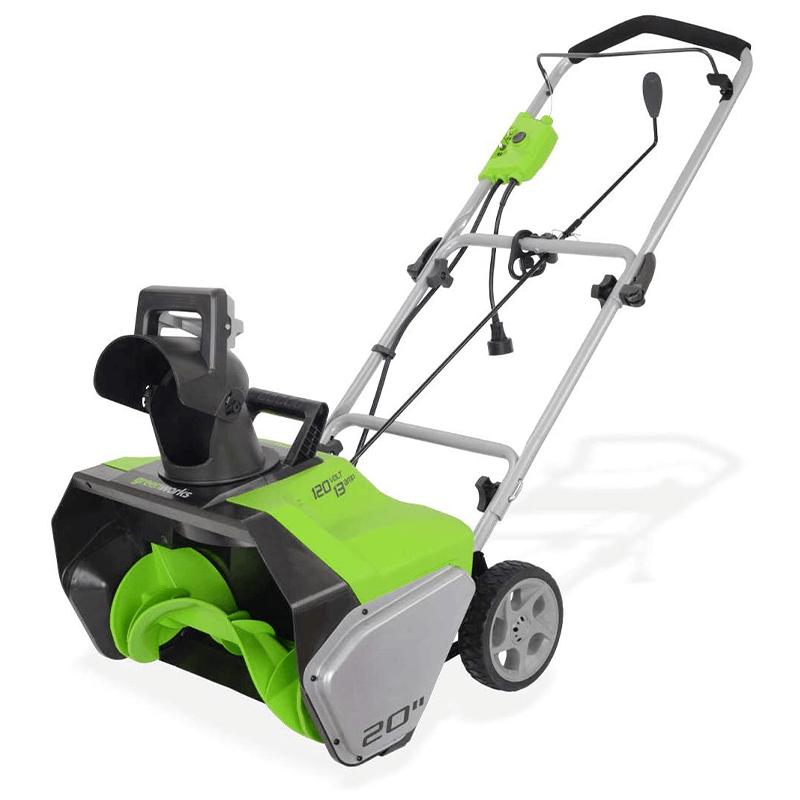
Extension cords, where corded machines go wrong
More complaints about corded machines trace to the cord than to the machine, and every one is preventable.
- Use an outdoor rated cold weather cord. Ordinary indoor cords stiffen and the jacket can crack at Canadian winter temperatures.
- Match gauge to length. For a 15 amp machine, 12 gauge to 30 metres. Undersized cords starve the motor and the machine feels gutless.
- One cord, not two joined. Every connection adds voltage drop, so a single 30 metre cord beats two 15 metre cords every time.
- Use the retainer hook by the handle. It stops the plug pulling out mid pass, which is the single most irritating failure mode of corded machines.
- Plan your passes so the cord trails behind you onto ground already cleared. Most people work away from the outlet and back toward it.
Get those right and a corded machine is close to trouble free. Get them wrong and you will blame the machine for the cord.
Battery packs, where cordless machines go wrong
The cordless equivalent of cord mistakes, and equally avoidable.
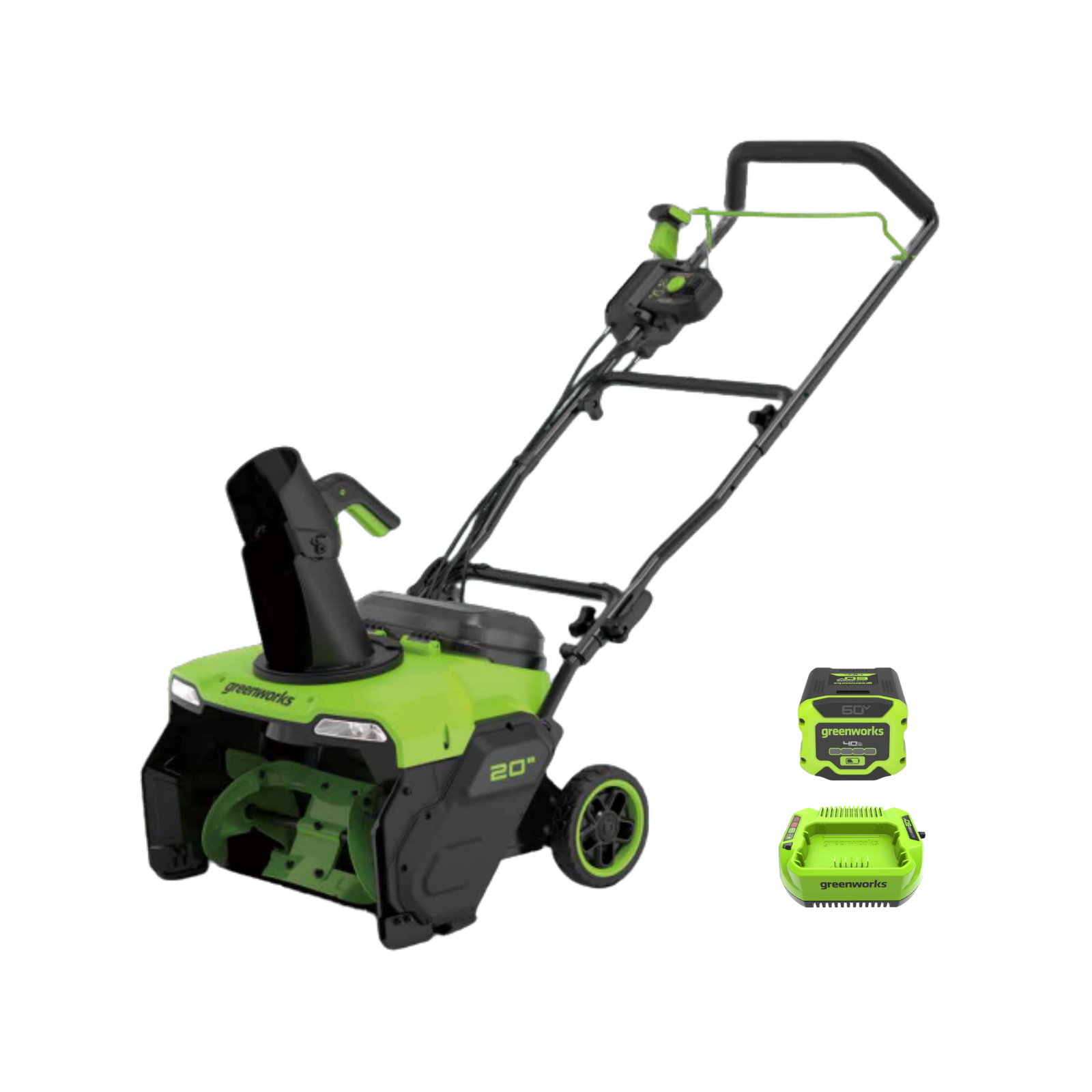
- Buying one pack in a snowy region. The storms that justify owning a machine are the ones that exhaust a single pack. Buy the second with the machine.
- Storing packs on the machine in an unheated garage. They lose capacity far faster than packs kept indoors.
- Buying a bare tool without checking pack size. A 2.0Ah pack from a trimmer will run a snow thrower briefly and badly.
- Mixing platforms. Packs are not interchangeable between voltages, so buying into a platform is a longer commitment than buying a machine.
Handled properly, a cordless machine asks less of you across a winter than anything else in the category. See battery snow blowers.
Electric vs battery snow blower: is one more powerful
In electric vs battery snow blower terms, at the light end they are comparable. A 13 to 15 amp corded machine and a mid range cordless single stage machine clear a similar driveway at a similar pace, and you would struggle to tell them apart in use.
At the top end battery wins outright, simply because it goes further. Corded machines are limited by what a 120 volt household circuit can supply, which caps them around 15 amps, and no corded two stage machine exists in this market. Cordless 60V and 80V platforms carry dual stage machines that handle gravel and depth a corded machine cannot approach.
So the honest answer is that battery has a higher ceiling, and corded has no ceiling on runtime. Which matters more is decided by your driveway, not by the specification.
The case for owning both
It sounds indulgent until you price it, and then it makes more sense than it should.
Plenty of Canadian households run a larger machine for the driveway and keep a light corded machine for everything the big one cannot reach: the back deck, the steps, the path to the shed, the strip along a fence line. A 28 inch two stage machine is the wrong tool for a wooden deck, and dragging it around the side of the house to clear a metre wide path is more work than the path is worth.
At $279 to $400 a corded machine costs less than many people spend on a second battery pack, and it removes the temptation to take a heavy machine somewhere it does not belong. It also gives you a working backup if the main machine is in a service queue during the worst month of the year, which is not a small thing.
So the electric vs battery snow blower question is not always either or. If you already own a cordless or gas machine sized for the driveway, a cheap corded machine for the awkward areas is one of the better value additions available in this category.
Cold weather
Corded machines are unaffected by cold beyond the cord itself stiffening, which a cold weather rated cord largely solves. Performance at minus twenty five is identical to performance at minus five.
Battery packs deliver less capacity in deep cold. The machine still starts instantly and runs normally, you simply get less from a charge. Storing packs indoors and fitting them just before clearing removes most of the effect.
Both comfortably beat a gas engine on cold starting, which is the comparison most people are actually making when they consider either. That is covered in battery vs gas.
Electric vs battery snow blower: which lasts longer
A corded machine has fewer things that can degrade. There is no pack, so beyond the paddles, scraper bar and the cord itself, there is very little to age. Ten years or more is entirely normal.
A cordless machine will outlive its first set of packs. That is expected, packs are replaceable, and the machine continues. It does mean the total cost of ownership includes a pack replacement at some point, which a corded machine avoids entirely.
Neither is fragile. Both will outlast a badly stored gas machine by a wide margin, because the thing that kills gas machines, stale fuel varnishing a carburettor over an eight month layup, does not exist for either of them.
The verdict
Run through these in order and stop at the first that applies to you.
- You need gravel capability or serious depth. Battery two stage, since no corded two stage machine exists. Corded is out.
- An outlet does not reach everything you clear. Battery. A cord you fight thirty times a winter is not worth the saving.
- You clear for more than an hour at a stretch. Corded, or battery with a second pack and a rapid charger.
- Everything is within 30 metres of an outlet and the driveway is paved. Corded. It costs half as much, never stops, and has nothing that degrades over the years.
- You want the least hassle and cost is secondary. Battery. No cord to run out, coil and trip over.
Most Canadian households with a paved two car driveway and an accessible outlet are better served by corded than they realise, simply because the price difference is large and the limitation never bites. Most households who have ever fought a cord around a corner in the dark will pay the difference for cordless without hesitating, and both are right.
Whichever you choose, both are certified for sale in Canada through CSA Group or another body accredited by the Standards Council of Canada, and lithium packs should be recycled at end of life through a programme such as Call2Recycle Canada rather than put in household waste.
Common questions
Which is better, a corded or battery snow blower?
How far can a corded snow blower reach?
Are corded snow blowers powerful enough?
How long does a battery snow blower run?
Is a corded snow blower cheaper than battery?
Can either be used on a gravel driveway?
Do battery packs need replacing?
What size extension cord do I need?
If you are also weighing gas, read battery vs gas snow blower. To settle the machine type first, see single stage vs two stage.