
Most snow blower buying mistakes are not caused by a bad machine. It is caused by a good machine bought for the wrong driveway, at the wrong time, on the wrong comparison. These are the errors that come up again and again, ordered roughly by how much they cost.
Snow blower buying mistakes: the short answers
- Surface first. The costliest of all snow blower buying mistakes is choosing a single stage machine for a gravel drive.
- Compare like for like. Bare tool prices against kit prices is the quietest of the snow blower buying mistakes.
- Timing. Buying in December costs money and choice at the same time.
- Parts supply. Check that belts, shear pins and paddles are stocked in Canada before you pay.
- The pattern. Almost all snow blower buying mistakes come from comparing numbers rather than matching the machine to the driveway.
1. Ignoring the surface: the costliest of all snow blower buying mistakes
The most expensive of the snow blower buying mistakes, because it cannot be corrected without buying a different machine.
If your driveway is gravel, dirt or loose interlocking stone, you need a two stage machine, and no single stage machine of any price or power is acceptable. The auger contacts the ground and will pick up and throw stones hard enough to break a window or injure someone.
People buy the single stage machine anyway, because it is cheaper and the listing did not make the restriction obvious, then discover the problem in the first storm. That is a return at best and a broken window at worst. Settle the surface question before you look at anything else, as covered in single stage vs two stage.
The mistakes ranked by what they cost
| Mistake | What it costs | Fixable after purchase |
|---|---|---|
| Single stage on gravel | A new machine, or a broken window | No |
| No parts supply | The machine, when something breaks | No |
| Starting a gas engine dry | The engine, within minutes | No |
| Buying in December | Peak price, worst choice | No, but only once |
| Bare tool against kit | The cost of a pack and charger | Yes, buy the pack |
| Too wide for the driveway | Daily annoyance, storage grief | No, without reselling |
| Undersized for the plow ridge | Sheared pins, slow clearing | Partly, with technique |
| Nowhere to store it | A garage you cannot use | No |
The top three cannot be undone. They are also the three that take the least time to check before paying, which is the whole argument for slowing down for two minutes at the point of purchase.
2. Never checking parts supply
The mistake that costs the most over time, and almost nobody runs this check.
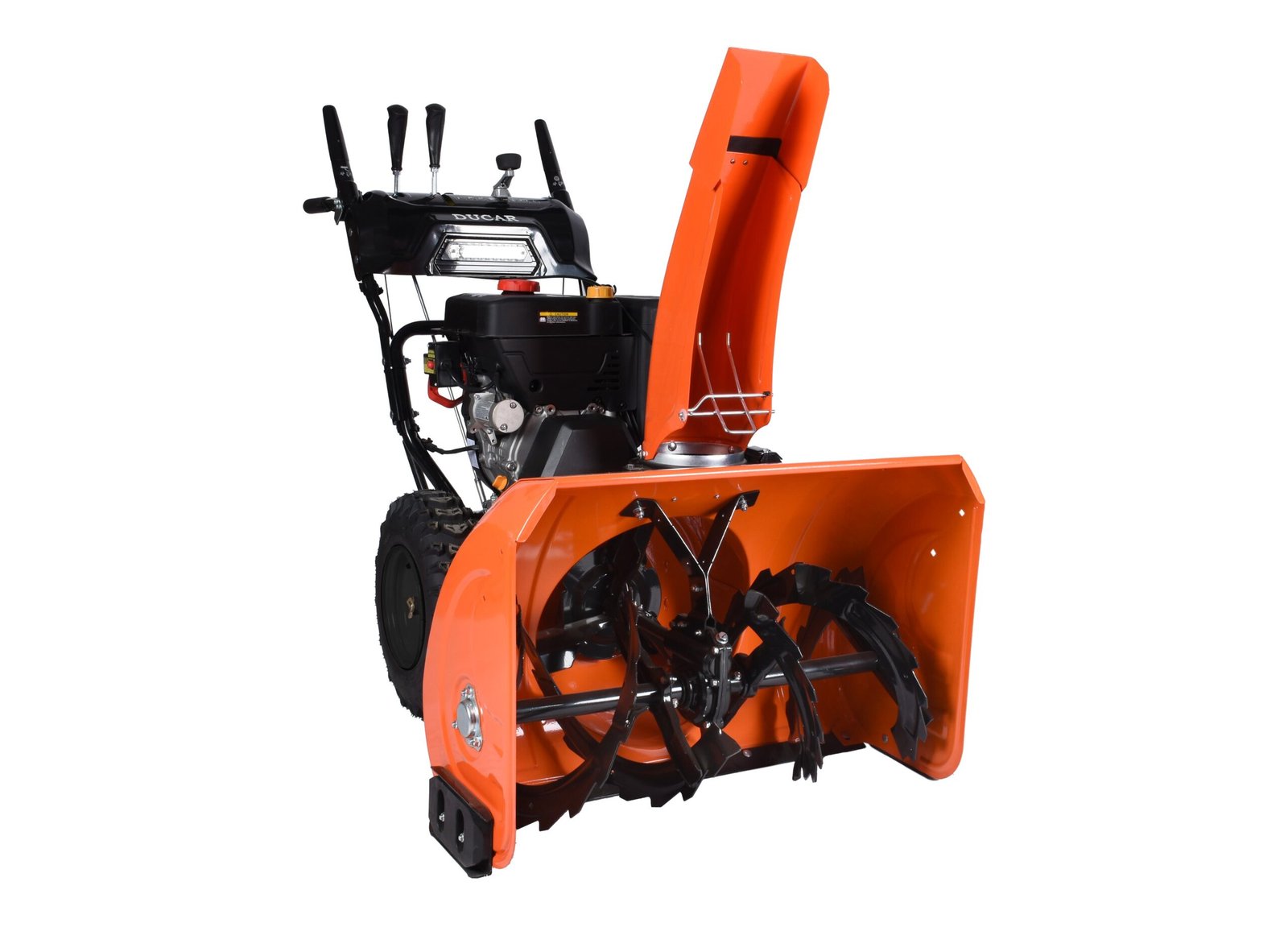
A snow blower should last ten to twenty years. Across that life it will need auger paddles, a scraper bar, shear pins, belts and skid shoes. None of it is expensive. All of it is essential, and a machine you cannot get a part for is scrap the moment something breaks.
Before buying anywhere, search for a consumable part for that exact model number, not the brand. If you cannot find an auger paddle today, in September, with no urgency, consider how that search goes in January with 30 centimetres down and the machine dead. House brand and discontinued big box models fail this test most often.
3. Bad timing, the most common of the snow blower buying mistakes
The most common mistake, and the easiest to avoid, because it costs nothing to fix.
Search interest for snow blowers in Canada multiplies more than fifteen times between August and December, and retail pricing follows that curve exactly. By the week after the first serious snowfall the popular sizes are gone, what remains is what nobody wanted, and prices are at their peak because demand is panicked rather than considered.
Worse, seasonal stock is bought months ahead against a forecast. When a heavy winter empties the shelves, most retailers do not restock until the following autumn. Buying in October rather than in the queue in January is the single largest saving available in this category. Full detail in where to buy a snow blower.
4. Comparing a bare tool against a kit
The costliest apples to oranges comparison in the cordless category, and it is very easy to make.
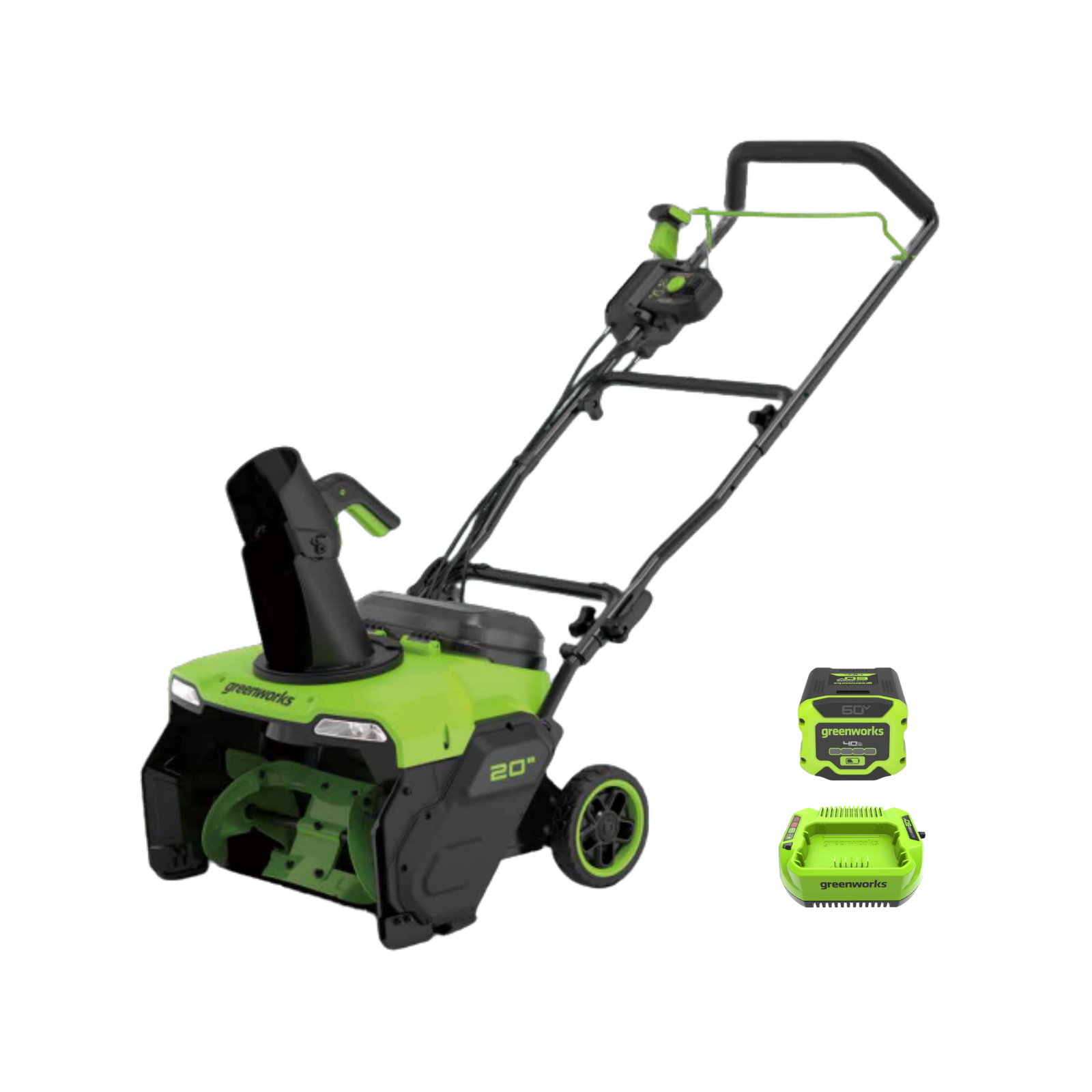
Many battery machines are sold twice: once as a bare tool, and once as a kit with battery and charger. The bare tool price looks dramatically cheaper, and it is not comparable to a rival machine quoted as a complete kit.
Buy the bare tool only if you already own packs on the same platform and they are large enough. A 2.0Ah pack from a trimmer will run a snow thrower, briefly and badly. Check what you are actually comparing before concluding one machine is better value than another. Figures are in snow blower prices in Canada.
5. Buying too wide
Oversizing feels like the safe error among snow blower buying mistakes, and is not.
A 34 inch machine on a two car driveway does not finish faster in practice. You make three passes instead of five and spend the difference turning a 120 kilogram machine at each end. You also now store something the size of a small motorcycle for the eight months a year it is idle.
Wider machines are heavier, turn less willingly, and ask more of the engine for the same conditions. Match width to driveway length using the sizing guide, and if you need more capability, buy it in intake height and power rather than width.
6. Buying on engine size alone
Displacement is printed largest, so it anchors the decision, and it is only part of the story.
Impeller diameter drives throwing distance more directly than engine size does, and a well matched 252 cc machine with a large impeller will out throw a poorly matched 302 cc one. Intake height decides how deep a bite you can take without stopping to clear, which on a machine used in real accumulation matters as much as width.
More fundamentally, a bigger engine does not fix a mechanism mismatch. A more powerful single stage machine is still a single stage machine, and still wrong on gravel.
7. Forgetting where it will live
Buying happens in October when the garage feels empty. Living with the machine happens for the eight months it is not needed.
A single stage machine fits beside a car and most models hang on a wall bracket. A 30 inch two stage machine at 100 kilograms takes real floor space and does not go on a wall. For anyone with a single garage, a carport or a garden shed, this frequently decides the purchase, and it is almost never mentioned in buying advice.
Measure the space before you buy, not after it arrives on a pallet.
8. Sizing for snowfall, not the plow ridge
People size the machine against the snow that falls from the sky, then meet the bank the municipal plow leaves across the entrance.
That material is compacted, frequently part ice, and several times denser than fresh snowfall. It is the hardest thing the machine will meet all winter, and a machine chosen for 20 centimetres of powder can be defeated by it entirely.
If the plow seals your driveway after every storm, that fact alone should move you to a two stage machine regardless of driveway length. See how to clear the plow ridge.
9. Not adding oil before the first start
The cheapest mistake to avoid and among the most destructive.
Gas snow blowers almost never ship with oil in the engine. Starting one dry destroys it within minutes, and it is not a warranty claim because it is an owner error. It is stated in the manual, and it catches people out every single season, usually because the machine arrived during a storm and was assembled in a hurry.
Add the grade the manual specifies, check the level on flat ground rather than on the slope of the driveway, and do it before the machine is ever started. The rest of the first season routine is in the maintenance checklist.
Buying under pressure
Every mistake above becomes far more likely in one specific situation: buying during a storm.
The driveway is buried, you need a machine today, and whatever is on the shelf becomes the machine you own for the next fifteen years. You do not check the surface requirement, you do not search for parts, you do not compare bare tool against kit, and you certainly do not measure the garage. You buy what is available and hope.
Retailers know this, which is why pricing peaks precisely when judgement is worst. It is not a conspiracy, it is simply demand meeting limited stock, and the outcome is the same either way: the worst decisions in this category are made in the worst conditions.
The defence is simple and it has nothing to do with willpower. Decide what you need in September, when there is no snow and no urgency, using the eight questions below. Write the model down. Then when the first forecast appears, you are executing a decision rather than making one. Storm timing is published by Environment and Climate Change Canada, and historical snowfall for your station is at ECCC climate records, which tells you what you are actually buying for.
The two minute checklist that prevents most snow blower buying mistakes
Run through this before paying, wherever you are buying.
- What is the driveway surface? Gravel means two stage, no exceptions.
- Do parts exist for this exact model? Search now, not later.
- Is this a bare tool or a kit? On cordless machines, confirm.
- Is the width right for the driveway, rather than as large as the budget allows?
- Where will it live for eight months?
- Does the plow seal my entrance? If so, two stage.
- Does it need oil before the first start? On gas, assume yes.
- Is the price in Canadian dollars, all in, with no brokerage at the door?
Eight questions, two minutes, and they eliminate almost every expensive snow blower buying mistake in this article.
Common questions
What is the biggest mistake when buying a snow blower?
Why should I check parts availability before buying?
When is the worst time to buy a snow blower?
What is the difference between a bare tool and a kit price?
Is it better to buy a bigger snow blower than I need?
Does engine size tell me how good a snow blower is?
Do new snow blowers come with oil?
What should I check before paying?
Avoided all nine? Start narrowing the machine in shop by type, or read best snow blowers in Canada for picks by driveway.