
Knowing when to buy a snow blower matters more than knowing which one to buy. A snow blower is used for four months and ignored for eight, and almost everything that goes wrong with one traces back to something not done in the right month. This is the year laid out properly: when to buy, when to prepare, when to service, and when the job you skip in April becomes the crisis you meet in January.
When to buy a snow blower: the short answers
- Best value. When to buy a snow blower for price is late August into September, before the first forecast moves demand.
- Best choice. When to buy a snow blower for range is the same window, while every width and every engine size is still on the floor.
- Worst month. December, when stock is thin, freight is slow and nothing is discounted.
- Clearance. March and April cut prices hard, but only on whatever nobody wanted.
- Spring clearance. When to buy a snow blower on discount is March and April, on whatever stock is left.
- Never in a storm week. Deciding when to buy a snow blower during a snowfall warning costs the most and leaves the least choice.
August: the new range arrives and prices hold
Stock lands, nobody is thinking about snow, and the full range is available for the only time in the year. Prices are at list with early season offers appearing, and selection is as good as it will ever be.
August is the month to work out what you need before deciding when to buy a snow blower rather than to buy in a hurry. Measure the driveway, confirm the surface, check where the machine will live for eight months, and look up historical snowfall for your station at Environment and Climate Change Canada. Deciding now means that when you do buy, you are executing a decision rather than making one under pressure.
September: when to buy a snow blower without pressure
If you know what you need, this is a good month to commit. The range is still complete, delivery is unhurried, and you have time to assemble and test before anything falls.
The question of when to buy a snow blower has one wrong answer, which is during a storm, and a broad band of right ones running from now until late November. Buying in September buys you calm rather than a discount.
Order the consumables at the same time: shear pins, a spare belt, fuel stabiliser, and paddles if yours are worn. They cost very little now and are unobtainable mid storm.
October: prepare and test before the first fall
The most important month in the calendar after April, and the one people skip.
Test run the machine. Fresh fuel in, start it, let it run several minutes. Confirm the auger and drive both engage and disengage cleanly. A machine that has sat since March needs proving before you rely on it.
Adjust the skid shoes for your surface, raised about a centimetre on gravel and lower on pavement. Check paddles, scraper bar and belts. Walk the driveway and note anything that will be buried once snow covers it.
A fault found in October is a conversation with a shop that has time to help. The same fault in January is a three week queue while you shovel. The full routine is in the maintenance checklist.
November: the last sensible window to buy a snow blower
Promotions are running and the range is still reasonable, which makes this the practical sweet spot for anyone who did not buy earlier. It is also the month first snowfall arrives across much of the country.
If you are still deciding when to buy a snow blower, decide now. Everything after this point costs more and offers less, and the gap widens weekly.
December: peak everything
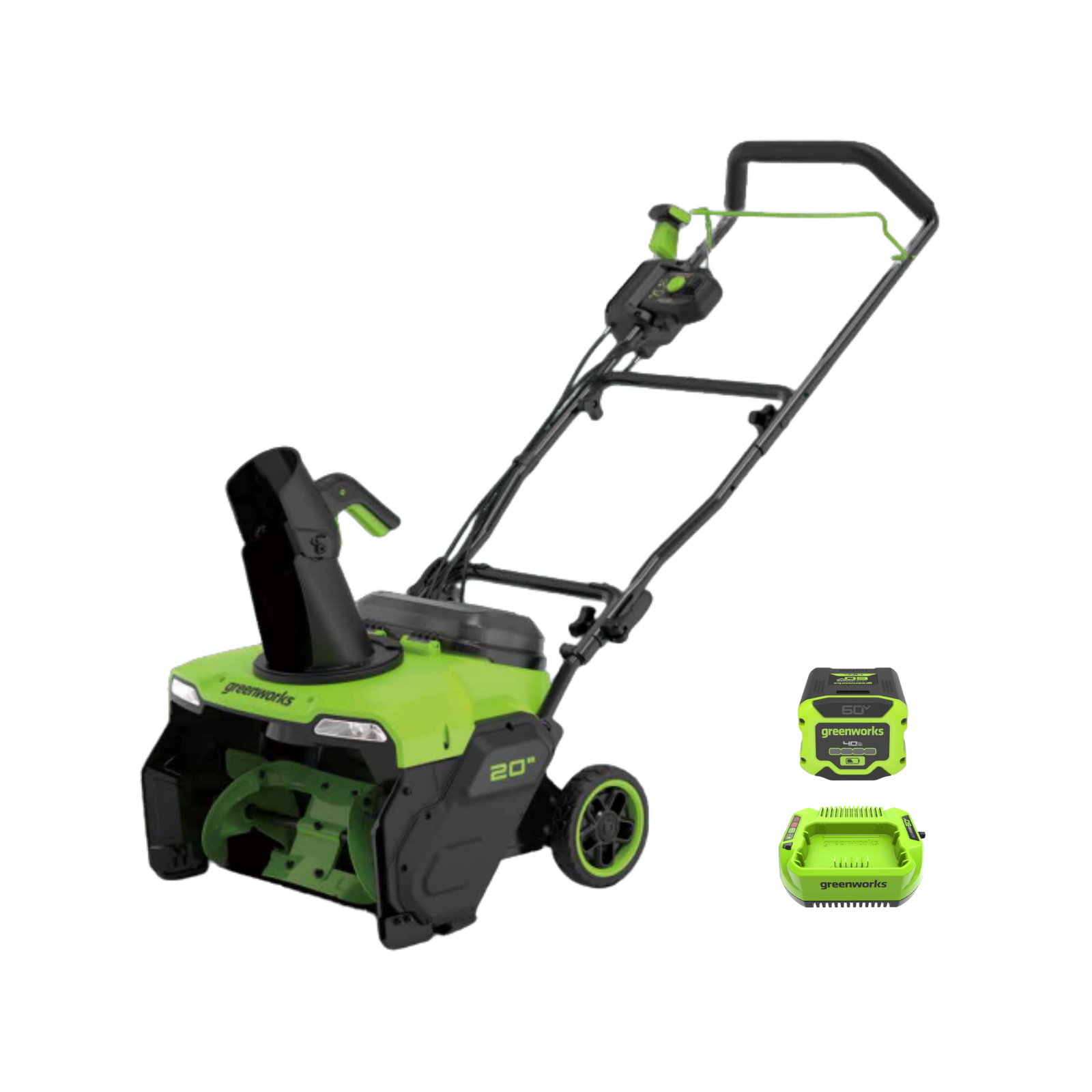
Peak demand, peak prices, thinning stock, and the busiest month of the year for every service department in the country.
This is when the April fuel job pays off or does not. A machine stored with untreated fuel will not start, and you join a queue measured in weeks at exactly the moment you need the machine daily. See why a snow blower will not start.
It is also the worst month to buy. Seasonal stock was bought months ago against a forecast, so when a heavy winter empties the shelves most retailers do not restock until the following autumn. What is left in December is what nobody wanted in September.
January and February: the hard months
The heaviest clearing of the year, and where technique matters more than equipment.
Clear early and often. Two passes through 15 centimetres is easier on you and on the machine than one through 30, and it avoids the compaction that comes from driving over snow before clearing it. Watch forecasts at ECCC and get ahead of storms rather than reacting to them.
Check shear pins before each storm and keep spares to hand. Deal with the plow ridge before it freezes, using partial width bites, as covered in how to clear the plow ridge. On cordless machines, store packs indoors and fit them just before clearing, since capacity falls in deep cold.
March: wet snow
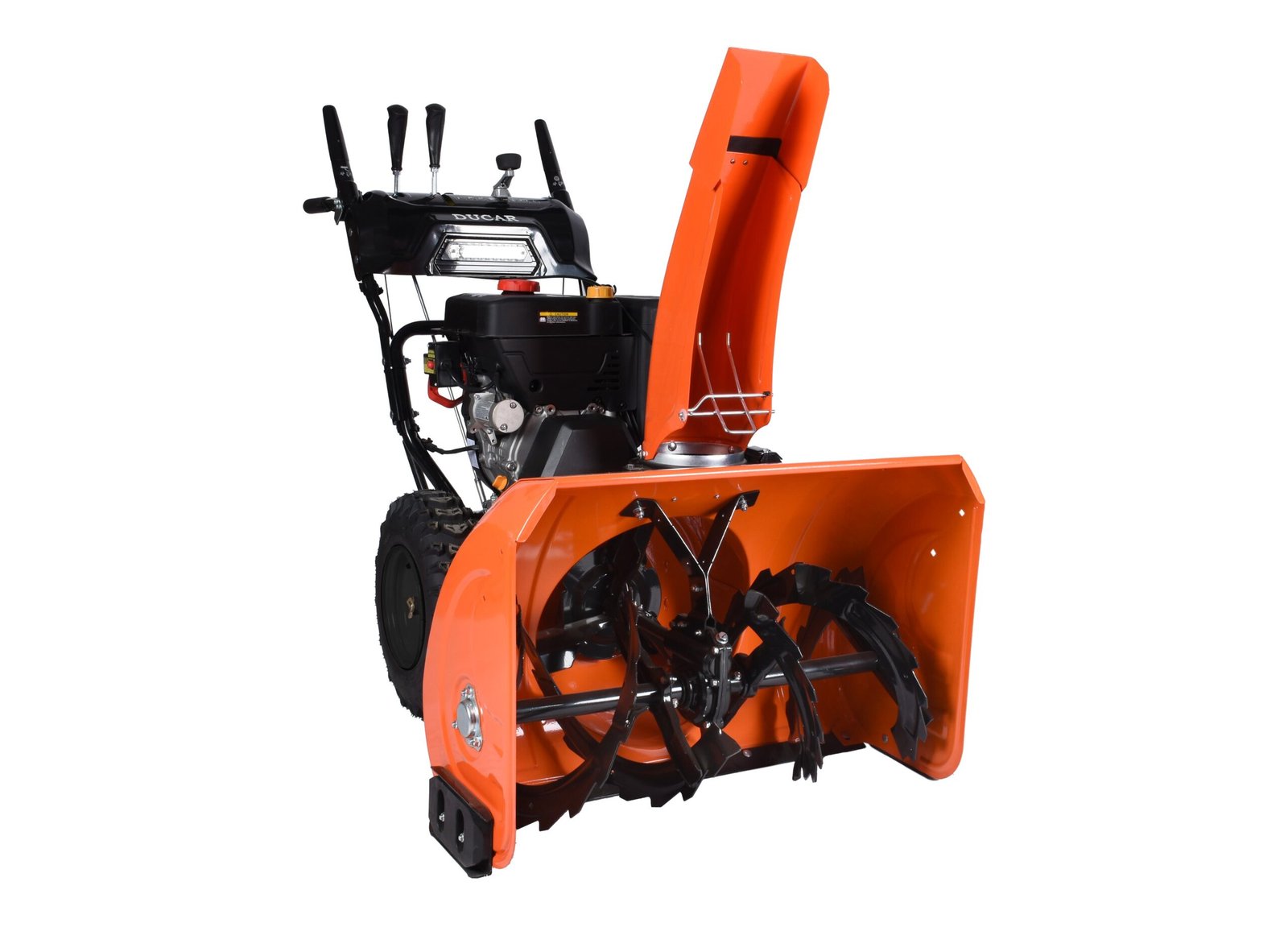
The snow changes character and catches people out. Late season falls are wetter and considerably denser than January powder, which packs chutes, drains battery packs faster, and asks more of every machine.
Clear earlier in the fall rather than waiting for it to finish, because wet snow compacts under its own weight and under traffic. Take partial width passes without hesitation. This is also when worn paddles announce themselves, because dense snow finds the weakness that powder hid.
How the timeline shifts across Canada
The months above hold for most of the country, and the edges move depending on where you are.
In Victoria and coastal British Columbia, the season is short and light enough that the whole calendar compresses. First snow often arrives late, some winters barely register, and a machine bought for a handful of clearings still needs the April fuel job because it spends even longer sitting.
In Ontario and Quebec, the timeline above is close to literal. First snowfall through November, heavy clearing from December to February, wet snow in March, storage in April.
In the Prairies, cold arrives earlier and stays. Deep cold matters more than depth in places, which pushes the October test run earlier and makes cordless pack storage more important, since capacity loss at minus thirty is real.
In Atlantic Canada and the lake effect belts, the season runs longer at both ends and arrives in larger single events. The practical effect is that the buying window closes earlier, because local stock is cleared faster, and the April job matters even more since the machine has worked harder.
In the territories, everything above extends, and parts logistics become the binding constraint rather than the weather. Ordering consumables in September rather than January is not optional advice there, it is the difference between a working machine and a stopped one.
April: the job that matters most
Twenty minutes now decides next December. It is the single highest value work you will do on the machine all year, and it is the one most often skipped because the season is over and the machine is out of mind.
- Deal with the fuel. Stabilise and run the engine several minutes so treated fuel reaches the carburettor, or run the tank dry. Not neither.
- Change the oil while the engine is warm, so contaminants and combustion acids drain out rather than sitting all summer.
- Clean and dry the machine, particularly inside the auger housing where salt and grit collect.
- Inspect and order parts while nobody else is ordering them.
- Store it raised, out of weather, and not wrapped tightly in plastic.
- Take battery packs indoors.
Full detail in how to store a snow blower for summer.
May to July: leave it alone, and the cheapest time to buy a snow blower
Nothing to do, provided April was done properly. The machine sits, and the fuel you dealt with is not degrading into varnish.
This is also the deepest clearance period, when remaining stock is cheapest and choice is minimal. If you are prepared to take whatever is left, it is the cheapest time of year to buy a snow blower. Most people are not, which is why the sensible window remains September to November.
Your first winter with a new machine
If this is your first season with a snow blower, the calendar above compresses into a shorter list, and knowing when to buy a snow blower is only the first part of it.
Before the first snowfall, assemble it properly rather than in a rush. Fit the handles, chute and control cables, and on a gas machine add oil before the engine is ever started, because they ship dry and starting one without oil destroys it. Read the manual far enough to find the safety key, the shut off and the clearing tool.
On the first clearing, go out in lighter snow than you think warrants it, so you learn the machine when the stakes are low. Find out how it turns, how the chute control works with gloves on, and how far it actually throws before you meet a real storm at six in the morning.
Through the first season, expect to adjust the skid shoes once you see how the machine sits on your particular surface, and expect to shear a pin at some point if the plow visits your entrance. Neither is a fault.
At the end, do the April job even though the machine is nearly new. A first year machine stored with untreated fuel fails in its second December exactly as readily as an old one, and people assume a new machine is immune. It is not.
The year in one table
| Month | Buying | What to do |
|---|---|---|
| August | Full range, list price | Measure, decide, research |
| September | Excellent | Buy, order consumables |
| October | Very good, offers start | Test run, adjust, inspect |
| November | Good, last sensible window | Final checks before first snow |
| December | Worst of the year | Clear early, check pins |
| January to February | Poor, stock thin | Clear often, mind the ridge |
| March | Clearance begins | Wet snow, partial passes |
| April | Good discounts, poor choice | Fuel, oil, clean, store |
| May to July | Cheapest, very limited | Nothing |
Work the calendar rather than the forecast and the question of when to buy a snow blower answers itself before the first flake lands.
Common questions
When is the best time to buy a snow blower in Canada?
Is it cheaper to buy a snow blower in spring?
Why do stores run out of snow blowers in winter?
What should I do in October?
What is the most important month for a snow blower?
Why is March snow harder to clear?
Should I buy a snow blower in December if I need one?
Do I need to do anything over the summer?
Ready to choose? Start with what size snow blower do I need, then compare types in shop by type. Avoid the common errors in nine buying mistakes.