
Almost every snow blower that fails in the middle of a Canadian winter fails for a reason that was preventable in October. Not a design fault, not bad luck: old fuel, a worn scraper bar, an oil change nobody did. This is the snow blower maintenance schedule that actually matters, in the order the calendar demands it, with the jobs that prevent failures separated from the ones that merely look thorough.
On this page
- The snow blower maintenance jobs that actually prevent failures
- October: the pre season pass
- Fuel is what kills most machines over summer
- Oil, spark plug and the starting system
- The wear parts, and which ones are meant to break
- Mid season checks that take four minutes
- Battery and electric machines in real Canadian cold
- April: putting it away properly
- A full snow blower maintenance schedule
- What it costs to skip this
- Frequently asked questions
The snow blower maintenance jobs that actually prevent failures
Manufacturer manuals list every conceivable task with equal weight, which is not much help when you have twenty minutes on a Saturday. In practice a small number of jobs prevent almost all mid winter failures.
Fuel management prevents more breakdowns than everything else combined, because a machine sits unused for seven months of the year. Oil matters because cold is when the engine is least protected. The scraper bar and paddles decide whether the machine still clears to the surface or just pushes snow around. Shear pins decide whether a jam costs you two dollars or a gearbox.
Everything else is worth doing, but if you only do these four you will avoid the failures that leave a driveway unclearable during a storm.
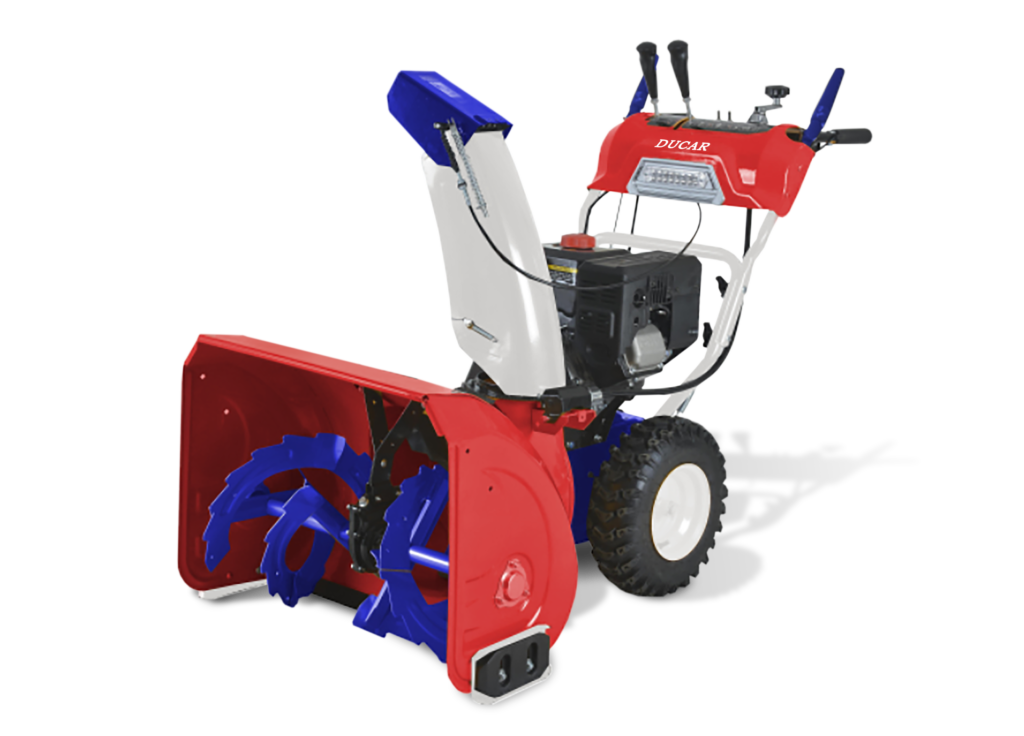
October: the pre season pass
Do this snow blower maintenance pass in October, before the first fall, not in November when you need the machine. A machine that will not start on the morning of the first storm is a machine you cannot get serviced, because every shop in your city is already booked.
Start it. That sounds obvious and it is the step people skip. If it will not start in a mild October garage, you have six weeks to fix it rather than six hours.
Check the oil level and condition. Check tyre pressure if it has wheels, because uneven pressure makes the machine pull to one side and scrape unevenly. Check that the auger and impeller turn freely by hand with the engine off and the spark plug lead disconnected. Check both control cables engage and release cleanly. Check the chute rotates fully and the deflector holds its position.
Then look at the wear parts properly, covered below.
Fuel is what kills most machines over summer
Petrol degrades. Left in a tank over a Canadian summer it separates, and the lighter fractions evaporate and leave a varnish that coats the inside of the carburettor. That varnish is why a machine that ran perfectly in March will not start in November.
You have two honest options. Drain the system at the end of the season, which means emptying the tank and then running the engine until it stops so the carburettor bowl empties too. Or treat the fuel with a stabiliser, then run the engine for several minutes so treated fuel actually reaches the carburettor rather than sitting in the tank.
What does not work is leaving a half full tank of untreated fuel and hoping. It is the most common snow blower maintenance failure we hear about, and it turns a machine into a carburettor clean that costs more than a season of stabiliser.
Ethanol blended fuel makes this worse, because ethanol attracts moisture and that water sits in the bottom of the tank. Where you have the choice, ethanol free fuel stores considerably better in a machine that sits for most of the year.
Oil, spark plug and the starting system
Change the oil once a season, and after the first five hours on a new machine while the break in debris is still circulating. Cold thickens oil, so winter starting is exactly when clean oil of the right grade matters most. Check the manual for the grade, because a summer weight oil in a January engine is a genuine problem rather than a technicality.
Replace or clean the spark plug annually. A plug is inexpensive, takes minutes, and a fouled one produces exactly the symptom people misdiagnose as a fuel problem: turning over but not firing. If your machine is refusing to start, work through our snow blower will not start guide before assuming the worst.
If your machine has electric start, test it in October. The circuit is used a handful of times a year and corroded contacts are common. Also confirm the recoil starter works, because it is the backup that matters when the power is out during a storm.
The wear parts, and which ones are meant to break
Four parts wear, and knowing which are consumable changes how you think about them.
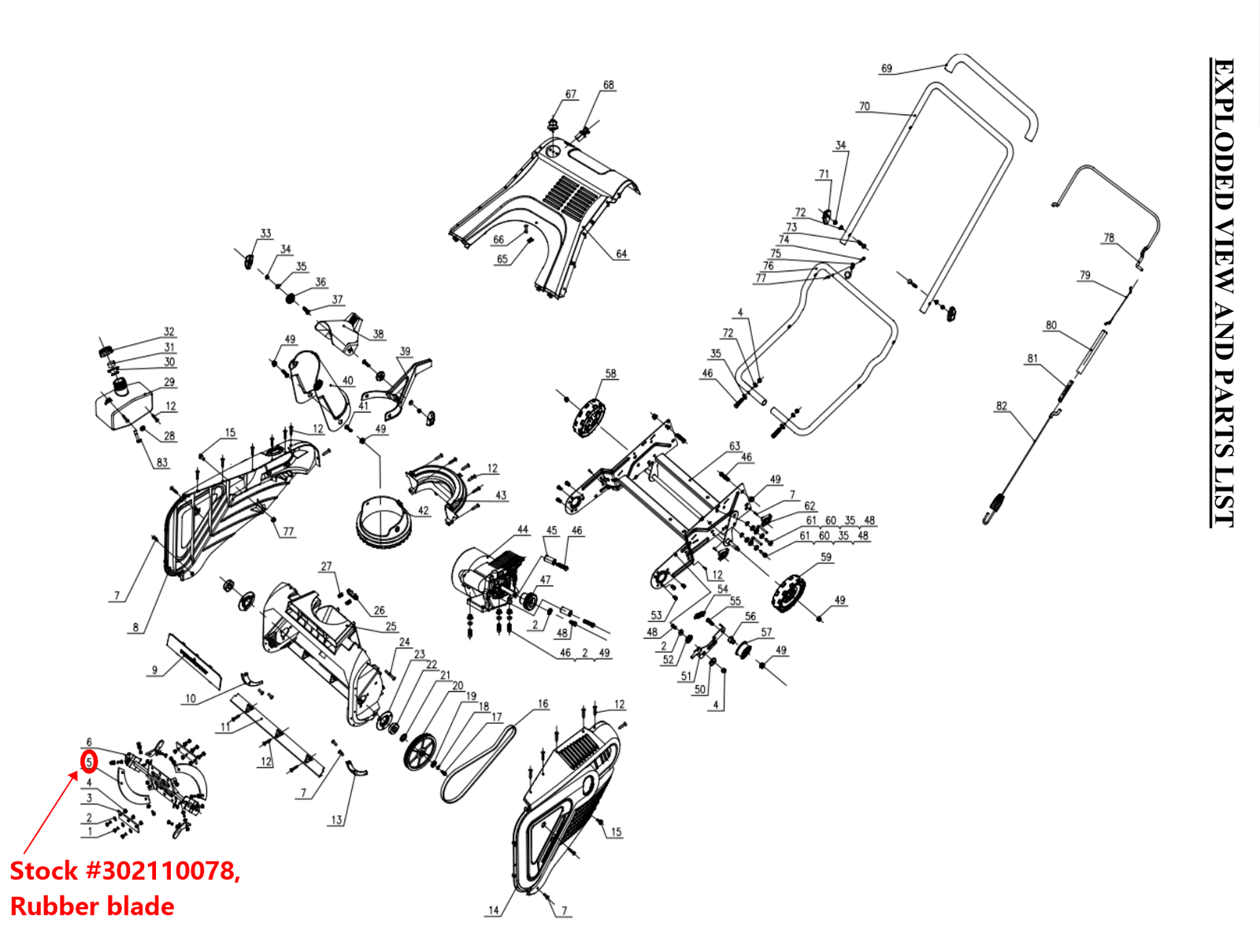
Shear pins are designed to fail. They are a deliberate weak point that breaks when the auger jams so the gearbox survives. A broken shear pin is the system working. Keep spares in the garage before the season starts, because you will need them during a storm and not before one. Our guide to snow blower shear pins covers sizing and why the correct pin matters more than people assume. Never substitute a standard bolt: it will not shear, and the gearbox pays instead.
The scraper bar is the strip along the bottom rear of the housing that sets clearing height. When it wears, the machine leaves progressively more snow behind. Most are reversible once, which effectively doubles their life.
Auger paddles on a single stage machine wear fastest of anything, because they contact the ground continuously. When they no longer reach the surface the machine stops clearing properly and stops pulling itself forward.
Skid shoes on a two stage machine set the auger height. Set them so the housing clears the surface, particularly on interlock or a sealed driveway where a low setting will scar the surface over a season. Replacement parts for all of these are in our snow blower parts section.
Mid season checks that take four minutes
Through the season, four minutes of snow blower maintenance after each significant use prevents most of the compounding problems.
Clear packed snow from the auger housing and the chute before it freezes solid overnight. Wipe the machine down so meltwater does not sit on bare metal. Check that the shear pins are intact if you hit anything. Check the oil level roughly every five hours of running.
Before each use, spray the inside of the chute and the auger housing with a silicone lubricant. It reduces clogging in wet snow more than any technique change, and clogging is both the main frustration and the main injury risk with this equipment. Never clear a blockage by hand. Stop the engine, wait for the auger to stop completely, and use the clearing tool. The Outdoor Power Equipment Institute safety guidance is two minutes of reading and covers the injury that puts people in hospital every winter.
Battery and electric machines in real Canadian cold
Battery machines need less snow blower maintenance, not none, and the cold changes the rules.
Lithium cells lose usable capacity as temperature drops. A pack rated for a certain runtime at room temperature will deliver noticeably less at minus twenty, which matters far more in Edmonton at 124 cm a season than in Toronto at 115 cm, because Edmonton holds its cold. Store packs indoors above freezing and bring them out to the machine rather than leaving them clipped in overnight in an unheated garage.
Store at a partial charge over summer rather than fully charged or fully flat. Keep the terminals clean and dry, and keep the charger somewhere dry.
Everything mechanical still applies. The scraper bar, paddles, chute and auger housing wear and clog exactly as they do on a petrol machine. Browse battery snow blowers and electric snow blowers for what the platforms involve.
April: putting it away properly
End of season storage is the snow blower maintenance step where next winter is actually decided.
Deal with the fuel first, by draining or stabilising. Change the oil while the engine is still warm from a final run, because warm oil carries more of the suspended debris out with it. Clean the machine thoroughly, especially inside the auger housing where road salt sits. Salt residue left over a humid summer corrodes faster than a winter of use does.
Touch up any bare metal, lubricate the chute mechanism and control cables, and store the machine covered but not sealed in plastic, which traps condensation. If it has a battery, remove it and store it indoors.
Then write down what you noticed. The worn scraper bar you spotted in April is the part you will otherwise rediscover during the first storm in November.
A full snow blower maintenance schedule
| When | Job | Why it matters |
|---|---|---|
| October | Start the machine | Six weeks to fix a fault instead of six hours |
| October | Change oil, check or replace spark plug | Cold starting is when the engine is least protected |
| October | Inspect scraper bar, paddles, skid shoes | Decides whether it still clears to the surface |
| October | Buy spare shear pins | You will need them mid storm, not before one |
| Before each use | Check oil level, spray chute with silicone | Clogging is the main frustration and injury risk |
| After each use | Clear packed snow, wipe down | Stops ice building and metal corroding |
| Every 5 hours | Check oil, check shear pins intact | Catches a jam before it reaches the gearbox |
| April | Drain or stabilise fuel | Prevents the varnish that stops November starts |
| April | Change oil, clean off salt, store covered | Salt corrodes faster over summer than in use |
| April | Remove battery, store indoors part charged | Preserves usable capacity for next season |
What it costs to skip this
The economics of snow blower maintenance are lopsided. A season of stabiliser, an oil change and a spark plug is a small annual cost. A carburettor clean is a multiple of that, and it arrives with a wait, because you are joining a queue in the one week of the year everybody else has the same problem.
A packet of shear pins is trivial. A gearbox is not, and on some machines it approaches the value of the machine itself.
The real cost, though, is a driveway you cannot clear during the storm you bought the machine for. In Ottawa at 223 cm a season or Sudbury at 267 cm, that is not an inconvenience. If you are still choosing a machine, the size calculator and our buying guide for Canada will narrow it down, and simpler machines genuinely need less of this. For the underlying climate figures behind our city pages, Environment and Climate Change Canada publishes the Canadian Climate Normals.
Frequently asked questions
How often should I change the oil in a snow blower?
Once a season for most residential machines, and after the first five hours on a brand new one. Cold thickens oil, so a machine running on last season’s oil is working hardest at exactly the moment it is least protected. Check the level before every use, not just the condition.
Should I drain the fuel or use a stabiliser over summer?
Either works, but do one of them. Fuel left untreated for a season separates and leaves varnish deposits in the carburettor, which is the single most common reason a machine will not start in November. Draining is the more thorough option. A stabiliser is easier and is fine if you run the engine for a few minutes afterwards so treated fuel reaches the carburettor.
Why does my snow blower keep breaking shear pins?
Usually because something is jamming the auger, most often ice, a chunk of packed plow ridge, or a hidden object. Shear pins are designed to break so that the gearbox does not, so a broken pin has done its job. If you are breaking them repeatedly in normal snow, the auger bearing or the gearbox itself needs looking at.
How do I stop the chute from clogging?
Keep moving forward slowly rather than fast, take a narrower bite in wet snow, and spray the inside of the chute and auger housing with a silicone lubricant before you start. Never clear a clog with your hand. Stop the engine, wait for the auger to stop completely, and use the clearing tool supplied with the machine.
When should skid shoes be replaced?
When the metal is worn thin enough that the auger housing is close to touching the ground, or when you can no longer set an even height on both sides. On a paved driveway they last several seasons. On gravel they wear far faster because they are doing real work.
Does a battery snow blower need maintenance?
Less, but not none. There is no fuel system or spark plug, but the scraper bar, paddles and auger still wear, the chute still needs lubricating, and the battery itself needs storing at a partial charge somewhere above freezing. Leaving a lithium pack in an unheated garage all summer is how people lose capacity.