
Choosing a snow blower in Canada comes down to three decisions: the type of machine, how deep it clears, and how it is powered. Get those right and a modest machine serves you for a decade. Get them wrong and the most expensive model on the page will still disappoint you. This guide covers all three, with the honest limits of each type.
On this page
- Which type of snow blower do you need
- Snow blower types compared
- Clearing width and clearing depth
- Gas, corded or cordless
- Understanding battery voltage and capacity
- Snow is not the same across Canada
- Gravel driveways and the plough ridge
- Choosing by the property you actually have
- Safety, said plainly
- Storage and off season care
- Clearing well, which matters more than the machine
- Frequently asked questions
Which type of snow blower do you need
Nearly every buying mistake in this category comes from choosing on price or on clearing width, when the decision that actually matters is the type of machine. There are three types, and the difference between them is mechanical rather than a question of quality.
A powered snow shovel is a narrow single purpose tool for steps, decks, balconies and paths. It is not a driveway machine and no amount of power makes it one. What it does is remove the lifting and twisting that causes most winter back injuries.
A single stage snow blower uses one auger to both gather snow and throw it, with the auger running in contact with the ground. That contact is why it scrapes a paved surface clean, and also why it must never be used on gravel. It suits paved driveways and ordinary snowfall, and it is the right choice for most Canadian households.
A two stage snow blower separates the two jobs. A serrated auger breaks the snow up and feeds it to a separate high speed impeller, which does the throwing. Because the auger is held clear of the ground on adjustable skid shoes, it handles gravel, and because it breaks snow apart before moving it, it deals with compacted drifts and the ridge left by a plough.
Snow blower types compared
| Type | Clears | Best for | Will not do |
|---|---|---|---|
| Powered snow shovel | 4 to 8 inches deep, 12 inches wide | Steps, decks, balconies, narrow paths | Driveways of any size |
| Single stage | 8 to 13 inches deep, 16 to 22 inches wide | Paved driveways, sidewalks, patios | Gravel, plough ridges, compacted snow |
| Two stage | Deep and compacted snow, 24 inches wide | Gravel, plough ridges, large driveways | Nothing much, but costs more and needs storage space |
Clearing width and clearing depth
Width is the number in every product title and depth is the number that decides whether a machine copes. Width tells you how many passes a driveway takes. Depth tells you whether you clear in one pass or three, and whether a heavy overnight fall defeats the machine entirely.
A 20 inch machine clearing 8 inches deep and a 20 inch machine clearing 13 inches deep look almost identical on a listing page and behave completely differently in February. Environment and Climate Change Canada publishes historical snowfall data by station through its Canadian Climate Normals, and ten minutes with your own location is the most useful research you can do before buying.
As a rough guide, an 8 inch clearing depth covers the majority of overnight falls in southern Ontario and the Prairies. A 10 inch depth gives comfortable margin almost anywhere. Thirteen inches, the deepest single stage figure we stock, handles nearly anything short of a storm that closes the roads.
Gas, corded or cordless
Gas machines have the most outright capability and the most ownership burden. Fuel, oil changes, spark plugs, carburettors that gum up over summer if the fuel is not stabilised, and a pull cord that is least willing on the coldest morning. For a large rural property they remain the right answer.
Corded electric machines have unlimited runtime and constant power regardless of temperature, with no battery to degrade or replace. The trade is a heavy gauge outdoor extension cable to manage, and a driveway that must be within reach of a socket. For a small to medium property near the house, corded is often the most sensible purchase and the cheapest to own over ten years.
Cordless machines are where the range has moved, and for good reason. No fuel, no oil, no starting ritual, no cable, and a battery that runs the rest of your outdoor tools. The limitation is runtime, which is solved with a second pack rather than a different machine.
Understanding battery voltage and capacity
These two numbers cause more buying mistakes than anything else in cordless equipment, so it is worth being precise.
Voltage, the 40V, 60V or 80V in a product name, sets the ceiling on power. It determines how hard the motor can work and whether it keeps its auger turning in heavy wet snow or bogs down and stalls.
Capacity, measured in amp hours, sets how long it can work for. A 5.0Ah pack does not make a machine more powerful than a 2.0Ah pack. It makes it run longer.
So an 80V machine with a small battery is powerful but short winded, and a 40V machine with a large battery runs a long time but meets its limit sooner in difficult snow. Choose voltage for the conditions you face and capacity for the size of your driveway.
One further point that saves real money: choose the platform you already own. If there are Greenworks 60V batteries in your garage, buying a 60V machine as a bare tool costs a fraction of a complete kit. Running two battery systems to gain 20V is a false economy that leaves you with duplicate chargers and packs that can never be shared.
Snow is not the same across Canada
A machine that is comfortable in Calgary can be working at its limit in Halifax, and the reason is water content. Cold dry Prairie snow is light, easy to throw and easy on a motor. Coastal and southern Ontario snow, particularly in March, carries far more water and can weigh several times as much for the same depth.
If you are in a wetter climate, weight the decision toward more motor rather than more width. A narrower machine with power in reserve will out perform a wider machine that stalls, and taking a narrower pass is always an option while adding power is not.
Gravel driveways and the plough ridge
Two situations rule out every single stage machine, and it is worth being blunt about both because they account for most returns in this category.
If your driveway is gravel, you need a two stage machine. A single stage auger runs in contact with the surface and will pick stones up and throw them, which damages the machine and is genuinely dangerous to vehicles, windows and people.
If a municipal plough seals the end of your driveway with a compacted ridge, you need a two stage machine. That ridge is not fresh snow. It is snow that has been compressed by a plough blade and often partially refrozen, and a single stage auger will ride over it rather than cut into it.
Choosing by the property you actually have
Specifications are easier to compare than they are to apply, so here is the same decision framed by the thing in front of your house.
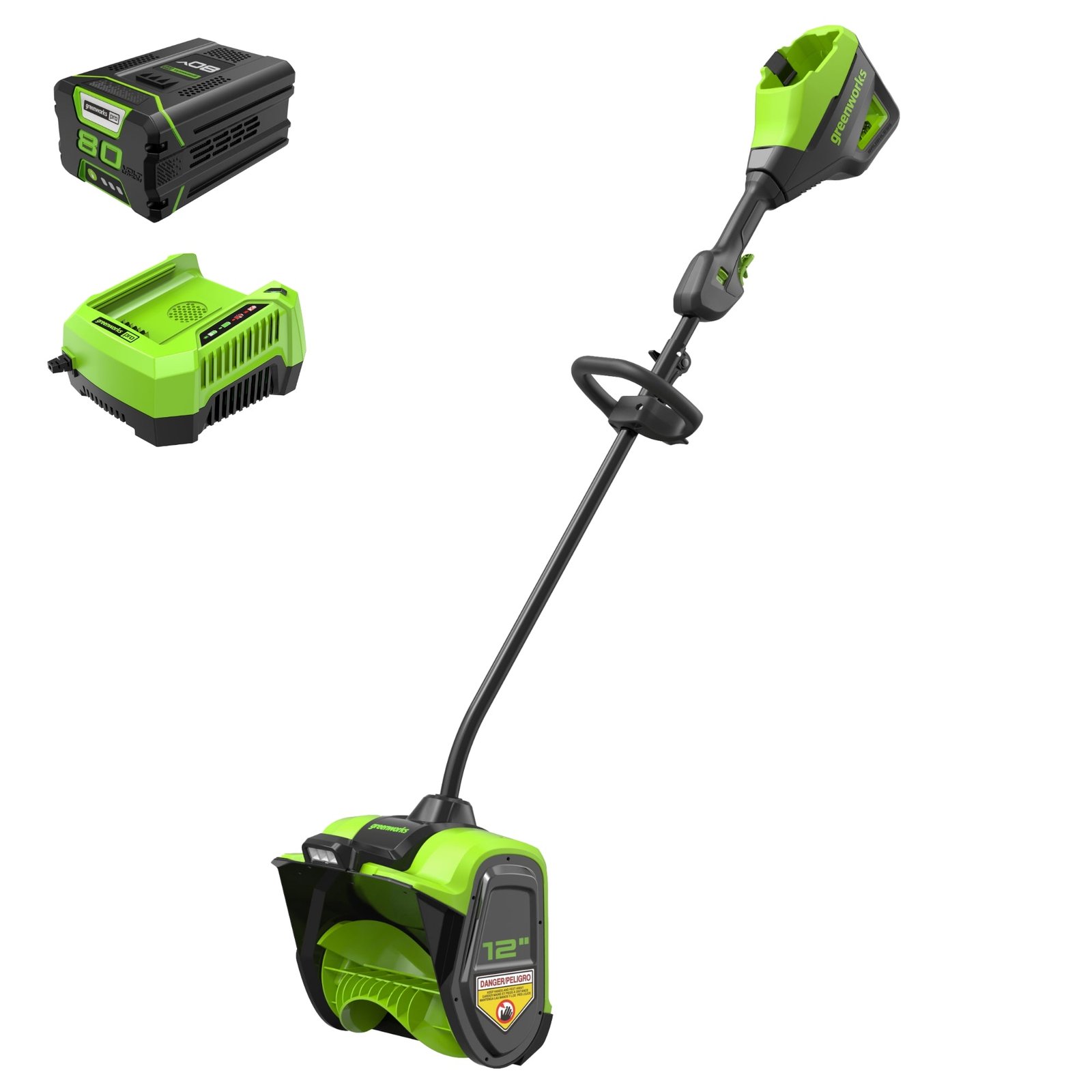
Townhouse, condo or a front path and steps. A powered snow shovel is very likely the only tool you need, and it stores in a cupboard rather than a garage. Anything wider will be awkward to manoeuvre and impossible to store.
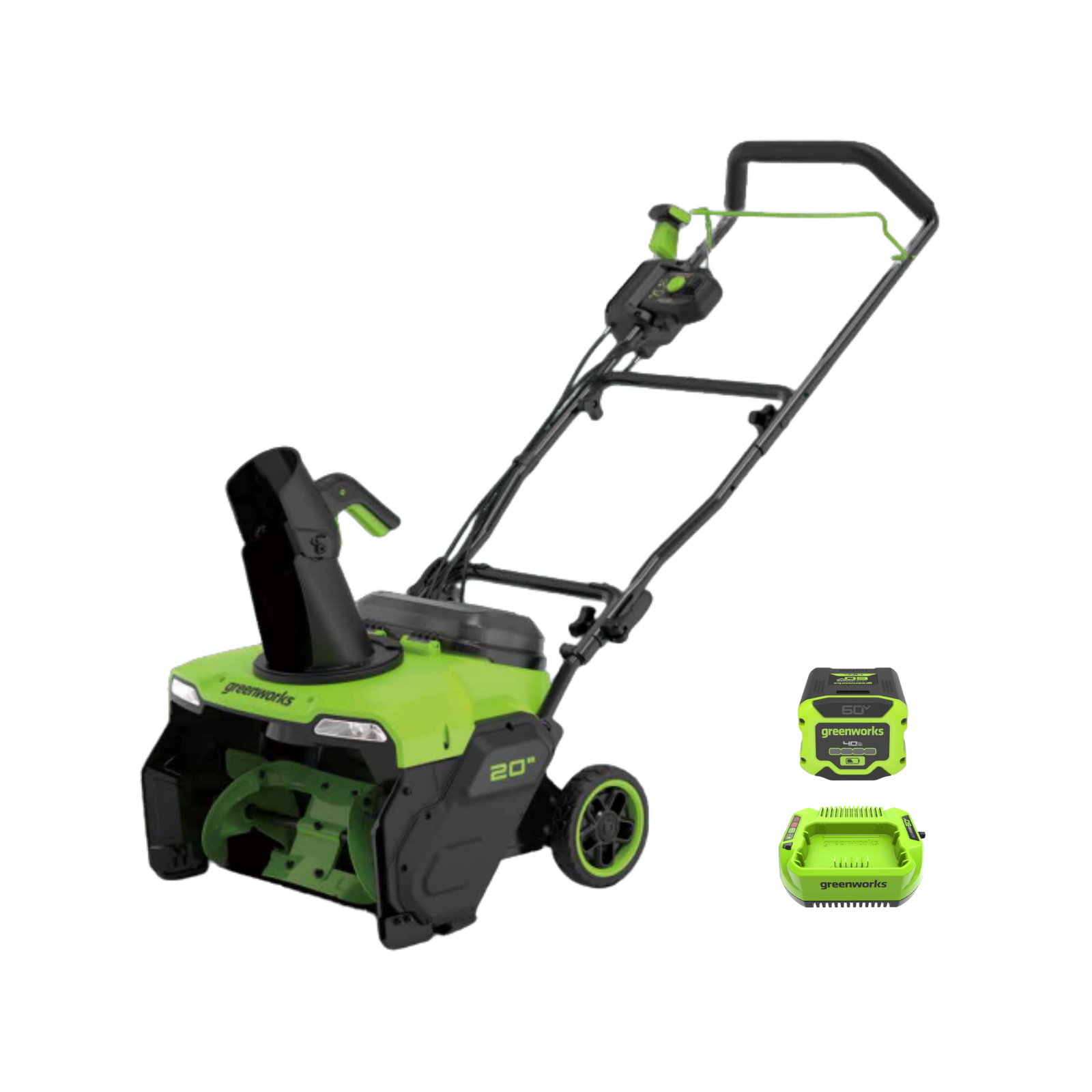
Single paved driveway and a walkway. A 16 to 20 inch single stage machine, cordless or corded. If you already own a battery platform, buy the bare tool on that platform and save the cost of a kit.
Double driveway on a paved surface. A 20 to 22 inch machine with at least 10 inches of clearing depth. The extra depth is worth more than the extra width, because it decides whether a heavy fall takes one pass or three.
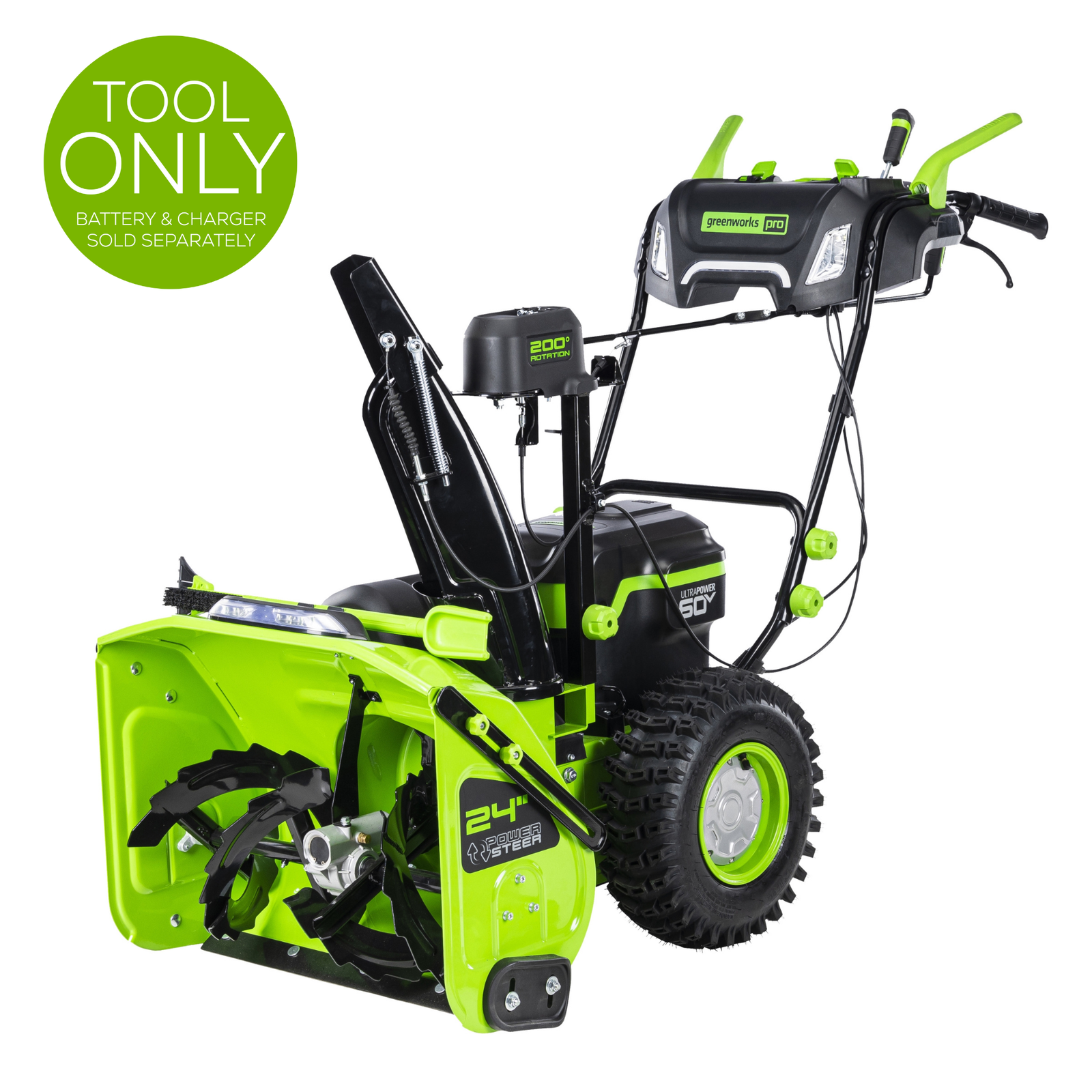
Gravel driveway, a long drive, or a plough that blocks you in. A two stage machine, and nothing else will do. Budget for the storage space as well as the price, because a 24 inch two stage unit needs a parking spot of its own.
Safety, said plainly
Snow blower injuries are overwhelmingly hand injuries, and they overwhelmingly happen the same way: a jammed chute cleared by hand while the machine still holds stored energy in the impeller. Releasing the trigger is not enough on its own.
Stop the machine, wait for everything to come to rest, and clear the blockage with the tool supplied for it. Two stage machines ship with a clearing tool for exactly this reason. The Canada Safety Council publishes seasonal guidance on safe winter equipment use that is worth five minutes before your first clearing of the year.
Two further habits worth forming. Walk the area before the first snowfall and remove anything the auger could pick up: hoses, extension leads, garden edging, toys and doormats. And keep an extension cable behind you at all times when using a corded machine.
Storage and off season care
What retires most snow blowers is corrosion rather than wear. These machines spend their working life soaked in meltwater carrying road salt picked up off the driveway on car tyres, then sit untouched for ten months.
At the end of the season, run the machine briefly on clear ground to throw out residual slush, wipe the chassis dry, fold the handle if it folds, and store it somewhere it will not sit in a puddle. That is the whole regime for a cordless or corded machine. A gas machine additionally needs its fuel drained or stabilised.
Batteries should be stored indoors, part charged rather than full or flat. Lithium cells lose usable capacity in deep cold, and a pack left in an unheated garage at minus twenty will give noticeably shorter runtime than the same pack brought out warm.
Clearing well, which matters more than the machine
Two habits get more out of any snow blower than an upgrade would.
Clear early. Fresh snow is light and easy to move. The same snow after it has been walked on, driven over and partially thawed and refrozen is a different material entirely, and it will defeat a machine that would have handled it comfortably six hours earlier.
Aim the chute downwind and plan your direction. Start at the point furthest from where you want the snow to end up and work toward it, so you are never re throwing the same snow. Set the chute away from the road, parked cars and your neighbour’s property before you start.
Frequently asked questions
What size snow blower do I need for a double driveway?
A 20 to 22 inch machine clears a 16 foot double driveway in roughly eight to ten passes down and back. Clearing depth matters more than width, so look for at least 10 inches of depth unless your snowfalls are consistently light.
Can I use a single stage snow blower on a gravel driveway?
No. Single stage machines run the auger in contact with the ground and will pick up and throw stones. Gravel requires a two stage machine with adjustable skid shoes that hold the auger clear of the surface.
Will a snow blower clear the ridge left by a plough?
Only a two stage machine will do this reliably. That ridge is compacted rather than fresh snow, and a single stage auger tends to ride over it instead of cutting into it.
Is a cordless snow blower powerful enough?
For paved driveways and ordinary snowfall, yes. Modern 60V and 80V machines match comparable gas single stage models. For very large properties or consistently deep wet snow, a two stage machine remains the stronger choice.
How long does a battery last while clearing?
It depends far more on snow density than on the machine. A 4.0Ah pack will typically clear a normal driveway in dry conditions. Heavy wet snow can halve that, which is why a second battery is the usual solution rather than a different machine.
What is the difference between a snow blower and a snow thrower?
In everyday use the terms are interchangeable in Canada. Strictly, a thrower is a single stage machine and a blower is a two stage machine, but manufacturers use both names for both types, so read the specification rather than the name.
Do you sell replacement parts?
Yes. Shear pins, belts, augers, skid shoes, chutes and cables are in our parts and accessories range. Shear pins are worth keeping in stock before you need them.
Are your prices in Canadian dollars?
Yes. Every price on this site is in CAD. Where a product comes from a United States manufacturer, the price has been converted rather than left for you to work out at the checkout.
Ready to choose? Browse the full snow blower range, or go straight to single stage machines, two stage machines or powered snow shovels.
Common questions
What size snow blower do I need in Canada?
Pace the driveway and divide by the clearing width to get your pass count, then check the depth of a typical single storm rather than the seasonal total.
Single stage or two stage?
Surface decides it. Gravel rules out every single stage design because the paddle contacts the ground and will throw stone.
When is the best time to buy?
Late August through early October. The range is complete, last season is reduced by ten to fifteen percent and freight is quick.
Is a cordless machine powerful enough?
On a paved drive up to about two cars, yes. For a plow ridge or deep wet snow, a two stage gas machine is still the right tool.
How long should a machine last?
Fifteen to twenty years for a maintained petrol machine. Untreated fuel and damp storage are what end them early, not the winters.
What spares should I buy with it?
A belt, a pack of shear pins and, on a single stage machine, a paddle set. All cheap in October and slow to arrive in January.