
A single stage machine that no longer clears to the pavement, no longer pulls itself forward, and throws half as far as it used to is not worn out. It needs a part that costs very little and takes under an hour to fit. Snow blower auger paddles are the most commonly misdiagnosed component in the category, and people replace whole machines over them.
What snow blower auger paddles actually do
On a single stage machine, the auger is faced with rubber or polymer paddles, and they do three jobs at once.
They collect and throw the snow, since there is no separate impeller. They clear to the surface, because they contact the ground as they turn, which is exactly why a single stage machine leaves bare pavement where a two stage machine leaves a thin layer. And they pull the machine forward, gripping the driveway as they rotate, which is why most single stage machines need no drive system and stay so light.
Because all three functions come from one wearing component, snow blower auger paddles degrade all three at once. That is why the symptoms arrive together and why the change feels like the machine dying rather than a part wearing.
Three symptoms of worn snow blower auger paddles
Worn snow blower auger paddles announce themselves as a set. If you recognise two of these, check the paddles before anything else.
- It no longer clears to bare pavement. A layer of snow is left behind where the machine used to leave clean concrete. This is usually the first thing people notice.
- It stops pulling itself forward. The machine suddenly feels heavy and you find yourself pushing it. Owners often assume the machine has become harder to handle with age.
- Throwing distance drops noticeably. Snow that used to land six to nine metres away now dribbles out of the chute a couple of metres from the machine.
None of these are engine or motor problems, which is why people waste time on fuel and spark plugs first. The engine is fine. The part that touches the snow is worn.
Diagnosing it against the alternatives
| Symptom | Likely cause | Machine type |
|---|---|---|
| Leaves snow, feels heavy, throws short | Worn paddles and scraper bar | Single stage |
| Leaves a thin even layer, always has | Normal by design | Two stage |
| Leaves more than it used to | Skid shoe wear or adjustment | Two stage |
| Auger turns, throws nothing | Auger belt | Either |
| Engine runs, auger dead | Sheared pin | Two stage |
| Will not start at all | Stale fuel, not a wear part | Gas |
Only the first row is a paddle problem. Working down this table before ordering anything saves replacing a part that was never worn, and the pin and belt faults are covered in shear pins explained.
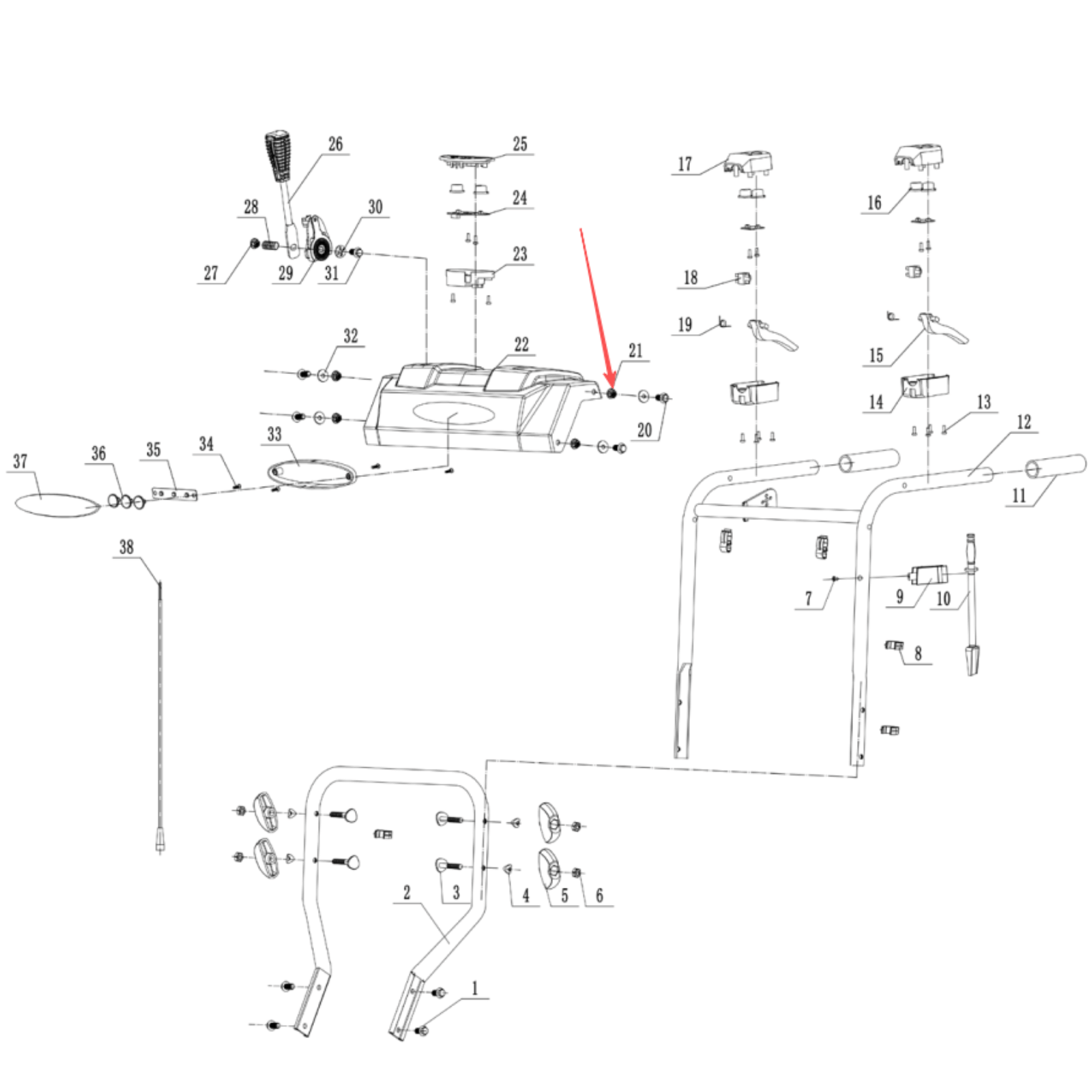
How to check in sixty seconds
Stop the engine, remove the safety key, and on a gas machine disconnect the spark plug lead before your hands go near the auger housing. The auger can hold stored energy.
Then look at the paddles. Most have a wear indicator, often a notch, a groove or a moulded line. Once wear reaches that mark, replace them. If there is no indicator, compare the paddle edge against the metal auger behind it: when the rubber has worn back close to flush with the metal, it is finished.
The simplest field test is a piece of paper. With the machine off, slide paper under the paddle where it meets the ground. If there is a visible gap and the paddle no longer contacts the surface across its width, it will not clear to pavement.
Do this in October, not in January. Checking wear parts before the season is the single highest value item in the maintenance checklist.
The scraper bar, the other half
Running along the bottom of the auger housing is the scraper bar, and it wears in step with the paddles. It sets how close the auger sits to the ground, and a worn scraper bar produces exactly the same first symptom: snow left behind where the machine used to clear cleanly.
Replace both together. They are inexpensive, they wear at similar rates, and fitting one without the other means doing the job twice. Both are stocked in snow blower parts, catalogued against the machine model rather than the brand.
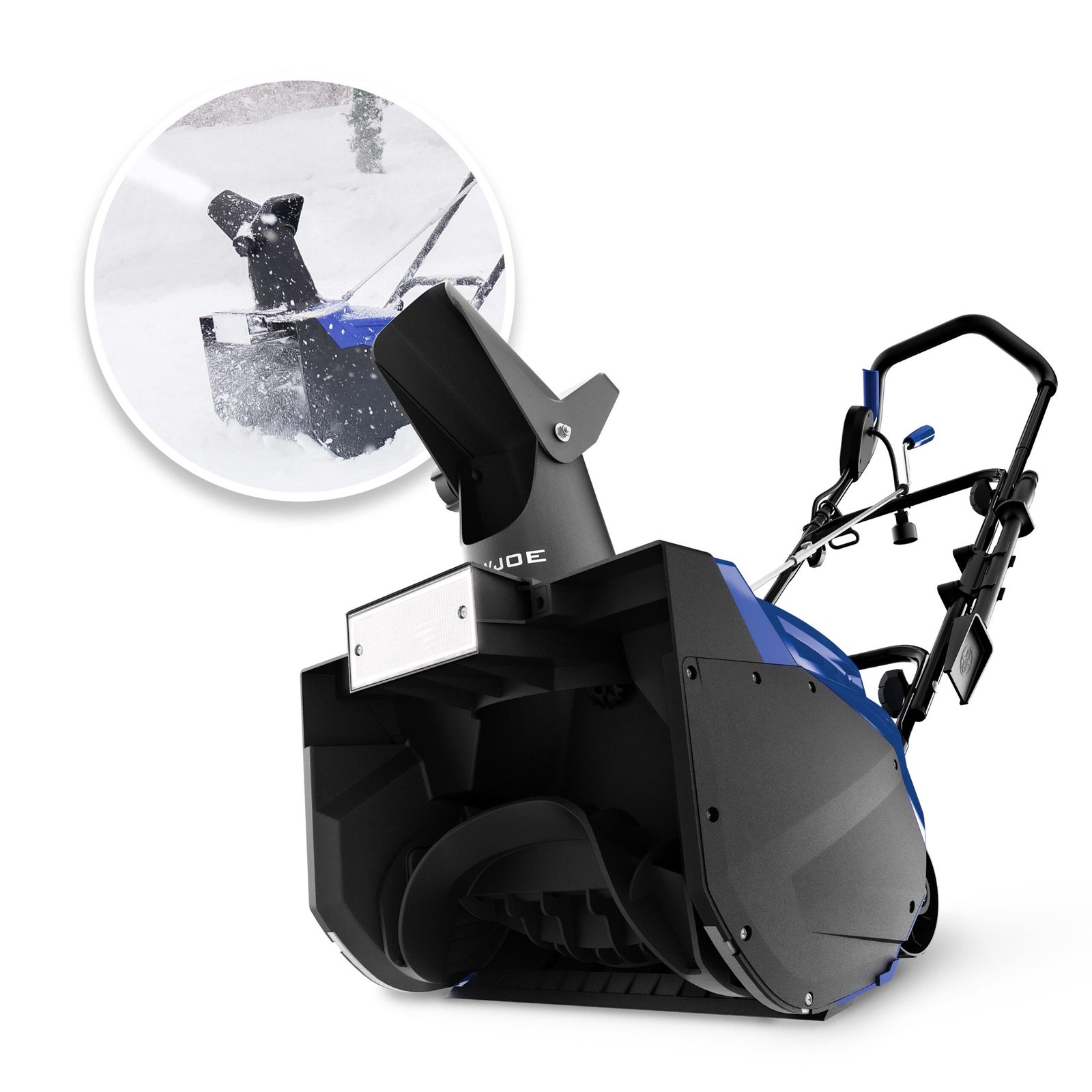
Replacing snow blower auger paddles
A realistic driveway job for most owners, typically under an hour with basic tools.
- Stop the engine, remove the key, disconnect the spark plug lead. Non negotiable.
- Tip or support the machine so you can reach the auger, following the manual. On gas machines, avoid tipping in a way that lets oil into the cylinder.
- Unbolt the old paddles. Fasteners are often corroded from salt, so penetrating oil and patience help.
- Fit the new paddles in the correct orientation. They are handed on many machines, and fitting one backwards is a common and frustrating error.
- Replace the scraper bar while you are there.
- Torque the fasteners properly and check the auger turns freely by hand before reconnecting anything.
If the fasteners are seized or the auger shows damage beyond the paddles, that is the point to get it looked at. Our repair guide covers what is realistic to tackle yourself.
Ordering the right ones
This trips people up more than the fitting does, because snow blower auger paddles are not interchangeable between machines that look almost identical.
Order by model number from the machine plate, never by brand or by eye. Manufacturers run several auger widths across a single model year, and a paddle set that is a centimetre out will either not bolt up or will sit at the wrong height against the scraper bar. The plate is usually on the rear of the housing or under the handle mount, and it is worth photographing once and keeping on your phone.
Check whether your machine takes a full paddle set or individual segments, since both designs are common, and whether the paddles are handed. Fitting a handed paddle backwards is the single most common error in this job, and the machine will run while clearing badly, which makes it hard to spot.
Buy the fasteners at the same time. The originals are usually corroded by road salt after a few seasons and will often shear or round off on removal, and discovering that halfway through the job with the machine tipped over is avoidable for the price of a handful of bolts.
How long snow blower auger paddles last
Snow blower auger paddles have no fixed replacement interval, because wear depends almost entirely on what you clear and how often.
A machine used a handful of times a season on a smooth paved driveway may go five years or more. The same machine used thirty times a winter on rough concrete or an aggregate surface can need paddles every two to three seasons. Neither is a defect.
Think of them the way you think of tyres or brake pads. They are consumable by design, they will be replaced several times over a machine that lasts a decade or more, and that is normal rather than a sign of poor quality. A machine on its third set of paddles is a machine that has been kept properly.
What wears snow blower auger paddles faster
- Rough or aggregate concrete. Far more abrasive than smooth asphalt.
- Clearing right down to the surface every time, rather than leaving a millimetre or two.
- Grit and road salt tracked onto the driveway, which acts as an abrasive between rubber and pavement.
- Any use on gravel, which destroys paddles quickly and, far more importantly, throws stones. Single stage machines must never be used on unpaved surfaces.
If your driveway is gravel, the answer is not more frequent paddle changes, it is a two stage machine whose auger rides clear of the ground on skid shoes.
Is it worth replacing them, or replacing the machine
Almost always worth replacing the paddles, and the arithmetic is not close.
A set of snow blower auger paddles and a scraper bar costs a small fraction of a new machine, and fitting them restores original performance rather than merely improving it. A machine with fresh paddles clears to pavement, pulls itself along and throws full distance exactly as it did when new. There is no gradual decline left behind, because the worn component was the only thing that had degraded.
The exception is a machine whose model has been discontinued and orphaned, where no parts supply exists. That is the situation to check before buying any machine, and it is covered in where to buy a snow blower in Canada. A machine you cannot get paddles for has a fixed remaining life no matter how sound the engine is.
Working safely matters here as much as anywhere on the machine, since your hands are inside the auger housing. Guidance on safe work with powered equipment is published by the Canadian Centre for Occupational Health and Safety, and it is worth doing this job in October in daylight rather than mid storm in the dark. Timing your clearing against Environment and Climate Change Canada forecasts gives you that window.
Two stage machines are different
Two stage machines have no rubber paddles at all. The auger is steel, it never touches the ground, and it feeds a separate impeller.
The equivalent wear parts there are the skid shoes, the metal plates that set auger height, and the impeller and its belt. Skid shoes are cheap and replaceable, and replacing worn shoes costs far less than repairing an auger housing that has been ground down against the driveway.
So if you own a two stage machine and it is leaving more snow than it used to, look at skid shoe adjustment and wear rather than searching for paddles that do not exist on your machine.
Common questions
How do I know if my snow blower auger paddles need replacing?
How long do snow blower auger paddles last?
Can I replace auger paddles myself?
Why does my snow blower leave snow behind?
Should I replace the scraper bar at the same time?
Why has my snow blower stopped pulling itself forward?
Do two stage snow blowers have auger paddles?
Can I use a single stage machine on gravel if I replace paddles often?
Paddles, scraper bars, skid shoes and belts are stocked in snow blower parts. For the full seasonal routine see the maintenance checklist, and for the type difference read single stage vs two stage.