
Most snow blower size charts are generic. This snow blower size calculator is not. The calculator below takes your driveway dimensions, your surface, whether the municipal plow banks your driveway and your city snowfall, then matches all of it against the 71 machines we actually hold, with real prices. It will also tell you when the answer is a smaller machine than you were expecting.
What size snow blower do I need?
Answer five questions. We match your driveway against the 71 machines we actually hold and show real prices, not a generic chart.
How this snow blower size calculator decides
Four inputs do the work, in a deliberate order of priority.
Surface first. Gravel forces a two stage machine regardless of everything else, because a single stage paddle contacts the ground and will throw stone.
Plow ridge second. If the municipal plow banks your driveway most storms, you need a machine that cuts into compacted snow rather than riding over it. That is two stage as well.
Area third. Length times width sets the baseline width, because passes are what take the time and width removes passes.
Snowfall last. A season over 220 cm nudges the recommendation up, because you are clearing far more often and depth per clear is higher.
Only then does it filter by your power preference and sort the remaining stock by how close each machine is to the target width.
The two rules that override everything
Width is a preference. These two are not.
Gravel means two stage, always. There is no width, brand or price at which a single stage machine becomes safe on an unpaved surface. The paddle touches the ground by design. Set the skid shoes to leave about a quarter inch under the scraper and accept that a thin layer of snow stays behind, which is the correct outcome rather than a fault.
A plow ridge means two stage. The bank the municipal plow leaves is compacted and often part refrozen. A single stage machine climbs it and leaves it there. A two stage machine cuts into it. If your street is plowed and the ridge appears most storms, this decides your purchase on its own.
Everything else in the calculator is optimisation. These two are pass or fail, which is why the tool applies them before it looks at size at all. The mechanics are explained in stages explained.
Snow blower size chart
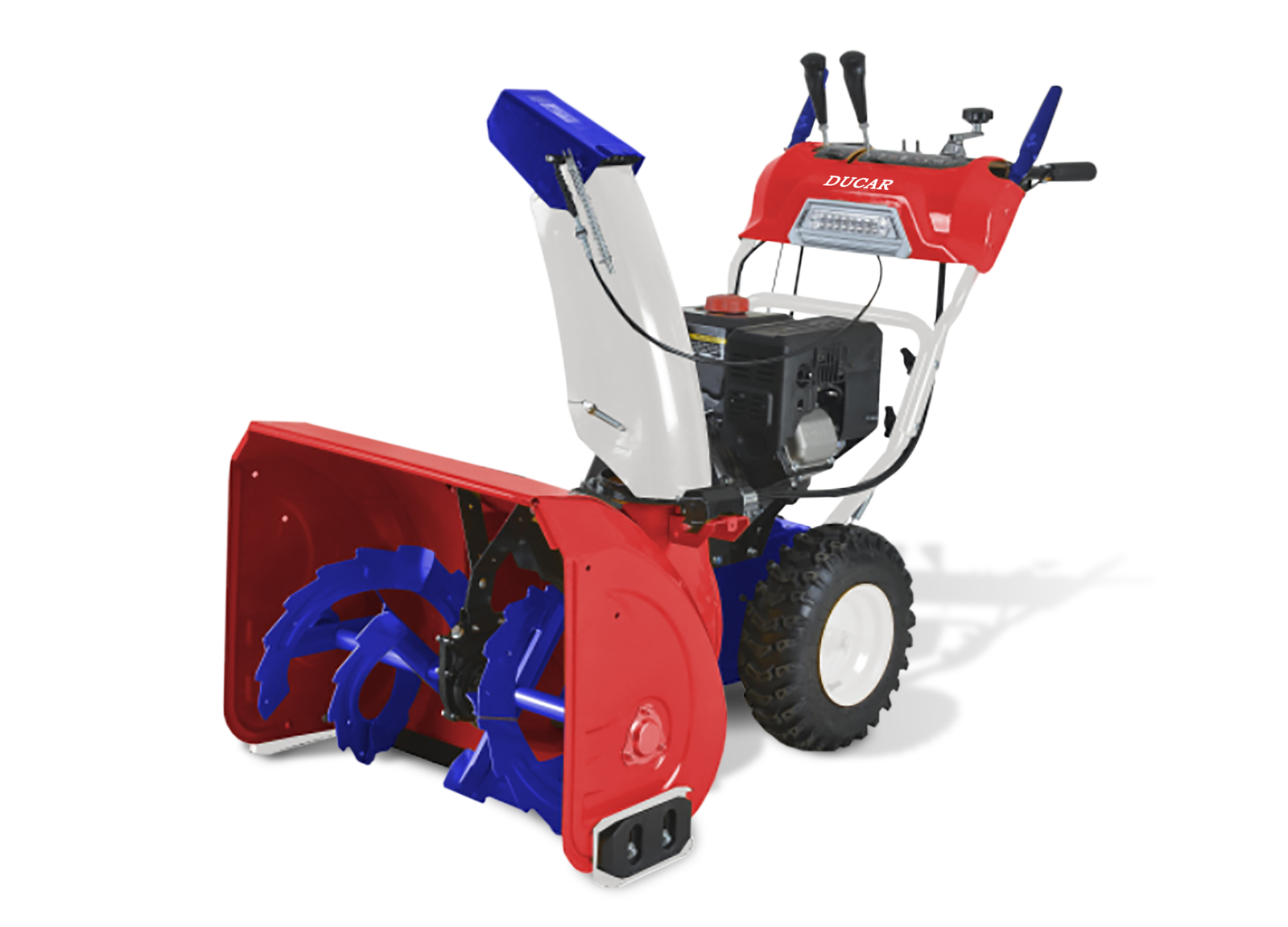
If you would rather read it off a table than use the tool, here is the same logic in static form, with the number of machines we hold in each band.
The snowfall figures behind the tool are published in full on the Canada snowfall by city page, where all 52 cities are ranked and the dataset is free to download.
| Driveway | Suggested width | In stock | Typical price |
|---|---|---|---|
| Steps, deck, one car apron | 10 to 13 inch powered shovel | 28 | $139 to $580 |
| Single car, short | 16 to 20 inch | 7 | $279 to $460 |
| Single car, long or small two car | 20 to 21 inch | 15 | $284 to $850 |
| Two car, standard | 22 to 24 inch | 10 | $321 to $3,199 |
| Two car, long or plow ridge | 25 to 28 inch two stage | 4 | $1,349 to $1,799 |
| Double length or rural | 29 to 34 inch two stage | 5 | $1,299 to $2,399 |
| Acreage, commercial | 35 inch and up, tracked | 2 | $1,029 to $5,999 |
Read the in stock column as well as the width. A band with one or two machines gives you little choice on power source or features, which sometimes makes the neighbouring band the better practical answer.
How long a clear actually takes
The calculator estimates minutes, and it is worth understanding what sits behind that number so you can judge it.
Clearing time is passes multiplied by the time per pass, plus turning. Passes come from your driveway width divided by the effective cutting width, which is the machine width less a small overlap that everyone leaves in practice. Turning costs roughly the same regardless of machine size, which is why doubling the width does not halve the time.
That is also why the gap between a 20 inch and a 28 inch machine on a standard two car driveway is a few minutes rather than a transformation, while on a rural lane it becomes the difference between a job you do and a job you avoid.
Deep, wet or refrozen snow can double these figures. Clearing partway through a long storm is almost always faster in total than one pass at the end.
Why your city changes the answer
Two identical driveways in different Canadian cities need different machines, and it is not simply about who gets more snow.
| City | Season snowfall | What it means for sizing |
|---|---|---|
| Vancouver | About 38 cm | A powered shovel or small machine is genuinely enough |
| Regina, Saskatoon | About 100 to 106 cm | Dry cold powder, moderate width copes well |
| Winnipeg, Edmonton, Calgary | About 114 to 129 cm | Dry snow, sizing driven by driveway not climate |
| Toronto, Mississauga, Brampton | About 108 to 115 cm | Less snow but freeze and thaw makes it dense |
| Halifax, St. Johns | About 131 to 156 cm | Wet coastal snow, lean to two stage |
| London, Hamilton, Kitchener | About 150 to 194 cm | Lake effect, frequent clears |
| Ottawa, Montreal | About 210 to 223 cm | Heavy season plus plow ridges, 24 inch and up |
| Barrie, Sudbury | About 253 to 267 cm | Snowbelt, 28 inch and up, consider tracks |
| Quebec City | About 303 cm | The heaviest in our range, go wide |
The row that surprises people is Toronto. It gets less snow than Winnipeg but is harder on a machine, because milder temperatures mean repeated melting and refreezing. Dense, part refrozen snow strains a machine far more than dry powder at twice the depth.
That is why the calculator uses your city as a modifier rather than the main input. Your driveway decides the size; your climate decides whether to lean up a band.
Sizing for storage and access, not just snow
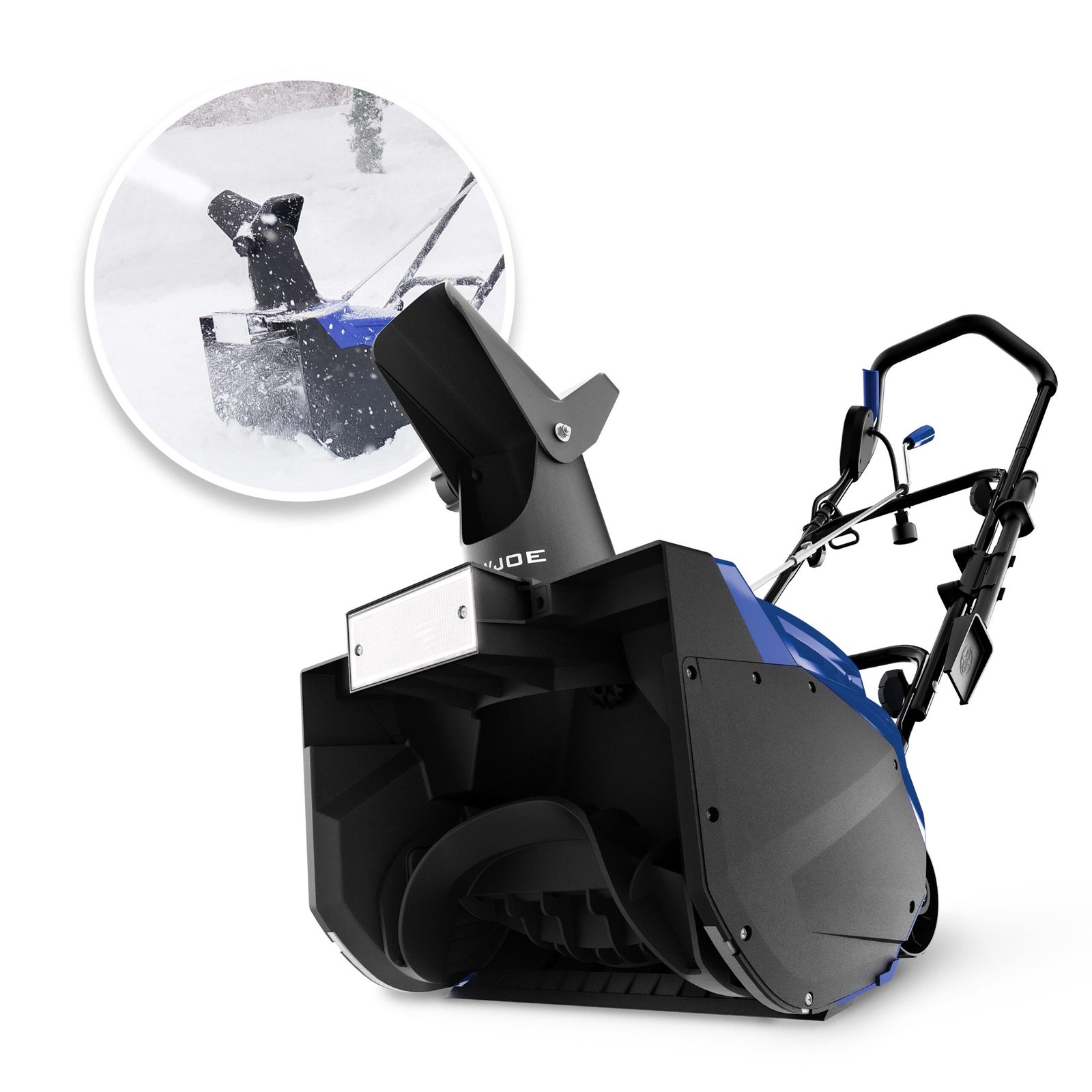
The calculator sizes for the driveway. There is a second constraint it cannot see, and it is the one that most often forces a smaller machine: where the thing lives and how it gets there.
Measure three things before you order. The narrowest gate or passage the machine must pass through, which on most properties is a 36 inch garden gate. The shed or garage door. And the floor space where it will sit with room to walk around it.
Remember that a snow blower is wider than its clearing width. The housing and handles add several inches each side, so a 28 inch machine is often close to 32 inches overall. It will pass a 36 inch gate with very little to spare, and a 34 inch machine usually will not pass at all.
Weight matters at the end of every pass rather than on the specification sheet. If the machine must be lifted over a threshold or manoeuvred in a tight garage, a lighter unit gets used earlier in the storm, and clearing early is what makes the job easy. Owners who buy small rarely regret it on a suburban driveway. Owners who buy large regularly regret the storage.
If storage is your binding constraint rather than the driveway, start from compact machines and work up only as far as your space allows.
When the snow blower size calculator surprises you
Two results catch people out, and both are usually correct.
It recommends smaller than you expected. This is the common one. A standard two car driveway genuinely does not need a 30 inch machine in most of Canada. Width buys you a few minutes per clear, and those minutes are worth less than a machine you can turn, store and get out quickly. If the result feels small, check the passes and minutes figures: if the time is acceptable, the size is right.
It jumps to two stage on a small driveway. That happens when you answered gravel or plow ridge. Those rules ignore area entirely, which is why a short gravel driveway can end up recommending a machine that looks oversized for the space. It is not oversized, it is the only safe type for that surface.
If a result genuinely does not fit your situation, the tool is not the final word. Send the driveway length and width, the surface, what the plow leaves and where the machine will be stored through the contact page. We would rather talk you into a cheaper machine that fits than take a return in January.
The sizing mistakes we see most
Buying for the blizzard. People size for the worst storm in a decade rather than the ordinary Tuesday they clear twenty times a season. An oversized machine is slower to get out, harder to turn and more awkward to store, every single time.
Measuring the parking area only. The walkway, the path to the shed, the gate and the strip the plow banks all add up, and they are usually the parts you resent clearing most.
Ignoring the gate. A standard garden gate is 36 inches and a machine is wider than its clearing width. A 28 inch machine is often close to 32 inches overall. Measure before ordering.
Treating gravel as a preference. It is not. See the rules above.
Buying width instead of stages. On a plow ridge, a 28 inch single stage machine loses to a 22 inch two stage one. Stage count beats width whenever the snow is compacted.
Where the snow blower size calculator gets its numbers
A snow blower size calculator is only as honest as the data behind it, so here is exactly what sits underneath this one.
- Snowfall. City figures come from the official climate normals published by Environment and Climate Change Canada, available through the climate normals search. We use the 1991 to 2020 station normals rather than a single memorable winter.
- Machine specifications. Clearing width, intake height, stage count and engine or battery rating are taken from the manufacturer specification for each of the 71 machines in stock. Nothing in this snow blower size calculator is rounded up to flatter a product.
- Clearing rate. Throughput is derived from width and typical walking speed, then reduced for wet snow. The snow blower size calculator deliberately assumes a slower pace than a specification sheet does, because real driveways have cars, corners and a plow ridge in them.
- Safety guidance. The warnings about manual clearing follow the Canadian Centre for Occupational Health and Safety position on cold weather exertion.
Two limits are worth stating plainly. First, a snow blower size calculator cannot see your driveway slope, and a steep drive changes the answer toward tracks or toward a self propelled machine. Second, it cannot see how much time you are willing to spend. If a 21 inch machine clears your drive in 40 minutes and that is acceptable to you, the calculator recommending 24 inch is advice rather than instruction.
If the result looks wrong for your situation, it may well be. Send us your measurements through the contact page and we will size it by hand. We would rather talk you into a cheaper machine that fits than take an order that comes back in January.
Using the snow blower size calculator with our city pages
The snowfall figure the snow blower size calculator uses for your city is the same one behind each of our city guides, so the two agree. Start with the city index, or go straight to Toronto, Edmonton, Calgary, Ottawa or Winnipeg for the local detail this snow blower size calculator condenses into one number.
Common questions
What size snow blower do I need for my driveway?
Width is set by the area you clear and how often you clear it. As a rough guide, a single car driveway suits 18 to 21 inches, a standard two car driveway 21 to 24 inches, and a long or double width driveway 28 inches and up. The calculator above works it out from your actual dimensions and adds the surface and plow ridge rules, which override width entirely.
Does the calculator use real stock?
Yes. It matches against the 71 machines with a stated clearing width that we hold right now, with live prices in Canadian dollars. If nothing fits your answers it says so rather than inventing a recommendation.
Why does gravel change the recommendation?
A single stage machine has a paddle that touches the ground, so on gravel it picks up and throws stone. Gravel requires a two stage machine with adjustable skid shoes that lift the auger clear of the surface. The calculator treats gravel as an absolute rule, not a preference.
How accurate are the clearing times?
They assume an average fall, a small overlap between passes, and a steady walking pace, plus turning time at the end of each pass. Deep, wet or refrozen snow takes considerably longer, and a plow ridge can add several minutes on its own.
Should I buy bigger than the calculator suggests?
Usually not. Oversizing is the most common buying mistake: a machine you cannot turn comfortably or fit through the gate gets used later in the storm than it should. Measure your gate before going above 26 inches.
Next steps: browse by size on snow blower sizes, compare types in stages explained, or read the buying guide. If your driveway is unusual, tell us the numbers and we will answer honestly, including when the answer is a cheaper machine.