
A small snow blower is the right answer far more often than the catalogue suggests. Most Canadian driveways are cleared by machines two sizes larger than they need, bought on the assumption that bigger is safer. This page covers the 21 compact snow blowers we stock between 16 and 21 inches, the 30 powered snow shovels below that, and the honest limits of both, so you buy the smallest machine that actually finishes your driveway.
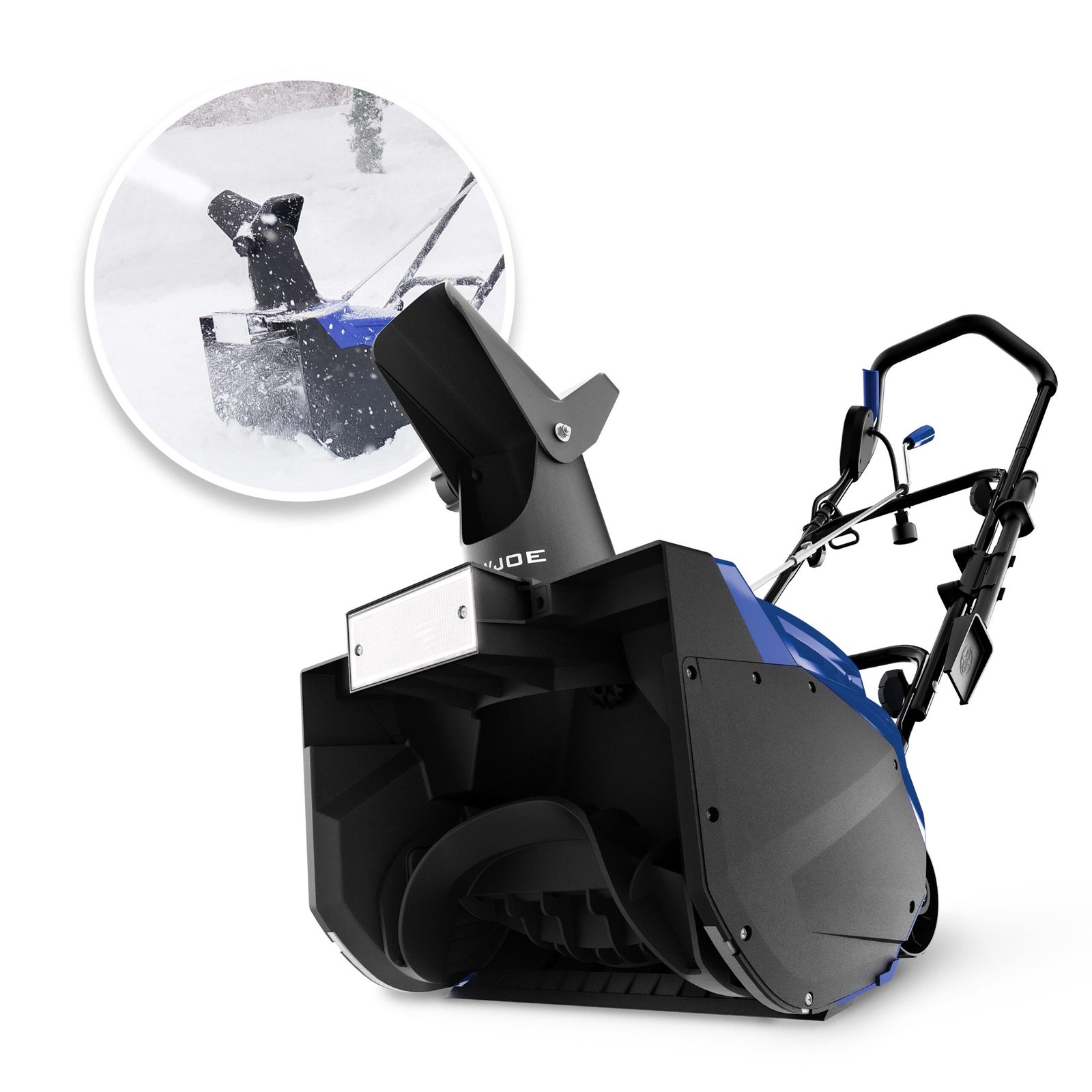
Canadian standards for outdoor power equipment are published by the CSA Group. Pick a small snow blower on passes, not on price alone.
What counts as a compact snow blower
There is no industry definition, so here is ours, based on what is actually in stock. A compact snow blower is a single stage machine between 16 and 21 inches of clearing width. We list 21 of them, from $278.75 to $849.99, in corded electric, cordless and one petrol option. Any small snow blower here will do that comfortably.
Below 16 inches you leave the category entirely. A 10 to 13 inch tool with a rubber paddle and no impeller is a powered snow shovel, and we stock 30 of those from $139.34. Manufacturers and search engines use mini snow blower and small snow blower for both, which is why buyers end up disappointed: they ordered something described as a blower and received a tool that clears a path rather than throwing snow.
| Class | Width | What it does | Our range |
|---|---|---|---|
| Powered snow shovel | 10 to 13 inches | Clears a path, no impeller, short throw | $139.34 to $780.50 |
| Compact snow blower | 16 to 21 inches | Single stage, auger and impeller, real throw | $278.75 to $849.99 |
| Mid size two stage | 21 to 26 inches | Separate auger and impeller, gravel safe | See the two stage range |
| Large two stage | 28 inches and up | Plow ridge, long lanes, acreage | See the two stage range |
The step that matters is between the first two rows. Everything else is a question of how much driveway you have. Buyers who choose a small snow blower rarely regret the storage.
Mini snow blower or powered shovel
This is the decision that goes wrong most often, so it is worth being blunt about the difference. A small snow blower still needs the right surface.
A powered snow shovel has a rubber paddle and no impeller. It pushes snow forward and to the side, clearing a path perhaps a metre wide with a throw measured in feet, not yards. It weighs little, starts instantly, and is genuinely excellent on steps, a deck, a walkway and a single car apron. It will not clear a driveway in any reasonable time and it will not touch a plow ridge.
A compact snow blower has an auger and an impeller. It takes a wider bite, throws snow properly clear of the cleared area, and will finish a normal driveway. It is heavier, needs somewhere to live, and costs roughly twice as much at the entry point.
The test is simple: if you need snow moved off the area rather than merely pushed aside, you need an impeller. Browse the snow shovel range or read on for the compact machines.
Will a small machine clear your driveway
Clearing time is width divided into area, plus the turns. A narrower machine is not proportionally slower, because the turn at the end of each pass costs the same either way, but the gap is real.
| Driveway | 16 inch | 20 inch | 28 inch |
|---|---|---|---|
| Single car, one length | About 8 passes | About 6 passes | About 5 passes |
| Two car, standard | About 15 passes | About 12 passes | About 9 passes |
| Two car, double length | About 30 passes | About 24 passes | About 17 passes |
| Rural lane | Not realistic | Not realistic | Sensible minimum |
For most suburban properties the difference between a 20 inch and a 28 inch machine is a few minutes per clear. Over a season of twenty clears that adds up, but so does wrestling a machine you cannot turn comfortably or fit through the gate. Measure the gate before the driveway: a standard garden gate is 36 inches, and a 28 inch machine plus handles rarely passes.
The buying guide works through the full sizing method.
Where compact machines stop
Every compact machine we stock is single stage, and that single fact sets all the limits. A single stage machine has one auger that both collects and throws, and its paddle contacts the ground.
- Never on gravel. The paddle touches the surface and will pick up and throw stone. This is not a caution, it is a hard rule. Gravel needs a two stage machine with adjustable skid shoes.
- The plow ridge defeats it. A single stage machine rides up over compacted, part refrozen snow rather than cutting into it. If the municipal plow banks your driveway every storm, buy two stage.
- Above about eight inches it pushes rather than throws. Deep falls become two passes at half depth, which is workable but slower than the numbers above suggest.
- Wet March snow is the real limit. Density, not depth, is what stops these machines.
- Slopes are hard work. Most compact machines have no drive system beyond the paddle pulling them along.
None of this makes them a bad buy. It makes them a good buy for a paved driveway of moderate length in a normal season, which describes a great many Canadian homes.
What compact machines cost
Real prices from our current range rather than a manufacturer list.
| What you get | Typical price here | Best for |
|---|---|---|
| Powered snow shovel, 10 to 13 inch | $139 to $250 | Steps, walkways, one car apron |
| Corded electric, 16 to 20 inch | $329 to $400 | Short paved drive within reach of an outlet |
| Cordless, 16 to 18 inch | $379 to $460 | Paved drive, no fuel, no cord |
| Cordless, 20 to 21 inch | $450 to $850 | The largest practical compact size |
| Petrol single stage, 21 inch | From about $550 | Longer paved drive, no power access |
Corded is the cheapest way into a real blower and the most often dismissed. If your driveway is short and an outdoor outlet reaches, a 16 to 20 inch corded machine at $329 to $400 does the job with no fuel, no stabiliser, no packs and no spring service. The cord is the whole trade.
See corded electric machines, battery machines, and the Canadian price guide.
Choosing between the two
Answer these in order and the machine picks itself.
- Is the surface gravel? If yes, stop. You need a two stage machine, whatever the size. No compact machine here is safe on it.
- Does the plow bank your driveway? If yes, two stage. A compact machine will ride over the ridge and leave it.
- What are you actually clearing? Steps, a deck, a walkway, one car apron: powered shovel. A real driveway: compact blower.
- How far from an outlet? Within a 12 gauge lead: corded is cheapest and lightest. Beyond it: cordless or petrol.
- Can you store and turn it? Measure the gate and the shed door before you order. A machine that does not fit where it lives gets used less.
If two of those pull in different directions, tell us the driveway length, the surface and your typical storm depth through the contact page and we will name the machine that fits rather than the one with the best margin. This is where a small snow blower stops being enough.
Corded, cordless or petrol at this size
At compact sizes the power source matters more than at large sizes, because the machine is light enough that any of the three is practical. The decision is about your property, not the technology. Storage is where a small snow blower repays you every week.
| Corded electric | Cordless | Petrol single stage | |
|---|---|---|---|
| Our compact range | 16 to 20 inch, $329 to $400 | 16 to 21 inch, $379 to $850 | 21 inch, from about $550 |
| Runtime | Unlimited | One to two packs per clear | A tank |
| Cold weather | Unaffected | Capacity drops in deep cold | Starts harder, needs stabiliser |
| Off season work | None | Store packs indoors | Oil, fuel, stabiliser, plug |
| Hard limit | Cord reach | Pack capacity | Nothing at this size |
| Best for | Short paved drive near an outlet | Paved drive, button start | Longer drive, no power access |
Corded is the most unfairly dismissed of the three. If an outdoor outlet reaches the far end of the drive, a corded machine removes fuel, stabiliser, packs, charging and spring servicing from your life permanently, for the lowest price in the category. The cord is a real nuisance in the dark and a real saving everywhere else.
Cordless is the middle road and the one most buyers choose now. Buy a second pack rather than a bigger machine if a single clear runs long: a spare pack is almost always cheaper than stepping up a class, and it solves the actual problem.
The size you can actually store
The specification nobody checks until delivery day. A compact machine earns much of its value here.
Measure three things before ordering: the gate you must pass through, the shed or garage door, and the floor space where it will live with room to walk around it. A standard garden gate is 36 inches, and a machine plus its handles is wider than its clearing width. A 20 inch machine passes comfortably; a 28 inch one often does not.
Weight matters at the end of every pass, not on the spec sheet. A light machine is easier to turn twelve times per clear, easier to lift over a step, and easier to get out of the shed on a morning when you are already late. Owners who buy small rarely regret it on a suburban driveway; owners who buy large regularly regret the storage.
Is a small snow blower right for you
To summarise: small snow blower comes down to matching the machine to the surface, the snowfall and the space you have to store it. Everything above is the detail behind that. If any of it is unclear for your property, ask us rather than guessing. A small snow blower earns its keep on exactly this kind of property.
What we stock right now
21 compact snow blowers between 16 and 21 inches, from $278.75 to $849.99, and 30 powered snow shovels from $139.34. Every machine ships Canada wide in Canadian dollars, with no conversion at checkout and no duty at the door, because the stock is already here. Ask us before ruling a small snow blower out.
Wear parts for all of them, paddles and scrapers in particular, are listed by manufacturer stock number on the parts catalogue, so a repair in year five is an order rather than a hunt. Delivery detail is on the shipping page.
Common questions
What is the smallest snow blower that is still a real snow blower?
On this site the smallest true blower is 16 inches wide. Below that you are looking at a powered snow shovel, which clears a path but has no impeller to throw snow across a lawn. Both are useful; they are just different tools. If a listing under 14 inches is described as a blower, check whether it actually has an auger and an impeller or only a paddle. That is the honest case for a small snow blower.
Is a small snow blower enough for a two car driveway?
Usually yes, but it will take longer. A 20 inch machine needs roughly 40 per cent more passes than a 28 inch one on the same area. On a standard two car driveway that is a difference of a few minutes per clear, which most owners accept in exchange for a machine they can store and turn easily. A small snow blower is the sensible default for a paved city driveway.
Can a compact snow blower handle the plow ridge?
Not well. Compact machines here are single stage, and a single stage machine rides up over a compacted ridge rather than cutting into it. If the municipal plow leaves a bank at the foot of your driveway every storm, a two stage machine is the honest answer regardless of how much you want something small.
Are small snow blowers safe on gravel?
No. Every compact machine we stock is single stage, and a single stage paddle contacts the ground by design. On gravel it will pick up and throw stone. Gravel requires a two stage machine with adjustable skid shoes, which lift the auger clear of the surface.
Is a lightweight snow blower easier for someone with a bad back?
Generally yes, and it is one of the better reasons to buy small. A 16 to 20 inch cordless machine is lighter to turn at the end of every pass, easier to get out of the shed, and needs no pull start. The trade is capacity, so match it to a paved driveway of moderate length rather than a rural lane.
Not sure a compact machine is enough? The buying guide covers sizing in full, the types guide explains single against two stage, and the stage comparison settles the gravel question.