
A two stage snow blower is the default choice for most Canadian driveways, and the only design that handles gravel, depth and the compacted ridge the plow leaves behind. If you are buying one machine to cover a real winter, this is almost always the category to buy it from.
-
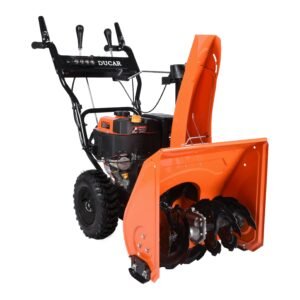
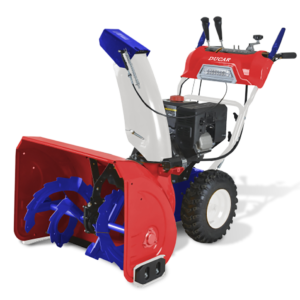
Gas Snow Blowers
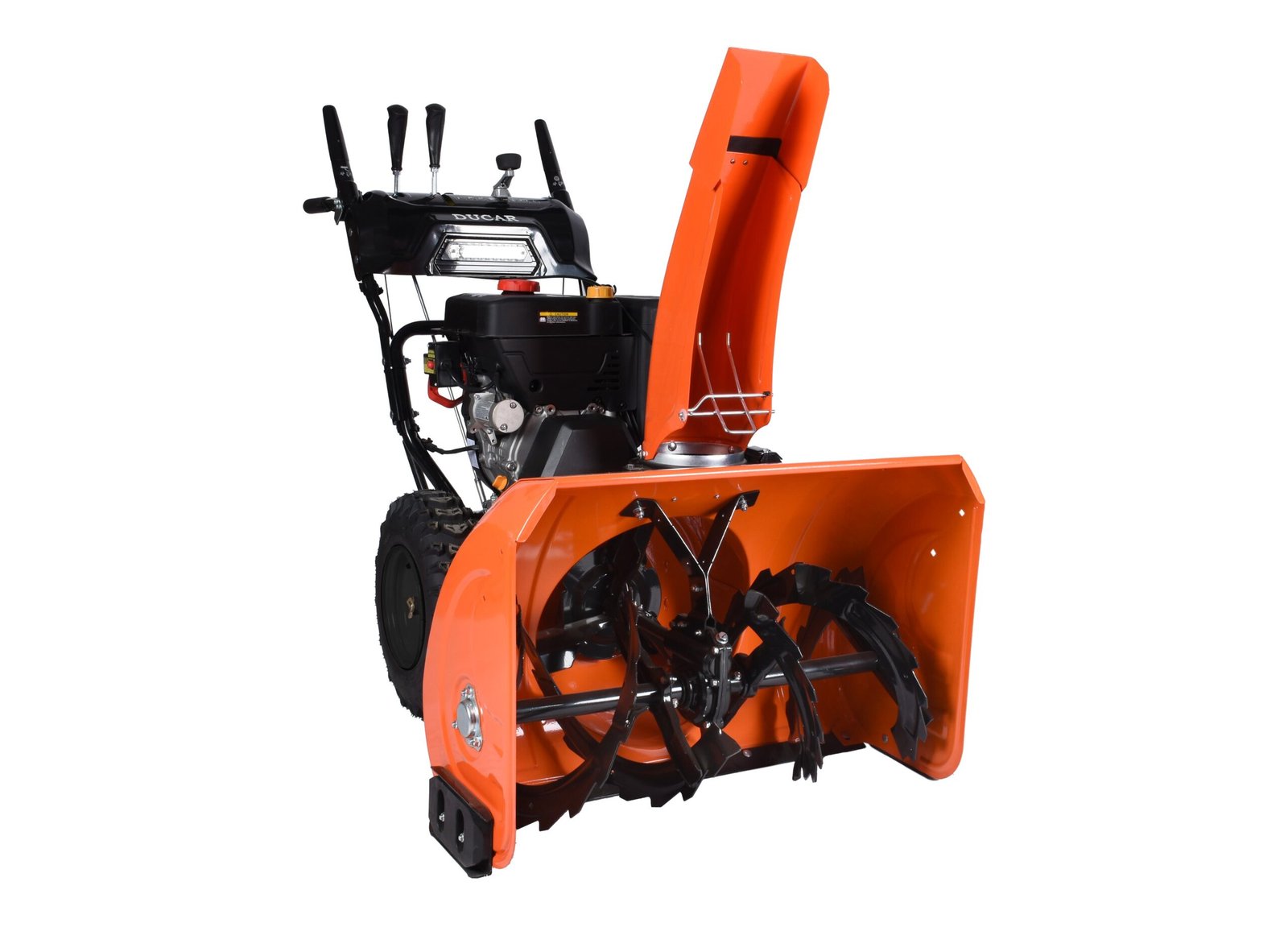
21″ Snow Blower, 212 cc, electric and recoil start
$849.00 to $999.00 Select options This product has multiple variants. The options may be chosen on the product page -
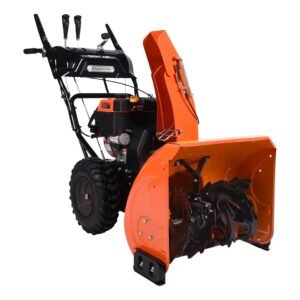
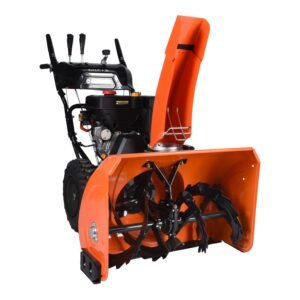
Gas Snow Blowers
24″ Snow Blower, 212 cc, electric and recoil start, heated handles, LED light
$1,249.00 to $1,399.00 Select options This product has multiple variants. The options may be chosen on the product page -
Gas Snow Blowers
26″ Snow Blower, 212 cc, electric and recoil start, heated handles, LED light
$1,349.00 to $1,549.00 Select options This product has multiple variants. The options may be chosen on the product page -
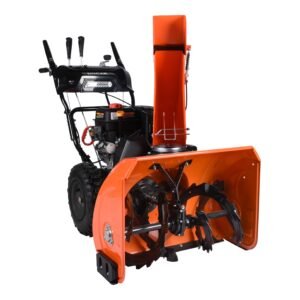
Gas Snow Blowers
28″ Snow Blower, 252 cc, electric and recoil start, heated handles, LED light
$1,599.00 to $1,799.00 Select options This product has multiple variants. The options may be chosen on the product page -
Gas Snow Blowers
30″ Snow Blower, 302 cc, electric and recoil start, heated handles, LED light
$1,799.00 to $1,999.00 Select options This product has multiple variants. The options may be chosen on the product page -
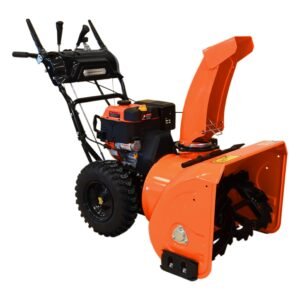
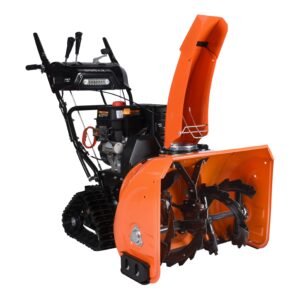
Gas Snow Blowers
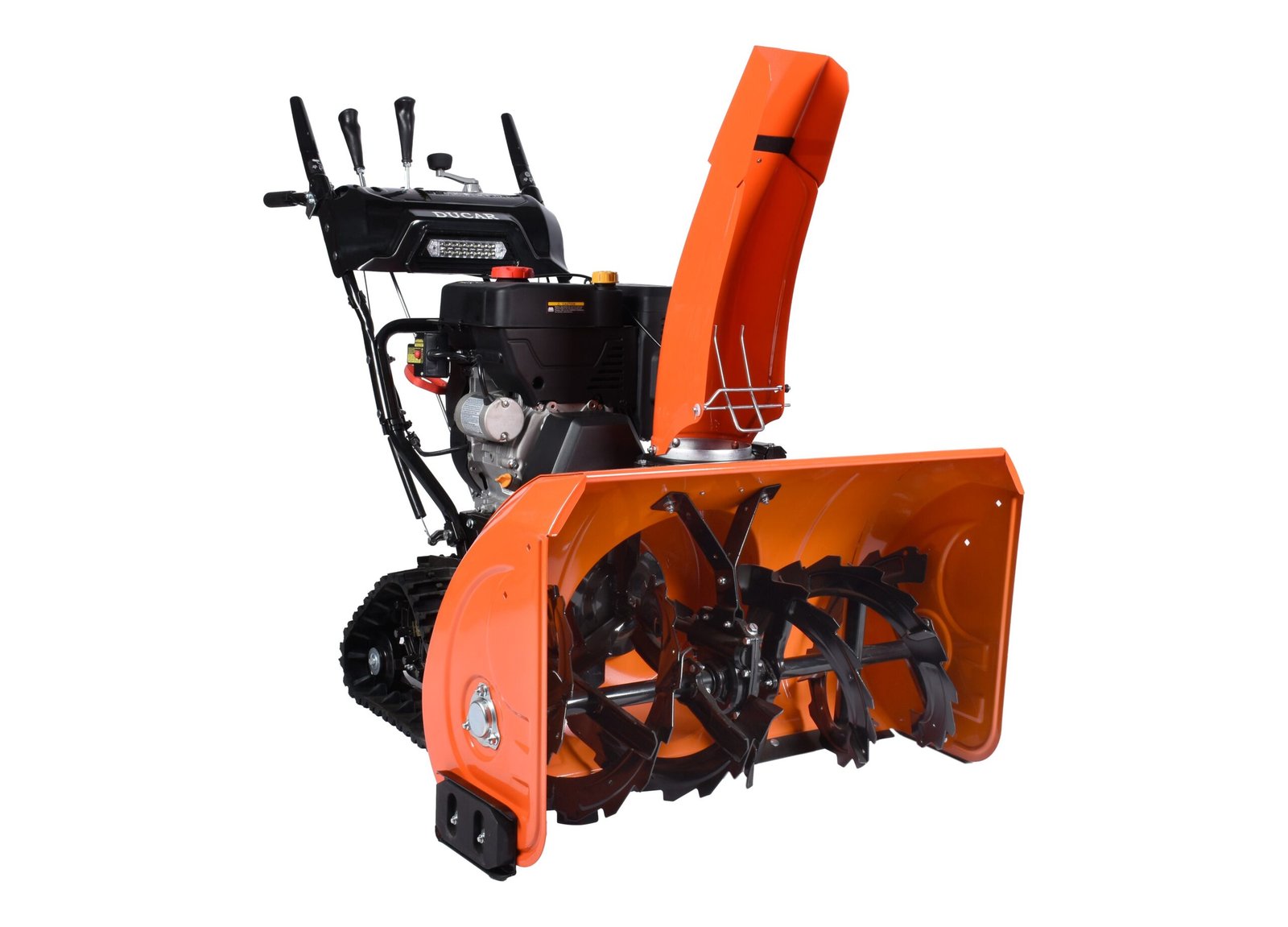
26″ Snow Blower, 252 cc, tracks, electric and recoil start, heated handles, LED light
$1,799.00 to $1,999.00 Select options This product has multiple variants. The options may be chosen on the product page -
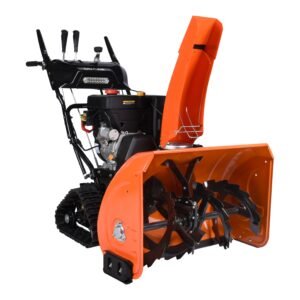
Gas Snow Blowers
Snow Blower, 30″, 302 cc, tracks, electric and recoil start, heated handles, LED light
$1,949.00 to $2,149.00 Select options This product has multiple variants. The options may be chosen on the product page
What makes a two stage snow blower different
The name describes the mechanism. A serrated auger turns slowly at the front, breaking snow loose and drawing it into the housing. It then feeds a separate high speed impeller behind it, and that impeller does the throwing. Two components, two jobs.
Splitting the work matters for two reasons. The auger can be geared for torque rather than speed, so it chews through dense, wet and compacted material that would stall a single component. And because the auger never needs to touch the ground, a two stage snow blower can float above a gravel or dirt surface instead of scooping it up.
That second point is the one people underestimate. It is the whole reason this design exists on rural properties, and it is why no single stage machine, electric or gas, belongs on an unpaved driveway.
Who actually needs one
You need a two stage snow blower if any of these describe your winter. Your driveway is longer than about two car lengths. Your surface is gravel, dirt or interlocking stone. The municipal plow seals the foot of your driveway with a dense ridge. You regularly see falls over 20 centimetres. Or your driveway slopes, where powered wheels stop being a luxury.
If none of those apply, and you clear a short paved driveway of ordinary snow, you may be buying more machine than you need. A single stage machine is lighter, cheaper and easier to store, and for a small paved pad it finishes the job just as well.
Two stage against single stage
| What matters | Two stage | Single stage |
|---|---|---|
| Auger contacts ground | No, rides clear on skid shoes | Yes, clears to the surface |
| Safe on gravel | Yes | No |
| Snow depth | Deep snow and the plow ridge | Up to about 20 cm |
| Throwing distance | 10 to 15 m | 6 to 9 m |
| Drive | Powered wheels or tracks | Pushed, paddles assist |
| Weight | 70 to 140 kg | 13 to 45 kg |
| Leaves a thin layer | Yes, a few millimetres | No, clears to pavement |
| Storage footprint | Large | Compact, often wall hung |
The last two rows are the honest trade. A two stage snow blower leaves a thin skim of snow because the auger rides above the surface, which is the same property that makes it gravel safe. On a paved driveway that residue usually melts or gets swept. If you want bare pavement in one pass, that is a single stage strength.
Choosing a clearing width
Clearing width on a two stage snow blower sets how many passes you make, and on a cold morning passes are the currency that matters.
- 24 inches. Two car driveways, easier to turn and to store. The smallest sensible two stage snow blower.
- 26 to 28 inches. The most common choice in Canada, and the best balance of speed against manoeuvrability for a typical suburban property.
- 30 inches. Long driveways and heavy snowfall regions. Power steering becomes genuinely useful at this size.
- 32 inches and wider. Rural laneways, acreage and commercial work. Heavy, and they need real storage space.
Buying wider than the driveway warrants is the most common mistake in this category. A 34 inch machine on a two car driveway spends more time being turned around than clearing.
Gravel, skid shoes and why this design wins
Skid shoes are the two small metal plates bolted either side of the auger housing. They set the gap between the auger and the ground, and adjusting them correctly is the single most important setup step on a two stage snow blower.
On gravel, raise them so the auger sits well clear, usually about a centimetre. You will leave a thin layer of snow, and you will not fire stones through a window. On pavement, lower them for a closer cut. Steel shoes are cheap and replaceable, and replacing worn shoes is far cheaper than repairing an auger housing that has been ground down. They are stocked in snow blower parts.
Wheels, tracks and power steering
Every two stage snow blower drives its own wheels, which is why you walk behind one rather than push it. How that drive is delivered changes the machine considerably.
Wheels are lighter, turn more easily and suit flat paved driveways. Tracks hold grip on slopes, ice and unpaved ground, and let you push into a ridge without the drive spinning. Tracks turn less willingly, so they are the wrong answer on a small flat pad and the right one on a sloped or rural property.
Power steering uses triggers on the handlebars to disengage drive to one wheel so the machine pivots. On anything from 28 inches upward it changes the experience more than the specification sheet suggests, particularly for anyone who is not physically able to muscle a 100 kilogram machine around at the end of every pass.
Features worth paying for
These options change daily life with a two stage snow blower more than the specification sheet suggests.
- Electric start. On a gas two stage snow blower this removes the only genuinely unpleasant part of ownership.
- Heated handgrips. Transformative on a long driveway in real cold.
- Chute control at the handle. Changing throw direction without stopping saves several minutes on every clear.
- LED lighting. Most clearing happens before dawn or after dark in this country.
- Steel skid shoes. Cheap, replaceable, and they protect the housing.
- Serrated auger. Cuts into crusted and refrozen snow instead of riding over it.
Gas or battery
A two stage snow blower no longer has to burn fuel. Modern 60V and 80V machines deliver genuine two stage performance with no fuel, no oil and no pull cord, and for a suburban driveway they are now a serious alternative rather than a compromise.
The dividing line is runtime and driveway length. A battery two stage machine clears a typical two car driveway on a charge, sometimes two with a large pack. Beyond that you are changing batteries mid job, which is where a gas machine keeps its advantage, since refuelling takes a minute and can be repeated indefinitely.
Cost also differs in shape. Battery machines cost more up front, particularly once you add a second pack, and almost nothing thereafter. Gas machines cost less initially and ask for fuel, oil and seasonal attention every year. Compare the full range in battery snow blowers.
Keeping one alive
- Shear pins. Designed to break and protect the gearbox. Check before every storm and keep spares, because they never break in October.
- Belts. A worn auger belt is the most common reason a machine runs but stops throwing snow.
- Skid shoes. Adjust for your surface and replace when worn thin.
- Fuel and oil on gas machines. Stabilise the fuel before summer storage or expect a no start in December.
- Grease points on the auger shaft, per the manual, once a season.
Our repair guide covers the faults that actually occur, most of which are a belt, a shear pin or stale fuel rather than anything serious.
The plow ridge and safe clearing
The impeller inside a two stage snow blower is the most dangerous mechanism most households own. It cannot distinguish snow from a hand, and it can hold stored energy even after the engine stops. Every machine ships with a clearing tool for the chute. Use it, with the engine off, every single time.
The plow ridge causes most jams and most shear pin failures. It is dense, frequently part ice, and driving into it at walking speed stalls the auger. Take partial width bites and let the machine work through it rather than forcing the pace.
Clear early and clear often during a long storm. Two passes through 15 centimetres is easier on the machine and on you than one pass through 30. Storm timing from Environment and Climate Change Canada is worth checking the night before, and general equipment safety guidance is published by the Canadian Centre for Occupational Health and Safety.
Snow clearing is strenuous work in cold air. Heart and Stroke publishes guidance worth reading if you have any cardiovascular history, and a powered two stage machine is precisely the tool that reduces that strain compared with a shovel.
Sizing a two stage snow blower to where you live
Annual snowfall in this country varies more than most buying guides admit, and it should change what you buy. Victoria sees under 50 centimetres in a typical year. Toronto and Vancouver sit at the lighter end, where a modest machine is ample. Montreal, Ottawa and Quebec City routinely clear more than two metres a season. Parts of Atlantic Canada and the lake effect belts east of Georgian Bay pass three metres, often arriving in single storms that bury a driveway in one night.
In the lighter regions a 24 inch two stage snow blower with a smaller engine is genuinely enough, and the money is better spent on electric start and heated grips than on width you will not use. In the heavy belts, buy wider and buy more engine than the driveway strictly suggests, because the machine will be asked to move accumulation rather than fresh snowfall, and there is a real difference between the two.
Frequency matters as much as total depth. A region that gets two metres in steady 10 centimetre falls is far easier on equipment than one that gets the same total in four enormous storms. If your snow arrives in large events, size up. Historical snowfall records by station are published by Environment and Climate Change Canada and are worth ten minutes before you choose a width.
-
Gas Snow Blowers
42″ Snow Blower, Stand-On, 420 cc, tracks, 12V electric start, LED light (Available August 18, 2026)
$5,999.00 to $6,249.00 Select options This product has multiple variants. The options may be chosen on the product page -
Gas Snow Blowers
28″ Snow Blower, 252 cc, electric and recoil start, heated handles, LED light
$1,599.00 to $1,799.00 Select options This product has multiple variants. The options may be chosen on the product page -
Gas Snow Blowers
34″ Snow Blower, 375 cc, electric and recoil start, heated handles, LED light
$1,999.00 to $2,199.00 Select options This product has multiple variants. The options may be chosen on the product page
Common questions
What is the difference between a single stage and a two stage snow blower?
Do I need a two stage snow blower for my driveway?
Can a two stage snow blower be used on gravel?
Why does my two stage snow blower leave a thin layer of snow?
What size two stage snow blower should I buy?
Are battery two stage snow blowers any good?
Why do shear pins keep breaking?
Do I need tracks instead of wheels?
Compare with single stage snow blowers, look at gas machines, or browse every type.