Gas Snow Blowers
Gas snow blowers exist for the conditions that stop everything else: a long rural driveway, a gravel surface, thirty or forty centimetres of accumulation, and the dense compacted ridge a municipal plough leaves across your apron after the storm has already passed. Output is not limited by a battery pack or a cord, so the machine holds its power for as long as there is fuel in it.
Nearly every gas machine here is two-stage or larger. An auger feeds snow to a separate impeller, which is what lets it take deep, heavy, partly melted snow and still throw it clear rather than packing the chute solid. That second stage is also why gas machines can work on gravel and dirt: the auger rides above the surface on adjustable skid shoes instead of scraping it.
Budget for the ownership, not just the purchase. Fuel wants stabiliser if the machine sits between storms, the oil needs changing at the interval in the manual, and a carburettor left full of untreated ethanol blend through a mild spell is the single most common reason a machine will not start in February. Electric start removes the pull cord but does not remove the engine maintenance.
Check clearing width against your driveway honestly. A wider machine finishes in fewer passes but is heavier to turn at the end of each one. Compare engine displacement, width, intake height and throw distance across the range below, read the snow blower buying guides for how those specs behave in real snow, and follow the Canada Safety Council guidance on clearing a jammed chute, which is where most snow blower injuries happen. Smaller paved driveways are better served by cordless machines.
Showing all 14 results
-
Gas Snow Blowers
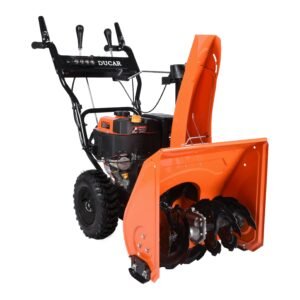
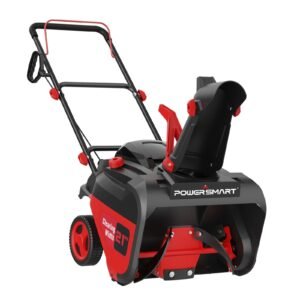
21″ Snow Blower, 212 cc, electric and recoil start
$849.00 to $999.00 Select options This product has multiple variants. The options may be chosen on the product page -
Gas Snow Blowers
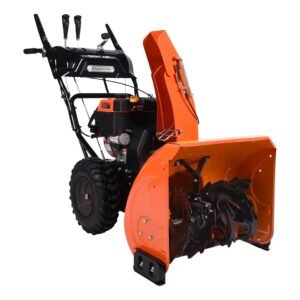
24″ Snow Blower, 212 cc, electric and recoil start, heated handles, LED light
$1,249.00 to $1,399.00 Select options This product has multiple variants. The options may be chosen on the product page -
Gas Snow Blowers
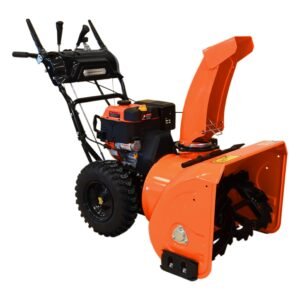
26″ Snow Blower, 212 cc, electric and recoil start, heated handles, LED light
$1,349.00 to $1,549.00 Select options This product has multiple variants. The options may be chosen on the product page -
Gas Snow Blowers
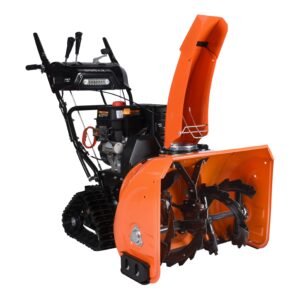
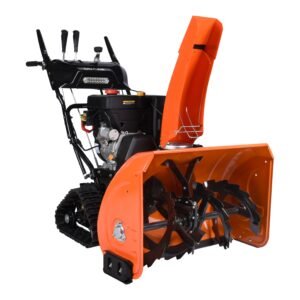
26″ Snow Blower, 252 cc, tracks, electric and recoil start, heated handles, LED light
$1,799.00 to $1,999.00 Select options This product has multiple variants. The options may be chosen on the product page -
Gas Snow Blowers
28″ Snow Blower, 252 cc, electric and recoil start, heated handles, LED light
$1,599.00 to $1,799.00 Select options This product has multiple variants. The options may be chosen on the product page -
Gas Snow Blowers
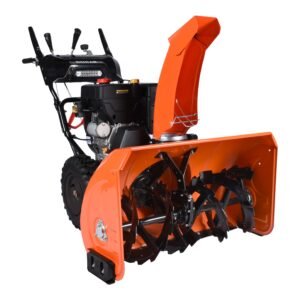
30″ Snow Blower, 302 cc, electric and recoil start, heated handles, LED light
$1,799.00 to $1,999.00 Select options This product has multiple variants. The options may be chosen on the product page -
Gas Snow Blowers
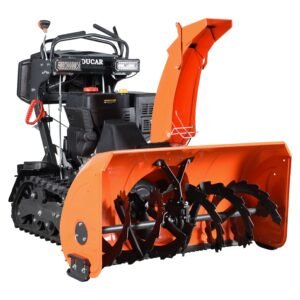
34″ Snow Blower, 420 cc, tracks, electric start, heated handles, LED light
$2,399.00 to $2,599.00 Select options This product has multiple variants. The options may be chosen on the product page -
Gas Snow Blowers
34″ Snow Blower, 375 cc, electric and recoil start, heated handles, LED light
$1,999.00 to $2,199.00 Select options This product has multiple variants. The options may be chosen on the product page -
Gas Snow Blowers
42″ Snow Blower, Stand-On, 420 cc, tracks, 12V electric start, LED light (Available August 18, 2026)
$5,999.00 to $6,249.00 Select options This product has multiple variants. The options may be chosen on the product page -
Gas Snow Blowers
Snow Blower, 30″, 302 cc, tracks, electric and recoil start, heated handles, LED light
$1,949.00 to $2,149.00 Select options This product has multiple variants. The options may be chosen on the product page -
Gas Snow Blowers
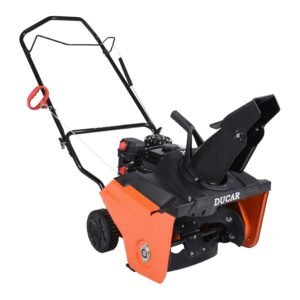
21″ Snow Blower, 196 cc, recoil start
$549.00 to $599.00 Select options This product has multiple variants. The options may be chosen on the product page -
Gas Snow Blowers
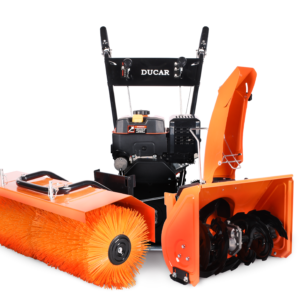
32″ Motorized brush and 22″ snow blower , 2 in 1, 212 cc
$1,299.00 to $1,449.00 Select options This product has multiple variants. The options may be chosen on the product page