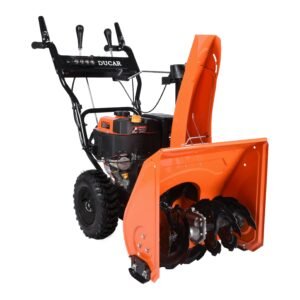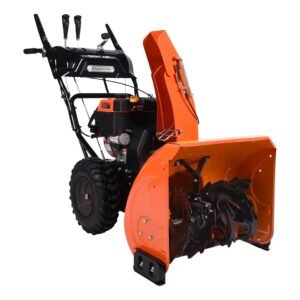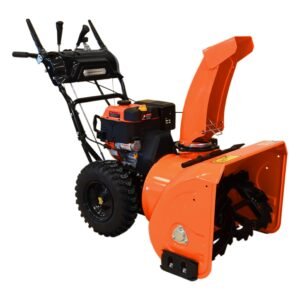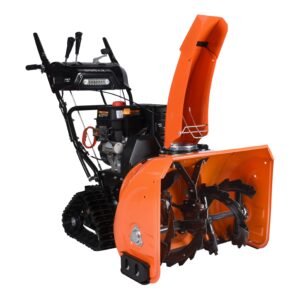
Two-Stage Snow Blowers
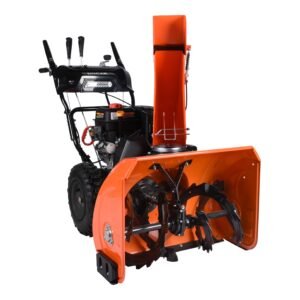
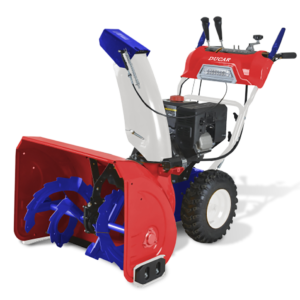
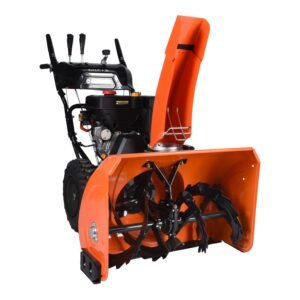
Two-stage snow blowers separate the work. A slow, high torque auger breaks the snow loose and feeds it inward, then a fast spinning impeller behind it throws that snow out of the chute. Splitting those jobs is what lets a two-stage machine take deep, wet, heavy snow without bogging, and throw it ten or fifteen metres instead of dribbling it onto your boots.
The practical difference for a Canadian homeowner is the plough ridge. When the municipal plough goes past after a storm, it leaves a dense compacted bank across the end of the driveway that has already been packed once and often partly refrozen. A single-stage machine stalls in it. A two-stage machine eats it. If that ridge is the reason you dread storms, this is the category to buy from.
Two-stage machines also run on gravel, dirt and unpaved laneways. The auger never contacts the ground: it rides at a set height on adjustable skid shoes, so it does not pick up loose stone. Set the shoes lower on pavement and higher on gravel, and check them each season, because worn shoes are the usual cause of a machine that suddenly starts scraping.
Expect real weight and real width, typically twenty-four inches and up, most with power steering or trigger controlled differentials so the machine turns without a wrestle. Nearly all are gas, so plan for stabilised fuel and an oil change interval. Compare intake height as carefully as clearing width, because intake height is what decides how deep a drift you can take in one pass. Read the snow blower buying guides before choosing, or look at single-stage machines if your driveway is paved and your snowfall is moderate. Keep a spare set of shear pins from parts and accessories on the shelf. Never clear a blocked chute by hand, even with the engine off, because a wound auger can spring round as soon as the obstruction moves. Use the clean out tool and follow the Canada Safety Council guidance on safe operation.
Showing all 16 results
-
Gas Snow Blowers
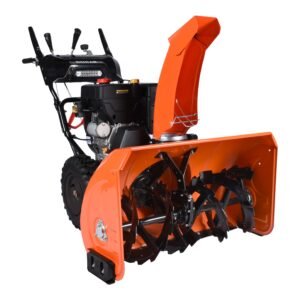
21″ Snow Blower, 212 cc, electric and recoil start
$849.00 to $999.00 Select options This product has multiple variants. The options may be chosen on the product page -
Gas Snow Blowers
24″ Snow Blower, 212 cc, electric and recoil start, heated handles, LED light
$1,249.00 to $1,399.00 Select options This product has multiple variants. The options may be chosen on the product page -
Gas Snow Blowers
26″ Snow Blower, 212 cc, electric and recoil start, heated handles, LED light
$1,349.00 to $1,549.00 Select options This product has multiple variants. The options may be chosen on the product page -
Gas Snow Blowers
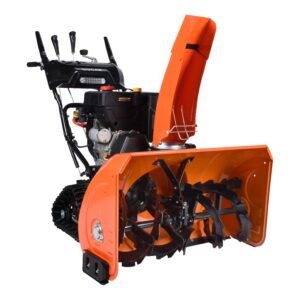
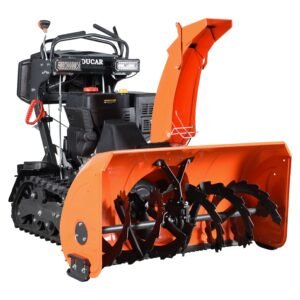
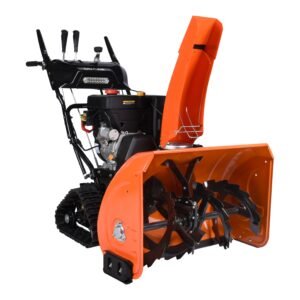
26″ Snow Blower, 252 cc, tracks, electric and recoil start, heated handles, LED light
$1,799.00 to $1,999.00 Select options This product has multiple variants. The options may be chosen on the product page -
Gas Snow Blowers
28″ Snow Blower, 252 cc, electric and recoil start, heated handles, LED light
$1,599.00 to $1,799.00 Select options This product has multiple variants. The options may be chosen on the product page -
Gas Snow Blowers
30″ Snow Blower, 302 cc, electric and recoil start, heated handles, LED light
$1,799.00 to $1,999.00 Select options This product has multiple variants. The options may be chosen on the product page -
Gas Snow Blowers
34″ Snow Blower, 420 cc, tracks, electric start, heated handles, LED light
$2,399.00 to $2,599.00 Select options This product has multiple variants. The options may be chosen on the product page -
Gas Snow Blowers
34″ Snow Blower, 375 cc, electric and recoil start, heated handles, LED light
$1,999.00 to $2,199.00 Select options This product has multiple variants. The options may be chosen on the product page -
Gas Snow Blowers
42″ Snow Blower, Stand-On, 420 cc, tracks, 12V electric start, LED light (Available August 18, 2026)
$5,999.00 to $6,249.00 Select options This product has multiple variants. The options may be chosen on the product page -
Battery Snow Blowers
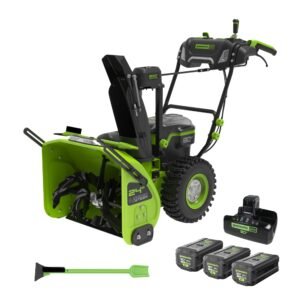
60V 24″ Dual Stage Snow Thrower, (3) 5.0Ah Batteries and Dual Port Charger Included
$2,999.99 Add to cart -
Battery Snow Blowers
80V 24” Dual Stage Snow Thrower, (3) 5.0Ah Batteries and Dual Port Charger Included
$3,199.00 Add to cart -
Gas Snow Blowers
Snow Blower, 30″, 302 cc, tracks, electric and recoil start, heated handles, LED light
$1,949.00 to $2,149.00 Select options This product has multiple variants. The options may be chosen on the product page -
Battery Snow Blowers
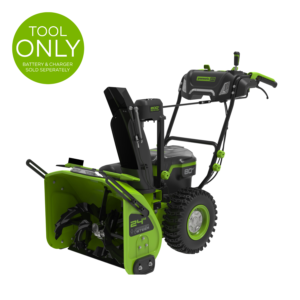
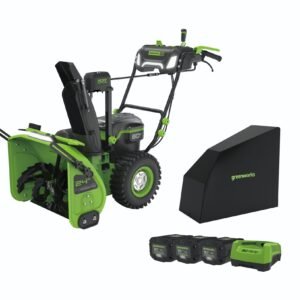
80V 24″ Dual Stage Snow Thrower, (3) 4.0Ah Batteries and Charger BONUS: Protective Cover
$2,999.99 Add to cart