
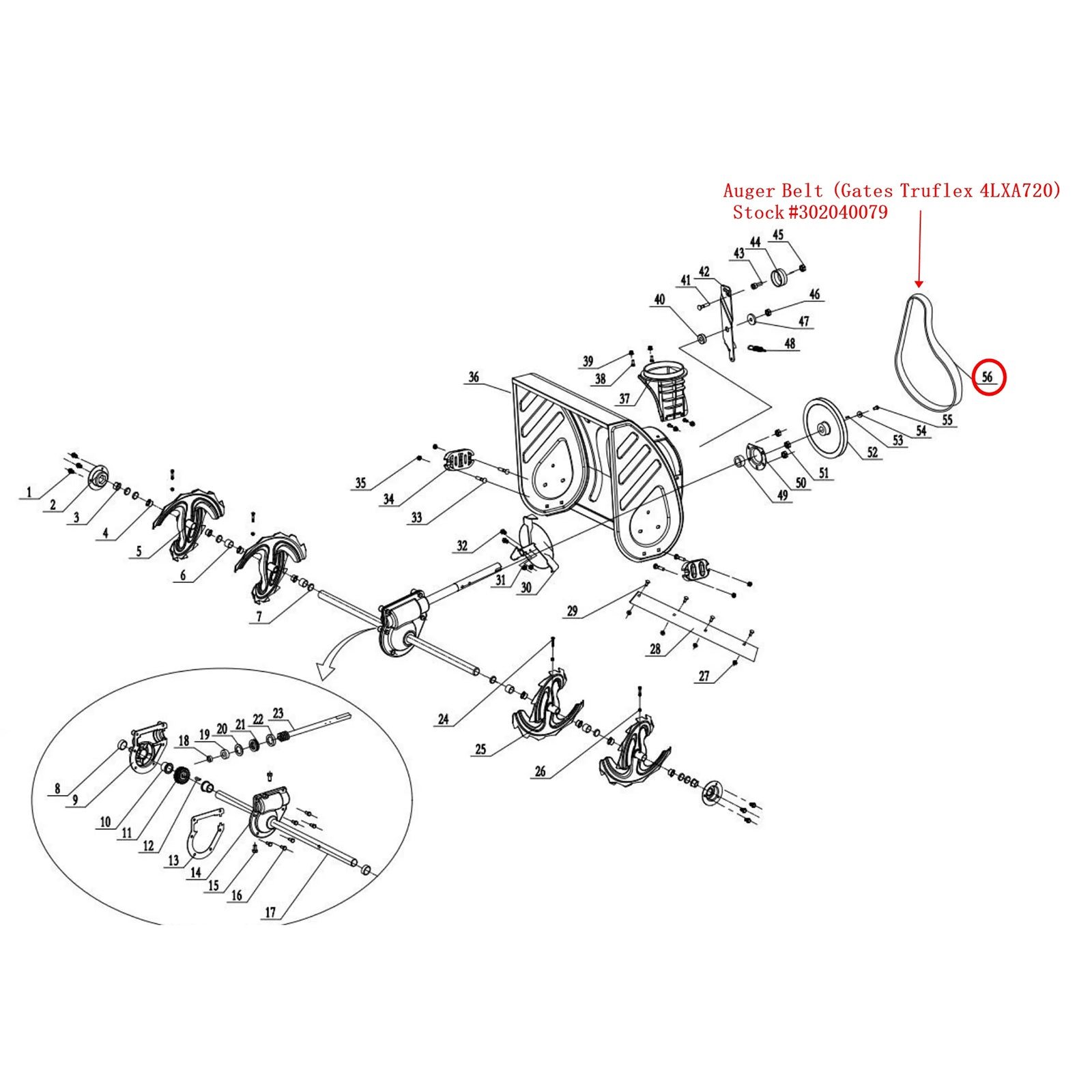
The 4LXA720 auger belt is stock number 302040079. The A in that code is the part worth understanding, because it marks this out as a different belt section from the 4L belts sitting next to it in the catalogue, and the two do not substitute for each other. What you are looking at is a 4lxa720 auger belt. The detail that follows applies to this one and not to the category.
On this page
Choosing a 4lxa720 auger belt for a Canadian driveway
V belts come in standardised sections that fix the top width and the depth. Two families matter on snow blowers.
| Section | Top width | Depth | Typical use |
|---|---|---|---|
| 4L | 1/2 inch | 5/16 inch | Fractional horsepower, light duty drives |
| A | 1/2 inch | 11/32 inch | Industrial classical section, deeper, higher load |
Both are half an inch across the top, which is why they look interchangeable in a photograph. The A section is deeper. A deeper belt sits differently in the pulley groove, carries load on more side face area and handles higher torque, which is why the 4LXA720 auger belt is specified where a plain 4L would be working at its limit.
Specifications
| Specification | Detail |
|---|---|
| Stock number | 302040079 |
| Belt code | 4LXA720 |
| Section | A section, 1/2 inch top width |
| Construction | Cogged |
| Outside length | 72 inches nominal |
| Substitutes | Not interchangeable with plain 4L |
Why a 4lxa720 auger belt will not swap for a 4L
Physically a 4L of the right length will go on. It will also fail early, and it may not drive properly from new.
The pulley groove is cut to an angle and depth matched to the belt section. Put a shallower 4L into a groove cut for an A section and the belt rides too deep, contacting the bottom of the groove where there is no grip, and touching the side faces over a smaller area than intended. The result is slip under load, then heat, then glazing.
The reverse is worse. An A section in a 4L groove sits proud, riding on the outer edges of the groove walls, which concentrates all the load on two narrow strips of rubber and chews the belt apart.
So the 4LXA720 auger belt substitutes only for another A section belt of the same length. Match the section first and the length second.
Identifying whether you need a 4lxa720 auger belt
Read the code off the old belt if you can. If it is unreadable, measure the depth rather than the width, because width will not separate them.
Stand the belt on a flat surface, top face up, and measure from the flat top down to the narrow inner face. Around five sixteenths of an inch, roughly 8 mm, is a 4L. Around eleven thirty seconds, roughly 9 mm, is an A section. It is a small difference and worth measuring carefully with a rule rather than judging by eye.
The other clue is the machine. A section belts appear on larger two stage machines with more engine torque, so if yours is a big machine and the belt looks chunky, suspect A section. Confirm before ordering. The snow blower price guide guide covers the broader machine classes.
Why section matters more than brand
People shopping belts tend to focus on the manufacturer name. On a snow blower the section matters far more, and getting it right is most of the job.
The reason is geometry. A V belt does not grip by being pressed down into the groove, it grips by wedging: as tension rises the belt is pulled into the tapering groove and the side faces are squeezed against the groove walls. That wedging multiplies the available friction several times over compared with a flat belt, and it only works if the belt angle and depth match the groove.
Get the section right and a modest belt will drive properly. Get it wrong and the best belt made will slip, because the wedge never forms. That is why the 4lxa720 auger belt cannot be substituted with a shallower 4L of the same length and the same brand.
Once the section is right, then construction is worth paying for: a cogged belt bends around small pulleys without overheating, and a cold rated compound stays flexible in January.
Fitting the 4LXA720 auger belt
Power off, cover off, routing photographed. Release the idler, remove the old belt and fit the new one to the same path.
With the new belt on, check the seating specifically. Drop it into the groove and look at it from the side: the top face should sit level with or just proud of the pulley rim, and the belt should not be touching the bottom of the groove anywhere. If it sinks, either the pulley is worn or you have the wrong section.
Turn everything by hand through several revolutions before restoring power, and confirm the auger stops within about five seconds of releasing the control. Canadian Centre for Occupational Health and Safety covers isolating powered equipment before this kind of work.
Parts to order with a 4lxa720 auger belt
One belt to rule out and one part to inspect.
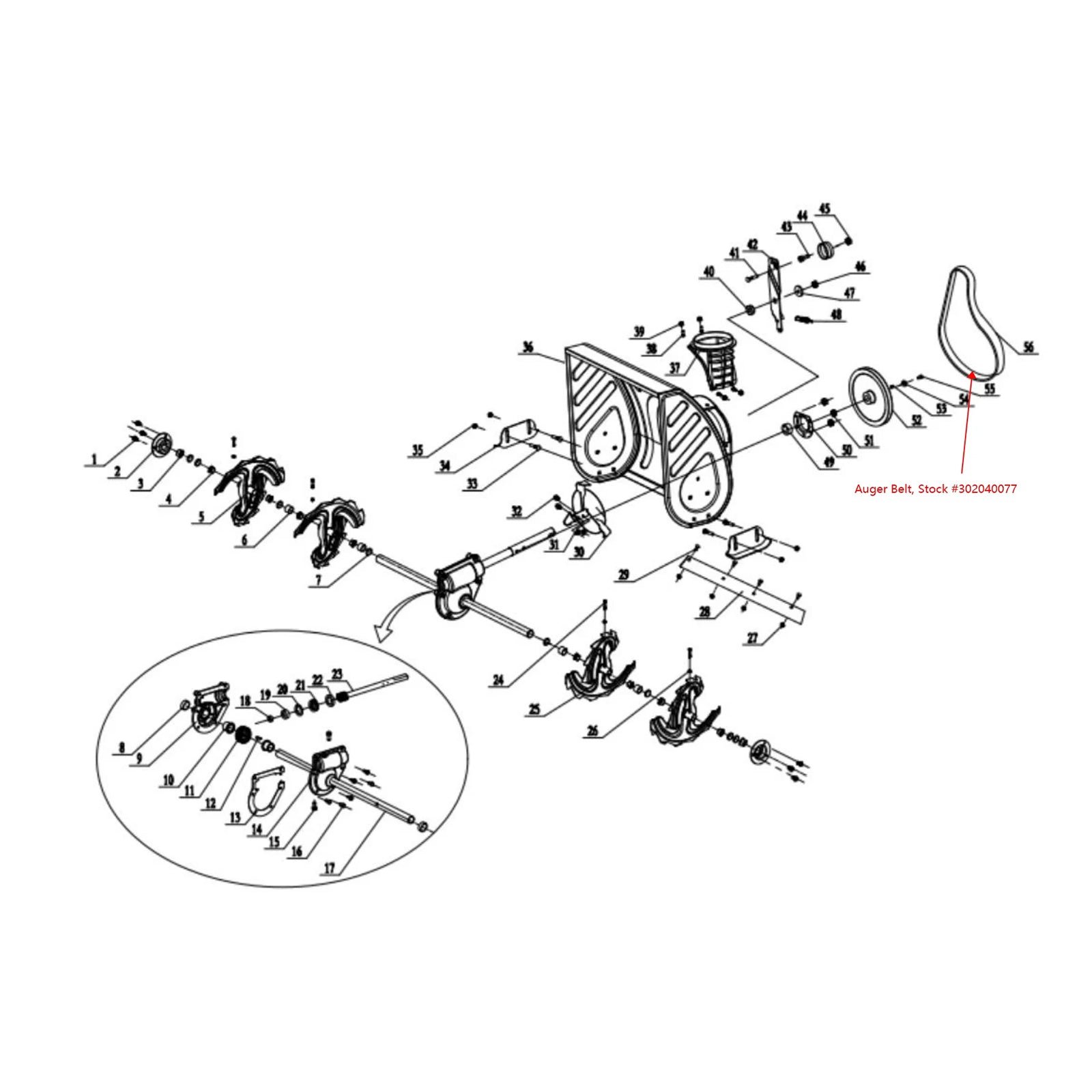
Auger Belt (Gates Truflex 4LXP700): the section is different, so this is the belt to rule out rather than substitute.
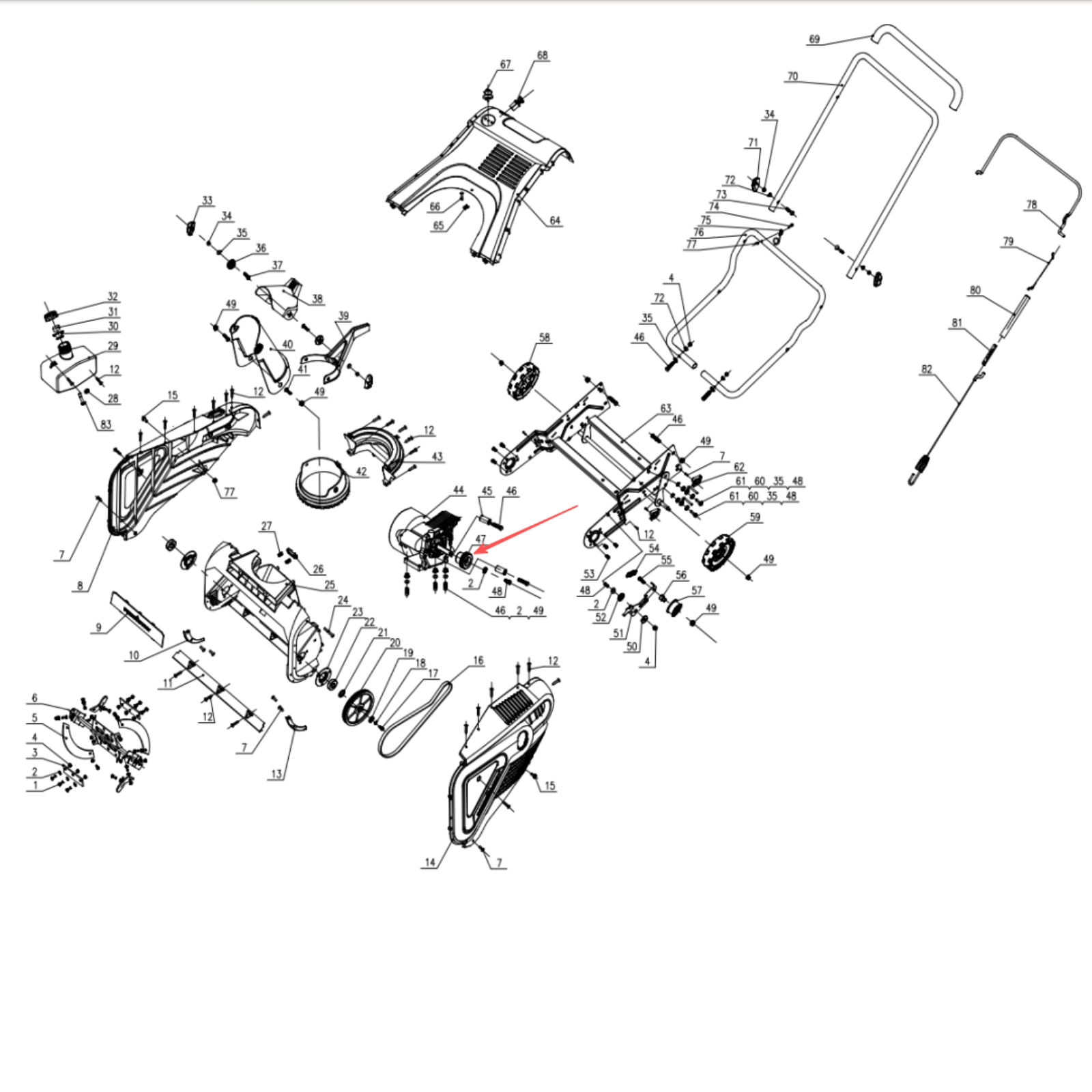
Small Belt Pulley: a worn groove makes any section sit too deep, so check it while the cover is off.
Common questions
What does the A in 4LXA720 mean?
It is the belt section. A section is a classical industrial V belt, half an inch across the top and about eleven thirty seconds deep, deeper than a 4L of the same width.
Can I fit a 4L belt instead?
No. It is shallower, so it rides too deep in an A section groove, contacts the groove bottom where there is no grip, and slips then glazes.
How do I tell a 4L from an A section?
Measure the depth, not the width, since both are half an inch across the top. Roughly 8 mm deep is a 4L and roughly 9 mm is an A section.
Why do some machines use A section?
Higher engine torque. The deeper section carries load on more side face area, so it is specified where a plain 4L would be working at its limit.
Does the X still mean cogged?
Yes. The notched inner face lets the belt bend around small pulleys without the compression that generates heat and glazing.
What if my new belt sits low in the groove?
Either the pulley groove has worn or you have the wrong section. Both cause slip, so resolve it before running the machine.
Reviews
There are no reviews yet.