
A 24 inch snow thrower belt sounds like a complete specification and is not quite one. This is part R0204397-00, listed for 24 inch machines, and clearing width is genuinely useful as a filter. It just is not the thing the belt actually cares about. If a 24 inch snow thrower belt is what you are after, this is the listing and these are the details worth knowing.
On this page
- This 24 inch snow thrower belt in practice
- Specifications
- The two measurements that decide a 24 inch snow thrower belt
- Measuring clearing width for a 24 inch snow thrower belt
- Why a new 24 inch snow thrower belt sometimes fails early
- Fitting a 24 inch snow thrower belt
- Parts to order with a 24 inch snow thrower belt
- Common questions
This 24 inch snow thrower belt in practice
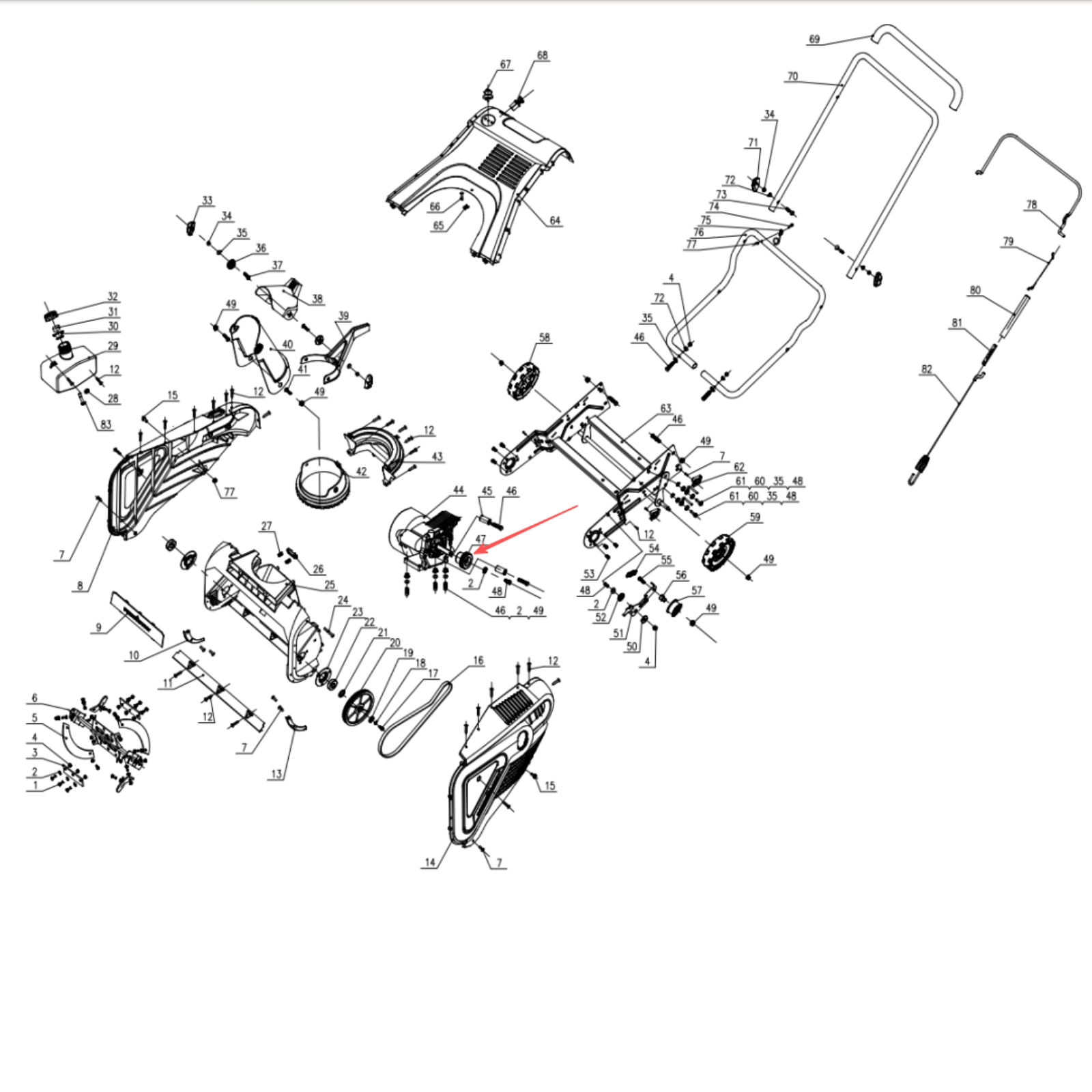
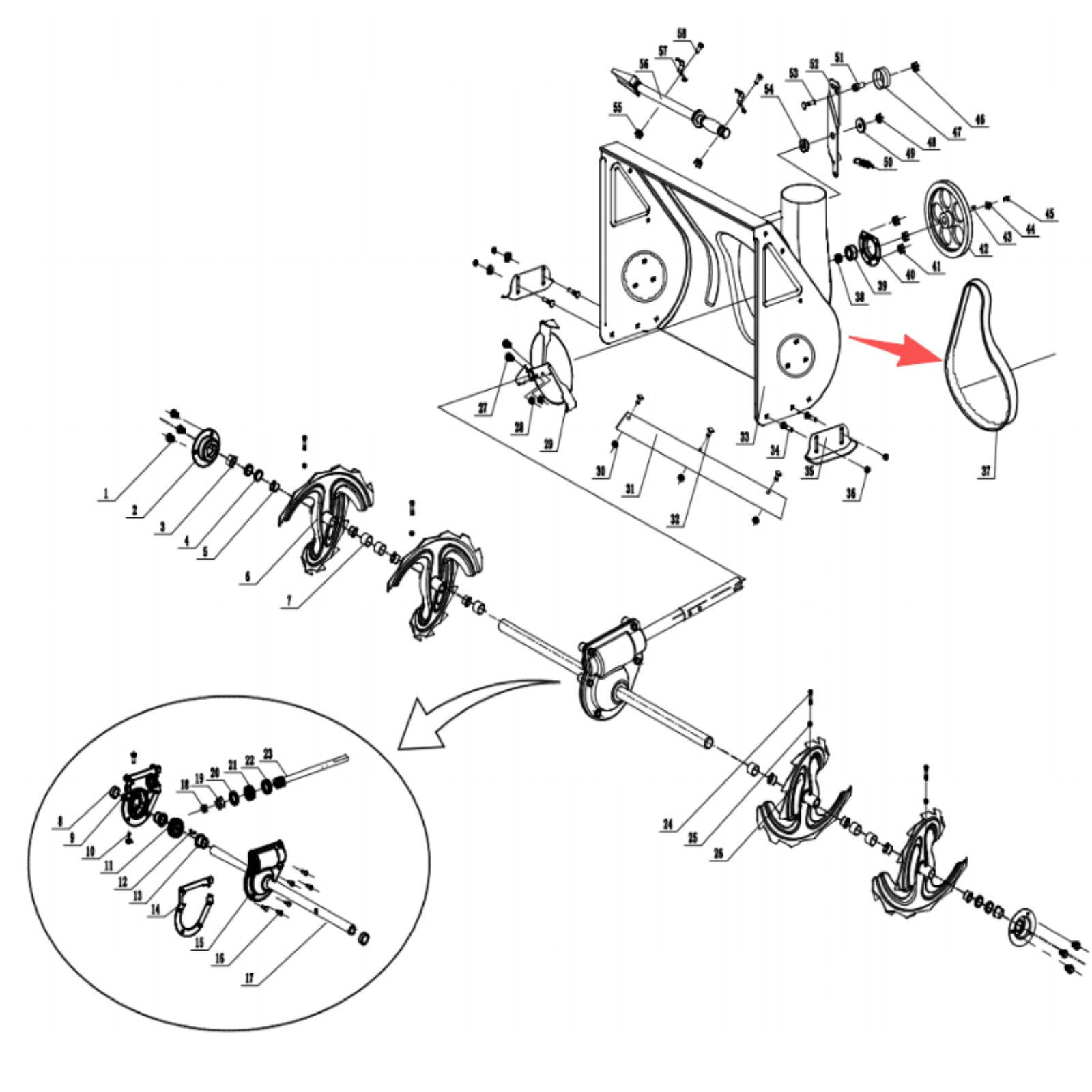
A belt does not know how wide your housing is. What it responds to is the distance between the pulleys it wraps, the diameter of those pulleys, and how far the idler travels.

Clearing width correlates with those things because a wider housing usually means a bigger chassis, a longer distance from the engine pulley to the auger pulley and therefore a longer belt. It is a real correlation and it is why a 24 inch snow thrower belt is a meaningful listing. But it is a correlation, not a rule, and two 24 inch machines from different families can take different belts.
Specifications
| Specification | Detail |
|---|---|
| Part number | R0204397-00 |
| Listed application | 24 inch snow throwers |
| Part type | Drive belt |
| Selection basis | Clearing width, confirm by measurement |
| Wear item | Yes |
The two measurements that decide a 24 inch snow thrower belt
Once width has narrowed the field, two figures finish the job.
| Measurement | How to take it | Why it matters |
|---|---|---|
| Outside length | Wrap a tape around the outer face of the intact belt | Decides whether the idler can tension it at all |
| Top width and depth | Measure across the flat top, then top to inner face | Decides the section, and whether it wedges in the groove |
Get both right and the belt will drive. Get the length right and the section wrong and it will slip from new, because a V belt grips by wedging into a tapering groove and that only works when the angle and depth match.
The measurement people get wrong is length, and always the same way: laying a broken belt flat and doubling it. That reads the inner length, minus whatever the belt lost when it failed, and typically comes out several inches short.
Measuring clearing width for a 24 inch snow thrower belt
Clearing width is the width of the housing opening at the front of the machine, measured across the mouth from outside edge to outside edge.
It is not the width of the auger, which is smaller. It is not the width across the wheels or the handlebar, which are usually wider. Both of those are measured by mistake regularly, and both push people into the wrong size band.
Manufacturers quote whole inches, so a tape reading of 23 and a half almost certainly means a 24 inch machine. Our what size snow blower you need guide explains how the industry defines clearing width, single stage against two stage covers what the machine classes mean, and CSA Group publishes the safety standards these machines are certified against.
Why a new 24 inch snow thrower belt sometimes fails early
If a belt lasted years and the replacement dies in weeks, the belt is not the problem. Three things account for almost all of it.
Worn pulley grooves. A V belt grips on its side faces. As a groove widens the belt sinks until it rides on the groove bottom, where there is no grip at all, so it slips, heats and glazes. Drop the new belt into the groove before fitting: if it sits below the rim rather than level with it, replace the pulley as well.
A seized idler. If the idler bearing has stopped turning, the belt drags across a stationary wheel every second the auger runs. That finishes a belt in one session and is easy to miss, because the machine works normally at first.
A cable adjusted too tight. If the idler never fully retreats, the belt stays partly tensioned with the control released, so it slips against a stopped pulley whenever the engine runs. That also means the auger never properly disengages, which is a safety fault as well as a belt killer.
Fitting a 24 inch snow thrower belt
Disconnect the power first. Take the belt cover off and photograph the routing before anything moves, including which side of each idler the belt passes. Wrong routing is the most common reassembly fault and produces a machine that either will not engage or will not release.
Release the tension at the idler, work the old belt off and fit the new one to the same path. Turn the pulleys by hand through several full revolutions to seat it, and check it runs centrally in every groove without touching a guide or the cover.
Then test the release: engage the auger, let go of the control, and confirm the auger stops within about five seconds.
Parts to order with a 24 inch snow thrower belt
One part to inspect and one page to read before ordering.
Small Belt Pulley: worn grooves glaze a new belt quickly, so check while the cover is off.
Auger Belt: worth reading if you are not yet certain the belt is what has failed.
Common questions
Will any 24 inch snow thrower belt fit my machine?
Not necessarily. Width is a useful filter because bigger housings usually mean longer belts, but two 24 inch machines from different families can take different belts.
How do I measure clearing width?
Across the housing opening at the front, outside edge to outside edge. Not the auger, and not across the wheels or handlebar, which are the two common mistakes.
What measurements do I actually need?
Outside length, taken by wrapping a tape around the outer face of an intact belt, plus the top width and the depth, which together give you the section.
Can I measure a broken belt?
Not by laying it flat and doubling it, which reads several inches short. Run a string around the pulley path with the idler at mid travel instead.
My tape says 23 and a half inches. What size is that?
A 24 inch machine. Manufacturers quote clearing width in whole inches, so round to the nearest one.
What if the length is right but it still slips?
The section is probably wrong. A V belt grips by wedging into a tapering groove, and that only works when the belt angle and depth match the groove.
Reviews
There are no reviews yet.