
A snow blower auger belt is the cheapest part that can stop a machine dead, and the most commonly replaced part on any two stage snow blower. This is stock number 302040065. Before you order one, it is worth knowing that a belt almost never fails suddenly: it tells you for weeks beforehand. If a snow blower auger belt is what you are after, this is the listing and these are the details worth knowing.
On this page
- Living with a snow blower auger belt
- Specifications
- Snow blower auger belt symptoms, in the order they appear
- Inspecting a snow blower auger belt properly
- Check the pulleys, or the new snow blower auger belt goes the same way
- Fitting a new snow blower auger belt
- Parts to check with a snow blower auger belt
- Common questions
Living with a snow blower auger belt
The engine drives a pulley. The snow blower auger belt runs from that pulley to another on the auger gearbox input. When you squeeze the auger control, an idler pulley swings across and tensions the belt, which is what engages the auger. Release the control and the idler swings back, the belt goes slack and the auger stops.
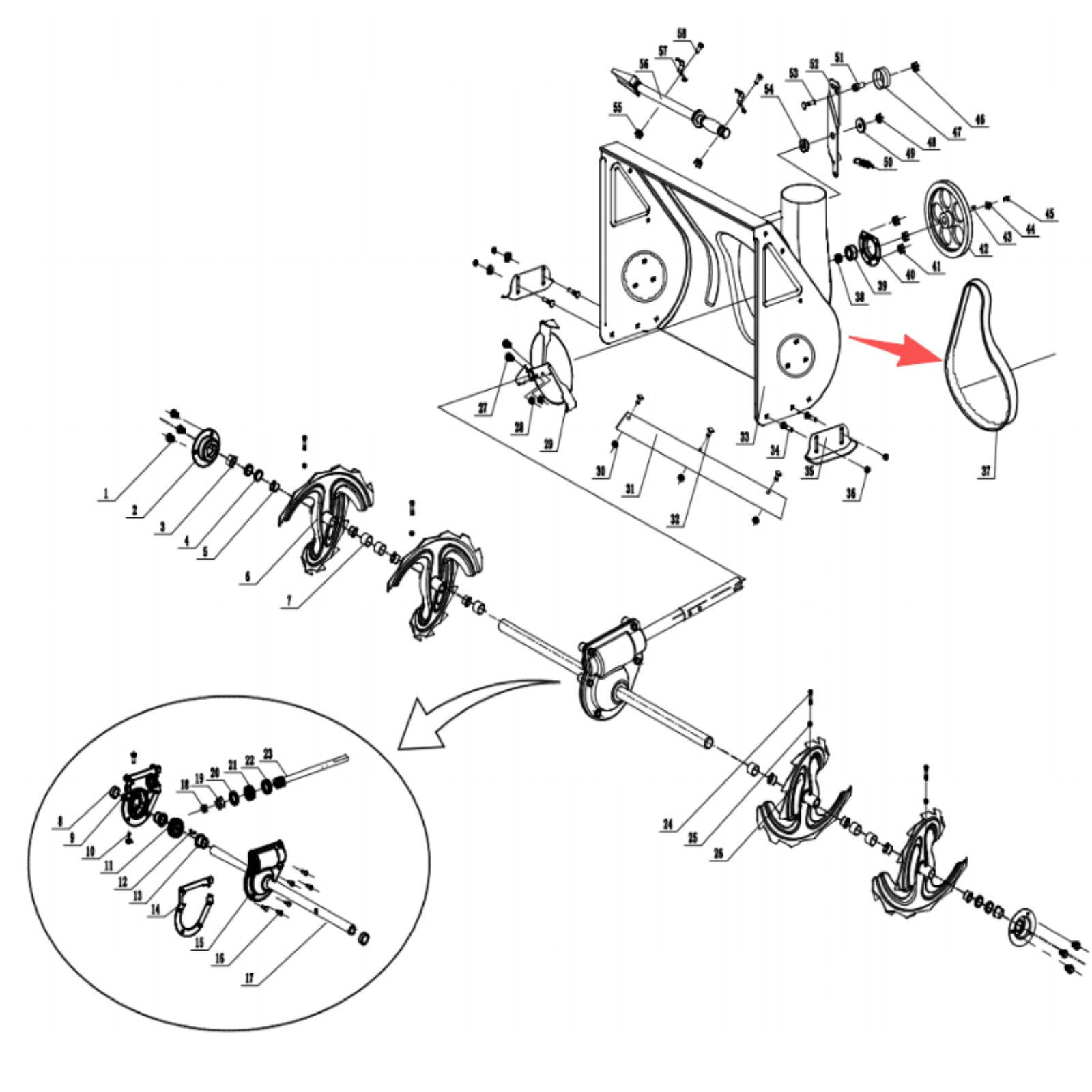
That means the snow blower auger belt is not just transmitting power. It is also the clutch. Every engagement is a controlled slip while the belt takes up the load, which is exactly why belts wear out and shafts do not.
Specifications
| Specification | Detail |
|---|---|
| Stock number | 302040065 |
| Part type | Auger drive belt |
| Function | Drives the auger, and acts as the clutch |
| Tensioned by | Idler pulley on the auger control |
| Wear item | Yes, expect to replace it periodically |
| Related | Idler pulley, drive pulley, auger control cable |
Snow blower auger belt symptoms, in the order they appear
A snow blower auger belt fails on a predictable path. Catching it early is the difference between a five minute job in October and a dead machine mid storm.
| Stage | What you notice | What is happening |
|---|---|---|
| 1 | Slight squeal when the auger engages | Glazing has begun, the belt is slipping on take up |
| 2 | Throw distance drops in wet snow only | Slipping under load, dry snow still fine |
| 3 | Auger slows or stops in heavy snow | Slipping badly whenever load rises |
| 4 | Burning rubber smell | Continuous slip, the belt is cooking |
| 5 | Auger will not turn at all | Belt broken, glazed solid or jumped the pulley |
The important one is stage two. A machine that throws well in powder and poorly in wet snow is almost always a slipping snow blower auger belt, not a worn impeller, and owners routinely spend far more money on the wrong part at this point.
Inspecting a snow blower auger belt properly
Disconnect the power first: spark plug lead off, or battery out. Then take the belt cover off and look for four things.
Glazing. A healthy belt has a matt, slightly rough side face. A glazed belt is shiny, almost polished. Glazing means it has been slipping, and a glazed belt cannot grip even if it looks otherwise perfect.
Cracking. Flex the belt backwards and look at the inner face. Fine transverse cracks mean the rubber has hardened with age. This is what kills belts on machines that sit for years rather than machines that work hard.
Depth in the groove. A new belt rides with its top face level with or just above the pulley rim. A worn belt sits down in the groove, which changes the effective pulley diameter and reduces auger speed even before it slips.
Missing chunks or a frayed edge. Usually means the belt has been rubbing a guide or the cover, so find the cause before fitting a new one.
Check the pulleys, or the new snow blower auger belt goes the same way
This is the step people skip and then repeat the job a month later.
A V belt grips on its two side faces, not its bottom. The pulley groove has to hold those faces at the right angle. As a pulley wears the groove widens and the belt sinks deeper, riding on its bottom face where there is almost no grip. Fit a brand new snow blower auger belt into a worn pulley and it will glaze within weeks.
Check by dropping the new belt into the groove with the machine off. It should sit with the top face at or slightly above the pulley rim, and it should not touch the bottom of the groove. If it sinks, the pulley is finished and needs replacing with the belt.
Check the idler too. A seized idler bearing means the idler stops turning and the snow blower auger belt grinds across a stationary wheel, which destroys it in a single session. The Canadian Centre for Occupational Health and Safety guidance on de energising powered equipment applies before you put a hand anywhere near the drive.
Fitting a new snow blower auger belt
Power disconnected, belt cover off. Photograph the routing before you remove anything, including which side of each idler the belt passes. Getting the routing wrong is the single most common reassembly error and it will either not engage or not release.
Release the tension by moving the idler, then work the old snow blower auger belt off. Fit the new one following your photograph, then rotate the pulleys by hand through several full turns to seat it. Check that the belt runs centrally in every groove and does not touch any guide or the cover.
Finally, test the dead man function: engage the auger, release the control, and confirm the auger stops within about five seconds. A belt adjusted too tight never fully releases, which is both a safety fault and a fast route to another burnt belt. Our snow blower safety guide covers that test and the snow blower repair guide covers the routing.
Parts to check with a snow blower auger belt
Two parts decide how long a new belt lasts, and both are cheap next to doing the job twice.
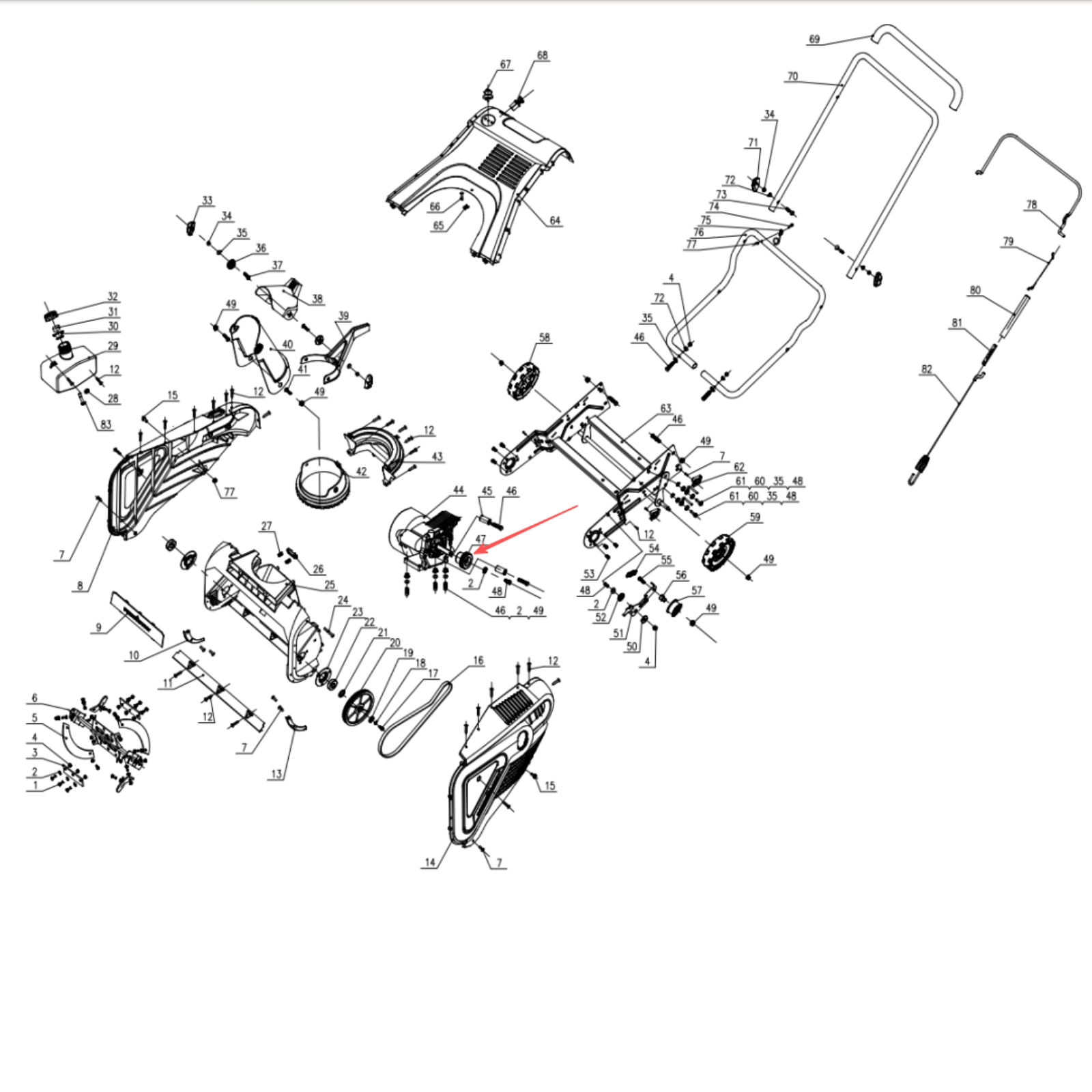
Small Belt Pulley: a worn pulley groove lets the belt sink and glaze, so check it before fitting a new belt.
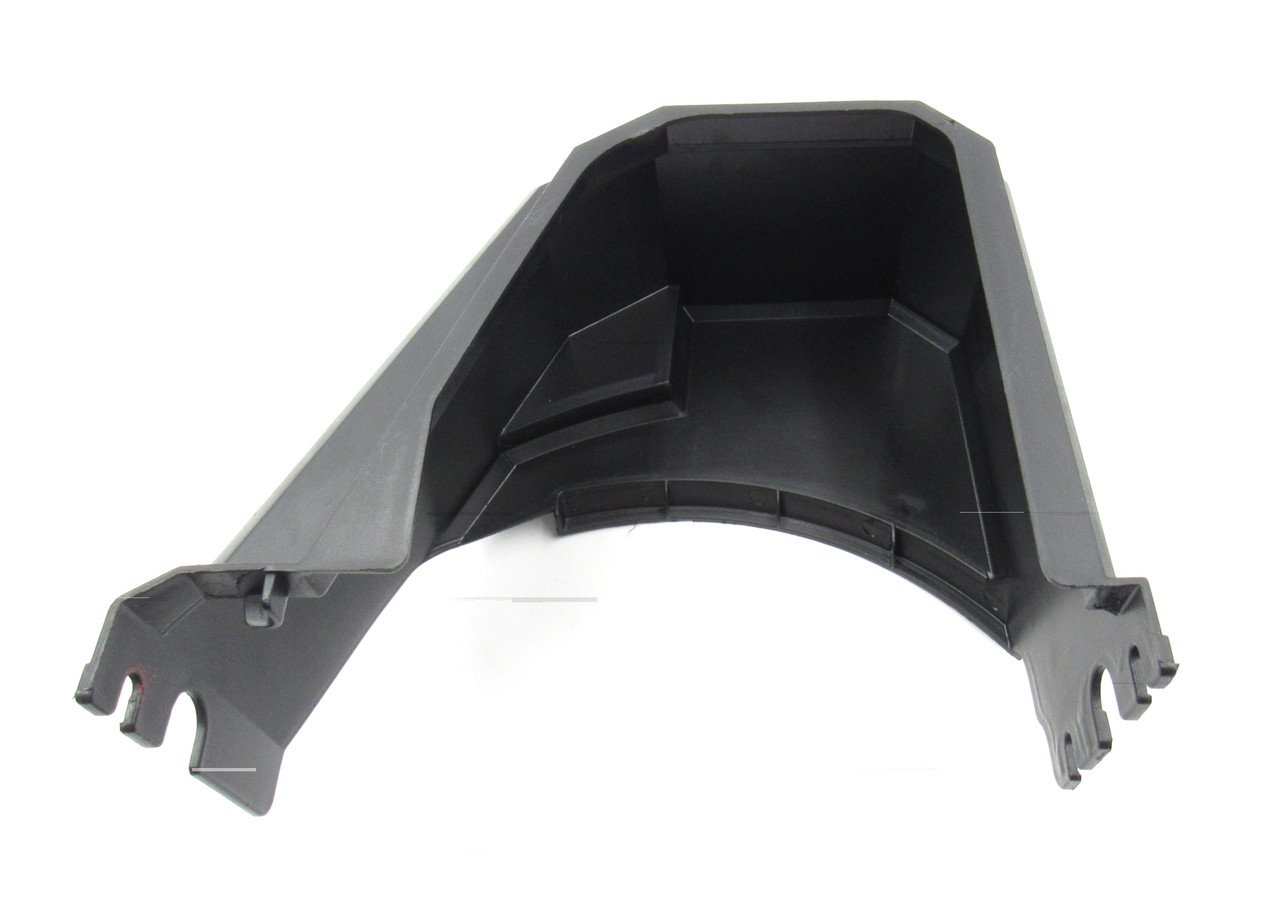
Belt Cover: a missing or damaged cover lets packed snow into the belt run, which shortens belt life.
Common questions
How long should a snow blower auger belt last?
Anywhere from two to ten seasons. Hours matter less than the pulleys: a belt in good grooves lasts for years, and the same belt in a worn pulley glazes within weeks.
My machine throws well in powder but badly in wet snow. Is it the belt?
Almost certainly. That is the classic stage two symptom of a slipping belt, and it is very often misdiagnosed as a worn impeller, which costs far more.
What does a glazed belt look like?
Shiny and polished on the side faces instead of matt and slightly rough. A glazed belt cannot grip even when it otherwise looks undamaged.
Should I replace the pulley as well?
Check it. Drop the new belt into the groove: if it sinks below the pulley rim rather than sitting level with it, the groove has worn and it will glaze the new belt quickly.
Why does the belt squeal when I engage the auger?
Some noise at engagement is normal, because the belt is acting as a clutch and slipping briefly. Continuous squealing means it is slipping the whole time and is on the way out.
Can I fit a hardware store belt instead of a snow blower auger belt?
Only if it matches the exact section and length. Snow blower belts also need to survive repeated clutching and sub zero starts, which a general purpose belt often will not.
Do I need to adjust anything after fitting?
Check the routing against your photograph, turn the pulleys by hand to seat the belt, then confirm the auger stops within about five seconds of releasing the control.

Reviews
There are no reviews yet.