
A small belt pulley is the part that quietly decides how long every belt you fit will last. This is stock number 303060099A, and it is the answer to the most common complaint in this whole catalogue: the new belt only lasted a few weeks. This listing is a small belt pulley, and everything below is written about that specific configuration.
On this page
The case for this small belt pulley
A V belt does not sit on the bottom of the groove. It grips on its two angled side faces, wedged against the matching angled walls of the pulley. All the drive is transmitted through that side contact.
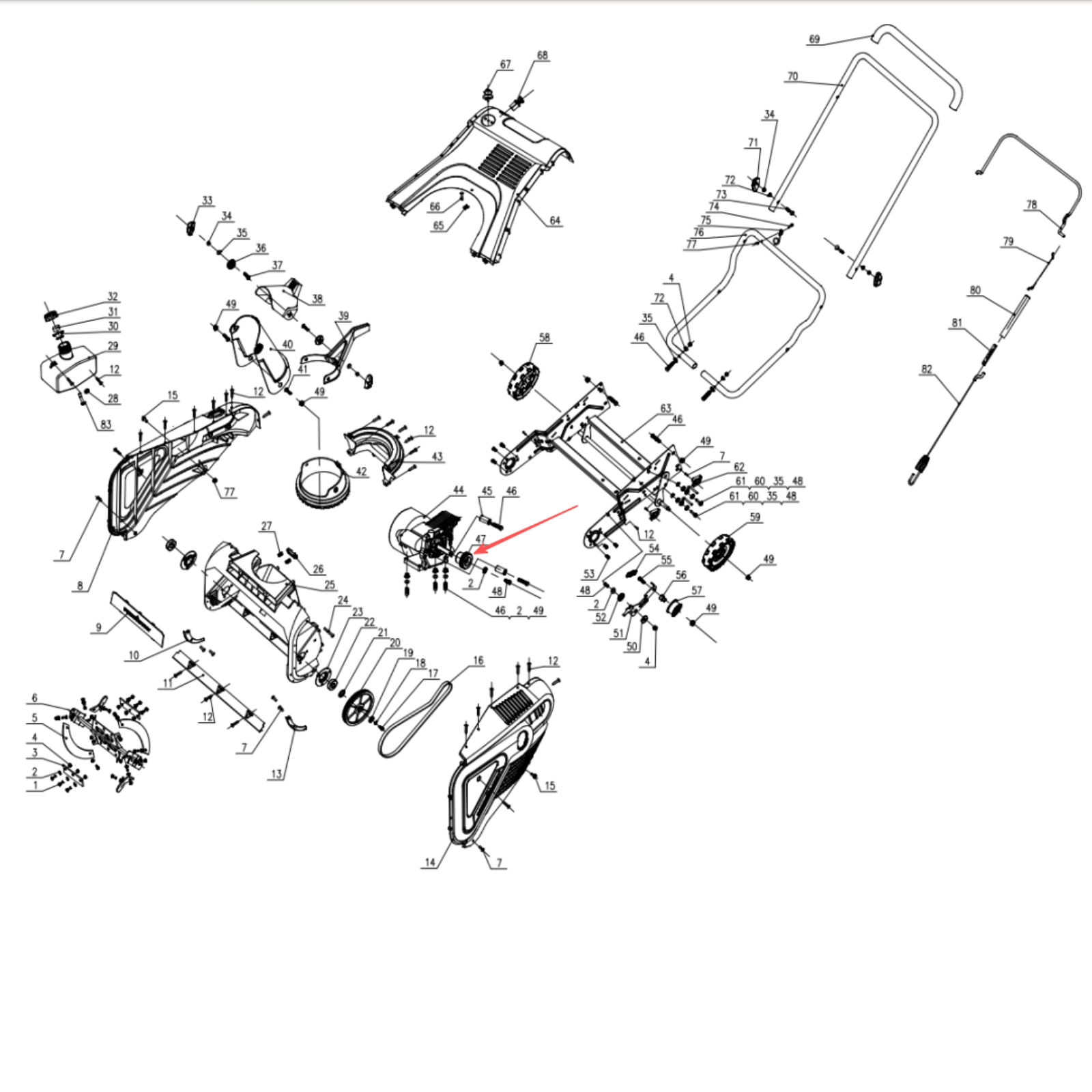
Every hour the machine runs, the belt is moving very slightly against those walls, particularly during engagement when it is deliberately slipping. Over years, that abrades metal from the groove flanks and the groove gets wider. A wider groove is a deeper groove as far as the belt is concerned, because a belt of fixed width settles further down into it.
Eventually the belt touches the bottom of the groove. At that moment the side faces stop carrying load, the wedge effect disappears, and the belt is riding on its base where there is almost no grip. It slips, heats, glazes and is written off, and the small belt pulley that caused it is still sitting there ready to do the same to the next one.
Specifications
| Specification | Detail |
|---|---|
| Stock number | 303060099A |
| Part type | Belt pulley, small |
| Function | Transmits drive through the groove side faces |
| Wear point | Groove flanks widen with use |
| Symptom when worn | New belts glaze and slip within weeks |
The thirty second small belt pulley groove test
You do not need measuring tools. You need the new belt, before you fit it.
With the power disconnected, drop the new belt into the pulley groove by hand and look at it from the side.
| What you see | Verdict |
|---|---|
| Belt top face level with or just above the pulley rim | Pulley is good |
| Belt top face slightly below the rim | Worn, will glaze the new belt sooner than it should |
| Belt sitting deep, base touching the groove bottom | Finished, replace the pulley |
That is the whole small belt pulley test. It takes half a minute and it is the difference between a belt that lasts years and one that lasts a month. It is also the step almost nobody does, which is why the belt gets blamed.
While you are there, check the groove walls for a polished shine and for a visible step or ridge partway down. Both mean wear.
Also check the small belt pulley turns freely
On a small belt pulley a worn groove is the slow killer. A seized bearing is the fast one.
Spin the small belt pulley by hand. It should turn smoothly and freely, without grinding, without roughness and without side to side play on its shaft. Any notchiness means the bearing is on its way out.
This matters most on an idler. An idler pulley that has stopped rotating does not disengage the drive, it just means the belt is dragged across a stationary wheel every second the engine runs. That will destroy a brand new belt inside a single clearing session, and the burnt smell afterwards gets blamed on the belt.
Side play is worth noticing too. A small belt pulley that wobbles on its shaft pushes the belt out of plane on every revolution, which shows as edge fraying on the belt.
When to replace a small belt pulley
Four situations, and the first is by far the most common.
The new belt sinks in the groove. Replace the pulley at the same time as the belt. Fitting a new belt into a worn groove is spending money to get the same failure again.
The bearing is rough or seized. Replace it before running the machine, because this one damages the belt immediately rather than gradually.
Visible damage to the groove. Chips, a bent flange or a ridge worn into one wall. Any of these concentrate load onto part of the belt.
The small belt pulley wobbles. Side play means a worn bore or a worn shaft, and both need attention before a new belt goes on.
The maintenance checklist has this on the autumn list, the snow blower repair guide covers removing the small belt pulley itself, and Canadian Centre for Occupational Health and Safety covers isolating the machine before any of it.
Parts to order with a small belt pulley
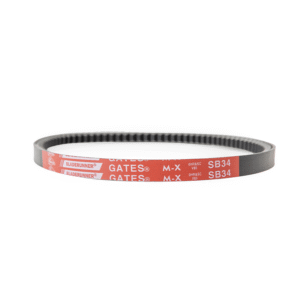
The belt this pulley drives, and the cover that keeps grit out of it.
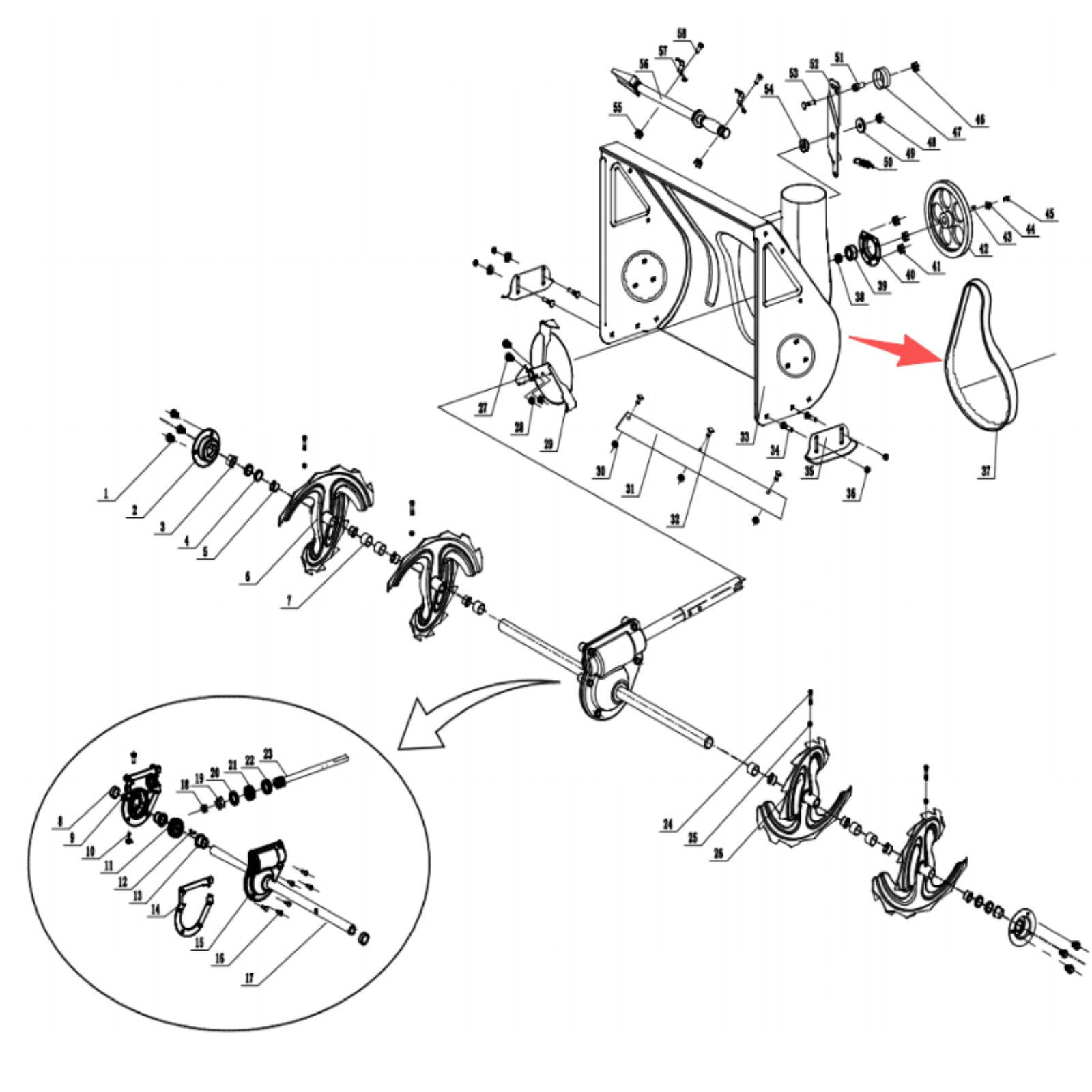
Auger Belt: order both together, because replacing one without checking the other is the usual mistake.
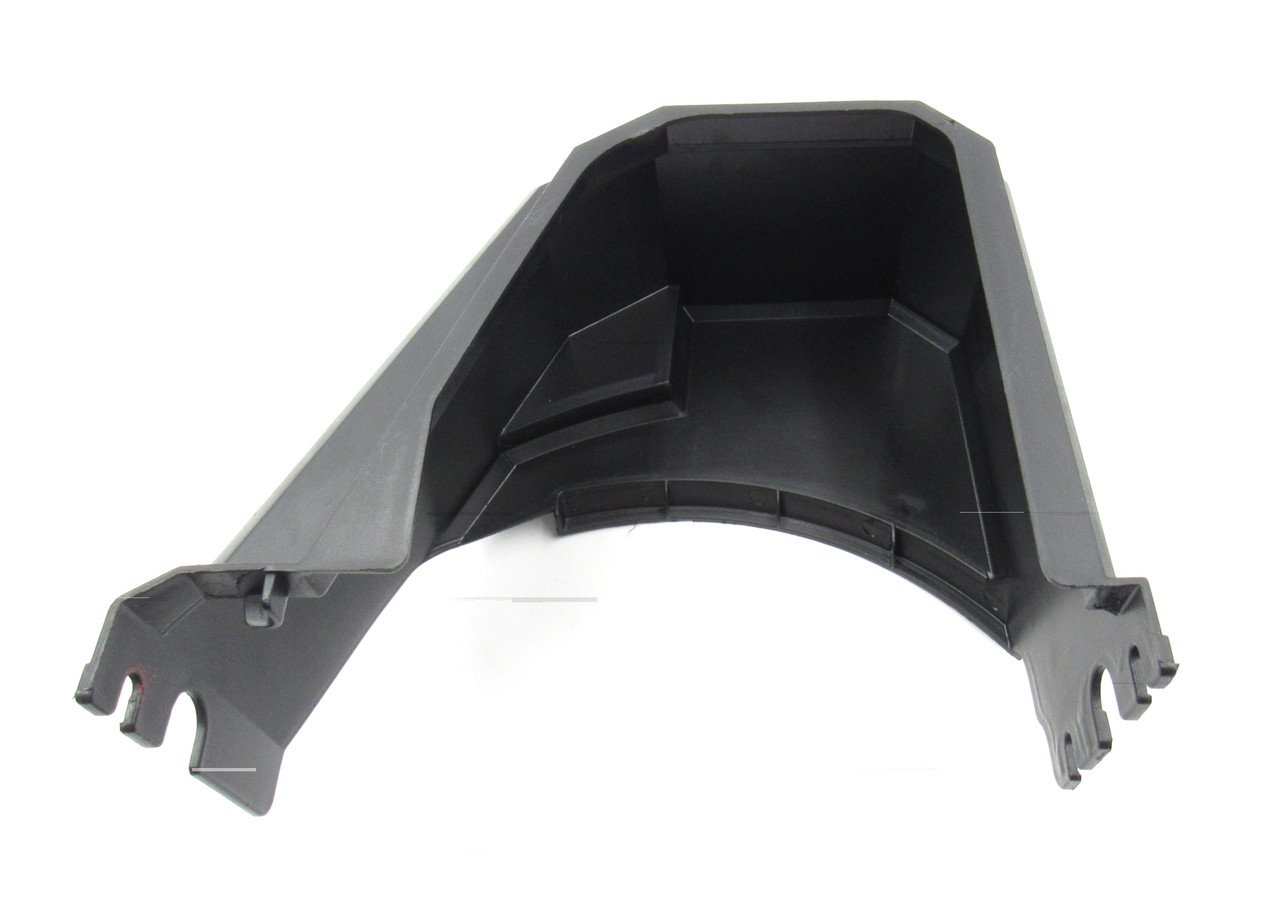
Belt Cover: grit packed into a groove accelerates exactly the wear described on this page.
Common questions
Why did my new belt only last a few weeks?
Almost always a worn small belt pulley. A widened groove lets the belt sink until it rides on its base, where there is no grip, so it slips and glazes.
How do I test whether the pulley is worn?
Drop the new belt into the groove by hand and look from the side. The belt top should sit level with or just above the pulley rim. If it sinks below, the groove has worn.
Should I replace the pulley every time I change a belt?
No, but you should test it every time. Most pulleys outlast several belts. The point is to catch the one that has not.
What does a seized idler do to a belt?
Destroys it in one session. The belt is dragged across a stationary wheel rather than rolling over a turning one, and the burnt smell afterwards usually gets blamed on the belt.
My belt frays along one edge. Is that the pulley?
Probably. Side play in a pulley pushes the belt out of plane on every revolution, and misalignment between pulleys does the same thing.
Does the belt sit on the bottom of the groove?
It should never touch the bottom. A V belt grips on its two angled side faces, and contact with the groove bottom means it has lost the wedge effect entirely.
How long should a small belt pulley last?
Usually several belts. Grit is what wears the grooves, so a drive kept covered and clean lasts far longer than one exposed to salted slush.

Reviews
There are no reviews yet.