
A snow blower belt cover is the panel most likely to be left in the garage after a repair, on the reasoning that it is only a cover. This is stock number 203050335, and it is doing two jobs that both matter: one for your fingers, and one for the belt underneath. This listing is a snow blower belt cover, and everything below is written about that specific configuration.
On this page
Where a snow blower belt cover fits
Behind the cover is a belt running between two pulleys, and the dangerous part is not the belt itself. It is the nip point, the place where the belt meets the pulley and is drawn into the groove.
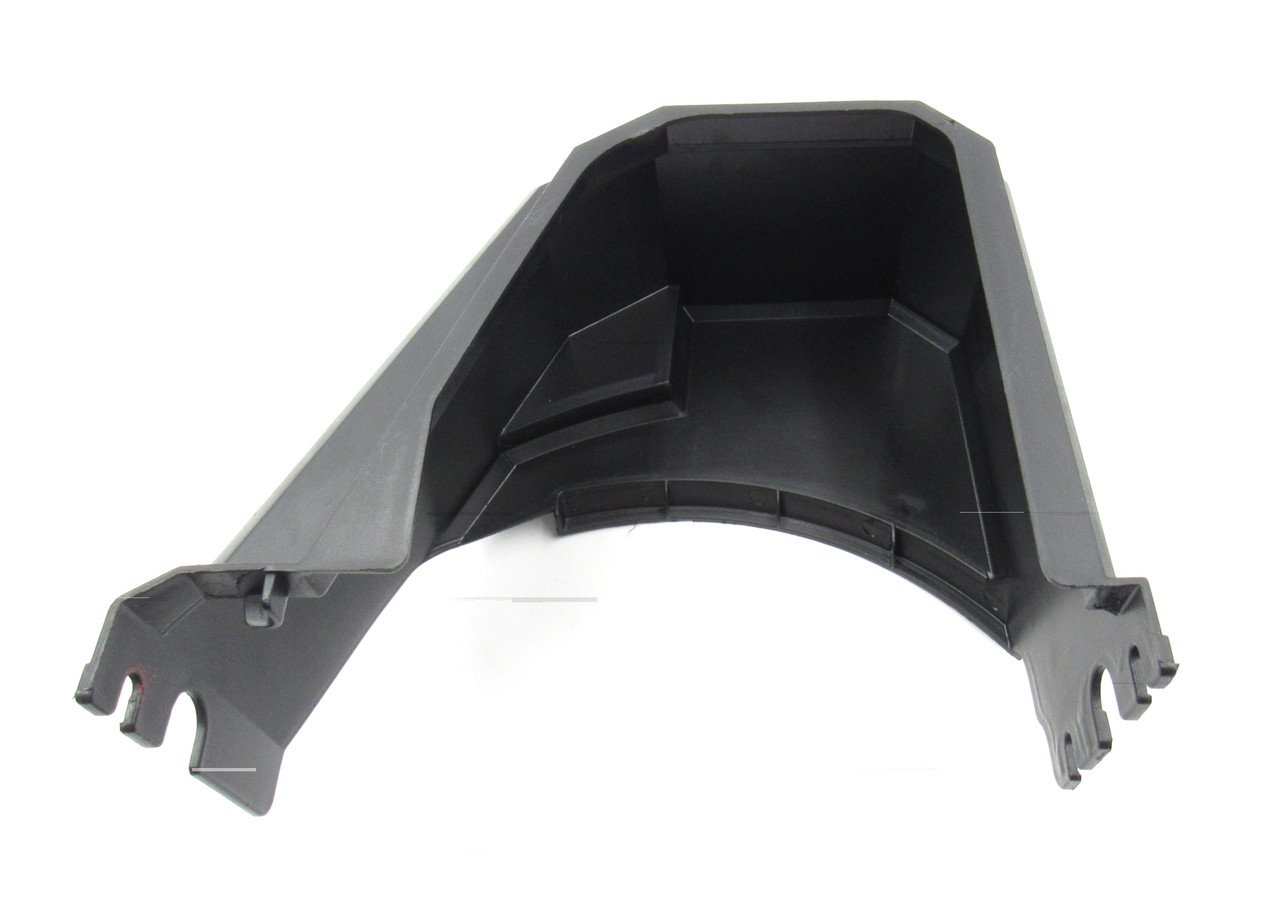
A nip point does not need much force to be serious. Anything that touches the belt just before it enters the pulley is pulled in and trapped: a glove finger, a cuff, a drawstring. Because it happens at belt speed there is no time to react, and because the belt is powered there is nothing to stop it continuing. Guarding rotating nip points is a basic principle of machine safety, and Canadian Centre for Occupational Health and Safety sets out why fixed guards are treated as the primary control rather than the last resort.
The cover also keeps you away from a hot engine and a spinning pulley, but the nip point is the reason it exists.
Specifications
| Specification | Detail |
|---|---|
| Stock number | 203050335 |
| Part type | Belt cover, fixed guard |
| Primary function | Guarding the belt and pulley nip points |
| Secondary function | Keeping snow, grit and salt out of the drive |
| Run without it | No |
The second job a snow blower belt cover does
The safety case is the important one. The practical case is that a snow blower belt cover also decides how long the belt lasts.
An unguarded belt run fills with snow. That snow packs into the pulley grooves, and a groove packed with compacted snow is effectively a shallower groove, so the belt rides high, loses side face contact and slips. Slip generates heat, heat melts the snow, and the belt is now running wet, which reduces grip further.
Worse is what the snow carries. Road salt and the sand spread at intersections behave like grinding paste between belt and pulley. A drive that stays clean can run a belt for years. The same drive open to salted slush will not.
So a missing cover does not just risk your hand. It roughly guarantees you will be buying belts more often, which is covered in more detail on our parts and accessories range.
When a snow blower belt cover needs replacing
A snow blower belt cover is not a wear part in the usual sense, but three things retire one.
Cracks. Most are moulded plastic, and plastic that has spent five winters going from a warm garage to minus 25 becomes brittle. A cracked cover flexes in service, and a guard that flexes can contact the belt.
Missing or stripped fasteners. A cover held on by two of its four screws vibrates, and vibration finishes the remaining fixings and then the cover itself. Replace missing hardware rather than living with it.
Distortion from heat. A cover that has been sitting against a hot exhaust or has softened and deformed no longer sits at the designed clearance from the belt.
In every case the test is the same: with the cover fitted and the power disconnected, confirm nothing inside can touch the belt or the pulleys through a gap or a crack.
Fitting a snow blower belt cover
Refitting a snow blower belt cover is the last step of any belt job, and it deserves a minute rather than thirty seconds.
Fit all the fasteners, not most of them. A snow blower belt cover is located by several points precisely because a guard has to stay put under vibration, and a partially fixed cover will work loose. If a fastener is missing, order one rather than leaving the hole empty.
Before you refit, look at what you are covering. This is the one moment in the year when the belt, both pulleys and the idler are all visible at once, so check the belt for glazing, the pulley grooves for wear and the idler for free rotation while you can see them.
Then, with everything back together, run the machine and listen. A snow blower belt cover contacting a moving part gives a rhythmic tick or rub, and it will wear through given long enough. Our snow blower safety guide covers the wider pre season checks, and the snow blower repair guide covers the belt inspection itself.
Parts to order with a snow blower belt cover
The two parts most affected by a missing or damaged cover.
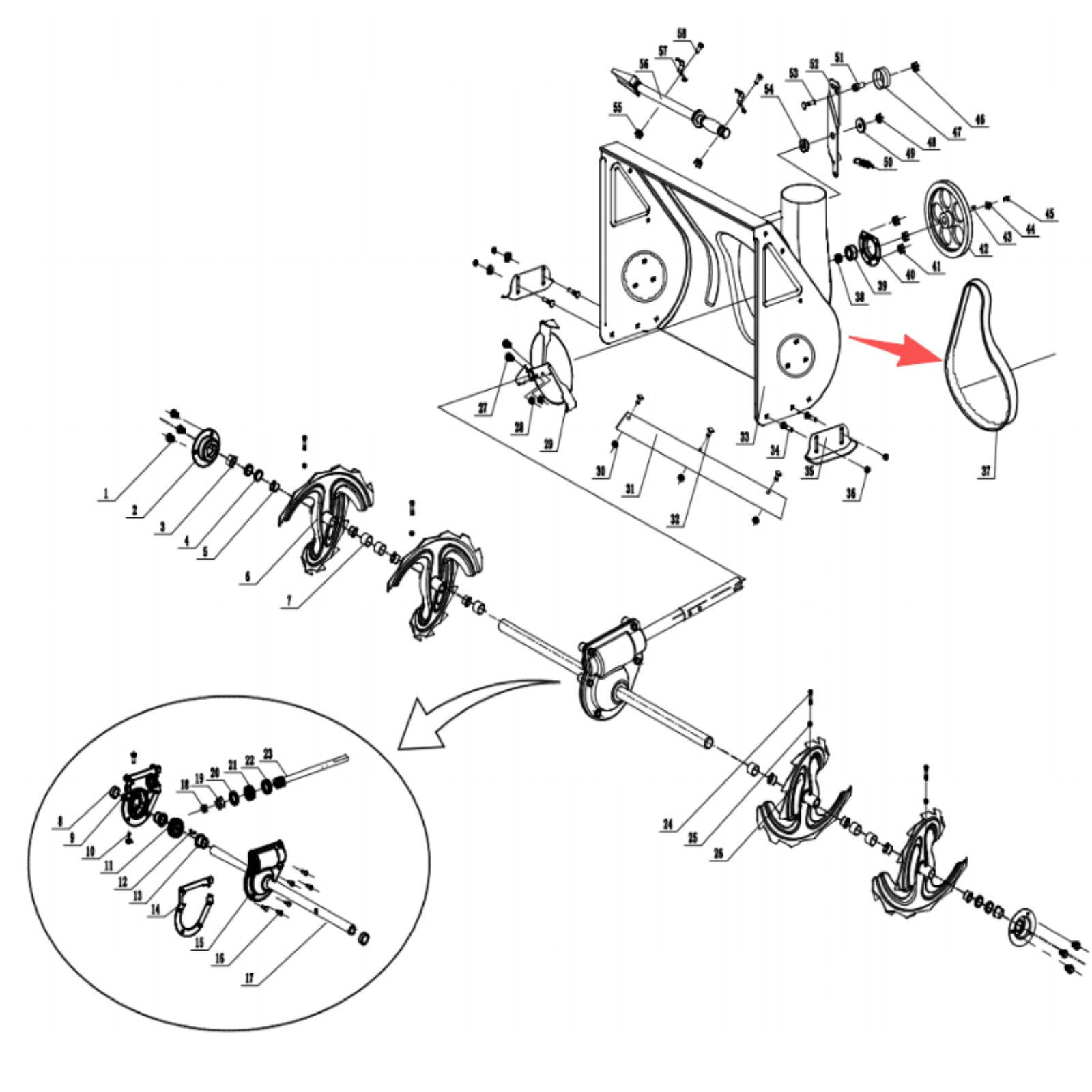
Auger Belt: if the cover has been off or missing, inspect the belt for grit damage while you are here.
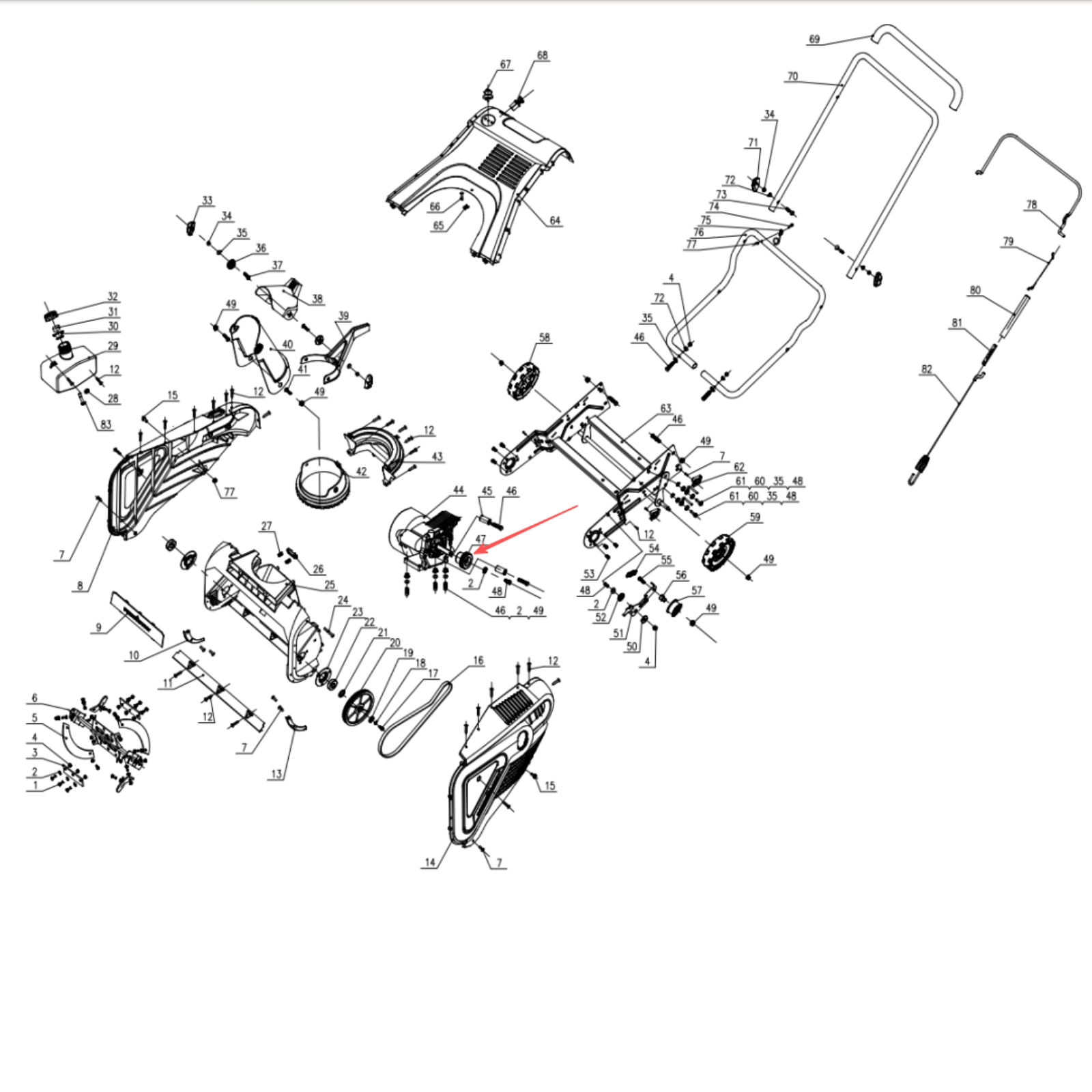
Small Belt Pulley: grooves full of compacted snow and salt are what a missing cover leads to.
Common questions
Can I run a machine without the snow blower belt cover?
No. The cover guards the nip points where the belt enters the pulleys, and anything drawn into one is trapped at belt speed with no time to react.
What is a nip point?
The place where the belt meets the pulley and is pulled into the groove. Anything touching the belt just before that point gets drawn in.
Does a missing cover really affect belt life?
Yes, significantly. Snow packs into the pulley grooves so the belt rides high and slips, and road salt and sand carried in with the snow act as grinding paste.
My snow blower belt cover is cracked but still on. Is that fine?
No. A cracked cover flexes in service and can contact the belt, and the crack will spread. Replace it.
Do I need all the screws?
Yes. Covers are located at several points so the guard stays put under vibration. A partially fixed cover works loose and then damages itself.
What should I check while the cover is off?
The belt for glazing, both pulley grooves for wear, and the idler for free rotation. It is the only time in the year you can see all of them at once.

Reviews
There are no reviews yet.