
The 4LXP880 auger belt is stock number 302040011, an 88 inch cogged V belt from the Gates Truflex family. It is often listed with a length range rather than a single figure, and that range is the most useful thing on the listing once you understand why it is there. Here is the honest picture on this 4lxp880 auger belt, written for Canadian conditions rather than for a catalogue.
On this page
Living with a 4lxp880 auger belt
A V belt is not a fixed steel link. It is rubber over tensile cords, and the length that matters is not the length lying on a bench, it is the length under working tension wrapped around two pulleys.
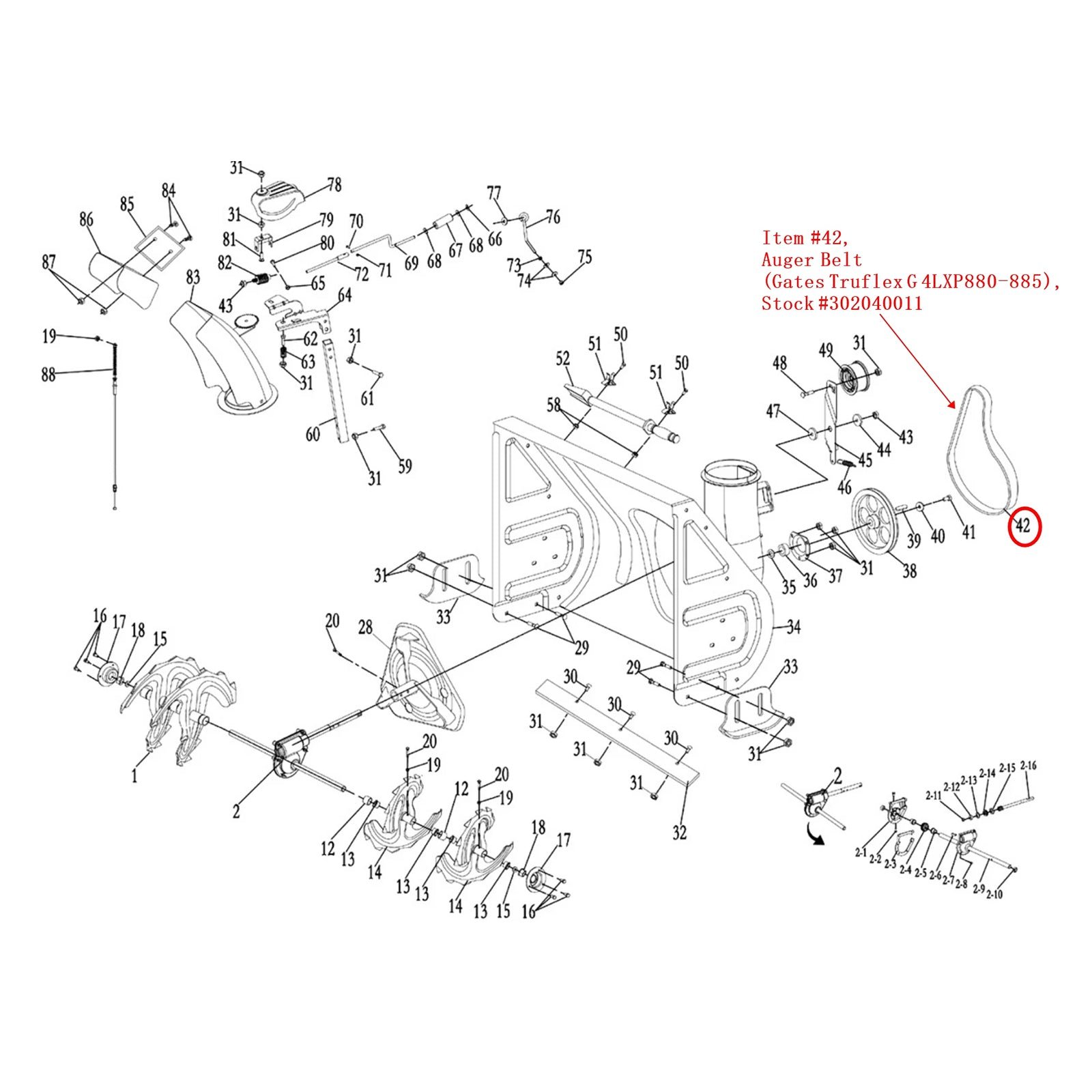
Manufacturing tolerance, cord tension and measurement method all shift that figure by a fraction. So a 4LXP880 auger belt is specified to a length band rather than a single number, and any belt inside that band will tension correctly on the machine it was designed for. The idler takes up the remainder.
This is also why a belt an inch or two off the specified length is not usually usable. The idler has a limited travel: too short and it will not fit over the pulleys, too long and the idler runs out of adjustment before the belt is tight, so the auger slips permanently.
Specifications
| Specification | Detail |
|---|---|
| Stock number | 302040011 |
| Belt code | 4LXP880 |
| Section | 4L, 1/2 inch top width |
| Construction | Cogged, Gates Truflex |
| Outside length | 88 inches nominal |
| Application | Auger drive |
Has your 4lxp880 auger belt actually stretched?
Owners often assume a slipping belt has stretched. Usually it has not, in any meaningful amount, and the distinction changes what you buy.
Modern V belts are built over tensile cords of polyester or aramid, and those cords barely stretch at all in service. What actually happens is that the rubber wears off the side faces, so the belt sits deeper in the pulley groove. Deeper means a smaller effective pulley diameter, which behaves exactly like a longer belt: the idler runs out of travel and the tension goes.
So the fix is a new 4LXP880 auger belt of the same length, not a shorter one. Fitting a deliberately short belt to compensate is a common and expensive mistake: it overloads the idler bearing and the gearbox input bearing, and it prevents the auger from fully disengaging, which is a genuine safety fault.
Measuring an old 4lxp880 auger belt correctly
Two methods, one reliable and one that produces wrong answers.
Reliable: with the belt intact and off the machine, lay a tape around the outer face and read the circumference. That is the outside length, which is what the code quotes.
Unreliable: laying a broken belt flat and doubling the measurement. That gives you the inner length plus whatever the belt lost when it failed, and typically reads several inches short. People order a belt two sizes down this way.
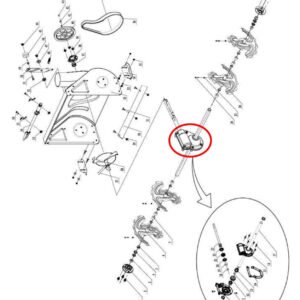
If the belt is broken and you cannot measure it, run a piece of string around the pulley path with the idler at its mid position, mark it and measure the string. That gets you close enough to identify the size band for a 4lxp880 auger belt. The snow blower repair guide covers the pulley path, and Canadian Centre for Occupational Health and Safety covers isolating the machine first.
What else makes a 4lxp880 auger belt slip
Before blaming the belt, rule out three things that produce identical symptoms and cost far less to fix.
The idler is not reaching full travel. The auger control cable stretches over time, so squeezing the bail no longer swings the idler all the way across. The belt is fine, it simply is not being tensioned. Adjusting the cable is free and fixes it.
The idler bearing has seized. A seized idler stops rotating, so the belt drags across a stationary wheel. This destroys a new belt within a session and is easy to miss because the machine still works at first.
The pulley grooves have worn. A V belt grips on its side faces. A widened groove lets even a correctly sized 4lxp880 auger belt sink until it rides on the groove bottom, where there is no grip at all.
Work through those three before ordering, because a new belt in any of those conditions will fail exactly the way the old one did.
Fitting the 4LXP880 auger belt
Power disconnected, cover off, routing photographed. Move the idler to release tension, work the old belt off, and fit the new one to the same path.
Once it is on, check the idler position. With the auger control released, the idler should sit clear of the belt with the belt visibly slack. With the control squeezed, the idler should reach full travel with the belt tight and still have a little movement left rather than being bottomed out. That remaining movement is the take up you will need as the belt beds in.
If the idler is already at the end of its travel with a brand new belt, you have the wrong length. Stop and check the code rather than forcing it.
Parts to order with a 4lxp880 auger belt
Two parts worth confirming before you order.
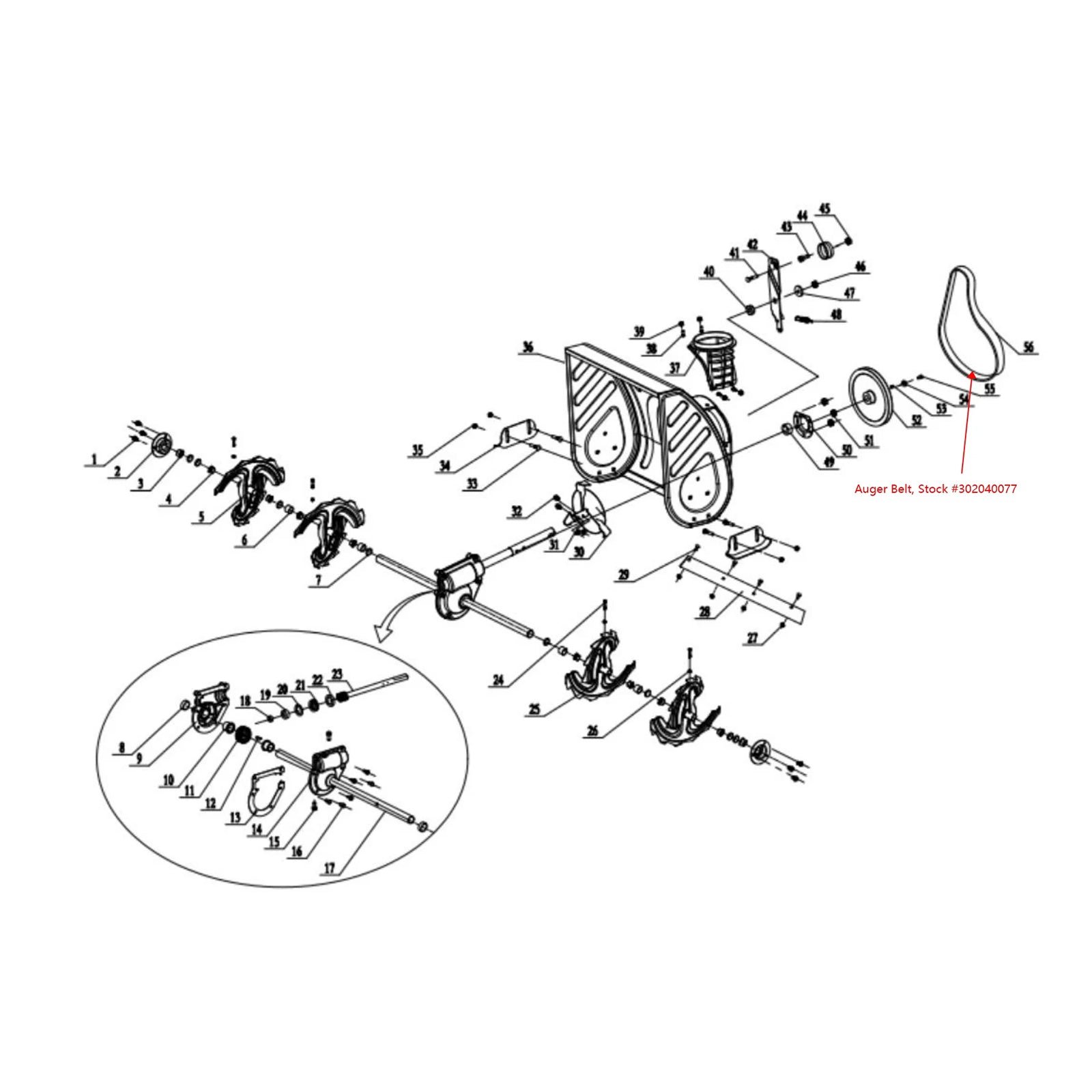
Auger Belt (Gates Truflex 4LXP700): same construction and section, twelve inches shorter, so confirm your code first.
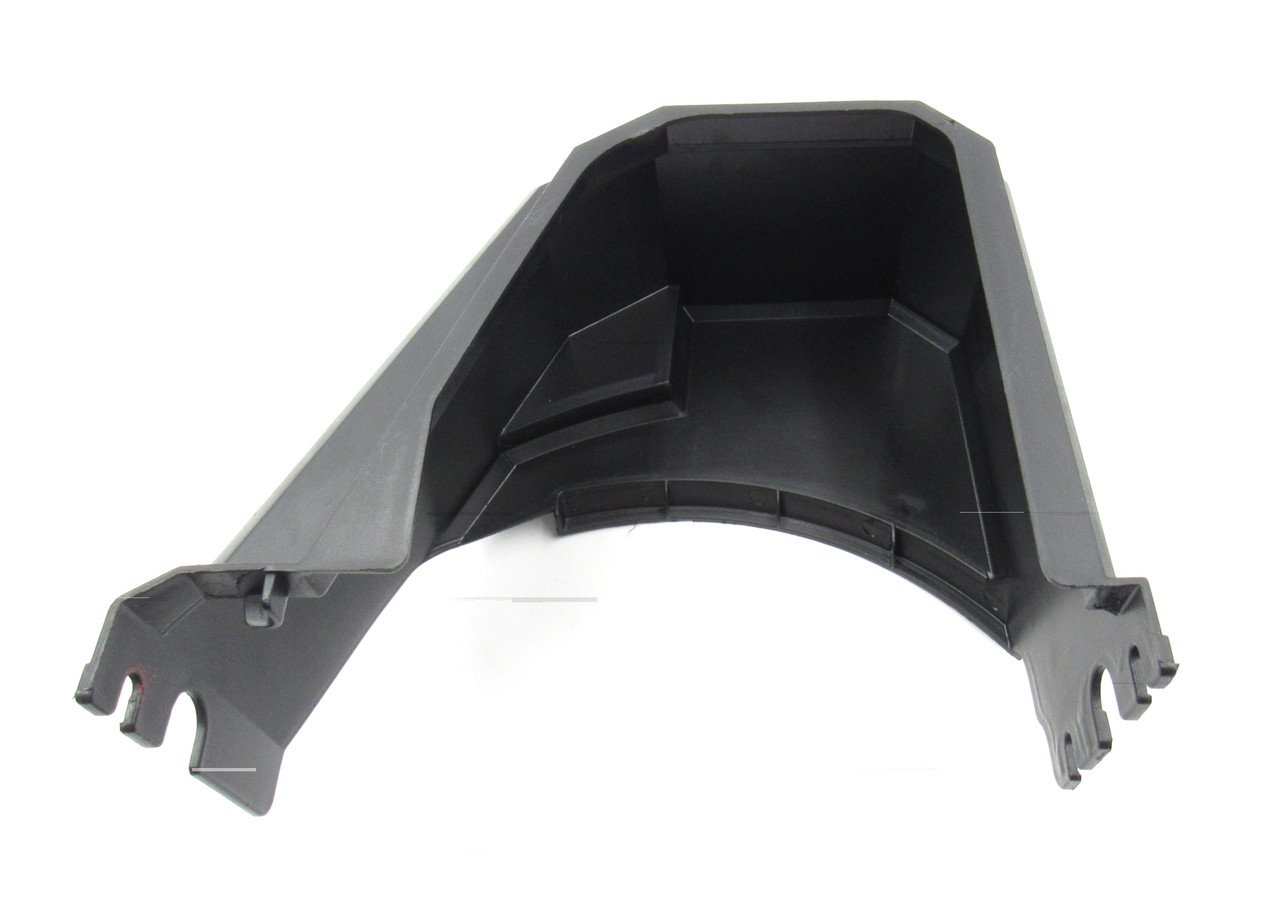
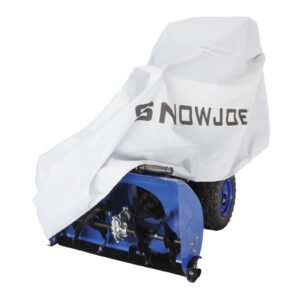
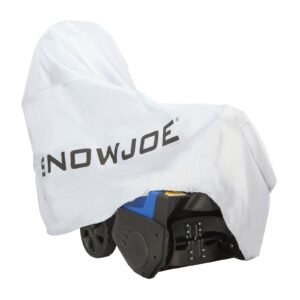
Belt Cover: snow packed into the drive is a common cause of belts jumping off the pulley.
Common questions
Why is the 4LXP880 auger belt listed with a length range?
Because belt length is specified as a band, not a single figure. Manufacturing tolerance and measurement method shift it slightly, and any belt in the band tensions correctly.
My belt slips. Has it stretched?
Almost certainly not. The tensile cords barely stretch. What happens is that rubber wears off the side faces so the belt sits deeper in the groove, which mimics a longer belt.
Should I fit a shorter belt to take up the slack?
No. It overloads the idler and gearbox bearings and stops the auger disengaging fully, which is a safety fault. Fit the correct length and check the pulleys.
How do I measure my old belt?
Wrap a tape around the outer face of the intact belt. Do not lay a broken belt flat and double it, which reads several inches short and leads people to order the wrong size.
What if the idler is at the end of its travel with a new belt?
The belt is too long. Stop and check the code rather than forcing it, because it will slip permanently in that position.
Is this the same as the 4LXP700?
No. Same family, same section and construction, but 88 inches instead of 70. They are not interchangeable.
Reviews
There are no reviews yet.