
The small rubber blade, stock number 302110079, is the least expensive part in a single stage auger set and the one most likely to be replaced on its own. That habit is also the most common cause of the handlebar vibration owners report a season later. Here is the honest picture on this small rubber blade, written for Canadian conditions rather than for a catalogue.
On this page
- This small rubber blade in practice
- Specifications
- How a mismatched small rubber blade unbalances an auger
- The handlebar test for small rubber blade balance
- What the small rubber blade fits and how to order
- Cold, salt and what actually kills a small rubber blade
- Related parts on the same machine
- Common questions
This small rubber blade in practice
A single stage auger carries rubber blades of several lengths bolted along its spiral. The small rubber blade is the shortest element of that arrangement.
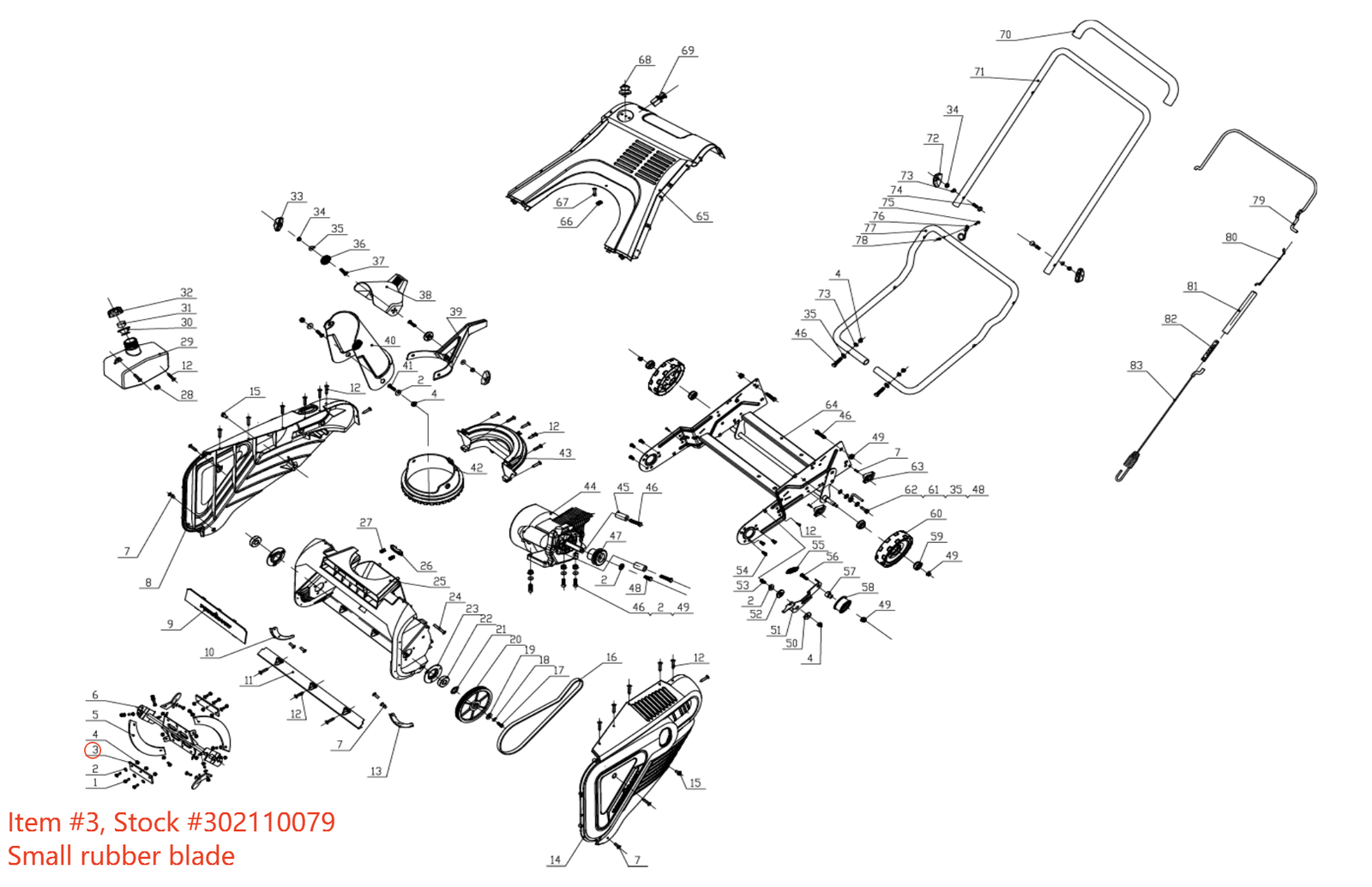
Being short, the small rubber blade sweeps the least area, carries the least load and, on paper, should last longest. In practice it is often the first to be replaced, because its position tends to put it where packed snow and grit collect, and because at the lowest price in the set it feels like the easy fix when the machine starts under performing.
It is rarely the whole answer. If the small rubber blade has worn enough to notice, the larger ones alongside it have done far more work over the same hours.
Specifications
| Specification | Detail |
|---|---|
| Stock number | 302110079 |
| Part type | Auger rubber blade, small |
| Machine type | Single stage |
| Sold as | Single blade |
| Interchangeable | No, not with the short or standard blades |
| Typical role | Shortest element of a mixed length auger set |
How a mismatched small rubber blade unbalances an auger
An auger is a rotating assembly turning at speed with your hands two feet away from it. Like any rotating assembly it needs to be balanced, and rubber blades are part of that balance in two ways: their mass, and the load each one takes as it meets the snow.
Fit one new small rubber blade against three worn ones and you have changed both. The new blade reaches the ground while the others no longer quite do, so it takes a disproportionate share of the load once per revolution. That is a cyclic force at auger speed, and it arrives at the handlebar as a vibration you can feel through gloves.
Vibration is not merely unpleasant. It works fasteners loose, it fatigues the auger bearings and it accelerates wear on the new small rubber blade you just fitted. If you are replacing rubber because of wear rather than damage, replace the set.
The handlebar test for small rubber blade balance
You can check auger balance without any tools at all.
Run the machine on a cleared surface with no snow going through it, at working speed, and rest your hands lightly on the handlebar rather than gripping. A healthy auger produces a smooth continuous buzz. An unbalanced one produces a rhythmic pulse, one beat per revolution, that you feel as a nudge rather than a hum.
If you feel that pulse, stop and look for the cause before the season starts properly. It is usually mixed blade wear. It can also be a blade that has partly torn, a missing bolt, or a bent auger shaft from meeting something buried. The last of those is the expensive one, and our snow blower repair guide covers how to check it.
What the small rubber blade fits and how to order
Order the small rubber blade on stock number 302110079. It, the short blade and the standard blade are separate part numbers and are not interchangeable, despite looking near identical in a listing photograph.
Before ordering, count what your auger actually carries and note the lengths. Machines in the same product family are not always built with the same arrangement, and the only reliable reference is your own machine with a photograph taken before dismantling. The complete range of single stage wear parts is in parts and accessories, the machines themselves are listed under single stage snow blowers, and the seasonal checks are in the maintenance checklist.
Cold, salt and what actually kills a small rubber blade
Rubber stiffens as it gets colder, which is why a machine started at minus 25 sounds harsher for the first minute. That stiffness is temporary and does no harm.
What damages a small rubber blade is abrasive. Road salt crystals and the sand spread at intersections behave like grinding paste between rubber and pavement. A machine that only ever clears a smooth private driveway can run the same set of blades for several winters. The same machine clearing the apron where a driveway meets a salted road can finish a set in one. Neither has anything to do with how cold it got.
There is one genuine cold related failure worth knowing: rubber that has been stored compressed and damp all summer, then flexed hard at low temperature, can split at the fold. Store the machine dry and off a wet concrete floor. Our off season storage guide has the full routine, and local snowfall totals that decide your real running hours are on Environment and Climate Change Canada climate data.
Related parts on the same machine
Two more rubber parts on the same machine are worth a look while you have it tipped over.
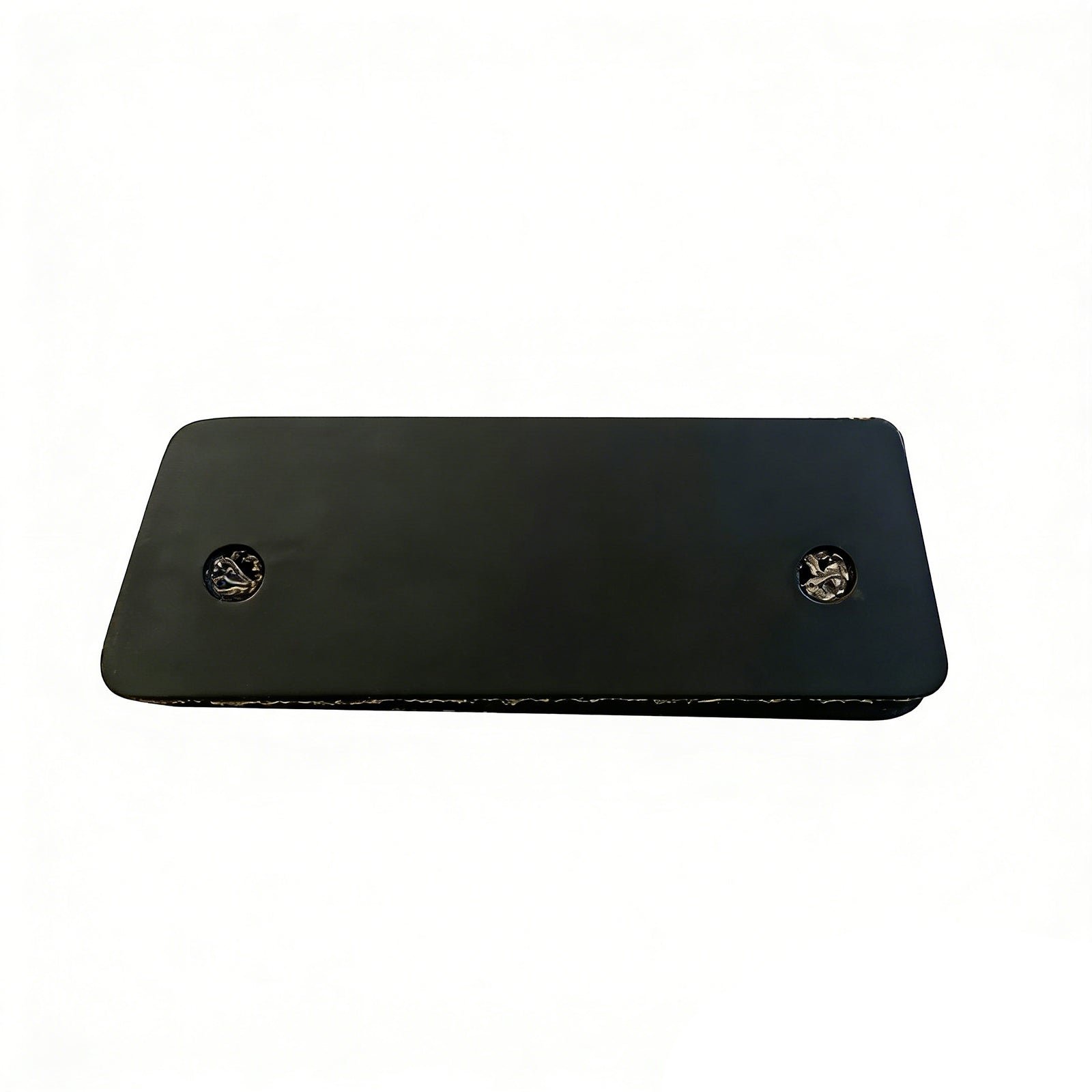
Short Rubber Blade: the other short length in the set, and the usual companion order.
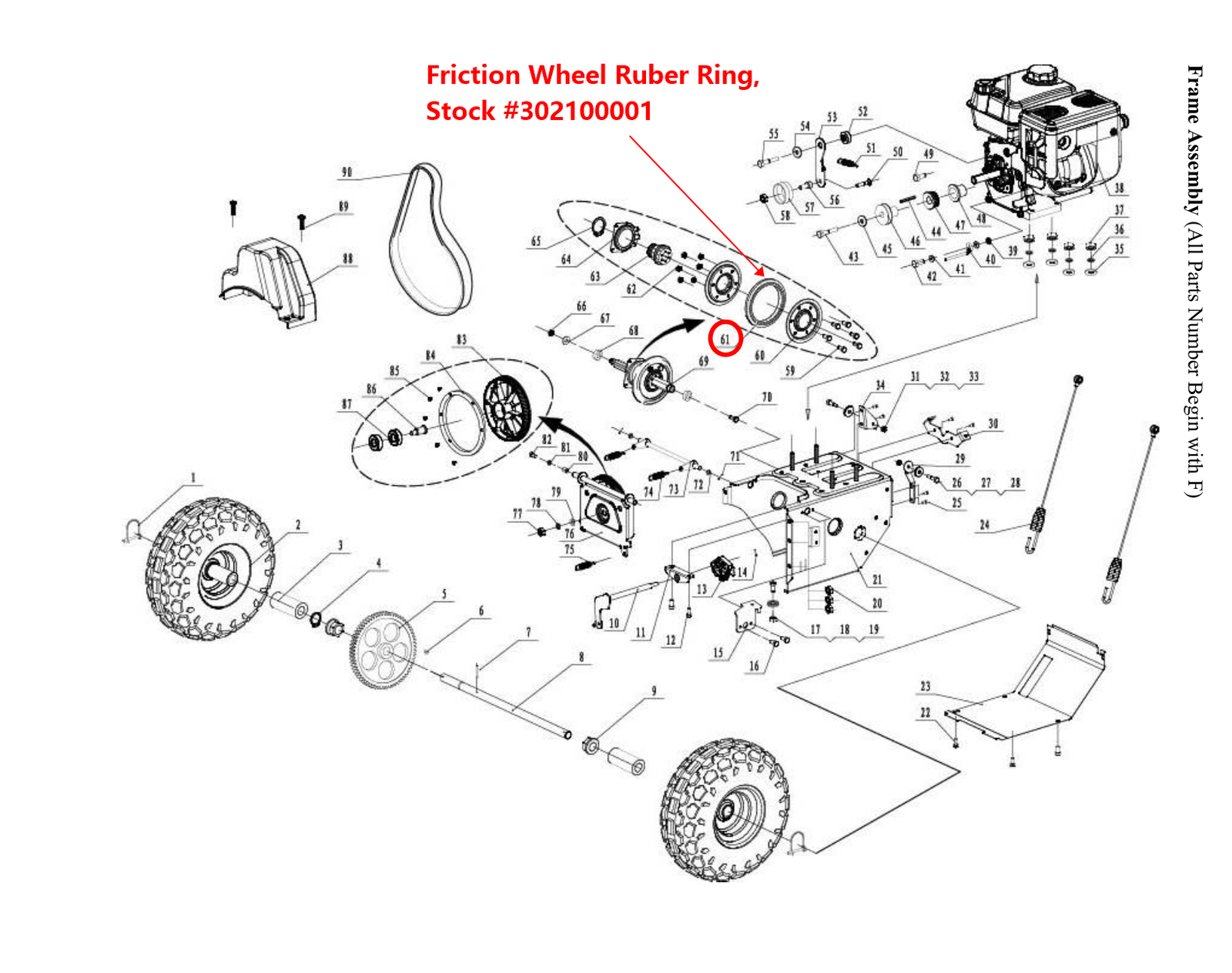
Friction Wheel Ruber Ring: on machines with a friction drive this rubber ring wears the same way and stops the machine driving.
Common questions
Is the small rubber blade the same as the short rubber blade?
No. They are different stock numbers in the same auger set and they are not interchangeable. Order by number rather than by appearance.
Why does my machine vibrate after replacing one blade?
Because the new blade reaches the ground while the worn ones do not, so it takes a disproportionate load once per revolution. That cyclic force is what you feel in the handlebar. Replace the set.
Does cold weather damage auger rubber?
Not really. Rubber stiffens in the cold but recovers. What destroys it is abrasion from road salt and intersection sand, which behaves like grinding paste between the blade and the pavement.
How do I check whether my auger is balanced?
Run the machine on a clear surface with no snow going through it and rest your hands lightly on the handlebar. A smooth buzz is healthy. A rhythmic pulse once per revolution means something is uneven.
Can I run the machine with a torn small blade?
Not for long. A partly torn blade is an unbalanced blade, and the vibration works fasteners loose and fatigues the auger bearings.
Should I store the machine with the auger resting on concrete?
Preferably not. Rubber stored compressed and damp for a whole summer can split when it is first flexed hard in the cold. Store it dry and, if you can, off the floor.
Reviews
There are no reviews yet.