
A high torque timing belt is stock number 302040026 here, 750 mm long with a 5 mm tooth pitch. Length gets all the attention when people order belts, and on a toothed drive the pitch matters just as much, because a belt with the wrong pitch will not engage at all. What you are looking at is a high torque timing belt. The detail that follows applies to this one and not to the category.
On this page
Choosing a high torque timing belt for a Canadian driveway
Pitch is the distance from the centre of one tooth to the centre of the next, measured along the belt. A 5 mm pitch belt has its teeth 5 mm apart, and the pulley it runs on has grooves cut 5 mm apart to match.
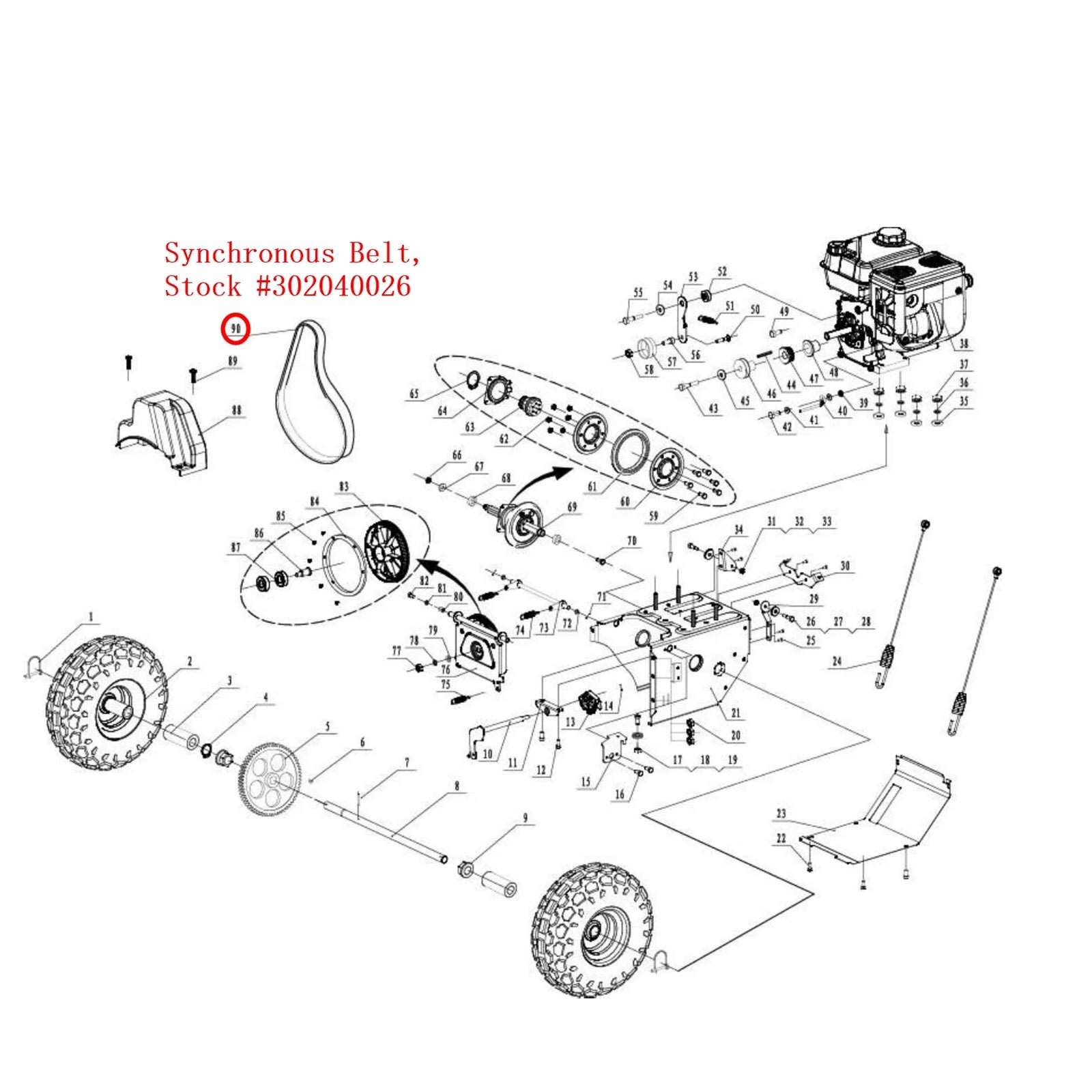
That matching is absolute. A high torque timing belt with 5 mm teeth cannot run on an 8 mm pulley, not partially and not badly, because after two or three teeth the belt and the pulley have drifted completely out of register. Unlike a V belt, which will grip a slightly wrong groove and merely wear faster, a mismatched pitch simply does not drive.
The other half of the specification is the tooth profile, which is the shape of each tooth in cross section. Older trapezoidal teeth carry load on a narrow contact patch. High torque profiles use a rounded, deeper tooth that spreads load across more of the flank, which is where the name comes from.
Specifications
| Specification | Detail |
|---|---|
| Stock number | 302040026 |
| Belt type | Synchronous, high torque profile |
| Length | 750 mm |
| Tooth pitch | 5 mm |
| Drive characteristic | Positive, no slip |
| Interchangeable | Only with the same pitch and profile |
Why the high torque profile exists
The original toothed belts used trapezoidal teeth, essentially a squared off wedge. They work, and they are still made, but they have a weakness: the load concentrates near the tooth root, and under heavy torque the tooth deflects and can shear off.
| Trapezoidal | High torque | |
|---|---|---|
| Tooth shape | Straight sided wedge | Rounded, deeper flank |
| Load spread | Concentrated near the root | Distributed along the flank |
| Behaviour under peak torque | Tooth deflects, can shear | Holds shape, resists shear |
| Backlash | More | Less |
A high torque timing belt uses the rounded profile, so the same width of belt carries substantially more torque before anything gives. On a snow blower that matters wherever the drive has to survive sudden loads, because a positive drive has no slip to absorb a shock.
Ordering a high torque timing belt correctly
Three figures identify one completely, and you need all three.
Pitch. Measure across ten teeth and divide by ten. Measuring one tooth spacing is too small a distance to read accurately, and getting pitch wrong makes the belt useless rather than merely short lived.
Length. Count the teeth all the way round and multiply by the pitch. Mark your starting tooth with a pen so you know where to stop. A tape around the outside is not the pitch length and will mislead you.
Width. Measure across the belt. A narrower belt in the right pitch will physically run but carries proportionally less torque and will strip teeth.
All three are usually moulded onto the belt. Clean the outer face and look before you measure anything. The snow blower repair guide covers where to find the drive on these machines.
How a high torque timing belt fails
It does not glaze and it does not squeal. It fails in one of three ways, and only one gives you notice.
Rounded teeth. The one warning you get. The belt has been jumping under load, usually because tension is low or a pulley is worn, and each jump wears the tooth tips from square to rounded. Rounded teeth jump more easily, so it accelerates.
Sheared teeth. A shock load removes teeth outright. Nothing absorbs the shock on a positive drive, so whatever suddenly stops the driven shaft is felt at full strength by the belt.
Cord failure. Invisible, and usually caused during a previous fitting by levering the belt over a pulley flange. It looks perfect right up until it parts.
Inspect the tooth tips every autumn. It is the only failure mode you can catch early, and the maintenance checklist is where that check belongs. Canadian Centre for Occupational Health and Safety covers isolating the machine before you open the cover.
Parts to order with a high torque timing belt
Two neighbouring belts to rule out before you order.
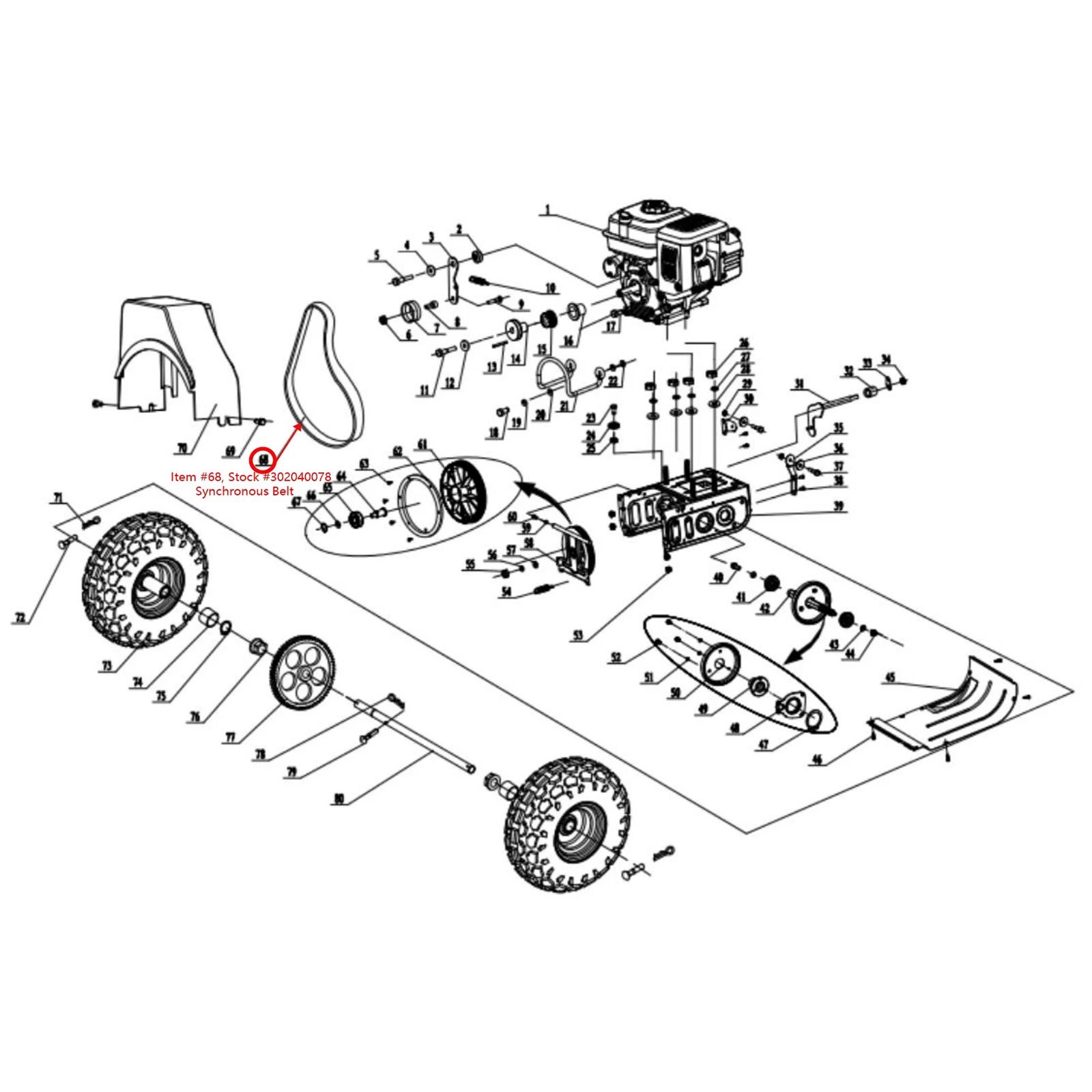
Synchronous Belt (735mm): shorter, and a different part, so confirm both pitch and length.
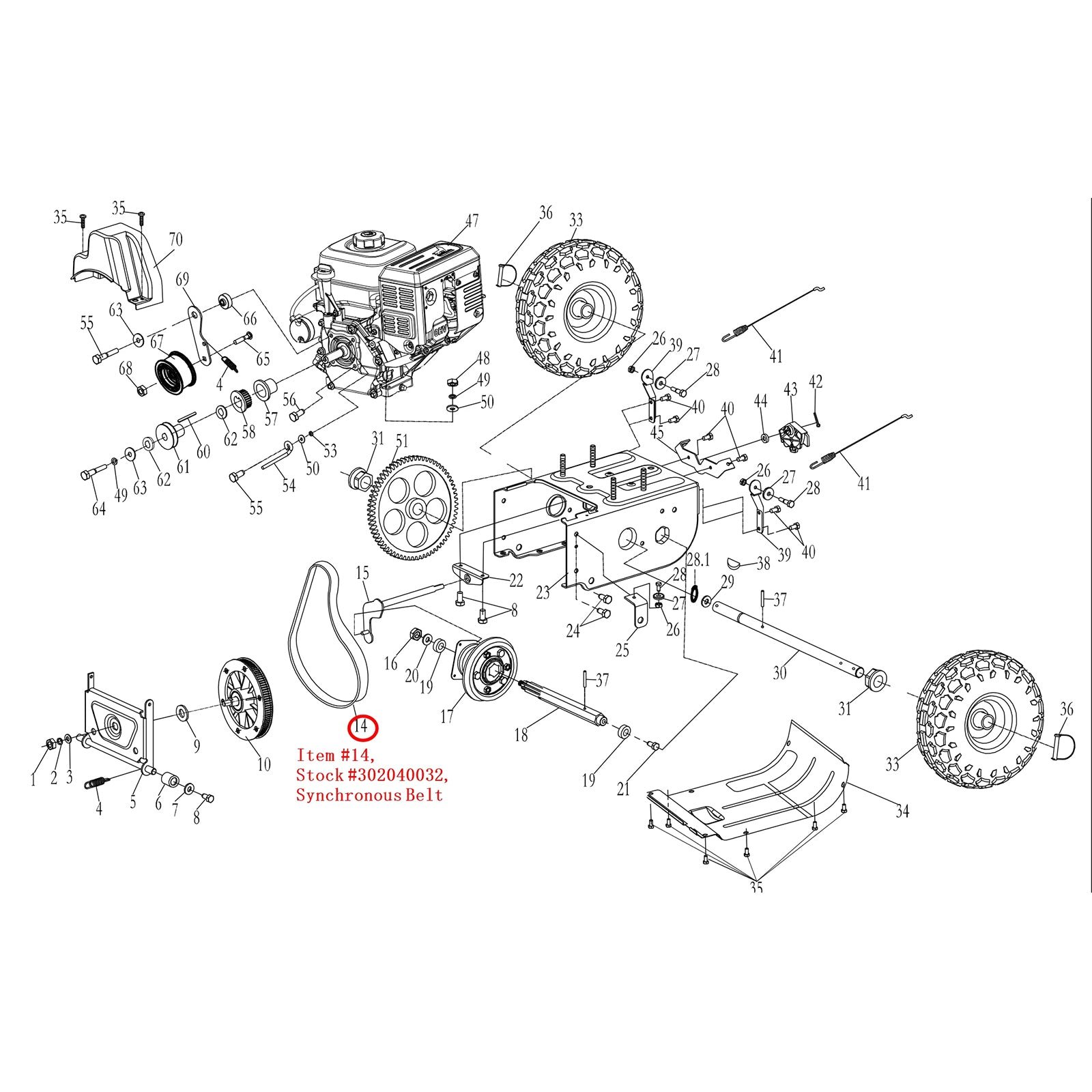
Synchronous Belt(720mm): the third length in this family, and the one most often confused with the others.
Common questions
What is tooth pitch on a high torque timing belt?
The distance from the centre of one tooth to the centre of the next. A 5 mm pitch belt has teeth 5 mm apart and needs a pulley with grooves cut to the same spacing.
Can I fit an 8 mm pitch belt on a 5 mm pulley?
No. After two or three teeth the belt and pulley are completely out of register. Unlike a V belt, a mismatched pitch does not drive at all.
How do I measure the pitch?
Measure across ten teeth and divide by ten. A single tooth spacing is too small a distance to measure accurately.
What makes it high torque rather than standard?
The tooth profile. High torque teeth are rounded and deeper, spreading load along the flank instead of concentrating it at the root, so the same belt width carries more torque.
Why did mine fail with no warning?
Toothed belts usually do. The one early warning is rounded rather than square tooth tips, which means the belt has been jumping. Check for it every autumn.
Does belt width matter if the pitch is right?
Yes. A narrower belt in the correct pitch will run but carries proportionally less torque and will strip teeth under load.

Reviews
There are no reviews yet.