
A synchronous belt 720mm long is a toothed belt, not a V belt, and the difference is not a detail of construction. This is stock number 302040032, and a toothed drive behaves in a fundamentally different way from the wedge grip belts elsewhere in this catalogue. What you are looking at is a synchronous belt 720mm. The detail that follows applies to this one and not to the category.
On this page
This synchronous belt 720mm in practice
A V belt transmits power by friction. Tension pulls it into a tapering groove, the side faces wedge against the groove walls, and friction does the rest. It can slip, and on a snow blower that is deliberate: the slip is what lets the belt act as a clutch.
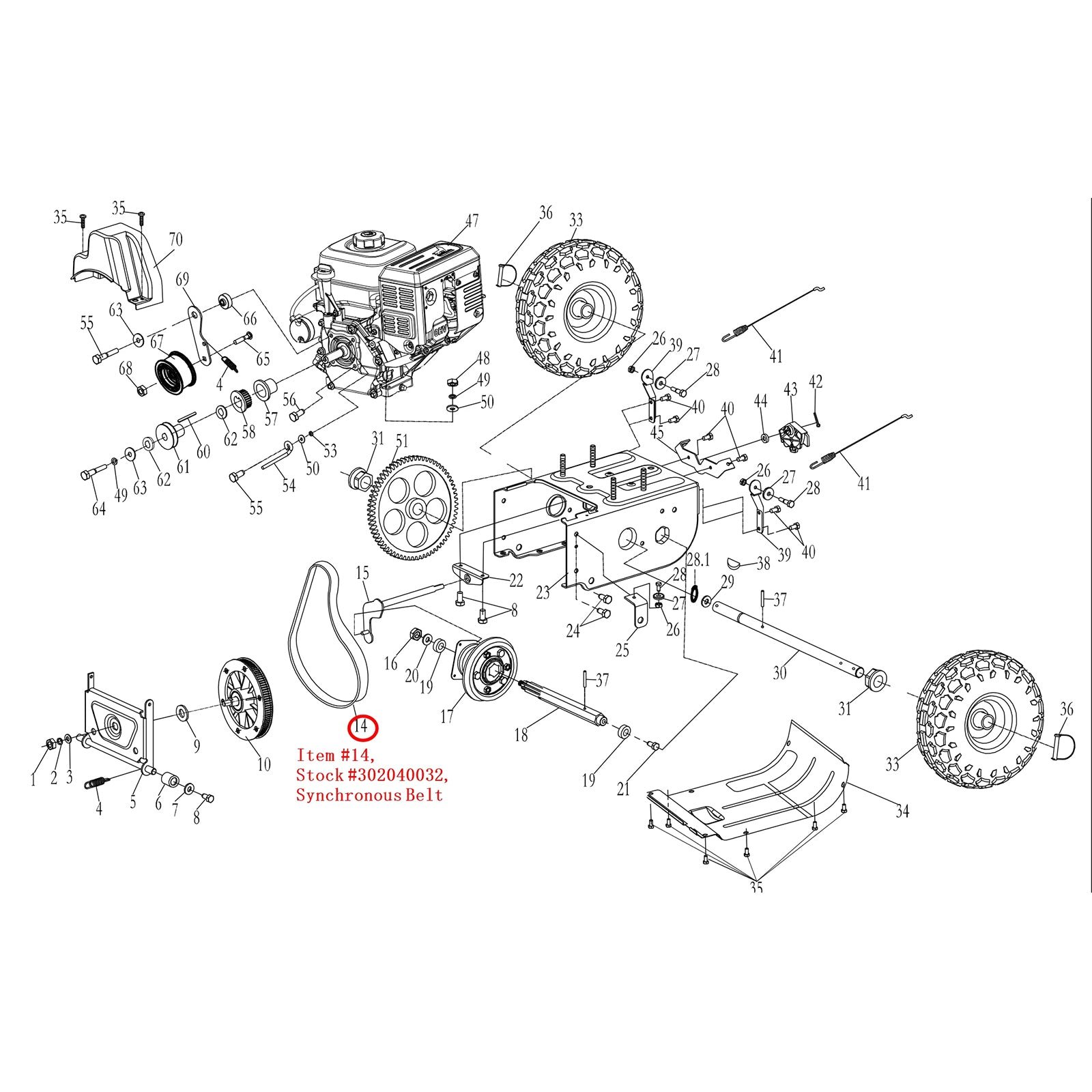
A synchronous belt 720mm long works by interference instead. Teeth moulded into the inner face engage matching grooves in the pulleys. There is no friction grip and no slip. One revolution of the driving pulley advances the driven pulley by an exact number of teeth, every time, under any load the belt can survive.
| V belt | Synchronous belt | |
|---|---|---|
| Grips by | Friction, wedging in the groove | Teeth engaging pulley grooves |
| Can slip | Yes, by design | No |
| Acts as a clutch | Yes | No |
| Fails by | Glazing and slipping gradually | Shearing teeth, suddenly |
| Warns you first | Squeal, then reduced throw | Usually not |
Specifications
| Specification | Detail |
|---|---|
| Stock number | 302040032 |
| Belt type | Synchronous, toothed |
| Length | 720 mm |
| Drive characteristic | Positive, no slip |
| Substitutes | Not interchangeable with a V belt |
What no slip changes on a synchronous belt 720mm
Two things, one good and one that catches people out.
The good one: nothing is lost to slip. A synchronous belt 720mm long delivers the engine’s torque to the driven shaft without the losses a V belt accepts, and it holds timing exactly, which matters wherever two shafts must stay in step.
The one that catches people: there is no shock absorber left in the drive. When a V belt meets a sudden load it slips briefly and takes the edge off. A toothed belt does not. The load goes straight through to whatever is downstream, so the protection has to come from somewhere else, usually shear pins.
That is also why toothed belts fail differently. They rarely warn you. A V belt squeals for weeks first, and a synchronous belt strips its teeth and stops.
Inspecting a synchronous belt 720mm
Because a synchronous belt 720mm will not warn you, inspection has to be deliberate. Do it every autumn with the power disconnected and the cover off.
Run the belt slowly through your fingers along the toothed face and look for teeth that are rounded at the tip rather than square, cracks at the tooth roots, or any tooth missing entirely. Rounded tips mean the belt has been jumping under load, which is the toothed equivalent of slipping and the one warning you do get.
Check the outer face for cracking too, and check the edges for fraying, which means the belt is running off centre and something is misaligned. The snow blower repair guide covers checking pulley alignment.
Fitting a synchronous belt 720mm
Power disconnected, cover off, routing photographed. Toothed belts are less forgiving than V belts on installation and two rules matter.
Never lever it on. Prying a toothed belt over a pulley flange with a screwdriver damages the tensile cords inside, and a belt with broken cords fails without warning. Slacken the tensioner properly and fit it by hand.
Do not overtighten. A toothed belt does not need the tension a V belt does, because it is not relying on friction. Overtightening loads the shaft bearings hard and shortens the life of everything. Follow the tensioner’s designed position rather than pulling it as tight as it will go.
Turn the drive by hand through several revolutions and confirm every tooth is seating properly in its groove. Canadian Centre for Occupational Health and Safety covers isolating equipment before this work.
Where a synchronous belt 720mm is used on a snow blower
Toothed belts turn up in specific places on these machines rather than as a general replacement for V belts, and knowing where helps you confirm you are looking at the right part.
The most common is the drive side of a self propelled machine, where the wheels or tracks need to keep a fixed relationship to engine speed. Slip there would show up as one track creeping relative to the other, which is exactly what a positive drive prevents.
They also appear on chute rotation and on electric machines where the motor turns fast and the auger must turn slowly with a precise reduction. On battery machines especially, a synchronous belt 720mm avoids the energy that a slipping V belt would waste as heat, and wasted energy on a battery machine is lost runtime.
What they are almost never used for on a snow blower is the auger drive on a gas two stage machine, because that drive needs the clutching action a V belt provides.
Parts to order with a synchronous belt 720mm
Two parts to have in front of you before ordering.
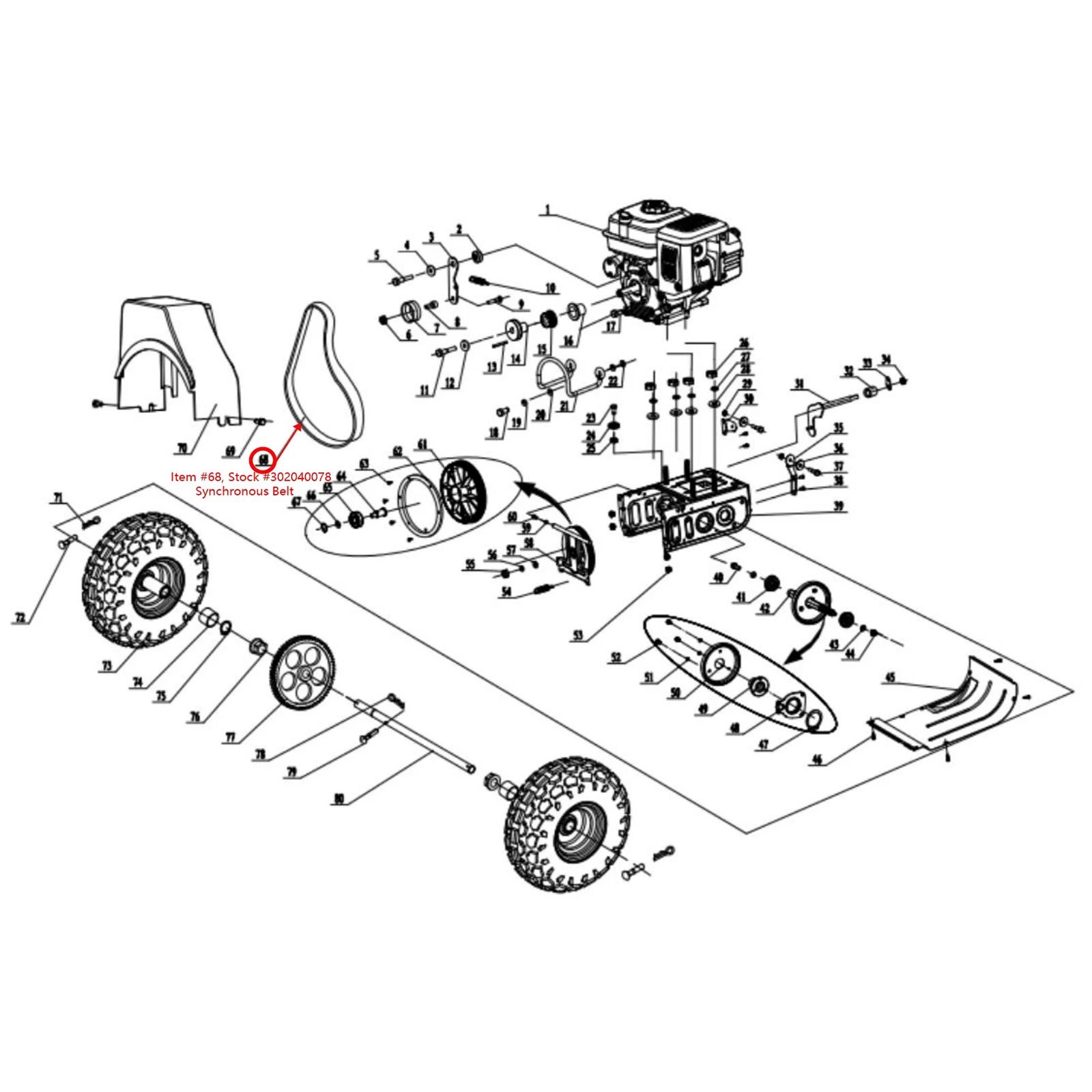
Synchronous Belt (735mm): same family, 15 mm longer, so measure before assuming which you need.
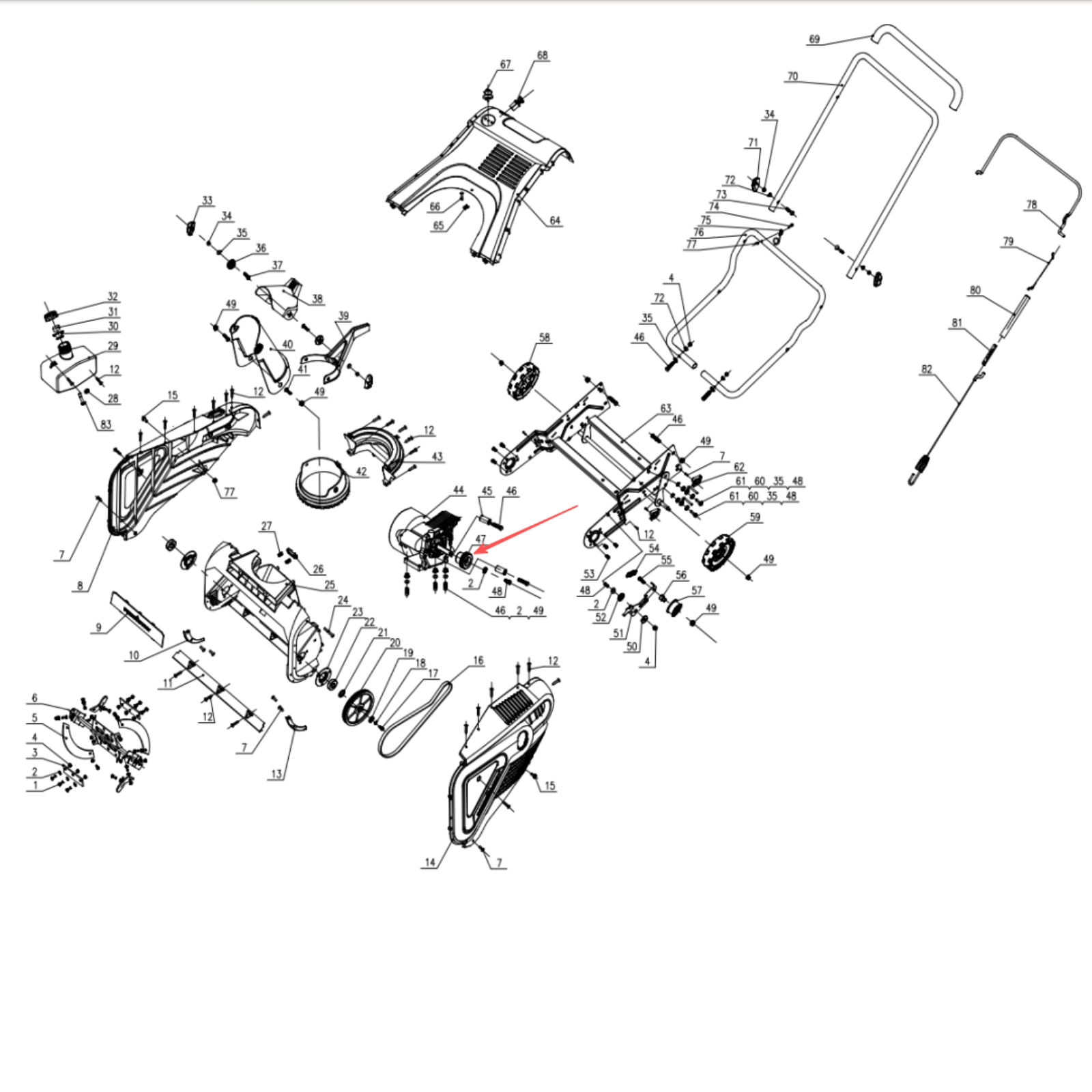
Small Belt Pulley: worn pulley teeth let the belt jump, which rounds the belt teeth in turn.
Common questions
Is a synchronous belt the same as a V belt?
No. A V belt grips by friction and can slip. A synchronous belt has teeth that engage grooves in the pulleys, so it cannot slip. They are not interchangeable.
Can I fit a V belt instead?
No. The pulleys are completely different: toothed pulleys have grooves cut to match the belt teeth, not a tapering V groove.
How do I know a synchronous belt is worn?
Look at the teeth. Rounded tips instead of square ones mean it has been jumping under load. Also check for cracks at the tooth roots and any missing teeth.
Why did my toothed belt fail without warning?
That is normal for the type. A V belt squeals for weeks first. A synchronous belt holds full drive until it strips teeth, which is why annual inspection matters more.
Can I lever the belt over the pulley?
No. Prying it on damages the tensile cords inside and the belt will then fail without warning. Slacken the tensioner and fit it by hand.
Should I tension it as tight as a V belt?
No. It does not rely on friction, so it needs less tension. Overtightening loads the shaft bearings and shortens the life of the whole drive.
Reviews
There are no reviews yet.