
A synchronous belt 735mm long is stock number 302040078, and it sits just 15 mm away from the 720 mm belt in the same catalogue. That is a small enough gap that guessing gets it wrong, and measuring a toothed belt is not done the way you measure a V belt. Buying a synchronous belt 735mm in Canada comes down to a handful of decisions, and this page works through them.
On this page
- The case for this synchronous belt 735mm
- Specifications
- Measuring a synchronous belt 735mm correctly
- Why 15 mm matters on a synchronous belt 735mm drive
- Fitting a synchronous belt 735mm without damaging it
- What actually goes wrong with a synchronous belt 735mm
- Parts to order with a synchronous belt 735mm
- Common questions
The case for this synchronous belt 735mm
A V belt is described by its outside length, because that is what the tape reads when you wrap it around the outer face. A toothed belt is described differently, and understanding why prevents most ordering mistakes.
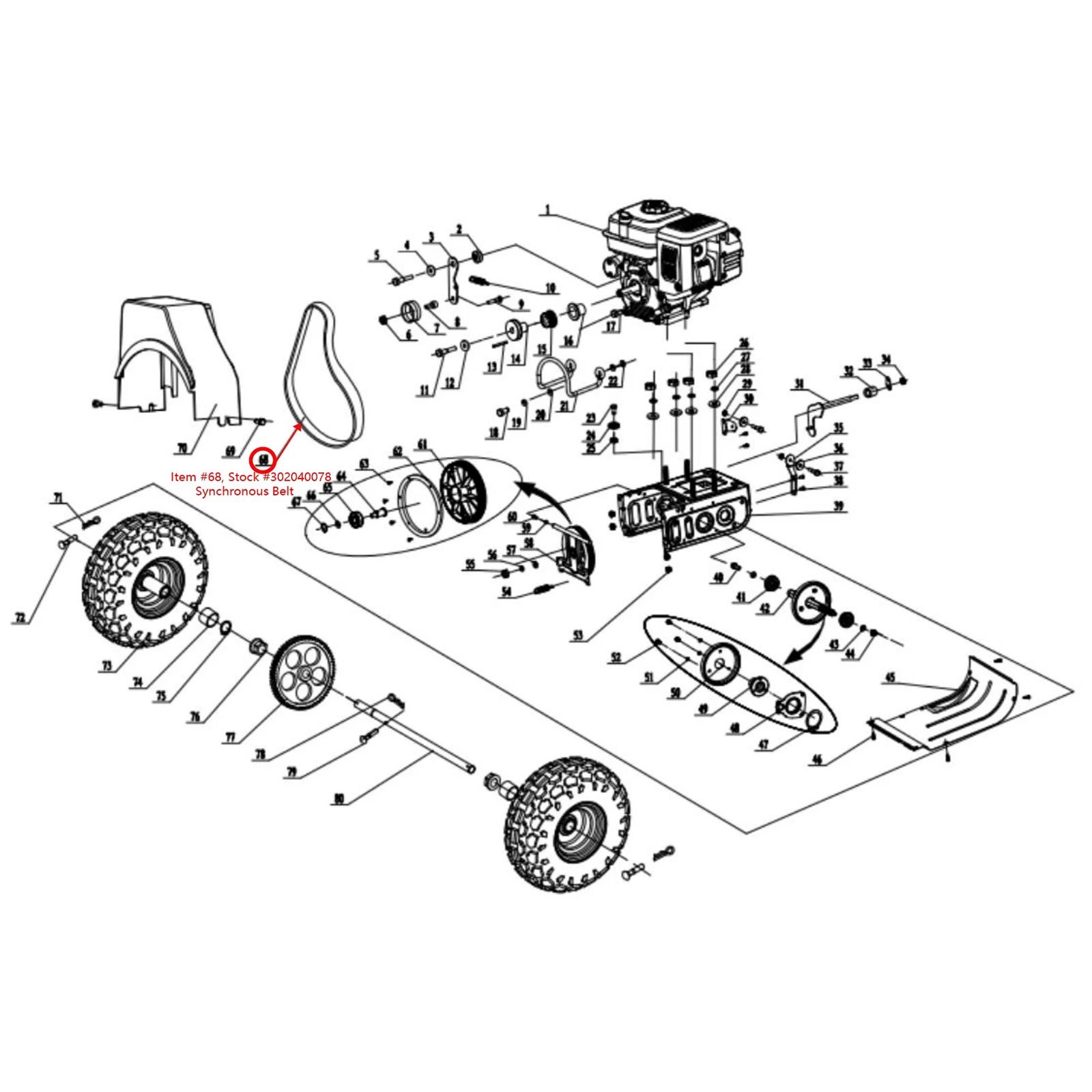
The real specification of a synchronous belt 735mm long is its pitch length, measured along the tensile cord line inside the belt rather than around the outside. Since the cords sit above the teeth, that line is shorter than the outer circumference and longer than the toothed face. It is the only length that is consistent between manufacturers.
The other way to state it is pitch multiplied by tooth count. A 5 mm pitch belt with 147 teeth is 735 mm. Those two numbers together are unambiguous, which is why they are usually moulded onto the belt.
Specifications
| Specification | Detail |
|---|---|
| Stock number | 302040078 |
| Belt type | Synchronous, toothed |
| Pitch length | 735 mm |
| Related length | 720 mm, a different part |
| Drive characteristic | Positive, no slip |
Measuring a synchronous belt 735mm correctly
Three methods, in order of reliability.
| Method | How | Reliability |
|---|---|---|
| Read the moulding | Clean the outer face and read pitch and tooth count | Best |
| Count the teeth | Mark a starting tooth, count all the way round, multiply by pitch | Very good |
| Tape around the outside | Wrap the outer face and note the figure | Rough only |
Counting teeth is the method worth knowing for a synchronous belt 735mm, because it works on a belt with unreadable markings and needs nothing but a marker pen. Mark one tooth, count round to the mark, and multiply by the pitch. Measure the pitch itself across ten teeth and divide by ten, which is far more accurate than measuring a single tooth spacing.
Wrapping a tape around the outside is the least reliable, because the outer circumference of a synchronous belt 735mm long is not 735 mm. It is longer, by an amount that depends on the belt’s thickness.
Why 15 mm matters on a synchronous belt 735mm drive
On a V belt drive, 15 mm of length is usually absorbed by the idler and nobody notices. On a toothed drive it is the difference between working and not.
A synchronous drive needs its teeth to align with the pulley grooves, and tensioners for toothed belts typically have far less travel than a V belt idler because they are only taking up manufacturing tolerance, not acting as a clutch. Fit a belt 15 mm too long and the tensioner runs out of adjustment, leaving the belt loose enough to jump teeth under load. Fit one 15 mm short and it either will not go on, or goes on so tight that it destroys the shaft bearings.
Neither failure is gradual. This is why measuring beats guessing on toothed belts even when it feels excessive.
Fitting a synchronous belt 735mm without damaging it
Power off, cover off, routing photographed. Then two rules specific to toothed belts.
Never lever the belt over a pulley flange. Prying with a screwdriver breaks tensile cords inside the belt, and a belt with broken cords gives no warning before it fails. Slacken the tensioner fully and fit it by hand.
Do not overtighten. A toothed belt does not rely on friction, so it needs materially less tension than a V belt of the same size. Set the tensioner to its designed position rather than pulling it up tight.
Then turn the drive by hand through several revolutions, watching that every tooth seats in its groove and the belt tracks centrally rather than creeping toward a flange. Our maintenance checklist has the pre season list this belongs on.
What actually goes wrong with a synchronous belt 735mm
Three failure modes, and none of them look like V belt wear.
Jumped teeth. The belt skips a tooth under load, usually because the tensioner has lost its setting or a pulley groove has worn. Each jump rounds the belt teeth a little more, so it gets easier to jump, and the drive gradually loses timing before it fails completely.
Sheared teeth. A shock load takes teeth off outright. Because the drive is positive there is no slip to absorb the shock, so anything that suddenly stops the driven shaft arrives at the belt undiminished.
Cord failure. Invisible from outside and usually self inflicted, from levering the belt over a pulley flange during a previous fitting. The belt looks perfect and then parts without warning.
The one you can catch early is jumped teeth, and the tell is rounded rather than square tooth tips. Check for it every autumn, because a synchronous belt 735mm gives you no audible warning at all. Full guidance in Canadian Centre for Occupational Health and Safety on isolating the machine first.
Parts to order with a synchronous belt 735mm
Two neighbouring belts worth ruling out before you order.
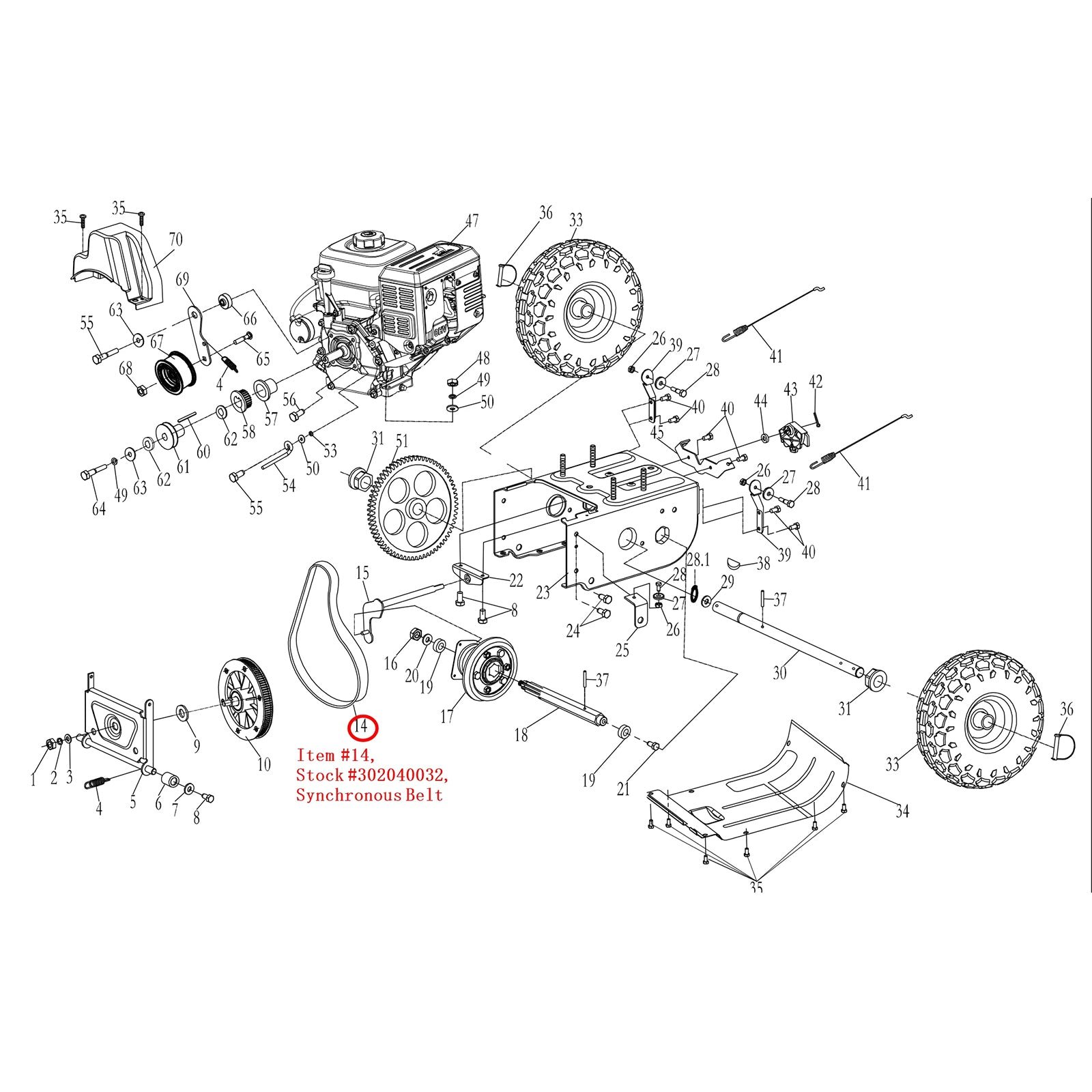
Synchronous Belt(720mm): the neighbouring length, and the one people order by mistake.
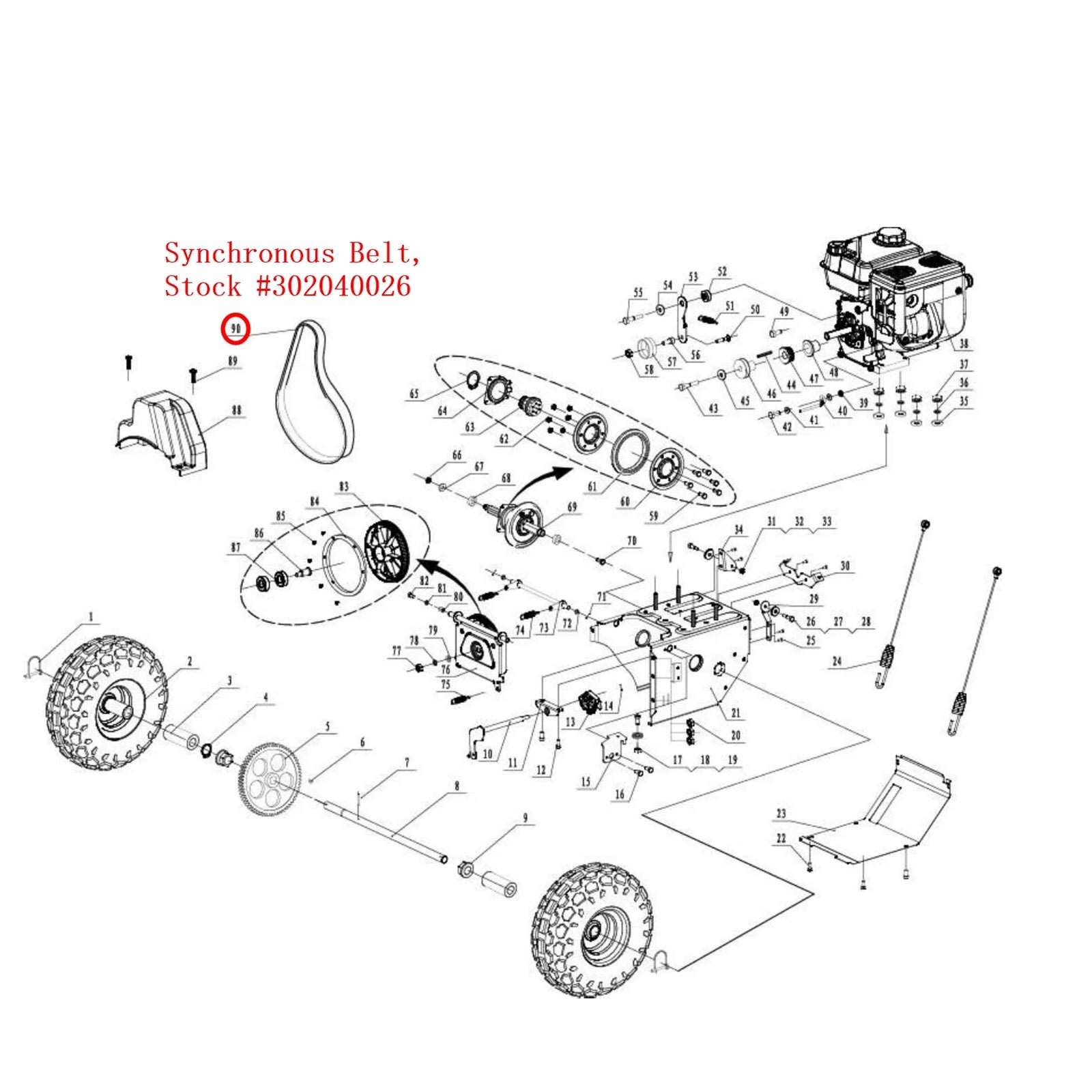
Synchronous Belt with High-Torque timing belt, 750 mm long, 5 mm tooth pitch: longer again and a different profile, so check pitch as well as length.
Common questions
How do I measure a synchronous belt?
Read the pitch and tooth count moulded on the belt if you can. Otherwise mark one tooth, count all the way round, and multiply by the pitch. Do not rely on a tape around the outside.
Why is the outside measurement wrong?
Because toothed belts are specified by pitch length, measured along the tensile cords inside the belt. The outer circumference is longer by the belt’s thickness.
How do I measure the pitch?
Measure across ten teeth and divide by ten. Measuring a single tooth spacing is too small a distance to read accurately.
Is 15 mm really enough to matter?
On a toothed drive, yes. Toothed tensioners have little travel, so 15 mm too long leaves the belt loose enough to jump teeth, and 15 mm short overloads the bearings.
Can I stretch a slightly short belt on?
No. Levering it on breaks the tensile cords, and the belt will then fail without warning.
Is this the same as the 720 mm belt?
No. Same family, 15 mm longer, and a separate part number. They are not interchangeable.
Reviews
There are no reviews yet.