
A snow blower for heavy snow solves a different problem from one built for deep snow. Machines that handle 30 centimetres of powder without complaint will pack solid in 15 centimetres of saturated March slush. If your winters end in heavy wet falls, or you live where the coast keeps temperatures near zero, that should change what you buy.
Choosing a snow blower for heavy snow: the short answers
- Impeller first. A snow blower for heavy snow lives or dies on impeller diameter, not on engine cc.
- Intake height. A 21 inch intake takes the drift a 16 inch intake climbs over.
- Two stage only. A single stage machine is the wrong snow blower for heavy snow because the paddle packs instead of throwing.
- Chute width. Wet snow bridges narrow chutes. Wider metal chutes with a steep angle clear themselves.
Why wet snow is harder on a snow blower for heavy snow
Dry powder is mostly air. Saturated snow can be several times denser for the same depth, which changes the job in three ways at once.
It is heavier to move, so the auger meets far more resistance per pass and the engine or motor works harder for the same forward speed. It is sticky, so instead of flying through the chute it adheres to the metal and builds up until the passage closes. And it compacts under its own weight, so snow left for a few hours becomes considerably harder to clear than the same snow cleared immediately.
A snow blower for heavy snow is a different specification: a machine adequate for your typical snowfall can therefore be inadequate for the wet falls, even though the number on the ruler is smaller. Choosing a snow blower for heavy snow means sizing for density rather than depth.
What matters in a snow blower for heavy snow
The specifications that matter in a snow blower for heavy snow are not the ones printed largest.
- Two stage, always. A single stage machine collects and throws with one auger, and wet snow packs it almost immediately. This is not a preference, it is the design difference that matters most here.
- Impeller diameter, which drives throwing distance and, crucially, the ability to keep dense material moving rather than accumulating.
- Intake height, so you can take a full width bite without the housing filling.
- Chute design and material, since a smooth wide chute clogs far less readily than a narrow one.
- Torque at the auger, which is what stops the machine bogging rather than raw engine displacement.
What copes with wet snow, and what does not
| Machine | In wet snow | Verdict |
|---|---|---|
| Corded electric single stage | Packs almost immediately | Wrong tool |
| Battery single stage | Packs, and drains packs fast | Wrong tool |
| Gas single stage | Slow, clogs often | Marginal |
| 60V two stage | Copes, watch runtime | Good with a second pack |
| 80V two stage | Handles it well | Best cordless option |
| 212 cc two stage | Works, feels stretched | Adequate |
| 252 to 302 cc two stage | Comfortable margin | The sensible choice |
| Three stage | Accelerator breaks it up first | Best if the ridge also freezes |
The pattern is clear: mechanism first, then impeller and intake, then engine. No amount of displacement rescues a single stage machine in saturated snow.
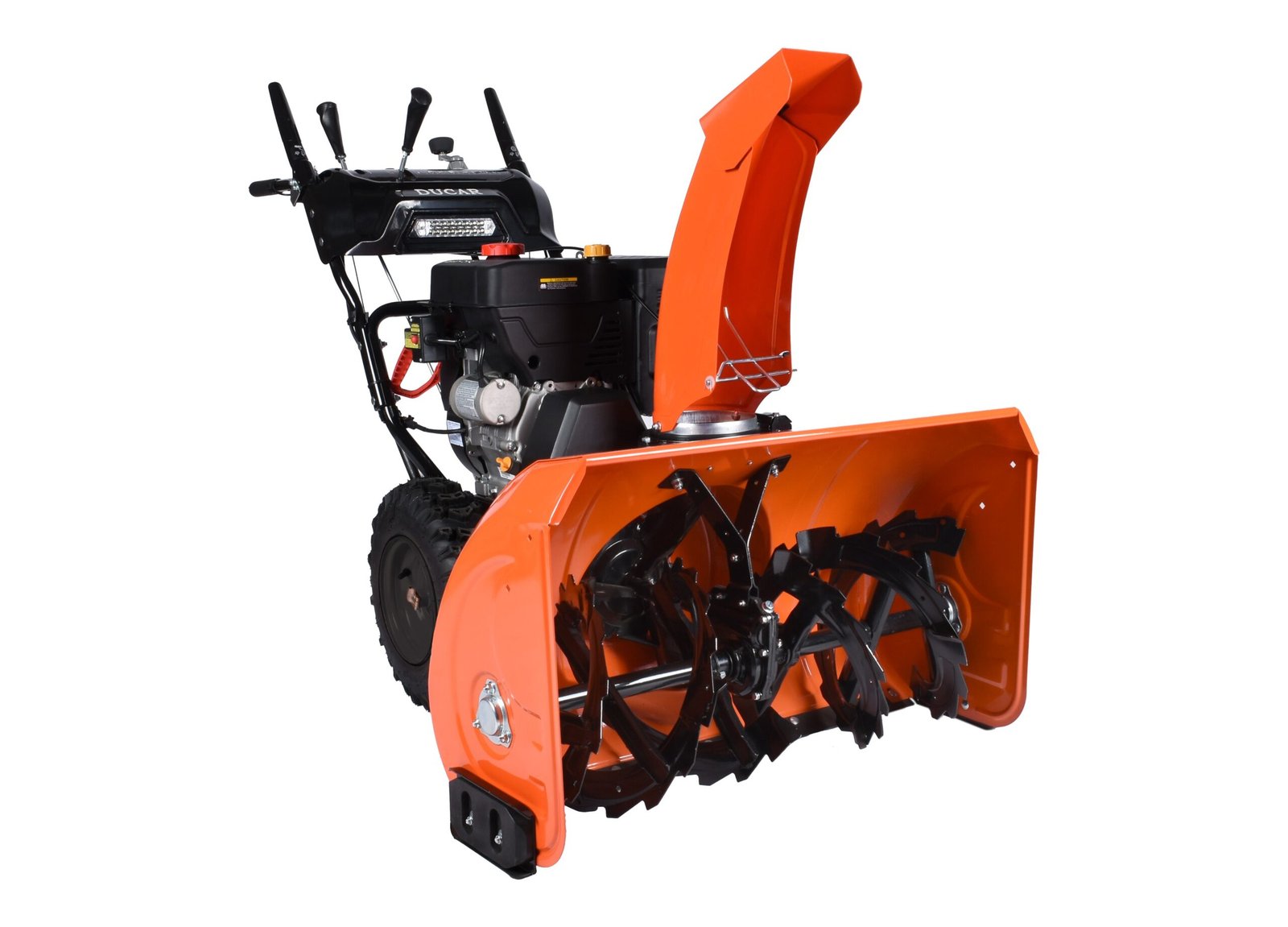
Impeller size, the number worth looking for
This is the specification that separates machines that cope with wet snow from machines that fight it, and most listings do not mention it at all.
The impeller is the high speed fan behind the auger that actually throws the snow. A larger diameter impeller moves more material per rotation and maintains velocity through dense snow, which is exactly what keeps the chute clear. A small impeller in wet snow slows, the material stops moving fast enough to exit, and the chute packs.
Between two machines with the same engine, the one with the larger impeller will throw further and clog less in wet conditions. That is why a well matched 252 cc machine can out perform a poorly matched 302 cc one, and why buying on displacement alone misleads people badly in this specific scenario.
Every listing on this site states impeller and intake figures for that reason.
Intake height, and the depth it lets you take
Intake height is the vertical opening of the auger housing, and it decides how deep a bite you can take before the housing fills faster than the impeller can clear it.
In dry powder a modest intake copes, because the material is light and moves through quickly. In wet snow the housing fills with dense material and a taller intake gives the auger room to feed the impeller steadily rather than choking. Combined with a larger impeller it is the difference between full width passes and constant half width work.
Power, and where cc is misleading
Engine size matters, and it matters less than the marketing implies.
On a gas machine, 252 cc and upward gives comfortable margin in wet conditions, and 302 cc and above handles it without drama. Below about 212 cc you will feel the machine working hard in dense snow regardless of how wide it is.
On a cordless machine, look at 80V rather than 60V if wet snow is your normal. Higher voltage platforms deliver more torque to the auger, which is precisely what dense material demands. Bear in mind that wet snow drains battery packs considerably faster than powder, so a second pack moves from useful to necessary.
What none of that changes is the mechanism. A powerful single stage machine is still the wrong tool for wet snow, because the problem is how the machine moves material rather than how much energy it has.
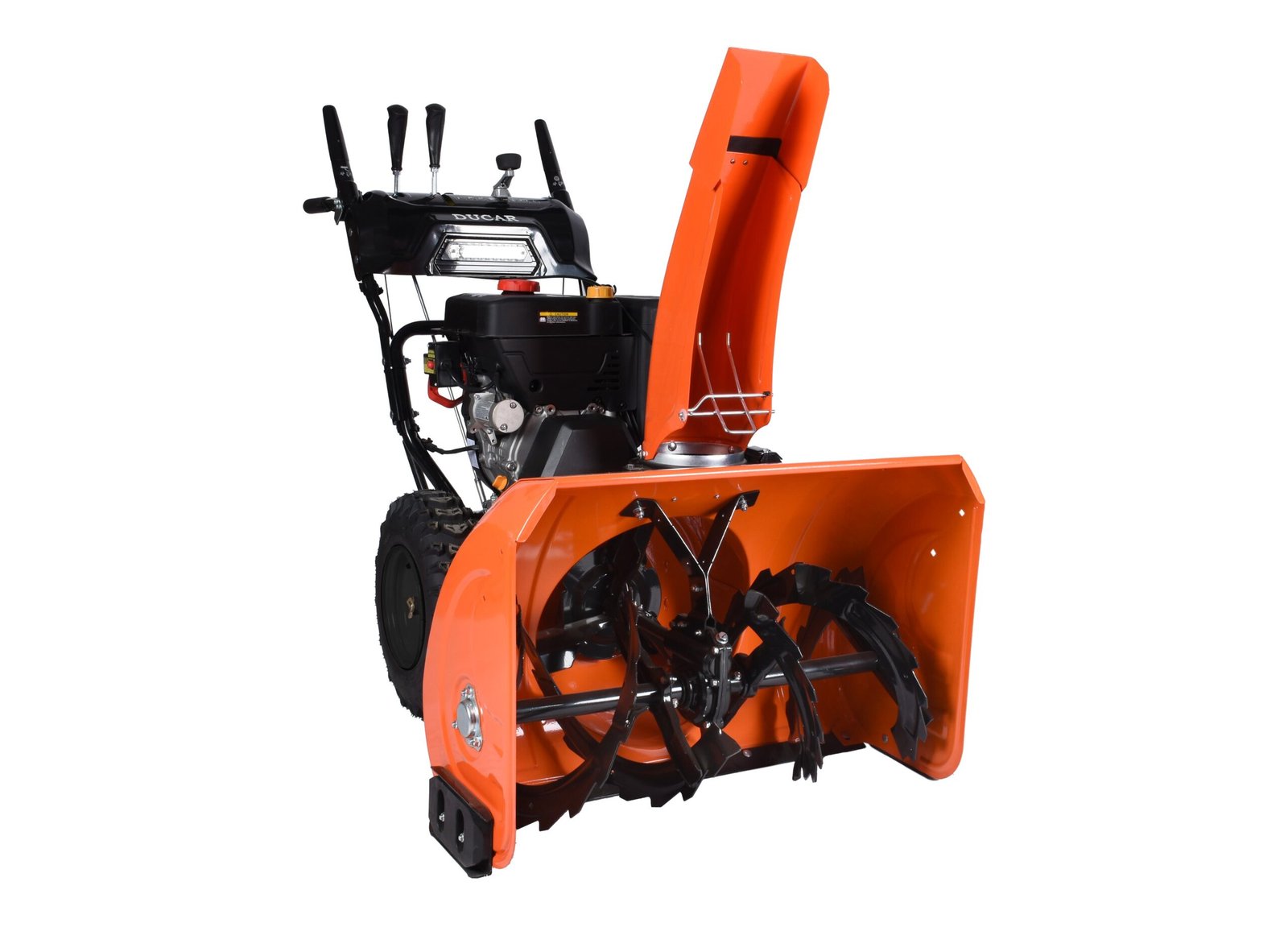
Stopping the chute clogging
Clogging is the defining frustration of wet snow, and several things genuinely help.
- Keep the machine moving forward steadily. Stopping while the auger is loaded lets material settle and pack.
- Run at full throttle on a gas machine. Reducing throttle to slow your walking pace drops impeller speed, which is exactly what causes clogging. Walk slower instead.
- Take partial width bites rather than full ones.
- Spray the chute and auger housing with a silicone or purpose made coating before clearing. It genuinely reduces adhesion.
- Do not aim the chute at maximum distance. A steeper angle needs more velocity to work, so a lower throw clogs less.
And when it does clog, use the clearing tool with the engine off, the key out and the spark plug lead disconnected. Wet snow jams are exactly the situation that injures hands, because the loaded mechanism holds tension even after shutdown. That is covered fully in snow blower safety.
Technique that keeps wet snow moving through the chute
Timing beats equipment here more than anywhere else in the category.
Clear early and clear twice. Wet snow compacts under its own weight within hours, and under any traffic almost immediately. Two passes through 8 centimetres is dramatically easier than one through 16, and the difference is larger with wet snow than with powder.
Do not wait for a wet storm to finish. Get out mid storm, accept that you will go out again, and you will spend less total time and put far less strain on the machine. Forecasts from Environment and Climate Change Canada tell you when a wet system is arriving.
Walk slower rather than throttling back, overlap passes more than you would in powder, and expect the job to take longer. None of that is the machine underperforming, it is the material.
Which snow blower for heavy snow to buy
Working from the constraints above rather than from a brand preference.
- Best overall for wet snow: a 24 to 28 inch gas two stage machine at 252 to 302 cc, with a large impeller and generous intake. It has the torque and the runtime, and refuelling has no limit when the job takes longer than expected.
- Best cordless: an 80V 24 inch dual stage machine, with a second pack. Genuine two stage performance without fuel, though budget for the packs.
- If the plow ridge is also a problem: consider three stage, where the accelerator breaks compacted material before it reaches the impeller.
- For a long or rural driveway: 30 inches and up at 302 to 420 cc, tracks worth considering for grip on the slush underneath.
- What to avoid: any single stage machine, and any corded machine, since neither has the mechanism or the margin.
Browse two stage snow blowers and gas snow blowers, or compare power sources in battery vs gas.
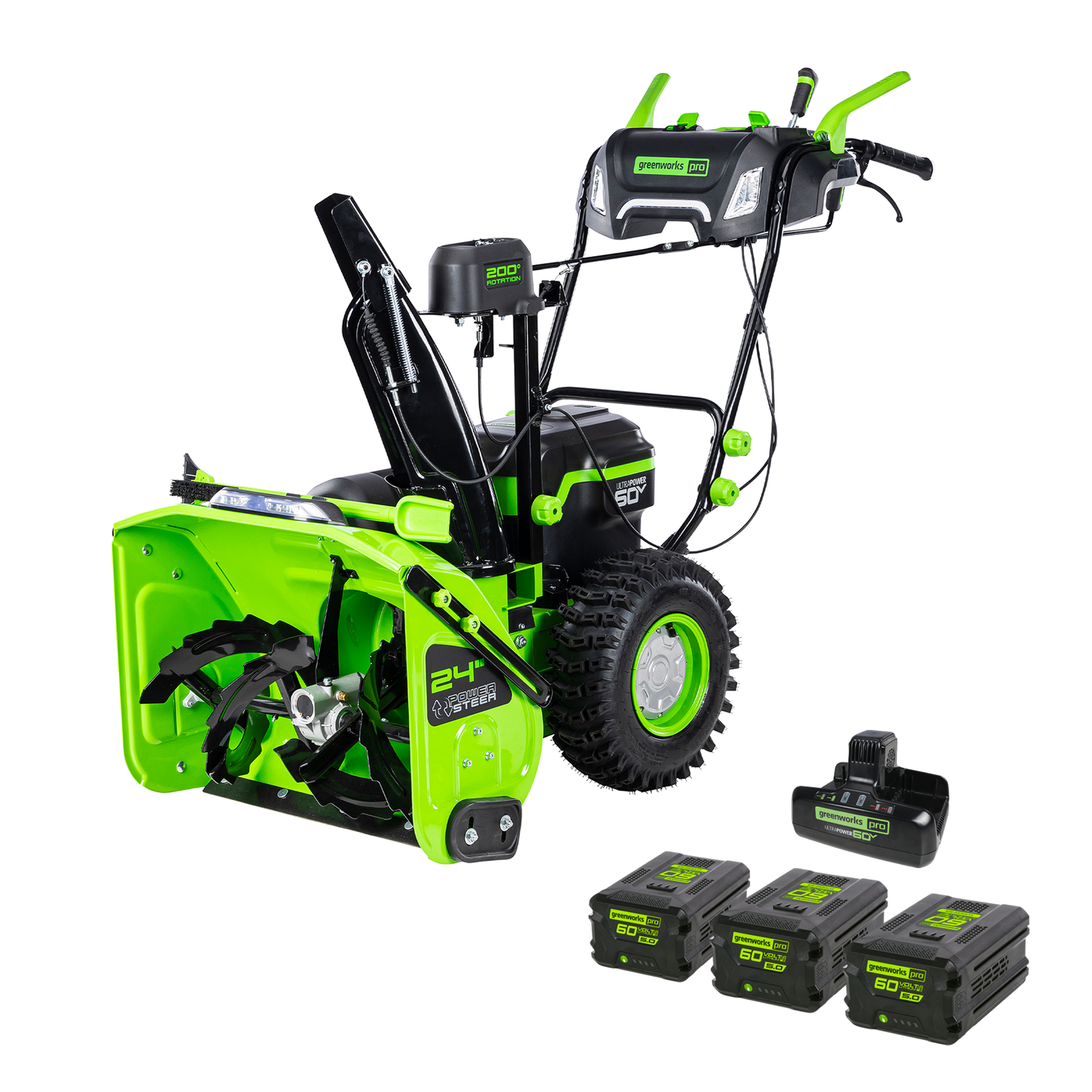
What wet snow does to the machine
Worth understanding, because a snow blower for heavy snow wears differently from one used in powder.
Belts take the worst of it. Dense material loads the auger repeatedly, and every time the auger slows under load the belt slips fractionally. Across a wet winter that glazes and wears the auger belt considerably faster than a dry one, which is why a machine that ran perfectly in January can stop throwing in March.
Shear pins go more often. Wet snow hides ice chunks, and the material itself is dense enough to load the auger hard on its own.
Paddles wear faster on single stage machines, because saturated snow carries grit against the rubber.
Corrosion accelerates. Wet snow means meltwater and road salt sitting inside the auger housing, which is why the end of season clean matters more in wet regions than in dry ones.
None of this is a reason to avoid clearing wet snow. It is a reason to inspect belts and pins at the end of a wet season rather than assuming, and to be thorough with the April storage job. Keep spares on hand, as covered in shear pins explained.
Where this matters most
Wet snow is regional, and it should weight your decision accordingly.
Coastal British Columbia sees relatively little snow, and what falls is frequently near zero and saturated, which is why buyers there routinely find a machine sized on total snowfall disappointing.
Atlantic Canada gets heavy, wet, wind driven snow in volume, which is the hardest combination in the country for equipment.
Southern Ontario and Quebec get powder through midwinter and wet snow at both shoulders, so the machine needs to cope with both.
The Prairies are the exception. Cold, dry snow dominates, and wet events are less common, so sizing on depth rather than density is more reasonable there.
Historical data by station is published at ECCC climate records, and it is worth checking what your winters actually consist of rather than assuming.
Common questions
What is the best snow blower for heavy wet snow?
Why does my snow blower clog in wet snow?
Should I reduce throttle when clearing wet snow?
Is engine size the most important spec for wet snow?
Can a battery snow blower handle heavy wet snow?
Can a single stage snow blower handle wet snow?
How do I stop wet snow sticking to the chute?
Should I wait for a wet storm to finish before clearing?
Sizing the machine properly comes first: see what size snow blower do I need. If the plow ridge compounds the problem, read how to clear the plow ridge.