
A single stage auger belt has a harder job than the equivalent belt on a two stage machine, and this is stock number 302040089. Understanding why changes how often you should expect to replace it. Everything on this page concerns one thing: this single stage auger belt, in Canadian use.
On this page
What this single stage auger belt is for
A two stage machine splits the work. The belt drives an impeller shaft, and a gearbox reduces that down to auger speed with a large mechanical advantage. Load arriving at the auger is divided by the gearbox ratio before it ever reaches the belt.
A single stage machine has no gearbox and no impeller. The engine pulley drives a belt, and that belt drives the auger directly. Every bit of load from the rubber paddles hitting packed snow arrives at the single stage auger belt undivided.
There is a second job too. On a single stage machine the auger touches the ground and pulls the machine forward, so the belt is also transmitting the propulsion. When you lean into the handlebar to push through a drift, that force is being resisted through the belt.
Specifications
| Specification | Detail |
|---|---|
| Stock number | 302040089 |
| Part type | Auger drive belt, single stage |
| Drives | Auger directly, no gearbox |
| Also provides | Forward propulsion through auger ground contact |
| Acts as | The clutch, via the idler tensioner |
| Machine type | Single stage |
What that means for single stage auger belt life
Expect a single stage auger belt to be a more frequent replacement than a two stage auger belt on a comparable machine, and do not treat that as a fault.
| Two stage | Single stage | |
|---|---|---|
| Load path to belt | Reduced by the gearbox | Direct, undivided |
| Belt also propels the machine | No, wheels are separately driven | Yes, through the auger |
| Shock loads reach the belt | Cushioned by shear pins and gearbox | Directly |
| Typical replacement interval | Longer | Shorter |
The practical consequence is to keep a spare. A belt is inexpensive, it is the single most likely thing to stop a single stage machine, and it always fails during a storm rather than in October. Machines and their classes are compared in single stage against two stage.
Habits that make a single stage auger belt last
Three things extend a single stage auger belt more than any product will.
Clear early. Depth is what loads the belt. Four inches twice is far kinder than eight inches once, and on a corded or battery machine going out twice costs nothing but time.
Take a narrower bite in wet snow. Dense snow at full width is the single heaviest load the belt ever sees. Overlapping passes at half width finishes sooner than stalling repeatedly at full width.
Let go before it stalls. A single stage auger belt slipping against a stopped auger burns through in seconds. If the auger jams, release the control immediately, clear the blockage with the chute tool, and start again. Our snow blower safety guide covers doing that without putting a hand near the auger, and Canadian Centre for Occupational Health and Safety sets out the general rule on isolating powered equipment.
When the problem is not the single stage auger belt
Two faults on single stage machines look exactly like a slipping belt and are much cheaper to fix.
Worn rubber paddles. As the paddles wear they stop reaching the ground, so the machine stops pulling itself forward and throws less far. Owners feel the machine getting heavy and assume the drive is slipping. Check the paddle to ground gap first: if you can slide a pencil under the blade tip, that is your fault, not the belt.
A stretched auger control cable. The idler never reaches full travel, so the single stage auger belt is never properly tensioned. The belt is fine. Adjusting the cable costs nothing.
The way to separate them is the smell and the noise. A genuinely slipping belt squeals and eventually smells hot. Worn paddles are silent and simply under perform, and a slack cable gives you an auger that engages weakly but quietly.
Fitting a single stage auger belt
Power disconnected. On most single stage machines the belt cover comes off the side of the engine housing with a few screws, and the belt run is simpler than a two stage layout: engine pulley, idler, auger pulley.
Photograph the routing, particularly which side of the idler the belt passes, then release the tension and lift the old belt off. Fit the new one, rotate by hand through several turns and check it runs centrally in both grooves.
Then test disengagement. Release the auger control and confirm the auger stops within about five seconds. On a single stage machine a belt left too tight also means the machine keeps trying to drive itself forward, which is both unpleasant and unsafe.
Parts to order with it
The belt does not wear in isolation. Two other parts drive how long it lasts.
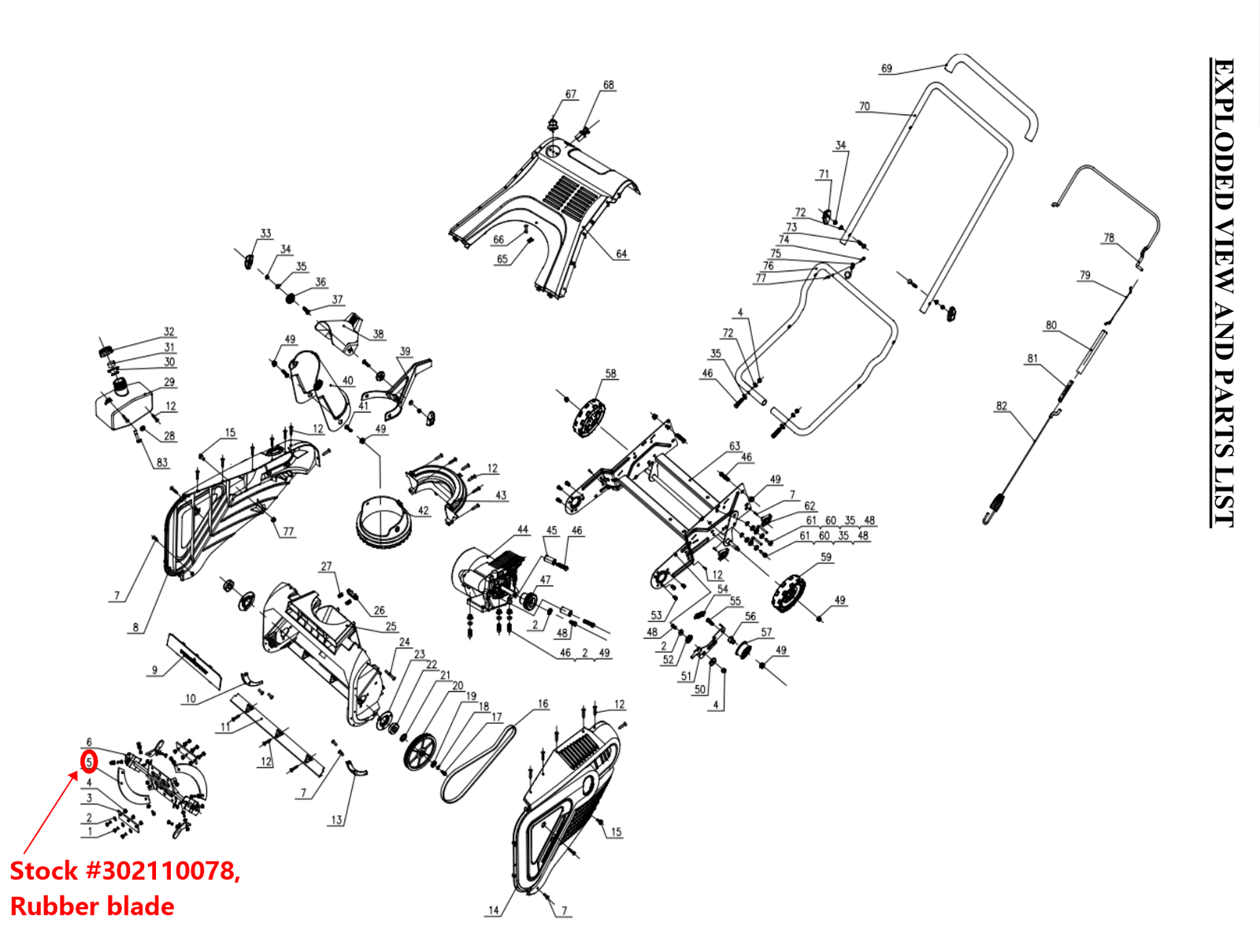
Rubber Blade: worn paddles make the machine work harder for the same result, which the belt pays for.
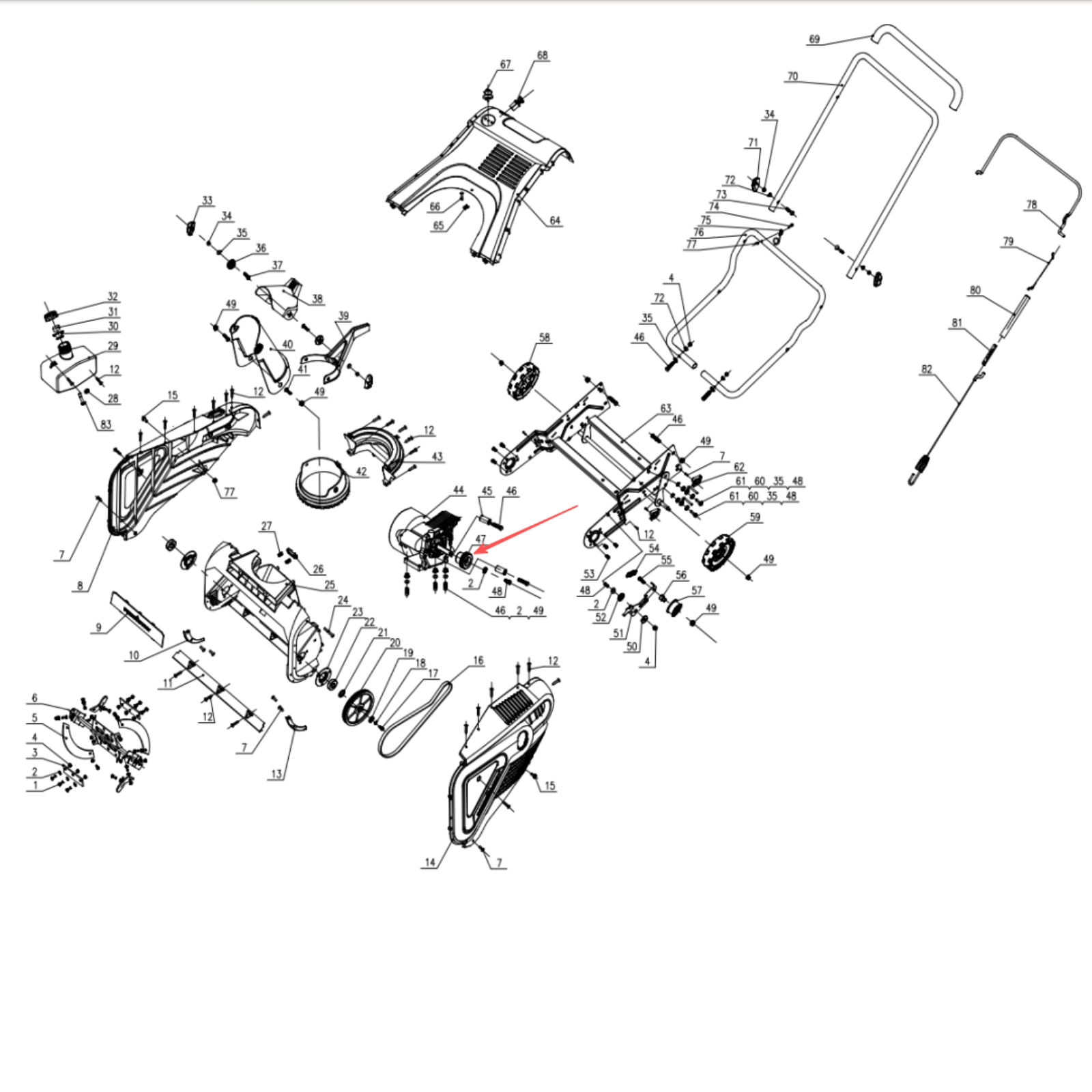
Small Belt Pulley: worn grooves glaze a new belt quickly, so check while the cover is off.
Common questions
Why does a single stage auger belt wear faster?
Because there is no gearbox between the belt and the auger. All the load arrives undivided, and the belt also transmits the machine’s forward propulsion through the auger.
How often should I replace it?
More often than a two stage belt on a comparable machine. Keep a spare, because a belt is the most likely thing to stop a single stage machine and it always fails mid storm.
The auger jammed and now the belt smells burnt. What happened?
The belt slipped against a stopped auger, which burns through it in seconds. Release the control immediately when the auger jams rather than holding it engaged.
Does clearing technique really affect belt life?
Yes, more than anything else. Clearing early at shallow depth and taking a narrower bite in wet snow both cut the peak load the belt has to carry.
Can I use a two stage auger belt on a single stage machine?
Only if the section and length match exactly. The machines use different pulley layouts, so match on the stock number rather than assuming.
Should the auger stop when I let go?
Yes, within about five seconds. If it does not, the belt is adjusted too tight and the machine will also keep trying to drive itself forward.
Reviews
There are no reviews yet.