
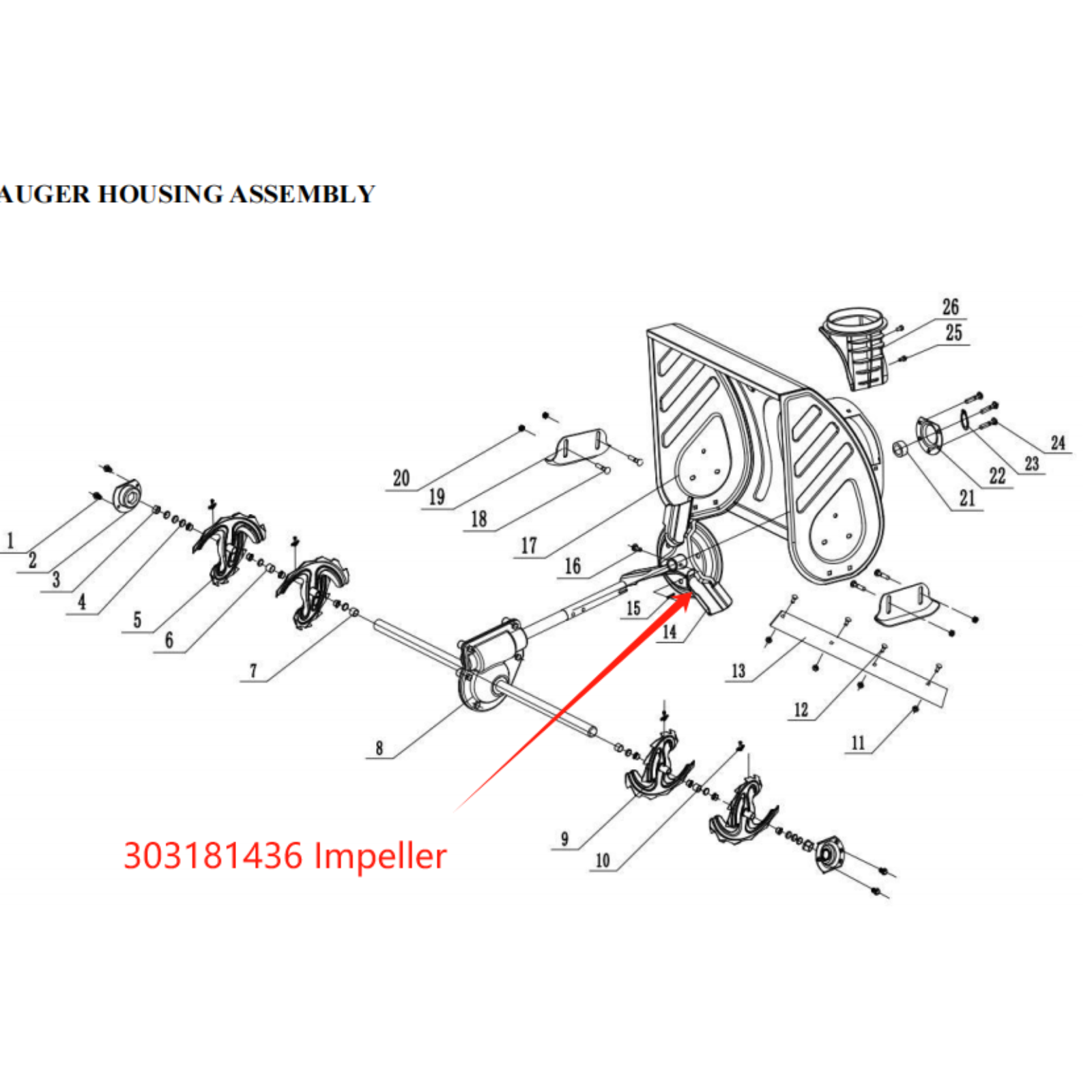
This two stage impeller is stock number 303181436, the smaller of the two impellers in our catalogue. The specification that matters most on it is not printed anywhere on the part: it is the gap between the blade tips and the housing. If a two stage impeller is what you are after, this is the listing and these are the details worth knowing.
On this page
Living with a two stage impeller
A two stage impeller works by trapping snow between the blade and the housing wall and flinging it up the chute. That word trapping is doing the work. If there is a gap between the blade tip and the housing, snow escapes back through it instead of going up the chute.
Dry powder barely notices a small gap because it is light and moves as a cloud. Wet, dense snow does notice, because it is heavy enough to squeeze back through rather than be carried. That is why the classic symptom of a worn clearance is a machine that throws beautifully in January powder and dribbles in March slush.
Manufacturers set this clearance loose enough to tolerate manufacturing variation and a stone passing through. On many machines that means several millimetres from new, and it opens up as the housing corrodes and the blades thin.
Specifications
| Specification | Detail |
|---|---|
| Stock number | 303181436 |
| Part type | Impeller, two stage |
| Key dimension | Blade tip to housing clearance |
| Driven by | Impeller shaft off the drive belt |
| Machine type | Two stage |
| Alternative impeller | 303180702 |
Measuring two stage impeller clearance properly
Disconnect the power. Spark plug lead off on a gas machine, and mean it: this job puts your hand inside the impeller housing.
Reach in through the chute opening or the auger housing and rotate the two stage impeller slowly by hand. At each blade, slide a feeler gauge or a folded strip of card between the blade tip and the housing wall and note the gap. Do every blade, because they rarely wear evenly.
What you are looking for is not an absolute number, since it varies by model, but consistency and change. A gap that differs a lot between blades means a bent impeller or a distorted housing. A gap you can fit a finger into is losing you real throw distance in wet snow whatever the manual says.
Do this in autumn, not in February. Our maintenance checklist lists it alongside the other pre season checks, and Canadian Centre for Occupational Health and Safety covers de energising powered equipment before putting a hand inside a housing.
Closing the gap without replacing the two stage impeller
If the two stage impeller itself is straight and the blades are sound, an excessive gap does not necessarily mean a new part.
The common workshop fix is a set of flexible strips bolted to the blade tips, which take up the clearance and flex out of the way if a stone gets through. Done properly it restores throw distance substantially and costs a fraction of an impeller.
Two cautions, and they matter. The strips must be flexible, not steel, or you have removed the tolerance that lets a stone pass and you will bend something expensive. And every blade must be done identically, because an impeller running at speed with uneven mass on the blades is unbalanced, and unbalance kills shaft bearings.
If the impeller is bent, corroded thin at the blade roots, or has oval pin holes, none of this applies and it needs replacing.
What a worn two stage impeller actually costs you
It is worth putting numbers on the problem, because throw distance sounds cosmetic and is not.
A machine throwing 25 feet places snow well clear of a double driveway in one pass. The same machine throwing eight feet puts the snow at the edge of the cleared strip, which means you clear it again on the next pass, and the pass after that. On a wide driveway that turns a single circuit into two or three, and it does it on exactly the heavy wet days when you least want to be outside.
Worse, snow landing close builds a bank along the edge of the driveway. Once that bank is higher than the housing you are no longer clearing a driveway, you are excavating a trench, and the machine has to lift snow over its own previous pile. This is the same problem the plow leaves at the kerb, covered in our clearing the plow ridge guide.
So a two stage impeller that has lost its clearance does not just throw less far. It roughly doubles the time the job takes and creates a second problem at the driveway edge. Measuring the gap in October is ten minutes well spent.
Which two stage impeller you need
We list two: this two stage impeller at 303181436 and a larger one at 303180702. They are not interchangeable and the price difference reflects size, not quality.
Measure the old one. Outside diameter across the blade tips and the shaft bore are the two figures that decide it. Comparing listing photographs does not work, because both are the same shape at different sizes with nothing in frame for scale.
If the old impeller is not available to measure, read the stock number off the manufacturer parts diagram for your model. That is the authority, and it is faster than guessing.
Parts to check alongside it
Before buying an impeller, two other parts are worth eliminating.
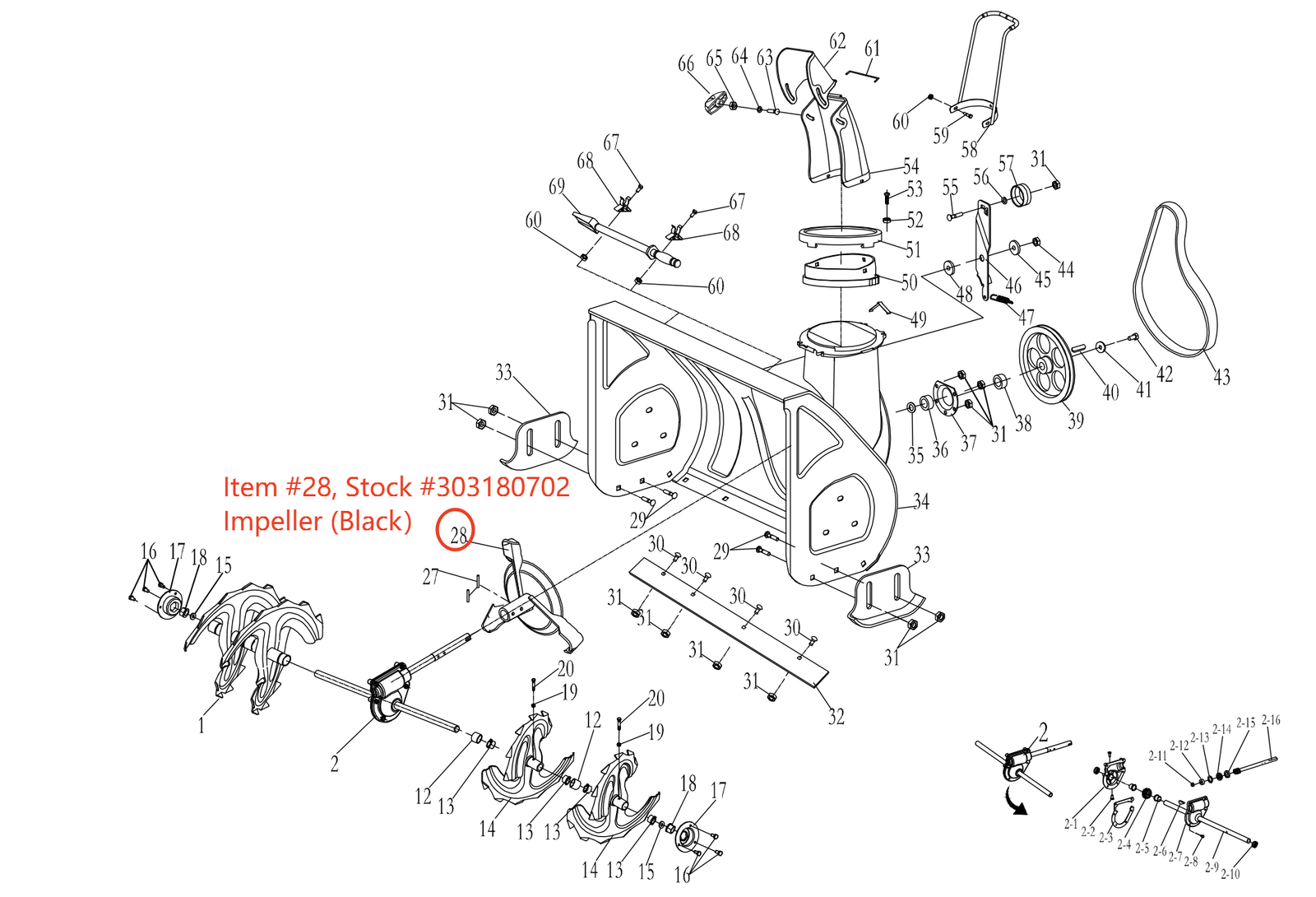
Impeller: the alternative impeller, and the one to measure against before ordering.

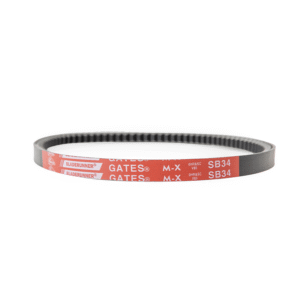
Auger Belt Single Stage: rule the belt out first, because a slipping belt mimics a worn impeller exactly.
Common questions
What clearance should a two stage impeller have?
It varies by model, so consistency matters more than an absolute figure. Measure every blade: a gap that differs a lot between blades means a bent impeller or a distorted housing.
Why does my machine throw well in powder but not in wet snow?
Almost always impeller clearance. Light powder does not notice a gap. Wet, dense snow squeezes back through it instead of being flung up the chute.
Can I fit strips to close the gap instead of buying a new impeller?
Yes, if the impeller is otherwise straight and sound. They must be flexible rather than steel, and every blade must be done identically or you unbalance the impeller.
How do I choose between the two impellers you list?
Measure the old one: outside diameter across the blade tips and the shaft bore. Photographs will not tell them apart, because there is no scale reference in the image.
Is it safe to reach into the impeller housing?
Only with the power disconnected. Pull the spark plug lead or remove the battery first. A stalled impeller can store energy and turn when a blockage releases.
When should I check the clearance?
Every autumn, before the first snowfall, alongside the rest of the pre season checks. Discovering it in February means living with it until spring.

Reviews
There are no reviews yet.