
The 3PK695 belt is stock number 302040090, listed for the DB5021. That code looks cryptic and is completely readable once you know the convention, and reading it is the difference between ordering confidently and guessing. If a 3pk695 belt is what you are after, this is the listing and these are the details worth knowing.
On this page
Choosing a 3pk695 belt for a Canadian driveway
Split it into three parts and each one is a specification.
| Code | Means | Detail |
|---|---|---|
| 3 | Rib count | Three ribs running the length of the belt |
| PK | Profile | Metric ribbed belt, 3.56 mm rib pitch |
| 695 | Length | Effective length in millimetres, so 695 mm |
So a 3PK695 belt is a three rib PK profile belt, 695 mm long. All three numbers have to match. Rib count sets how much torque the belt can carry, profile sets whether it seats in the pulley at all, and length sets whether the tensioner can tension it.
Specifications
| Specification | Detail |
|---|---|
| Stock number | 302040090 |
| Belt code | 3PK695 |
| Ribs | 3 |
| Profile | PK, 3.56 mm rib pitch |
| Effective length | 695 mm |
| Listed fitment | DB5021 |
How a ribbed belt differs from a V belt
A V belt is a single large wedge that grips by jamming into one deep groove. A ribbed belt is a flat belt with several small V shaped ribs moulded along its inner face, running in a pulley with matching small grooves.
The consequence is flexibility. Because each rib is shallow, the belt as a whole is much thinner than a V belt of equivalent capacity, so it bends around small pulleys easily and without generating the heat that cracks a thick belt. That is why ribbed belts took over automotive accessory drives, and why they turn up on compact machines where a V belt would be working at its bend radius limit.
The trade is that a 3pk695 belt needs correct alignment more than a V belt does. A V belt sitting slightly off is still wedged in its groove. A ribbed belt running off centre puts ribs onto lands, which shreds it quickly.
Why rib count is not negotiable
Rib count is the one figure people are tempted to treat as approximate, on the reasoning that four ribs on a three rib pulley is simply more grip. It is not.
A pulley with three grooves has three grooves and then a flat land. Put a four rib belt on it and the fourth rib rides on that land, holding the other three slightly out of their grooves. The belt runs on one rib’s worth of contact, tracks badly and destroys itself.
Fewer ribs than grooves is less immediately destructive but still wrong: a two rib belt in a three groove pulley carries two thirds the load on a belt sized for two thirds the job, and it will track toward one side.
So match the rib count exactly. On a 3pk695 belt that means three, on a three groove pulley, every time.
Fitting a 3pk695 belt
Power disconnected, cover off, routing photographed. Ribbed belts have one installation trap that V belts do not.
Check that every rib is seated in a groove before you run the machine. It is entirely possible to fit a ribbed belt one groove out, with the outermost rib on the land, and it will look almost right at a glance. Sight along the pulley from the side: the belt edge should line up with the pulley edge on both pulleys.
Then turn the drive by hand through several revolutions and watch for the belt creeping sideways. Creep means misalignment, and a ribbed belt will not tolerate it for long. Our snow blower repair guide covers checking pulley alignment properly.
When a 3pk695 belt needs replacing
Ribbed belts wear differently from V belts and the tells are on the rib face, so you have to take the belt off or at least get a light onto its inner side.
Rounded rib tips. New ribs come to a defined point. Worn ones flatten, which lets the belt sit deeper and reduces the wedging that produces grip. This is the normal end of life and it is gradual.
Material missing between ribs. Chunks out of the valleys mean the belt has been running misaligned or over a seized pulley, so find the cause before fitting a new one.
Cracks across the ribs. Age hardening rather than wear. Common on machines that sit for years, and a good reason to replace a belt that looks unused but is old.
A glazed, shiny rib face. The belt has been slipping. On a 3pk695 belt that usually points at tension or a worn pulley rather than the belt itself, so check both before assuming the belt was at fault. General guidance on isolating powered equipment before any of this is in Canadian Centre for Occupational Health and Safety.
Parts to order with a 3pk695 belt
Two ribbed belts in the same catalogue that are easy to confuse with this one.
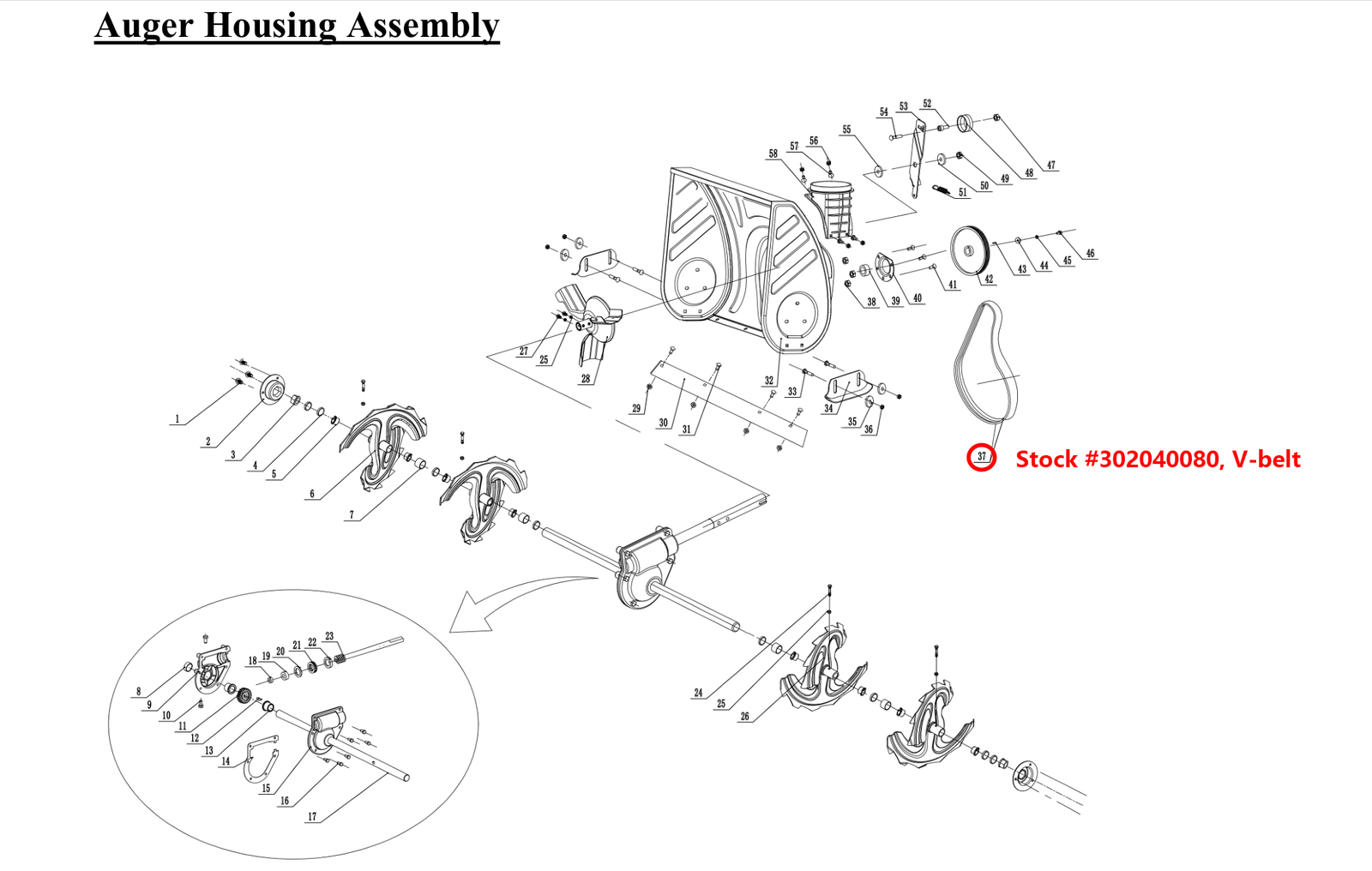
Multi-Wedge Belt (4PK 660mm): same PK profile, different rib count and length, so check both before ordering.
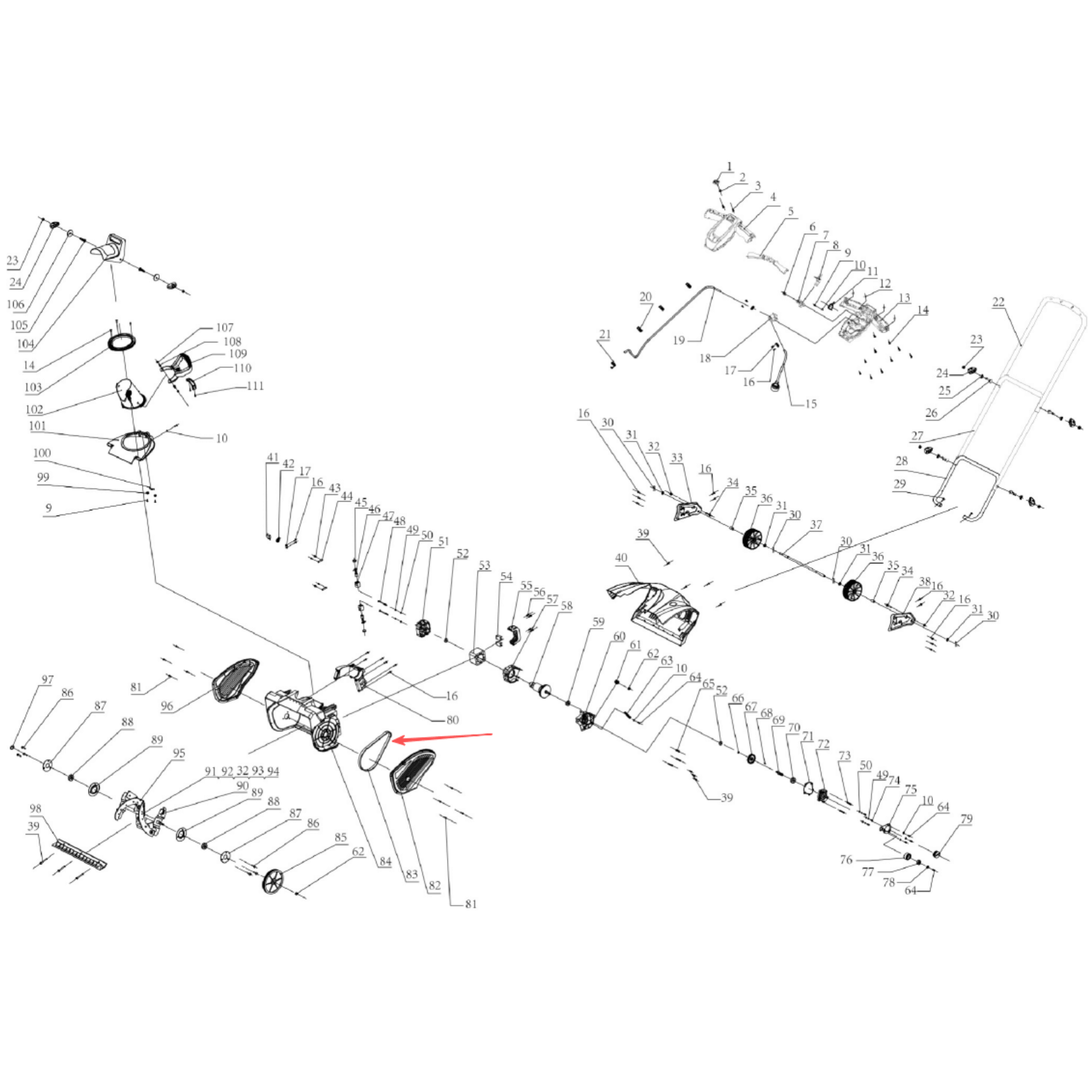
Auger Belt (5PJ660-670): a different rib pitch entirely, and not interchangeable with PK.
Common questions
What does 3PK695 mean?
Three ribs, PK profile with a 3.56 mm rib pitch, and 695 mm effective length. All three figures have to match for the belt to work.
Can I use a 4PK belt on a 3PK pulley?
No. The fourth rib rides on the flat land beside the grooves and lifts the other three out of position, so the belt runs on almost no contact and destroys itself.
How is a ribbed belt different from a V belt?
A V belt is one deep wedge in one deep groove. A ribbed belt is a thin flat belt with several shallow ribs, so it bends around small pulleys without overheating.
Does alignment matter more on a ribbed belt?
Yes. A misaligned V belt is still wedged in its groove, but a ribbed belt running off centre puts ribs onto the flat lands and shreds quickly.
Is PK the same as PJ?
No. They are different rib pitches. PK is 3.56 mm and PJ is finer at 2.34 mm, so the pulleys are cut differently and the belts do not interchange.
How do I check it is fitted correctly?
Sight along each pulley from the side. The belt edge should line up with the pulley edge on both. A belt fitted one groove out looks nearly right at a glance.
Reviews
There are no reviews yet.